
As an observer and participant in the agricultural UAV industry for over a decade, I have witnessed its evolution from a nascent concept to a burgeoning market. The potential of agricultural UAVs, particularly in crop protection, is undeniable, yet a rational examination reveals both immense opportunities and significant challenges. This article delves into the real-world dynamics of agricultural UAVs, drawing from firsthand experience in standard-setting, sales, and service operations. Through detailed analysis, tables, and formulas, I aim to provide a comprehensive perspective on this transformative technology.
The agricultural UAV sector is often hailed as a multi-billion-dollar opportunity, with estimates ranging from hardware markets of 20 to 50 billion yuan, and when combined with service markets, potentially reaching 100 billion yuan. I have never doubted the commercial value and scale of agricultural UAVs, but it is crucial to approach this industry with caution, avoiding impulsive investments and strategic short-sightedness. The allure of agricultural UAVs must be balanced with a clear understanding of the pitfalls that await unwary entrants.
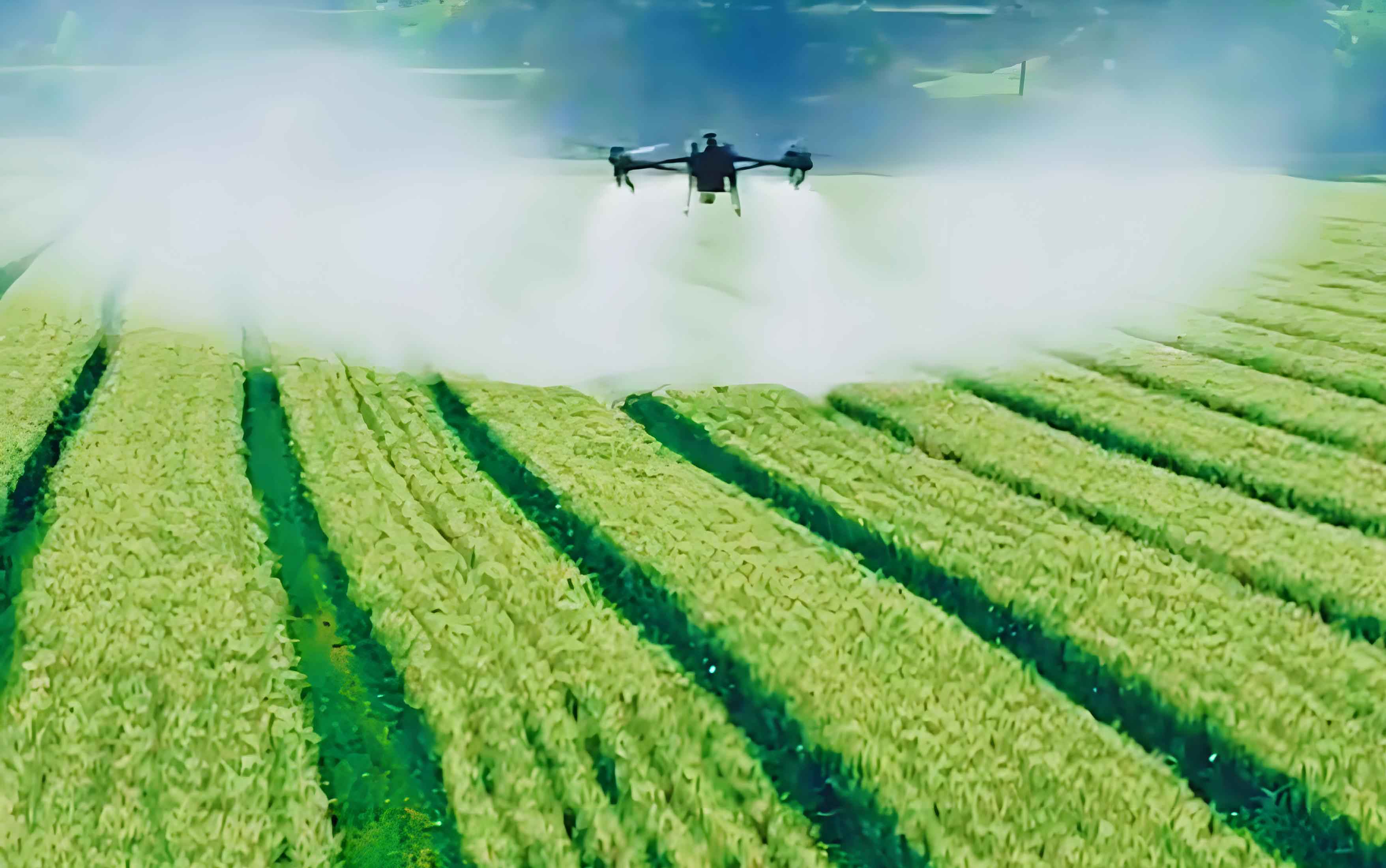
One of the most critical aspects to consider is the inherent nature of agricultural UAVs as electronic products intertwined with internet technology. This dual genetic makeup means that agricultural UAVs follow Moore’s Law, which posits that the performance of microprocessors doubles approximately every 18 months while costs halve. This law can be expressed mathematically as:
$$ P(t) = P_0 \cdot 2^{-\frac{t}{T}} $$
where $P(t)$ is the price at time $t$, $P_0$ is the initial price, and $T$ is the period (18 months). This rapid iteration cycle challenges traditional agricultural machinery manufacturers, who are accustomed to slower development timelines. For instance, the price trajectory of agricultural UAVs over the years demonstrates this decline:
| Year | Type of Agricultural UAV | Average Price (in 10,000 yuan) |
|---|---|---|
| 2010 | Early models | High, often above 20 |
| 2014 | Electric multi-rotor | 15-20 |
| 2015 | Improved electric models | 10-15 |
| 2016 | Competitive market entry | 8-12 |
| 2017 | Mass production effects | 5-10 |
| 2018 | Advanced models with subsidies | 3-8 |
This table illustrates how the cost of agricultural UAVs has decreased significantly, driven by advancements in electronics and scale. Traditional农机企业 (agricultural machinery companies) struggle to keep pace with this节奏, as their expertise lies in mechanical systems rather than the core electronic components and software that define modern agricultural UAVs. Companies like DJI and XAG excel in these areas, continuously推出迭代机型 that set industry standards and price points. Thus, agricultural UAVs are not a natural fit for traditional农机企业; attempting to compete often results in products that are generations behind yet priced higher, leading to market irrelevance.
Another pivotal issue is the operational efficacy of agricultural UAVs across different crop types. While agricultural UAVs have proven effective in large-scale grain crops like wheat, rice, corn, and cotton—where standardized作业模式 have emerged—their performance in economic crops such as fruits, vegetables, tea, and orchards remains suboptimal. In my参与试验,包括 multiple brands of agricultural UAVs (electric, gasoline-powered, and hybrid) with various rotor configurations, the作业效果 did not meet farmer expectations. The challenge lies in adapting the machine structure, spraying mechanisms, and operational protocols to the diverse and often complex canopies of economic crops. A comparative analysis can be summarized as follows:
| Crop Category | Agricultural UAV Efficacy | Ground Machinery Efficacy | Key Challenges for Agricultural UAVs |
|---|---|---|---|
| Grain Crops (e.g., wheat, rice) | High – accepted by farmers | Moderate to High | Minimal;成熟作业模式 |
| Economic Crops (e.g., apples, tea) | Low to Moderate – not widely accepted | High – preferred by farmers | Canopy penetration, droplet deposition, wind drift |
The公式 for droplet coverage efficiency in agricultural UAVs can be modeled as:
$$ C_e = \frac{A_d}{A_t} \times 100\% $$
where $C_e$ is the coverage efficiency, $A_d$ is the area effectively covered by droplets, and $A_t$ is the target area. For economic crops, $C_e$ often falls below acceptable thresholds due to factors like leaf density and microclimate effects. Overcoming these hurdles requires collaboration between agricultural UAV manufacturers, agrochemical companies, and agronomic experts to develop tailored solutions. The蓝海市场 of economic crops represents a significant opportunity for agricultural UAVs, but it demands sustained innovation and field testing beyond laboratory conditions.
Agricultural UAVs are often viewed as replacements for ground-based crop protection equipment, such as手动背负式喷雾器 and电动喷雾器. However, this perspective is misleading. While agricultural UAVs offer advantages in speed, efficiency, and accessibility—especially in difficult terrain—they cannot完全取代地面机械. Ground machinery can perform all tasks that agricultural UAVs do, but the reverse is not true due to limitations in payload, weather conditions, and precision requirements. A more viable future involves complementary use, where agricultural UAVs and ground equipment are deployed based on specific scenarios. The竞争 between these two categories can be analyzed using a substitution index $S_i$:
$$ S_i = \frac{E_{uav}}{E_{ground}} $$
where $E_{uav}$ and $E_{ground}$ represent the effectiveness of agricultural UAVs and ground machinery, respectively. For large, open fields, $S_i$ may approach or exceed 1, indicating substitution potential, but for dense or sensitive crops, $S_i$ remains low. Thus, the agricultural UAV industry should focus on协同作业 rather than outright replacement.
The commercial value of agricultural UAV hardware is frequently exaggerated. While some reports project a 50-billion-yuan market, realistic assessments suggest a much smaller scale. Assuming annual demand stabilizes at 50,000 units post-growth phase, with an average price of 50,000 yuan, the hardware market would be:
$$ M_h = N \times P_a = 50,000 \times 50,000 = 2.5 \text{ billion yuan} $$
where $M_h$ is the hardware market size, $N$ is the number of units, and $P_a$ is the average price. This pales in comparison to traditional农机 industries like tractors, which can exceed 50 billion yuan. Moreover, the price of agricultural UAVs is likely to continue declining, potentially reaching a point where they are bundled with agrochemicals. In a market of this magnitude, only a few large players can thrive, making it a niche segment within the broader agricultural machinery landscape. Therefore, overstating the商业价值 of agricultural UAVs can lead to redundant investments and market saturation.
Conversely, the service market for agricultural UAVs holds far greater promise. Crop protection is a高频需求 activity, with multiple applications per growing season. For example, the frequency of spraying can be represented as:
| Crop Type | Spraying Frequency per Season | Potential Service Revenue per Hectare (yuan) |
|---|---|---|
| Rice | 3–5 times | 150–250 |
| Wheat | 2–3 times | 100–200 |
| Vegetables | 7–15 times | 350–750 |
| Fruit Trees | 5–11 times | 250–550 |
If we consider the total cultivated area in China, the service market for agricultural UAVs could indeed approach 100 billion yuan. However, profitability remains elusive due to intense price competition. In regions like Xinjiang, cotton spraying rates have plummeted to 75 yuan per hectare, while rice and wheat services often cost under 150 yuan per hectare. This price erosion follows a model similar to Bertrand competition, where firms undercut each other to gain market share, leading to near-zero economic profits. The profit function for an agricultural UAV service provider can be expressed as:
$$ \pi = (P – C) \times Q – F $$
where $\pi$ is profit, $P$ is price per hectare, $C$ is variable cost, $Q$ is quantity of hectares serviced, and $F$ is fixed costs. With $P$ driven down by competition, achieving scale ($Q$) becomes critical, yet scaling too quickly can compromise作业质量, creating a vicious cycle. The price system in the agricultural UAV作业市场 has been damaged, making it difficult for providers to sustain operations without subsidies or diversified revenue streams.
This leads to the final point: the current火爆 of the agricultural UAV market is largely subsidy-driven. Government购机补贴 programs, especially those with local accumulative incentives, have fueled sales. In areas without subsidies, demand relies on零星惠农 projects rather than genuine刚需. The relationship between subsidy impact and market demand can be modeled as:
$$ D_t = D_n + \alpha S + \beta P_j $$
where $D_t$ is total demand, $D_n$ is natural demand (刚需), $S$ is subsidy value, $P_j$ is project-based demand, and $\alpha$ and $\beta$ are coefficients. Presently, $S$ and $P_j$ dominate, indicating that the agricultural UAV industry is still in a培育阶段. True刚需—where farmers adopt agricultural UAVs based on economic and agronomic benefits alone—is emerging but requires further maturation. Subsidies play a vital role in accelerating adoption, but over-reliance risks creating a bubble that may burst when政策 support wanes.
In conclusion, agricultural UAVs represent a transformative force in modern agriculture, with significant potential in both hardware and service domains. However, success demands navigating deep pitfalls: the rapid technological迭代 that disadvantages traditional manufacturers, the limited efficacy in economic crops, the complementary role with ground machinery, the realistic assessment of market size, the profitability challenges in services, and the subsidy-dependent demand. As the industry evolves, stakeholders must prioritize innovation, collaboration, and sustainable business models to harness the full promise of agricultural UAVs. The journey ahead is fraught with challenges, but for those who tread carefully, the rewards could be substantial.