
In the contemporary era of rapid development, the effective management of natural resources, particularly in the agricultural and forestry sectors, stands as a cornerstone for sustainable national progress. My perspective, as a policy architect and management specialist, is that these domains are intrinsically linked through their shared dependence on land, ecosystem services, and technological adoption. The modernization of management frameworks is not merely an option but an imperative to enhance productivity, ensure ecological balance, and mitigate risks such as wildfires. This treatise delves into the core strategies for revolutionizing agricultural economic management and explores the transformative role of advanced technologies, specifically unmanned aerial vehicles, in safeguarding forest resources. A holistic, integrated approach is paramount for navigating the complexities of the 21st century.
Reinventing Agricultural Economic Management Frameworks
The foundation of a robust agricultural sector lies in a dynamic and responsive economic management system. Traditional models often struggle with market volatility, technological integration, and human capital development. From my standpoint, a comprehensive overhaul focusing on precise goal-setting, institutional innovation, talent cultivation, and digital transformation is essential.
1.1 Precision in Goal Formulation
The initial and most critical step is the articulation of clear, actionable management objectives. These objectives serve as the strategic compass, defining the priorities, content, and operational focus of all managerial activities. They also provide the definitive criteria for evaluating the efficacy of management practices. A well-defined target is derived from a meticulous analysis of regional agricultural realities, encompassing factors such as resource endowment, market access, and socio-economic conditions. It must balance short-term operational targets with a visionary direction for long-term development. We can conceptualize the goal hierarchy as follows:
| Strategic Level | Management Objective Focus | Key Performance Indicators (KPIs) |
|---|---|---|
| Macro (National/Regional) | Food Security, Sustainable Resource Use, Rural Revitalization | Total Factor Productivity (TFP), Carbon Footprint, Farmer Income Growth Rate |
| Meso (Sector/Industry) | Supply Chain Optimization, Value-Added Agriculture, Technology Penetration | Post-Harvest Loss Percentage, Export Value of Processed Goods, Adoption Rate of Precision Agri-tech |
| Micro (Farm/Enterprise) | Profit Maximization, Cost Efficiency, Quality Certification | Net Profit Margin, Cost-Benefit Ratio (CBR), Area under Certified Production (e.g., Green/Organic) |
The relationship between resources, management effort, and output can be modeled to illustrate the impact of targeted interventions:
$$ Y = f(L, K, T, M) $$
Where \(Y\) is agricultural output, \(L\) is labor, \(K\) is capital, \(T\) is technology, and \(M\) represents the quality of management practices. Effective goal-setting directly optimizes the function \(f\) and the allocation of \(L, K, T\).
1.2 Institutional Innovation and Adaptive Systems
A static management体制 (system) is a liability. The construction of a resilient agricultural economic management体制 requires continuous improvement and innovation, tailored to the unique rhythms of local market economies and national development needs. While cross-jurisdictional learning is invaluable, blind replication is counterproductive. The evolutionary path of such a system can be expressed as:
$$ S_{t+1} = S_t + \alpha(I_e – S_t) + \beta(I_i) $$
Here, \(S_{t+1}\) represents the future management system, \(S_t\) is the current system, \(I_e\) is useful external institutional knowledge, \(I_i\) is internal innovative capacity, and \(\alpha\) and \(\beta\) are adaptation and innovation coefficients, respectively. The optimal system emerges from a deliberate process of selective assimilation (\( \alpha \)) and endogenous innovation (\( \beta \)).
1.3 Cultivating High-Caliber Management Talent
The execution of any sophisticated strategy hinges on human expertise. Presently, a significant gap exists in the professional素质 (quality) of personnel engaged in agricultural economic management. The escalating complexity of agri-tech, supply chain logistics, and digital finance demands a new breed of managers. A multi-pronged strategy is necessary:
- Government-Led Specialized Training: Establishing mandatory, regular upskilling programs through dedicated agricultural management academies or partnerships with tertiary institutions.
- Curriculum Modernization: Educational programs must integrate modules on data analytics, environmental economics, precision agriculture technologies, and agri-business entrepreneurship.
- Incentive Structures: Developing career advancement pathways and remuneration packages linked to performance metrics and certification achievements to attract and retain talent.
The return on investment in human capital can be significant, affecting the productivity parameter in our earlier model: \( L \) (labor) transforms into \( H \) (human capital), where \( H = L \cdot e^{g \cdot t} \), with \(g\) representing the growth rate of knowledge and skills.
1.4 Digital Transformation of Management Modalities
Legacy management methods, reliant on paper-based records and heuristic decision-making, are obsolete. The integration of Information and Communication Technologies (ICT) is non-negotiable. Key applications include:
- Big Data Analytics: Utilizing satellite imagery, IoT sensor networks, and market data streams to forecast yields, optimize input use, and predict price trends.
- Blockchain for Traceability: Implementing distributed ledger technology to create immutable records from farm to fork, enhancing food safety and brand value for green/organic products.
- Cloud-Based Management Platforms: Enabling real-time monitoring of farm operations, financial management, and seamless communication across the value chain.
This digital shift fundamentally alters the technology variable \(T\), making it a dynamic, data-driven function: \( T = D(A_t, C_t) \), where \(D\) is the digital system, \(A_t\) is real-time data acquisition, and \(C_t\) is computational analytics power.
The Paradigm Shift in Forestry Protection: The Centrality of the Fire UAV
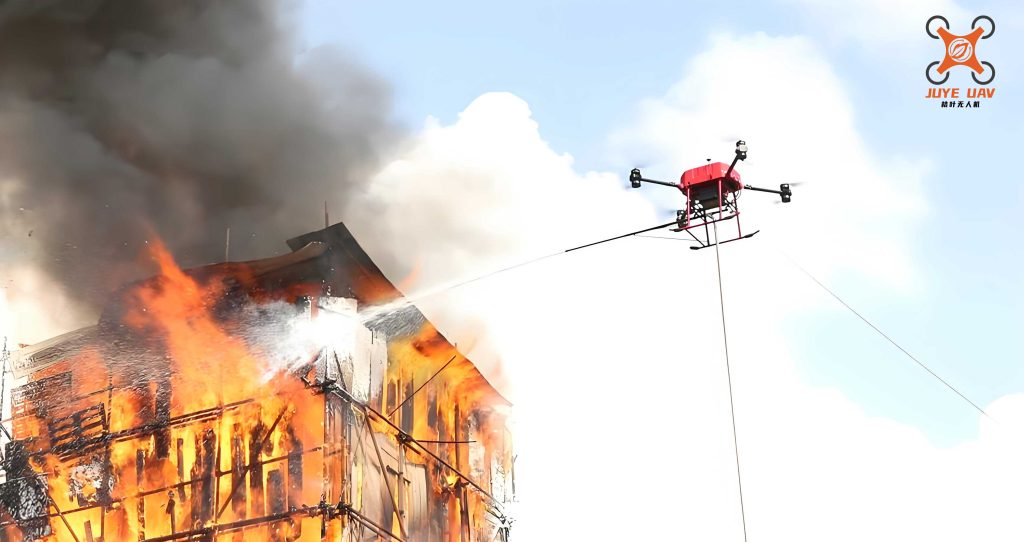
Transitioning from cultivated fields to natural forests, the management challenge shifts towards preservation and hazard mitigation. Forest fires represent a catastrophic threat to biodiversity, carbon sinks, and human settlements. Here, technological innovation, particularly the deployment of unmanned aerial vehicles (UAVs) specifically designed for fire management—hereafter referred to as fire UAV systems—is revolutionizing traditional forestry practices.
2.1 Design Philosophy of a Fire UAV Monitoring System
The core rationale for deploying a fire UAV network is to achieve persistent, cost-effective surveillance over vast and often inaccessible forested areas. The system is designed for early detection and continuous situation assessment. Its operational doctrine involves pre-programmed patrol routes, automated anomaly detection using thermal and visual sensors, and real-time data telemetry. The operational efficiency \(O_{UAV}\) of such a fleet can be modeled as:
$$ O_{UAV} = \frac{A_c}{t_r + t_d} $$
Where \(A_c\) is the effective area coverage per sortie, \(t_r\) is the reaction time from alarm to confirmation, and \(t_d\) is the data dissemination time to ground teams. Minimizing the denominator is a primary design goal.
2.2 Global Context and Prevailing Challenges
Internationally, fire UAV technology is integrated with automated alarm systems, digital photogrammetry, and satellite networks to form a comprehensive early-warning grid. However, several impediments slow widespread, mature adoption:
| Challenge Category | Specific Issues | Impact on Fire UAV Efficacy |
|---|---|---|
| Regulatory & Managerial | Lack of standardized airspace management protocols; unclear operational guidelines for emergency response. | Leads to delayed deployment, coordination chaos, and underutilization of assets. |
| Technical Limitations | Limited flight endurance in harsh weather; sensor accuracy degradation in dense smoke; high data bandwidth requirements. | Reduces operational window and reliability of intelligence during critical fire events. |
| Economic & Logistical | High initial acquisition, maintenance, and skilled operator training costs. | Prohibits scalable deployment, especially for resource-constrained forest management agencies. |
| System Integration | Poor interoperability between fire UAV data formats and legacy forest management information systems. | Creates data silos, hindering holistic situational awareness and command decisions. |
Addressing these challenges requires a concerted effort in policy formulation, R&D investment, and public-private partnerships.
2.3 Multifunctional Applications of the Fire UAV in Forest Management
The versatility of the modern fire UAV extends across the entire disaster management cycle—prevention, response, and recovery.
- Prevention & 24/7 Surveillance: Equipped with high-resolution and infrared cameras, fire UAV units conduct automated patrols, identifying heat anomalies indicative of potential ignition points long before a visible flare-up.
- Real-Time Firefighting Intelligence: During an active blaze, a fire UAV provides commanders with live feed of fire front dynamics, direction, and intensity. This allows for precise resource allocation. The rate of fire spread \(R\) can be estimated using data from a fire UAV:
$$ R = \frac{\Delta P}{\Delta t} $$
where \(\Delta P\) is the change in the fire perimeter position measured from georeferenced fire UAV imagery over time interval \(\Delta t\). - Airborne Communication Relay: In remote forest terrain where ground communication fails, a fire UAV can act as a temporary communications tower, establishing a vital link between isolated firefighting crews and the command center.
- Post-Fire Assessment and Ecological Monitoring: Using multispectral sensors, fire UAV platforms map burn severity, assess vegetation regeneration, and monitor soil erosion, guiding restoration efforts.
2.4 Future Trajectory: Towards an Intelligent, Integrated Aerial Fleet
The future lies in developing specialized, resilient fire UAV platforms with enhanced endurance, superior smoke-penetrating sensors, and advanced autonomy (swarm intelligence). These systems will be nodes in a larger Internet of Things (IoT) ecosystem, sharing data with ground sensors, satellite networks, and manned aircraft. The decision-support capability will evolve from simple reconnaissance to predictive analytics and automated initial response coordination, fundamentally altering the cost-benefit equation of forest protection.
Synthesis and Concluding Perspective
The journey towards sustainable resource management in agriculture and forestry is a continuous process of strategic alignment and technological empowerment. In agriculture, the path forward demands precise economic objectives, fluid and innovative institutional structures, a steadfast commitment to professionalizing the workforce, and the wholesale adoption of digital tools. Parallelly, in forestry, the fire UAV has emerged as a transformative asset, shifting the paradigm from reactive firefighting to proactive, intelligence-driven prevention and response.
These two strands are interwoven by the common thread of leveraging technology—data analytics, UAVs, IoT—to make informed, efficient, and sustainable decisions. The integration of these advanced management philosophies and tools is not merely an operational upgrade; it is a strategic imperative for ensuring food security, ecological resilience, and the long-term socio-economic health of nations. As we look ahead, the fusion of human expertise with intelligent machines like the fire UAV will define the new frontier of natural resource stewardship.