
In recent years, the rapid development of drone technology has ushered in a new era of innovation across various sectors, including logistics, aerial photography, security, and law enforcement. As a typical representative of new productive forces and emerging industries, drones have become a critical driver for industrial transformation and high-quality development. However, this proliferation also introduces significant challenges to public security governance, particularly in managing risks associated with “low, slow, and small” (LSS) drones, which are easily exploited by malicious actors. Railway corridors, as vital transportation channels for mass movement of people and goods, have become a common conduit for drones transported across regions. The inspection and control of drone-related risks in these corridors are crucial for maintaining national and social security, yet they face numerous hurdles. From my perspective as a researcher and practitioner in public security, this article explores the significance, current dilemmas, and optimization pathways for drone risk inspection and control in railway corridors, emphasizing the pivotal role of drone training in enhancing overall efficacy.
The importance of drone risk management cannot be overstated. Drones, especially LSS types, pose threats ranging from unintentional incidents due to operator error to intentional misuse for espionage, smuggling, or terrorism. Railway channels offer a unique opportunity for front-end risk identification, as they serve as checkpoints where drones and their operators can be intercepted before potential harm materializes. By implementing robust inspection protocols, authorities can mitigate both unconscious risks—such as those stemming from inadequate drone training or legal awareness—and conscious risks involving malicious intent. This proactive approach aligns with broader efforts to serve high-quality development through法治-based governance, as emphasized in recent national public security meetings. The logic of railway corridor drone risk inspection and control can be visualized as a dynamic process: it involves identifying risk sources, assessing their propagation through transportation networks, and implementing measures to disrupt risk chains. This process not only safeguards critical infrastructure but also contributes to the overall stability of society.
Current research on drone risk management in China primarily focuses on legal regulation, technical countermeasures, and public administration. Scholars have highlighted gaps in specialized legislation, the need for higher legal hierarchy, and insufficient administrative enforcement. Some advocate for a shift from a “machine-operation” two-dimensional监管 model to a “machine-operation-intelligence” three-dimensional framework, promoting prudent and dynamic legal oversight. In terms of technical countermeasures, traditional methods include interference, destruction, and interception, while newer approaches involve electronic fences, GPS spoofing, and cyber control. From a public management perspective, researchers stress the importance of stakeholder collaboration to balance risk reduction and benefit maximization, often through flexible监管 that follows “delegation, management, and service” principles. However, existing studies largely concentrate on mid-to-back-end监管 and反制措施, with limited attention to front-end risk identification in specific scenarios like railway corridors. This gap underscores the necessity of exploring railway-based inspection strategies, which can complement theoretical frameworks and provide practical insights for security agencies.
To understand the value of railway corridor drone risk inspection, consider the typical risks posed by LSS drones. These devices, characterized by altitudes below 1000m, small size, and speeds under 100km/h, are difficult to detect and control, making them attractive for illicit activities. Examples from recent years include unauthorized surveillance of military facilities, disruptions to aviation operations, invasions of privacy, and even fatal accidents due to operational errors. Internationally, drones have been used in terrorist attacks, such as explosive-laden UAVs targeting regions in Iraq. Railway channels, by intercepting these drones during transport, act as a “safety filter” that prevents risks from spreading to sensitive areas. The inspection logic involves a multi-step process: through security checks, legal宣传, and preliminary inquiries, authorities can enhance operators’ legal awareness and prevent unintentional violations. Simultaneously, by identifying suspicious individuals, analyzing intelligence, and controlling sources, they can sever the “risk传导链” used by criminals. This dual function makes railway inspections a critical component of national security strategy.
Despite its significance, drone risk inspection in railway corridors faces several challenges. First, institutional support is incomplete, leading to ambiguity in “what to inspect” and “how to inspect.” While the “Interim Regulations on the Flight Management of Unmanned Aircraft” effective from January 1, 2024, fills some regulatory gaps, specific provisions for railway channels are lacking. Local regulations or industry standards are underdeveloped, leaving frontline police unclear about their inspection duties and执法 permissions. In practice, officers often只能 perform legal宣传 and reminders, rather than conducting thorough risk assessments. Second, mechanisms and processes are not fully integrated, resulting in a fragmented “control chain.” There is a disconnect between local and railway public security departments regarding risk information sharing, such as data on individuals with prior drone-related offenses. This lack of前置信息源 hampers targeted inspections. Additionally, channel inspection valves are loose, with unclear priorities and ineffective measures, while闭环稳控链 are broken due to inadequate通报 and follow-up with local authorities. Third,主体能力欠缺, meaning that frontline personnel lack the expertise for precise inspection. Without specialized drone training, officers struggle to identify drone models, functions, licenses, or potential modifications, reducing the efficacy of X-ray screening and risk analysis. These困境 collectively undermine the overall quality of risk control.
To address these issues, I propose an optimization framework based on accident causation theory and hazard identification principles. By treating drone risk inspection as a “safety production环节,” we can categorize factors into four elements: human, material, management, and environmental. This classification aligns with the national standard “Classification and Code of Hazards and Harmful Factors in Production Processes” (GB/T13861-2022) and provides a structured approach for improvement. The core elements are summarized in Table 1, which outlines key components for each category.
| Primary Classification | Secondary Classification | Coverage Content |
|---|---|---|
| Human Factors | Subjective Inspection Ability | Ability to identify drone types, purposes, licenses; multi-dimensional risk analysis capability; security inspection skills; intelligence analysis skills related to drone risks. |
| Psychological Inspection Initiative | Psychological motivation to actively inspect drones, analyze potential risks, and conduct legal宣传. | |
| Material Factors | Risk Data Information | Mechanisms for sharing information on key personnel, prior offenses, and important warnings between local and railway authorities; databases for high-risk drones in railway systems. |
| Technical Equipment Foundation | Tools such as facial recognition动态监控 for risk analysis; equipment like drone samples, countermeasure devices, and inspection instruments to enhance inspection capabilities. | |
| Environmental Factors | Legal Environment | Development of detailed regulations and rules for drone risk control based on existing laws like the Interim Regulations, including provisions for railway corridor inspections. |
| Institutional Environment | Establishment of systematic institutional norms for railway corridor drone risk inspection, accompanied by operational guidelines for X-ray identification and license verification. | |
| Management Factors | Closed-loop Risk Inspection Chain | A comprehensive management chain covering “inspection-checking, inquiry-registration, handover-communication, tracking-follow-up, closure-resolution, and risk录入.” |
| Supervision Management Mechanism | Task standards for全流程 supervision, including “pre-inspection reminders, in-process monitoring, and post-inspection review.” |
Building on this framework, the optimization paths can be elaborated as follows:
1. Consciousness and Capacity Enhancement: Cultivating Inspection Experts through Drone Training
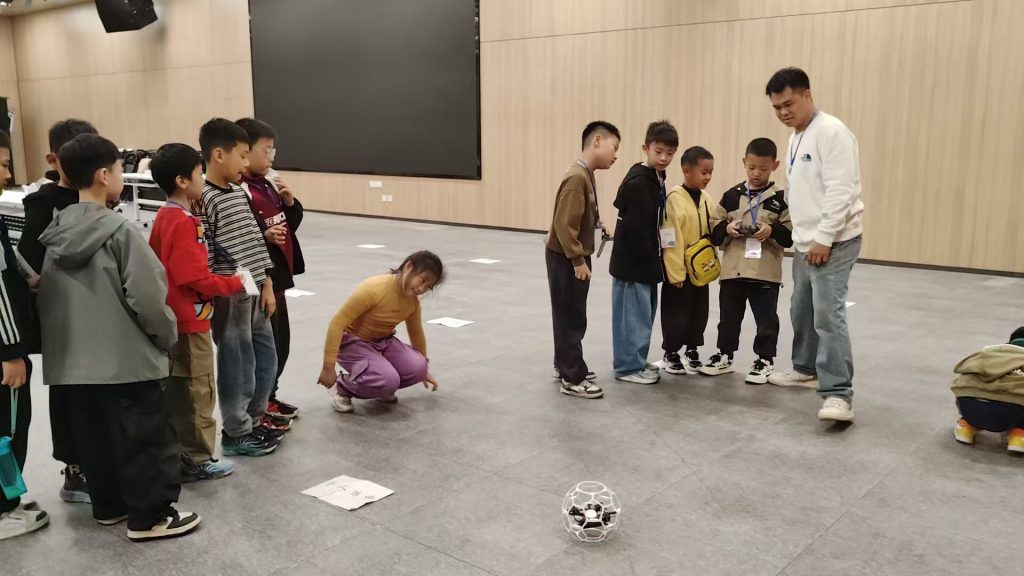
Consciousness is the precursor to action. To enhance the主观能动性 of frontline officers, it is essential to foster a deep understanding of drone-related threats. Regular case studies on “drone security hazards” should be conducted, coupled with legal education on the Interim Regulations and other relevant laws. This will dispel misconceptions that drones are merely ordinary luggage and boost责任感 for risk inspection. Moreover, a professional drone training system must be established. This includes intensive training on安检 X-ray image recognition to accurately distinguish between consumer, agricultural, and specialized drones. A chain-style risk assessment mechanism should be developed, linking “person profiling—carried drone type—destination—purpose matching” to identify anomalies. For instance, a model for railway corridor drone risk inspection can be represented as a function: $$ R_i = f(P_i, D_i, G_i, M_i) $$ where \( R_i \) is the risk score for individual \( i \), \( P_i \) is the person’s profile (e.g., prior records), \( D_i \) is the drone type, \( G_i \) is the destination, and \( M_i \) is the stated purpose. Discrepancies, such as a tourist carrying an industrial-grade drone to a restricted area, would trigger further scrutiny. By integrating drone training into unified training programs, we can cultivate a talent pool skilled in both operating and inspecting drones, thereby improving front-line efficacy.
2. Data Construction and Technical Measures: Strengthening the Inspection Foundation
Data and technology are cornerstones of effective risk control. On one hand, local and railway authorities must bridge information gaps by establishing shared databases, such as a “drone黑飞 database” and a “drone offense history database.” These repositories should include data on individuals with prior offenses (e.g., illegal filming or airspace violations), high-risk drone models (e.g., those with large payloads or改装 capabilities), and sensitive destinations (e.g., no-fly zones like Beijing or key military regions). Access to such information enables precise targeting during inspections. On the other hand, technical countermeasures should be enhanced. This involves deploying智能 surveillance systems with facial recognition capabilities to assist in risk analysis. Additionally,配置 of drone samples and反制装备 can aid in hands-on drone training for officers. The integration of these tools can be quantified through an efficiency metric: $$ E = \frac{N_d}{T_c} \cdot A_d $$ where \( E \) is inspection efficiency, \( N_d \) is the number of drones detected, \( T_c \) is the time spent on checks, and \( A_d \) is the accuracy of detection. By optimizing \( E \) through better data and technology, we can significantly improve inspection outcomes.
3. Legal and Institutional Environment: Ensuring Inspection Compliance
A robust legal and institutional environment is vital for sustainable inspection practices. Legally, while the Interim Regulations provide a foundation, specific provisions for railway corridor inspections are needed. For example,引用 the “Resident Identity Card Law” and “Railway Safety Management Regulations,” which grant police the authority to inspect IDs at stations, could be extended to include drone checks. This would clarify执法 permissions and reduce ambiguity. Institutionally,制定 the “Railway Corridor Drone Risk Inspection Work System” is crucial to define inspection priorities, requirements, and层级 responsibilities. Operational guidelines, such as the “Drone X-ray Image Identification Guide” recently issued by public security departments, should be adopted to standardize procedures. These measures can be framed as a compliance model: $$ C = L_s \cdot I_g $$ where \( C \) represents compliance level, \( L_s \) is the strength of legal support, and \( I_g \) is the clarity of institutional guidance. By maximizing \( C \), authorities can ensure that inspections are both lawful and effective, thereby夯实 the保障 for risk control.
4. Risk Chain and Supervision Mechanisms: Enhancing Inspection Quality
Management维度 requires a focus on holistic risk chain control and rigorous supervision. For risk chains, a closed-loop mechanism should be established, encompassing “information analysis—on-site inspection—station-handover—local notification—tracking feedback.” This ensures that risks identified in railway channels are communicated to relevant authorities for后续处置. A risk分流机制 can be implemented, categorizing risks into low, medium, and high levels with corresponding处置流程. For instance, high-risk cases might involve immediate detention and investigation, while low-risk ones may only require documentation. This can be expressed as: $$ R_c = \sum_{i=1}^{n} w_i \cdot S_i $$ where \( R_c \) is the comprehensive risk score for a case, \( w_i \) are weights for different factors (e.g., drone type, operator intent), and \( S_i \) are scores assigned to each factor. Based on \( R_c \), appropriate actions can be taken. For supervision,制定 “task standard件” for drone risk inspection can standardize officer behavior. These standards should mandate steps like “ticket verification—machine检查—purpose inquiry—license check—destination confirmation—legal宣传” for every drone encounter. Regular audits and reviews can further ensure adherence, creating a culture of accountability. Incorporating drone training into supervision protocols, such as through模拟 exercises and performance evaluations, can continuously refine skills and processes.
In conclusion, drone risk inspection and control in railway corridors are indispensable for maintaining national and social stability. While current practices face challenges related to institutions, mechanisms, and capabilities, a systematic approach grounded in safety production theory offers viable solutions. By enhancing human factors through targeted drone training, leveraging material factors with data and technology, fortifying environmental factors with legal and institutional reforms, and optimizing management factors with closed-loop risk chains and supervision, we can significantly提升 the efficacy of inspection efforts. From my perspective, the integration of these elements will not only address immediate security concerns but also contribute to the broader goal of high-quality development under the rule of law. Future endeavors should focus on practical implementation, policy refinement, and continuous capacity building, ensuring that railway channels remain effective “safety filters” in an era of rapidly evolving drone technologies.