
From the Olympic rings in Pyeongchang to the light shows over Xi’an, drone swarm performances have begun to capture the world’s imagination. The 526-strong drone fleet at the 2019 Guiyang Big Data Expo presented a breathtaking visual spectacle. The official announcement of 5G commercialization on June 6th by China’s Ministry of Industry and Information Technology has allowed drones, which rely heavily on communication signals, to begin sensing the fragrance of 5G. Consequently, on the trending charts of high-tech innovations, “drones” are frequently grabbing attention…
An Unmanned Aerial Vehicle (UAV), commonly known as a drone, is an aircraft operated without a human pilot onboard, controlled either remotely via radio or autonomously by onboard computers. It embodies a convergence of sensor technology, communication systems, information processing, intelligent control, and aeronautical propulsion—a true product of the information age with high technological content. From initial spectacle-driven shows to widespread applications in military domains and civilian fields such as agricultural plant protection, power line inspection, geological surveying, environmental monitoring, forest fire prevention, and aerial cinematography, the influence of drones has grown immensely. They bring infinite imagination and anticipation to our lives. So, how did drone technology develop, and what are its uses? Let us first delve into a brief history of its evolution.
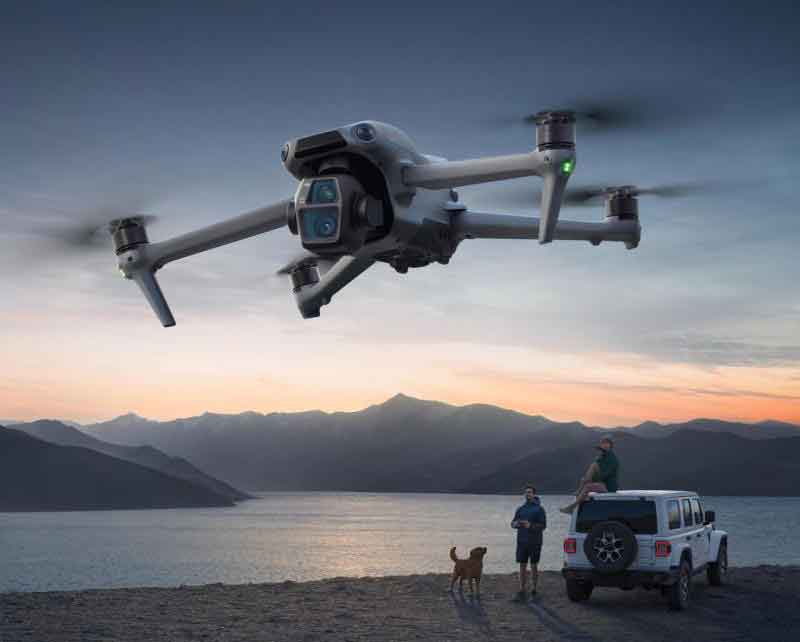
We have observed at various exhibitions and through media reports that drones come in a dazzling array of types and capabilities. From a technical perspective, they can be classified into: unmanned fixed-wing aircraft, unmanned airships, unmanned helicopters, and unmanned multi-rotor aircraft. Based on application domain, drones fall into military and civilian categories. Militarily, they serve as reconnaissance drones and target drones. On the civilian side, “drone + industry application” represents the true essential demand, greatly expanding the utility of the technology itself. Developed nations are actively exploring industry applications and advancing drone technology.
The genesis of drones dates back to the 1920s. During World War I in 1914, efforts were made to develop a small aircraft controlled not by a pilot but by radio. Modern warfare can be considered the primary driver for drone development. The world’s first true drone was born in 1917, but their operational deployment began in earnest during the Vietnam War, primarily for battlefield reconnaissance.
As pioneers in the field, the United States has led the world in drone technology. Beginning development of target drones as early as 1939, from the 1950s-60s onwards, the U.S. successively developed tactical and strategic UAVs like the “Firebee,” “Pioneer,” “Hunter,” “Predator,” and the well-known “Global Hawk,” as well as the armed reconnaissance variant of the Predator. These platforms saw action in Vietnam, the Gulf War, Kosovo, and military operations in Afghanistan.
The development of China drone technology commenced in the 1950s and 60s, gradually forming series such as the “Chang Kong-1” target drone. Notably, the “Chang Kong-1,” a large jet-powered radio-controlled high-subsonic aircraft, not only pioneered China’s drone industry but was also modified into a nuclear test sampling aircraft, successfully completing a cloud-penetrating sampling mission for a nuclear test in 1977.
With advancing times and technology, by 2013, civilian China drone applications had become extensive, playing significant roles in disaster prevention and mitigation, search and rescue, traffic supervision, resource exploration, forest firefighting, and meteorological detection. During major natural disasters like the Wenchuan earthquake and the Zhouqu mudslide, drones proved invaluable. Furthermore, UAVs like the Tengfei HW-200, produced by China Aerospace Science & Industry Corporation (CASIC), provided meteorological support for Shenzhou spacecraft launches and recoveries.
Today, across urban and rural China, drones are driving profound changes, permeating daily work routines. One cannot help but marvel at their outstanding performance in transport capabilities and enhancing production efficiency. In many remote mountainous areas, where poor transportation isolates communities for parts of the year—hindering the delivery of critical supplies and the transport of goods to market—the emergence of drones has solved this dilemma, making the seemingly impossible, possible.
Beyond agricultural and rural development, drones provide multifaceted foundational information and assist in law enforcement for urban planning, construction, and management—areas such as road and bridge construction, traffic patrols, security surveillance, and municipal law enforcement. A typical example is urban planning, which requires detailed land-use information. Manual surveys are immensely labor-intensive, whereas data on residential areas, road networks, and public buildings can be clearly interpreted and extracted from aerial imagery captured by drones.
Wherever and whenever, drones find their utility. The rapidly evolving drone industry is transforming our lives, yet its current state presents a mix of promise and concern.
The Imperative for Unified Standards
The widespread application of drones has made drone manufacturing a new name card for “Made in China.” However, behind the industry’s high-speed growth lurk significant issues: irregular business practices, difficulties in industrial upgrading, inconsistent product quality, and the urgent need to establish comprehensive standard and testing/certification systems.
Among these, drone quality is particularly concerning. Media reports highlight professional photographers driven to frustration by major-brand drones requiring numerous replacements for persistent issues like dark spots in video and photos. Frequent “flyaway” or crash incidents across regions sound alarms for drone safety. Experts point out that as part of aeronautical equipment, drones currently suffer from low technical barriers, a lack of technical standards, and inadequate准入 systems, leading to uncontrolled production quality and heightened safety risks.
“A commercial airliner requires type certificates, production certificates, and airworthiness certificates before it can fly. The situation for drones is currently chaotic,” notes one legal scholar. “There are thousands of enterprises in China developing and producing drones, with myriad models, each following different proprietary standards.” The recommendation is to implement classified management for the drone market, setting准入 thresholds to ensure technical competency, particularly for large drones, suggesting type certification, production licensing, and airworthiness reviews.
Establishing unified standards is becoming an industry consensus. Relevant domestic drone regulatory bodies, the China UAV Industry Innovation Alliance, and the Ministry of Industry and Information Technology (MIIT) have been striving to promote industrial development, technical standards, and regulatory frameworks. In 2018, MIIT issued the “Unmanned Aerial Vehicle Manufacturing Enterprise Specification Conditions (Draft for Comment),” following earlier guidance opinions to promote and standardize the manufacturing sector. Efforts include researching civil UAV industry management standards, formulating 15 aviation industry standards for UAVs, and guiding the preparation for an International UAV System Standardization Association.
Nevertheless, the drone industry remains one with immature regulations and significant quality consistency issues. Further in-depth discussion among industry experts and enterprises is needed to better standardize development and foster a healthy ecosystem.
Promoting the construction of drone-related standards has been a focal point. A U.S. Department of Defense analysis once indicated that the probability of failure for UAV systems was 50 times that of an F-16 fighter and 100 times that of a general aviation aircraft. Therefore, until safety is substantially improved, regulators like the FAA maintain a conservative stance on widespread drone application. “U.S. airworthiness rules for drones are based on those for general aviation, which are relatively strict,” states a professor from Northwestern Polytechnical University. “Only under strict airworthiness oversight can the safety and reliability of drones be guaranteed.”
Experts echo the need to first address ‘airworthiness’ standards—defining what kind of machine manufacturers can produce that is permitted to fly. This is the foundational step, requiring industry standards. Next are the operational flight standards for users, such as pre-flight application procedures and approved airspace. Finally, issues of regulatory oversight, applicable laws, and legal liabilities must be clarified.
Beyond airworthiness, strengthening the implementation of real-name registration systems is advised. Furthermore, while China has some national military standards for drone production, civilian standards remain underdeveloped. Therefore, relevant authorities and industry associations should expedite the improvement of the standard system. This is not only necessary for standardized enterprise production but also an essential requirement for enhancing the competitiveness of China drone products in the international market.
Addressing quality and certification challenges, forums like the “UAV Testing and Certification Summit” held during the “2019 Global UAV Application and Development Conference” in Beijing brought together experts to discuss establishing a China drone quality system, referencing international standards and practical case studies.
A Multifaceted View of Drone Standards
Without rules, nothing can be accomplished. Standards are crucial technical benchmarks in modern socio-economic life, playing a vital role in ensuring product quality and safety and promoting industrial transformation and upgrading.
At international forums, industry leaders emphasize that the future aviation industry requires a high degree of automation and moves towards unmanned systems, where drones will play a significant role. To ensure new services integrate into existing systems, global air traffic management projects, systems, and collaboration with regulators worldwide are needed to establish corresponding standards supporting this new industry’s development.
Regulatory officials in China have stated that UAV systems, with their multiple safety-critical points, significant quality risks, and susceptibility to international technical trade barriers, face the important direction of ensuring product quality safety and achieving high-quality development. At the critical juncture before the industry’s explosive growth, it is hoped that industry peers will actively explore paths for deep integration of quality certification and industrial development, learn from international experience, and leverage the role of foundational infrastructure like standards, measurement, inspection, testing, and quality certification to promote safe and effective development of the drone industry.
With advancements in remote sensing, communications, and artificial intelligence, China has become a leading nation in UAV R&D and production, standing shoulder-to-shoulder with the U.S. in the first tier. Renowned brands represent the strength of the China drone sector. Having seized the historical opportunity for a strong start, the standardization of products and the market now requires corresponding national and industry standards for guidance.
The development of China drone standards has undergone a relatively prolonged process. Key milestones are summarized below:
| Year | Regulatory/Standardization Milestone | Primary Focus |
|---|---|---|
| 2003 | Implementation of “Regulations on General Aviation Flight Control” | Treating civilian UAVs as general aviation aircraft. |
| 2005 Onwards | Civil Aviation Authority Requirements | Mandating transponders and anti-collision functions for UAVs. |
| 2009-2013 | Series of Civil Aviation Administration of China (CAAC) Management Documents | Addressing airworthiness (“Interim Provisions on Civil UAV Management”), airspace management (“Measures for Air Traffic Management of Civil UAVs”), and pilot qualification (“Interim Provisions on the Management of Civil Unmanned Aircraft System Pilots”). |
| 2014 | Delegation to AOPA-China | AOPA-China made responsible for UAV pilot qualification training management. |
| 2017 | Joint Issuance of “Unmanned Aircraft System Standard System Construction Guide (2017-2018 Edition)” | Promoting industry standardization, initiating work on national standards for terminology, classification, multi-rotor testing requirements, and type nomenclature. |
| 2017-2019 | Operational and Market Development Initiatives | Pilot programs for UAV R&D and test flight bases; exploration of operational management models. |
The “Interim Provisions on the Management of Civil Unmanned Aircraft System Pilots” (2013) stated that micro-drones (≤7 kg) operating within visual line-of-sight (VLOS) within a 500m radius and below 120m altitude did not require pilot certification, though flying in excessively high airspace should be avoided. Drones exceeding these parameters or operating in complex airspace required pilot oversight by associations or the CAAC.
Draft “UAV Airspace Management Regulations” involved content on flights in segregated airspace and in integrated airspace, detailing flight plan declaration requirements and conditions, specifying where drones could operate. Crucially, drone flights are not assigned specific routes but are allocated designated areas for operations, a significant step towards legitimizing civil UAV flights and important for market development.
Adapting to the Market and Flying Toward the “Distant” Future
Market research indicates over 300 entities in China engaged in the drone industry, with approximately 160 being relatively large-scale, forming a preliminary R&D, manufacturing, sales, and service ecosystem. Currently, hundreds of drone models are in development or use, with small drone technology maturing, strategic UAVs undergoing test flights, and attack UAVs successfully test-firing air-to-ground missiles.
The reality is that the China drone market, while not yet mature, holds vast potential. Predictions suggested the consumer drone shipment volume in China could reach significant numbers, with consumer grade expectations rising yearly. As national traditional industries transform and supply-side structural reforms advance, under the backdrop of encouraging innovation, the highly valuable drone industry will maintain rapid growth. Industry forecasts projected the overall market size for civil UAV product sales and services in China to reach substantial figures by 2020 and 2025.
National strategic emerging industry and informatization plans from the State Council included clear guidance and supportive policies for the drone industry, actively promoting AI integration, commercializing civil UAVs, and advancing general aviation pilot demonstrations. The management philosophy for general aviation was defined as “combining deregulation with regulation, focusing on deregulation.” Pilot programs for UAV R&D and test flight bases were launched in East China in 2017 to explore management models and guide orderly development.
With soaring market enthusiasm, establishing standards that meet market and innovation needs, stimulating market vitality, and building a new standard system where government and market efforts coordinate and complement each other will promote healthy, standardized development of the drone market. This has placed group standard development firmly on the industry agenda.
In April 2019, the kick-off meeting for the group standard “General Requirements for UAV Comprehensive Test Fields” was held in Beijing. Experts highlighted the development status of test fields, explained the pain points in China drone application and control, and emphasized that establishing nationwide standards was a necessary measure for standardization. The urgency was stressed, as standards in the drone field lagged behind market demand, and group standards were needed to address shortcomings.
Subsequently, based on the principle of addressing urgent market needs first, the International UAV System Standardization Association (Preparatory) released 14 group standards at its first council meeting, covering general standards, fixed-wing, helicopter, and multi-rotor UAV specifications.
Industry leaders have voiced strong support for standardization. Chief Technology Officers from research institutes note that rapid industry growth requires association platforms for guidance and support. With imperfect regulatory standards, inadequate testing/verification systems, and lagging safety supervision手段, industry demand for standards is日益旺盛, necessitating increased group standard supply. CEOs of drone companies affirm that applying “standards +” to the drone industry to lead a规范, orderly market is a proposition of the times and a topic for industrial共赢.
At recent global conferences, alliance representatives acknowledged that drones have truly become an industry within the aviation sector. However, deficiencies in core key technologies persist, and work on technological innovation, industry application promotion, and supervision needs strengthening. External challenges, such as trade-related pressures on leading companies, have caused concern. Yet, in the industrial-grade drone domain, China’s foundation and advantages are forming. Given historical restrictions on technology transfer, the industry’s continued development relies on independent innovation and open cooperation.
While the overall landscape in 2019 may face difficulties due to factors like trade disputes, strengthening internal capabilities is key. This involves rigorous quality and performance testing, technological improvements for industry applications, and enhancing endurance and flight stability. Superior quality and performance are built upon a sound standardized system. Despite numerous problems and challenges, the standardization work for China drone technology has taken solid steps and has begun its “take-off.”
The growth trajectory of the China drone market can be modeled to show its potential. If we consider the market size \( M \) at time \( t \) (in years from a baseline), a simplified exponential growth model can illustrate the trend:
$$ M(t) = M_0 \cdot e^{kt} $$
Where \( M_0 \) is the initial market size and \( k \) is the growth rate constant derived from industry projections. Similarly, the relationship between standardization maturity \( S \) and market stability/reliability \( R \) can be conceptualized. While complex, one can posit that improved standards reduce the systemic failure rate \( \lambda \). If the probability of a critical failure per flight hour without mature standards is \( \lambda_{high} \), the implementation of comprehensive standards aims to reduce it to \( \lambda_{low} \). The reliability over an operational time \( T \) can be expressed using a basic exponential decay model for failure probability:
$$ R(T) = e^{-\lambda T} $$
Thus, the impact of standards is to significantly increase \( R(T) \) by lowering \( \lambda \).
The path forward involves parallel development across multiple domains, which can be summarized by the following framework equation for sustainable industry advancement \( I \):
$$ I(t) = \alpha \cdot Tech(t) + \beta \cdot Std(t) + \gamma \cdot App(t) + \delta \cdot Reg(t) $$
Here, \( Tech(t) \) represents core technological innovation, \( Std(t) \) the maturity of the standard system, \( App(t) \) the breadth and depth of industry applications, and \( Reg(t) \) the effectiveness of regulatory oversight. The coefficients \( \alpha, \beta, \gamma, \delta \) represent the relative weighting or contribution of each factor to overall industry health. For the China drone industry to achieve its “soaring ascent,” a balanced optimization where \( \beta \) (the standard factor) is strengthened in tandem with the others is essential.
The applications of drones are vast and can be categorized for clarity:
| Sector | Primary Applications | Key Contributions of China Drone Technology |
|---|---|---|
| Agriculture | Precision spraying, crop monitoring, surveying. | Increasing efficiency, reducing labor and chemical usage. |
| Infrastructure & Energy | Power line/pipeline inspection, solar/wind farm monitoring, construction site surveying. | Enhancing safety, reducing inspection costs and time, providing detailed data. |
| Public Safety & Disaster Response | Search and rescue, fire monitoring and management, accident scene assessment, hazardous environment inspection. | Providing rapid aerial perspectives, accessing dangerous areas, delivering supplies. |
| Logistics & Transportation | Medical supply delivery, e-commerce parcel delivery, intra-facility material transport. | Solving last-mile challenges in remote areas, improving speed for critical items. |
| Media & Entertainment | Aerial cinematography, live event coverage, light shows. | Enabling creative perspectives, creating large-scale dynamic displays. |
| Environmental Monitoring | Air/water quality sampling, wildlife tracking, deforestation monitoring, coastal surveillance. | Providing scalable, repeatable data collection for conservation and research. |
We eagerly anticipate the magnificent spectacle of clear skies and the phoenix dancing in the heavens—a metaphor for the mature, safe, and innovative future of the global and China drone industry, guided by the wings of standardization.