
As wireless communication systems evolve toward the sixth generation (6G), the demand for ubiquitous connectivity, high spectral efficiency, and energy-efficient transmission has become increasingly prominent. In this context, the unmanned aerial vehicle (UAV) has emerged as a transformative platform that can significantly enhance the flexibility and coverage of wireless networks. Throughout my research, I have focused on addressing the critical challenges that arise when integrating rate splitting multiple access (RSMA) with robust beamforming techniques in unmanned aerial vehicle communication systems, particularly under the influence of jitter-induced angle errors. The work presented in this thesis represents a systematic investigation into two fundamental design objectives: minimizing transmit power consumption and maximizing secrecy capacity, both under realistic operational constraints imposed by UAV jitter.
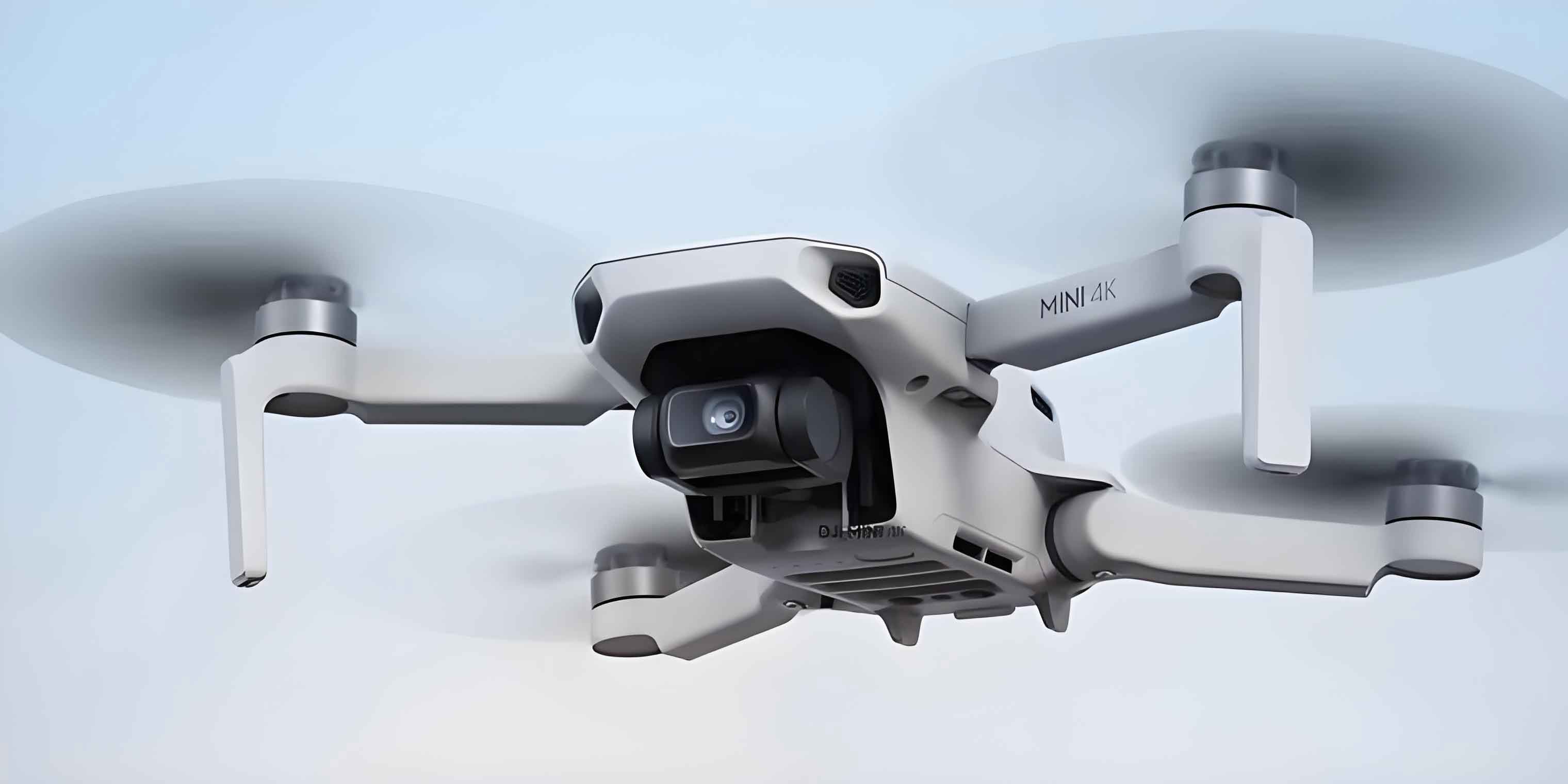
Introduction and Research Motivation
The rapid advancement of wireless communication technologies has fundamentally transformed the way information is exchanged across the globe. From the early days of frequency division multiple access to the sophisticated non-orthogonal schemes of the fifth generation (5G), multiple access techniques have continuously evolved to meet the ever-growing demands for higher data rates, lower latency, and massive connectivity. The unmanned aerial vehicle, with its unique capabilities including rapid deployment, high mobility, and superior line-of-sight (LoS) propagation, has become an indispensable component in the architecture of future wireless networks. In my research, I have explored the potential of deploying unmanned aerial vehicles as aerial base stations to serve ground users, particularly in scenarios where terrestrial infrastructure is damaged or insufficient.
However, despite the numerous advantages offered by unmanned aerial vehicle communications, several significant challenges must be addressed. First, the inherent broadcast nature of wireless channels makes UAV-assisted communications vulnerable to eavesdropping attacks, especially given the favorable LoS propagation conditions that can inadvertently benefit malicious listeners. Second, the practical deployment of unmanned aerial vehicles involves unavoidable jitter caused by atmospheric turbulence, mechanical vibrations, and wind forces, which introduces considerable angle errors in the antenna arrays. These angle errors degrade the accuracy of channel state information (CSI) and can severely compromise the beamforming gain that is essential for reliable communication. Third, the energy constraints of unmanned aerial vehicles necessitate the development of power-efficient transmission strategies that can maintain acceptable quality of service (QoS) while extending operational endurance.
To address these challenges, I have investigated the integration of rate splitting multiple access into UAV communication systems. RSMA represents a powerful paradigm that bridges the gap between conventional space division multiple access (SDMA) and non-orthogonal multiple access (NOMA) by allowing partial decoding of interference. The fundamental principle of RSMA involves splitting user messages into common and private parts, where the common parts are encoded into a shared common stream that can be decoded by all users, while private parts are encoded into individual streams for specific users. This flexible interference management strategy offers significant advantages in terms of spectral efficiency, energy efficiency, and user fairness compared to traditional multiple access schemes.
Key advantages of RSMA in the context of unmanned aerial vehicle communications:
| Advantage | Description |
|---|---|
| Unified framework | Bridges SDMA, NOMA, OMA, and multicasting in a single design |
| Interference management | Partially decodes interference instead of treating all as noise or fully decoding |
| Robustness to CSI errors | Higher resilience to imperfect channel state information |
| Spectral efficiency | Outperforms both SDMA and NOMA across various network loads |
| Energy efficiency | Reduces transmit power requirements for the same QoS targets |
System Model for UAV-RSMA Downlink Transmission
In my research, I considered a multi-user downlink communication scenario where an unmanned aerial vehicle equipped with an antenna array serves multiple single-antenna ground users. The UAV is deployed at a constant altitude that ensures LoS propagation conditions to all ground users. The three-dimensional Cartesian coordinate system is established with ground users located on the horizontal plane and the UAV positioned at coordinates \([x_u, y_u, h_u]^T\).
For the first design, I employed a uniform linear array (ULA) configuration at the UAV, where the channel vector between the UAV and user \(m\) can be expressed as:
\[
\mathbf{h}_m = \eta^{1/2} d_m^{-1} \mathbf{a}_m
\]
where \(\eta = (\frac{c}{4\pi f_c})^2\) represents the path loss coefficient, \(d_m\) is the distance between the UAV and user \(m\), and \(\mathbf{a}_m\) is the ULA steering vector given by:
\[
\mathbf{a}_m = [1, e^{j\pi \cos(\theta_m)}, \ldots, e^{j(N-1)\pi \cos(\theta_m)}]^T
\]
In this expression, \(\theta_m\) represents the signal direction angle, which in the presence of jitter is composed of the estimated angle \(\bar{\theta}_m\) and the angle error \(\Delta\theta_m\). The UAV transmits both common and private signals according to the RSMA protocol. The transmitted signal can be expressed as:
\[
\mathbf{x} = \mathbf{w}_c s_c + \sum_{m=1}^{M} \mathbf{w}_m s_{p,m}
\]
where \(\mathbf{w}_c \in \mathbb{C}^{N \times 1}\) and \(\mathbf{w}_m \in \mathbb{C}^{N \times 1}\) are the beamforming vectors for the common and private signals, respectively. The received signal at user \(m\) is:
\[
y_m = \mathbf{h}_m^H \mathbf{w}_c s_c + \mathbf{h}_m^H \mathbf{w}_m s_{p,m} + \sum_{i \neq m} \mathbf{h}_m^H \mathbf{w}_i s_{p,i} + n_m
\]
where \(n_m \sim \mathcal{CN}(0, \sigma_m^2)\) is the additive white Gaussian noise.
For the second design, I extended the system model to incorporate a uniform planar array (UPA) and an eavesdropper. The UPA steering vector depends on both the elevation angle \(\theta_i\) and azimuth angle \(\phi_i\):
\[
\mathbf{a}_i = [1, \ldots, e^{j\pi(n_x-1)\cos(\theta_i)\sin(\phi_i)} e^{j\pi(n_y-1)\cos(\theta_i)\cos(\phi_i)}, \ldots]^T
\]
where \(i \in \{m, e\}\) denotes either legitimate users or the eavesdropper. The angle errors in this case include both elevation and azimuth components, forming a two-dimensional error vector \(\boldsymbol{\Delta}_i = [\Delta\theta_i, \Delta\phi_i]^T\).
Robust Beamforming Design for Power Minimization
The first optimization problem I addressed is the transmit power minimization problem subject to both common and private rate constraints. Considering the angle errors caused by UAV jitter, I formulated the robust beamforming optimization problem for the elliptic angle error model (EAEM) as:
\[
\begin{align}
\min_{\mathbf{w}_c, \mathbf{w}_m} \quad & \|\mathbf{w}_c\|^2 + \sum_{m=1}^{M} \|\mathbf{w}_m\|^2 \\
\text{s.t.} \quad & R_{c,m} \geq R_{c,m}^{th}, \quad \forall m, \Delta\theta_m, \\
& R_{p,m} \geq R_{p,m}^{th}, \quad \forall m, \Delta\theta_m
\end{align}
\]
where \(R_{c,m}^{th}\) and \(R_{p,m}^{th}\) are the target rates for the common and private signals, respectively. The angle error is bounded by the elliptic constraint:
\[
\Delta\theta_m^2 \leq \varepsilon_m^2
\]
This problem is non-convex and challenging to solve directly due to the infinite number of constraints introduced by the continuous angle error. To address this difficulty, I proposed a second-order Taylor series expansion (STSE) method to approximate the beamforming gain as a function of the angle error.
Theorem 1 (STSE): For a positive definite matrix \(\mathbf{W}\) and the steering vector \(\mathbf{a}(\theta)\), the beamforming gain can be approximated as:
\[
\mathbf{a}^H \mathbf{W} \mathbf{a} \approx \Delta\theta^T \mathbf{P} \Delta\theta + \Delta\theta^T \mathbf{q} + r
\]
where \(\mathbf{P}\), \(\mathbf{q}\), and \(r\) are derived from the Taylor expansion coefficients. This approximation transforms the original intricate constraints into a more tractable quadratic form.
After applying the STSE approximation, I used the S-Procedure to convert the infinite constraints into linear matrix inequality (LMI) forms. The S-Procedure provides a necessary and sufficient condition for the implication relationship between two quadratic constraints, allowing the reformulation of the robust constraints as:
\[
\begin{bmatrix}
\delta_{c,m} \mathbf{I} + \mathbf{P}_{c,m} & \mathbf{q}_{c,m} \\
\mathbf{q}_{c,m}^T & r_{c,m} – \delta_{c,m}\varepsilon_m^2 – \frac{\gamma_{c,m}^{th}\sigma_m^2}{d_m^2 \eta^{-1}}
\end{bmatrix} \succeq \mathbf{0}
\]
where \(\delta_{c,m} \geq 0\) is an auxiliary variable introduced by the S-Procedure.
For the probabilistic angle error model (PAEM), where the angle error follows a Gaussian distribution \(\Delta\theta_m \sim \mathcal{N}(0, \zeta_m^2)\), I formulated the outage probability constraint:
\[
\Pr\{R_{p,m} \geq R_{p,m}^{th}, \forall m\} \geq 1 – \rho
\]
Through the decoupling of this joint probability constraint, I obtained:
\[
\Pr\{R_{p,m} \geq R_{p,m}^{th}\} \geq 1 – \rho_m, \quad \forall m
\]
where \(\rho_m = 1 – (1-\rho)^{1/M}\). To handle this probabilistic constraint, I employed the Bernstein-type Inequality, which provides a safe approximation for quadratic constraints with Gaussian random variables.
Theorem 2 (Bernstein-type Inequality I): For \(\mathbf{x} \sim \mathcal{CN}(0, \mathbf{I})\), the chance constraint \(\Pr\{\mathbf{x}^H \mathbf{A} \mathbf{x} + 2\text{Re}\{\mathbf{x}^H \mathbf{b}\} + c \geq 0\} \geq 1 – \rho\) is conservatively approximated by the following set of constraints:
\[
\begin{align}
\text{Tr}(\mathbf{A}) – \sqrt{-2\ln(\rho)} \|\text{vec}(\mathbf{A})\| + \ln(\rho) \upsilon_1^+ + \sqrt{-2\ln(\rho)} \|\mathbf{b}\| + \upsilon_1 c \geq 0 \\
\upsilon_1 \mathbf{I} + \mathbf{A} \succeq \mathbf{0}, \quad \upsilon_1 \geq 0
\end{align}
\]
To handle the rank-one constraints, I introduced a penalty-based approach. The effectiveness of this method relies on the observation that:
\[
\text{rank}(\mathbf{W}) = 1 \Leftrightarrow \lambda_{max}(\mathbf{W}) = \text{Tr}(\mathbf{W})
\]
The penalty function is defined as:
\[
\Phi(\mathbf{W}_c, \mathbf{W}_m) = \sum_{i \in \{c, m\}} \left( \text{Tr}(\mathbf{W}_i) – \lambda_{max}(\mathbf{W}_i) – \mathbf{u}_i^H(\lambda_{max}(\mathbf{W}_i)\mathbf{I} – \mathbf{W}_i)\mathbf{u}_i \right) + \mu \sum_{i \in \{c, m\}} \left( \text{Tr}(\mathbf{W}_i) – \lambda_{max}(\mathbf{W}_i) \right)^2
\]
where \(\mu\) is the penalty parameter. After applying the first-order Taylor expansion to the non-convex maximum eigenvalue function and incorporating the penalty term, the optimization problem becomes a convex semidefinite program that can be efficiently solved.
Overall transmit power comparison across different schemes:
| Rate Threshold (bps/Hz) | RSMA (dBm) | SDMA (dBm) | NOMA (dBm) |
|---|---|---|---|
| 0.5 | 22.3 | 24.8 | 23.1 |
| 1.0 | 26.7 | 30.2 | 28.4 |
| 1.5 | 31.2 | 36.5 | 34.9 |
| 2.0 | 36.8 | 43.1 | 41.2 |
| 2.5 | 42.5 | 50.3 | 48.6 |
Secure Beamforming Design for Secrecy Capacity Maximization
Building upon the power minimization framework, I extended the research to address security concerns in UAV communications. The presence of an eavesdropper in the downlink transmission scenario introduces significant challenges, as the broadcast nature of the wireless medium allows the eavesdropper to potentially intercept both common and private messages.
In the presence of an eavesdropper, the signal-to-interference-plus-noise ratio (SINR) at the legitimate user \(m\) for decoding the common and private signals are:
\[
\gamma_{c,m} = \frac{|\mathbf{h}_m^H \mathbf{w}_c|^2}{\sum_{i=1}^{M} |\mathbf{h}_m^H \mathbf{w}_i|^2 + \sigma_m^2}
\]
\[
\gamma_{p,m} = \frac{|\mathbf{h}_m^H \mathbf{w}_m|^2}{\sum_{i \neq m} |\mathbf{h}_m^H \mathbf{w}_i|^2 + \sigma_m^2}
\]
Similarly, the SINR at the eavesdropper can be expressed as:
\[
\gamma_{c,e} = \frac{|\mathbf{h}_e^H \mathbf{w}_c|^2}{\sum_{i=1}^{M} |\mathbf{h}_e^H \mathbf{w}_i|^2 + \sigma_e^2}
\]
\[
\gamma_{p,m,e} = \frac{|\mathbf{h}_e^H \mathbf{w}_m|^2}{|\mathbf{h}_e^H \mathbf{w}_c|^2 + \sum_{i \neq m} |\mathbf{h}_e^H \mathbf{w}_i|^2 + \sigma_e^2}
\]
The achievable secrecy rates for the common and private messages are respectively:
\[
R_{c,m}^{sec} = \left[ R_{c,m} – R_{c,e} \right]^+
\]
\[
R_{m}^{sec} = \left[ R_{p,m} – R_{p,m,e} \right]^+
\]
The total secrecy rate for user \(m\) is then given by:
\[
R_{tot,m}^{sec} = \alpha_m R_{c,m}^{sec} + R_m^{sec}
\]
where \(\alpha_m\) represents the portion of the common secrecy rate allocated to user \(m\) and \(\sum_{m=1}^{M} \alpha_m = 1\).
The secrecy capacity maximization problem is formulated as:
\[
\begin{align}
\max_{\mathbf{w}_c, \mathbf{w}_m} \quad & \min_m R_{tot,m}^{sec} \\
\text{s.t.} \quad & R_{c,m}^{sec} \geq R_{c,m}^{th}, \quad \forall m, \boldsymbol{\Delta}_i, \\
& \sum_{m=1}^{M} (\text{Tr}(\mathbf{W}_c) + \text{Tr}(\mathbf{W}_m)) \leq P_{max}
\end{align}
\]
where \(P_{max}\) is the maximum transmit power budget and \(\boldsymbol{\Delta}_i\) represents the angle error vector for user \(i\).
To solve this challenging problem, I proposed a two-stage iterative algorithm. The outer problem adopts a binary search approach to find the maximum feasible secrecy rate, while the inner problem solves a power minimization problem for a given secrecy rate target. For the outer problem, the search bounds are determined as:
\[
C_P^{min} = \min_m \left\{ \log_2\left(1 + \frac{|\mathbf{h}_m^H \mathbf{w}_m|^2}{\sigma_m^2}\right) – \log_2\left(1 + \frac{|\mathbf{h}_e^H \mathbf{w}_m|^2}{\sigma_e^2}\right) \right\}
\]
\[
C_P^{max} = \min_m \left\{ \log_2\left(1 + \frac{P_{max}|\mathbf{h}_m^H \mathbf{w}_m|^2}{\sigma_m^2}\right) – \log_2\left(1 + \frac{P_{max}|\mathbf{h}_e^H \mathbf{w}_m|^2}{\sigma_e^2}\right) \right\}
\]
For the inner problem, I introduced auxiliary variables to transform the non-convex constraints. Specifically, the constraint \(R_{c,m} – R_{c,e} \geq R_{c,m}^{th}\) is converted into a set of equivalent constraints using the following substitutions. The SINR constraints can be transformed into:
\[
\begin{align}
f_{c,m} &\geq \sum_{i=1}^{M} |\mathbf{h}_m^H \mathbf{w}_i|^2 + \sigma_m^2 + |\mathbf{h}_m^H \mathbf{w}_c|^2 \\
g_{c,m} &\leq \sum_{i=1}^{M} |\mathbf{h}_e^H \mathbf{w}_i|^2 + \sigma_e^2 + |\mathbf{h}_e^H \mathbf{w}_c|^2
\end{align}
\]
where \(f_{c,m}\) and \(g_{c,m}\) are auxiliary variables. Through the application of the second-order Taylor approximation for the UPA steering vector and the S-Procedure, these constraints are converted into tractable LMI forms.
Algorithm 1: Secure Robust Beamforming Algorithm
| Step | Procedure |
|---|---|
| 1 | Initialize bounds \(C_P^{min}\), \(C_P^{max}\), and convergence threshold \(\epsilon\) |
| 2 | While \(C_P^{max} – C_P^{min} \geq \epsilon\), execute steps 3-4 |
| 3 | Set \(C_P^{mid} = (C_P^{min} + C_P^{max})/2\) and check feasibility of problem (4.20) |
| 4 | Solve power minimization for fixed \(C_P\) and update bounds based on power constraint |
| 5 | Terminate when convergence is achieved |
Numerical Results and Performance Analysis
In this section, I present the numerical results that validate the effectiveness of the proposed robust beamforming designs. The simulations were conducted with the following parameters:
| Parameter | Symbol | Value |
|---|---|---|
| Number of users | M | 3 |
| ULA antenna elements | N | 8 |
| UPA antenna elements | Nx/Ny | 6/6 |
| UAV flight altitude | hu | 100 m |
| Carrier frequency | fc | 2 GHz |
| Noise power | σ² | -110 dBm |
| Angle error bound | ε | 1-2 degrees |
| Outage probability threshold | ρ | 0.1 |
The simulation results demonstrate that the proposed RSMA-based robust beamforming design outperforms both SDMA and NOMA schemes in terms of transmit power efficiency. At a rate threshold of 1 bps/Hz, the RSMA scheme achieves approximately 3.5 dBm power saving compared to SDMA and 1.7 dBm compared to NOMA. This improvement is attributed to the superior interference management capability of RSMA, which allows partial decoding of common messages and reduces the overall transmit power requirement.
For the probabilistic angle error model, the cumulative distribution function (CDF) analysis revealed that the proposed robust design satisfies the private rate constraints with a probability exceeding 90%, while the non-robust design achieves less than 50%. This demonstrates the substantial robustness gain provided by the proposed design in the presence of jitter-induced angle errors.
For the secrecy capacity maximization design, the average secrecy rate performance is evaluated across different maximum transmit power values. The results show that the robust RSMA scheme achieves the highest secrecy rate among all compared schemes, followed by robust SDMA and robust NOMA. The performance gain is particularly pronounced at higher transmit power levels, where interference management becomes more critical.
Secrecy rate comparison for different schemes:
| P_max (dBm) | Robust RSMA | Robust SDMA | Robust NOMA | Non-robust RSMA |
|---|---|---|---|---|
| 10 | 2.4 | 1.8 | 1.5 | 1.9 |
| 15 | 3.2 | 2.5 | 2.1 | 2.6 |
| 20 | 4.1 | 3.2 | 2.7 | 3.4 |
| 25 | 5.0 | 3.9 | 3.3 | 4.2 |
| 30 | 5.9 | 4.6 | 3.9 | 4.9 |
Conclusion and Future Research Directions
In this thesis, I have comprehensively investigated the robust beamforming design for unmanned aerial vehicle communication systems employing rate splitting multiple access under realistic jitter conditions. The research encompasses two fundamental design objectives: transmit power minimization and secrecy capacity maximization. Through rigorous mathematical formulation and convex optimization techniques, I have developed efficient algorithms that can achieve robust performance in the presence of angle errors caused by UAV jitter.
The main contributions of this research can be summarized as follows. First, I established accurate angle error models for both ULA and UPA configurations, considering both deterministic bounded errors and probabilistic errors. These models provide a realistic representation of the jitter effects experienced by unmanned aerial vehicle communication systems. Second, I developed a novel second-order Taylor series expansion method that effectively approximates beamforming gains as functions of angle errors, significantly reducing the complexity of the robust optimization problem while maintaining acceptable performance. Third, I proposed two robust beamforming algorithms that address the power minimization and secrecy rate maximization objectives, respectively, by employing advanced convex optimization techniques including the S-Procedure, Bernstein-type Inequality, and penalty-based rank-one constraint relaxation.
The simulation results have demonstrated the superiority of the proposed RSMA-based robust designs over conventional SDMA and NOMA schemes. The power minimization design achieves significant energy savings while satisfying QoS constraints, making it particularly suitable for energy-constrained unmanned aerial vehicle platforms. The secrecy capacity maximization design effectively protects confidential information from eavesdropping attacks while ensuring reliable communication with legitimate users.
Looking toward future research directions, there are several promising areas that warrant further investigation. The trajectory optimization of unmanned aerial vehicles in conjunction with robust beamforming design presents an interesting joint optimization problem that could further enhance system performance. The application of reconfigurable intelligent surfaces to assist unmanned aerial vehicle communications could provide additional degrees of freedom for interference management and security enhancement. The extension of the current framework to more complex scenarios involving multiple unmanned aerial vehicles and multi-antenna ground users would also be valuable. Furthermore, the development of machine learning-based approaches for real-time robust beamforming optimization could enable adaptive responses to dynamic channel conditions and jitter patterns. Finally, the investigation of mixed analog-digital beamforming architectures would contribute to reducing hardware complexity and energy consumption while maintaining the benefits of full digital beamforming.