
As a researcher deeply immersed in the field of autonomous systems, I find the challenge of enabling multiple drones to fly in coordinated formations while safely avoiding obstacles to be one of the most compelling and technically demanding areas of development. The objective is clear: to ensure that during cooperative flight, no member of a drone formation collides with environmental obstacles or with each other. This capability is fundamental to enhancing operational safety, reliability, and the overall success of complex missions, whether in military reconnaissance, precision agriculture, or large-scale light shows. Despite significant progress, current obstacle avoidance solutions still grapple with challenges, particularly in dense or highly dynamic environments. This exploration delves into the current state of the art, analyzes prevailing methodologies, and outlines the critical trajectories for future development.
The concept of multi-drone cooperative formation flight has transitioned from a theoretical ideal to an active area of intense research and application. It involves the intricate orchestration of several key aspects: the design and maintenance of specific geometric shapes (the formation), managing the aerodynamic coupling effects between closely spaced units, rigorously controlling safe inter-agent distances, and dynamically adjusting trajectories in real-time. Achieving precise, safe, and efficient path following under these constraints is paramount for executing sophisticated tasks. My research focuses on the control and coordination algorithms that make this possible, recognizing that while foundational work has laid a strong groundwork, the journey toward fully robust and intelligent drone formation systems is ongoing.
The advantages of employing drone formations are substantial. In surveillance, a formation can provide multi-perspective, persistent coverage of an area, synthesizing data to create a comprehensive situational awareness picture that a single drone cannot. It enhances redundancy; the loss of a single unit does not necessarily lead to mission failure. For tasks like aerial mapping or delivery, formations can dramatically increase operational throughput. Perhaps most significantly, in certain contexts, a coordinated drone formation can execute complex maneuvers and distributed tasks, such as simultaneous sensor deployment or collaborative payload transport, that are far beyond the capability of individual platforms.
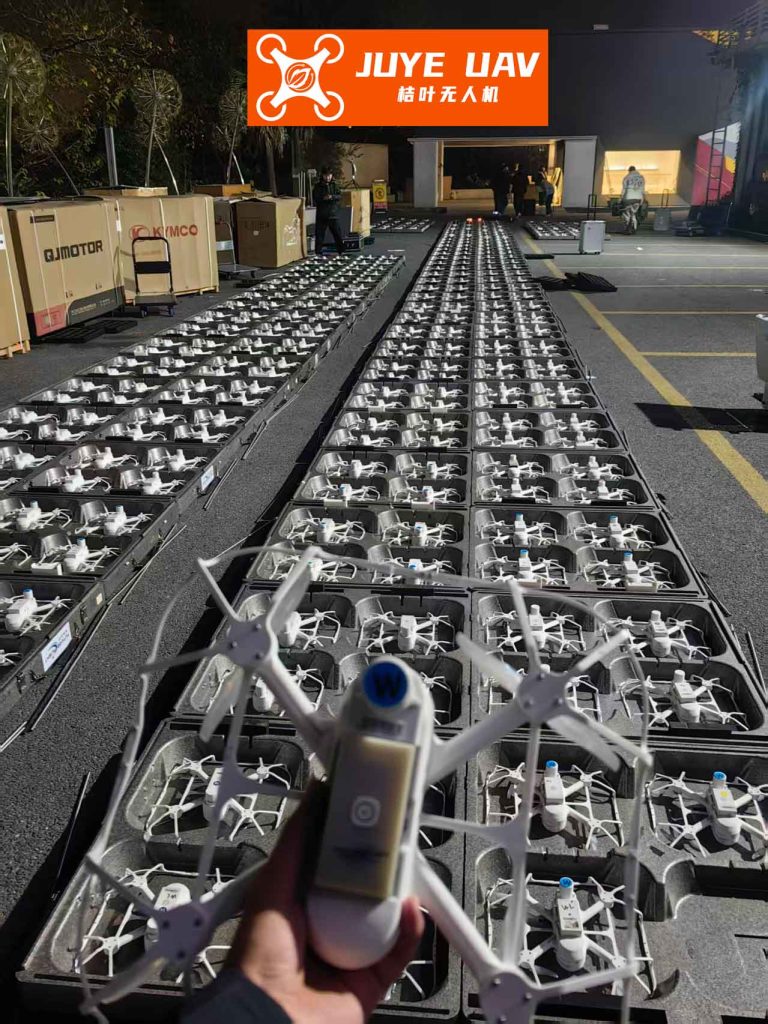
Current State of Obstacle Avoidance and Control Technology
The core research problem can be bifurcated into two related but distinct challenges: collision avoidance with external, static/dynamic obstacles, and inter-drone collision prevention within the formation itself. The solutions often intertwine but require different theoretical and practical considerations.
1. Formation Collision Avoidance with External Obstacles
This aspect concerns navigating the entire drone formation as a cohesive entity through a cluttered environment. The primary goal is to plan or adapt a global or local path that ensures all drones avoid obstacles while attempting to preserve the formation structure as much as possible.
a) Collaborative Path Planning: This is a proactive, pre-mission or real-time planning approach. It generates feasible, collision-free trajectories for all drones simultaneously, considering the kinematics and dynamics of each agent and the spatial constraints of the formation. Optimization algorithms are frequently employed to minimize a cost function, such as total flight time or energy consumption, subject to collision avoidance constraints. A common representation of a drone’s dynamics for 2D planning can be simplified as:
$$ \begin{cases} \dot{x}_i = v_i \cos(\theta_i) \\ \dot{y}_i = v_i \sin(\theta_i) \\ \dot{\theta}_i = u_i \end{cases} $$
where for drone \(i\), \((x_i, y_i)\) is its position, \(\theta_i\) is its heading, \(v_i\) is its speed, and \(u_i\) is its control input (turning rate). The collision avoidance constraint between drone \(i\) and an obstacle \(O\) can be formulated as maintaining a distance greater than a safety radius \(R_s\):
$$ \sqrt{(x_i – x_O)^2 + (y_i – y_O)^2} > R_s \quad \forall t $$
For a drone formation, these constraints must hold for all drone-obstacle pairs and all times, making the optimization problem high-dimensional and complex.
b) Reactive Methods: Artificial Potential Fields (APF) and Variations: APF is a widely studied reactive method where obstacles generate a repulsive potential field, and the target generates an attractive field. The drone, treated as a particle, moves under the influence of the resultant force, \(F_{total} = F_{attr} + F_{rep}\). A standard formulation is:
$$ F_{attr}(q) = -k_{attr} \cdot (q – q_{goal}) $$
$$ F_{rep}(q) = \begin{cases} k_{rep} \left(\frac{1}{d(q,O)} – \frac{1}{d_0}\right) \frac{1}{d(q,O)^2} \nabla d(q,O), & \text{if } d(q,O) \leq d_0 \\ 0, & \text{if } d(q,O) > d_0 \end{cases} $$
where \(q\) is the drone’s position, \(q_{goal}\) is the goal, \(d(q,O)\) is the distance to obstacle \(O\), and \(d_0\) is the influence distance of the obstacle. For a drone formation, this concept is extended by creating a combined potential field that considers both external obstacles and other drones as sources of repulsion. A significant challenge, however, is the problem of local minima where attractive and repulsive forces balance, trapping the drone. For formations, this can be catastrophic. Modified APF methods introduce rotational forces or integrate with global planners to escape these minima.
c) Geometric and Curve-Based Methods: Methods like DUBINS paths or BÉZIER curves are used to generate smooth, feasible paths that respect the drone’s minimum turning radius. When an obstacle is detected, a new set of safe, parametric curves can be computed for the formation. For instance, a path for a drone can be replanned using a composite of DUBINS curves to go around an obstacle. The challenge in a drone formation context is to compute these paths for all drones in a way that maintains relative positions and avoids new inter-drone conflicts created by the deviation.
d) Model Predictive Control (MPC): MPC has become a cornerstone for formation control with obstacle avoidance. It solves a finite-horizon optimal control problem online at each time step. The optimization incorporates a model of the drone dynamics, state and input constraints (which encode obstacle avoidance as, for example, “distance > threshold”), and a cost function penalizing deviation from the desired formation and control effort. Only the first control input of the optimized sequence is applied, and the process repeats at the next time step. This receding horizon approach makes it highly effective for dynamic environments. The standard formulation for drone \(i\) at time \(k\) is:
$$ \min_{u_{i}(k:k+N-1)} \sum_{j=0}^{N-1} \left( \| e_{i}(k+j|k) \|^2_Q + \| u_{i}(k+j|k) \|^2_R \right) $$
$$ \text{subject to:} $$
$$ x_i(k+j+1|k) = f(x_i(k+j|k), u_i(k+j|k)) $$
$$ g(x_i(k+j|k), x_l(k+j|k)) > 0, \quad \forall l \neq i, \forall O $$
$$ u_{min} \leq u_i(k+j|k) \leq u_{max} $$
Here, \(e_i\) is the formation tracking error, \(N\) is the prediction horizon, and \(g(\cdot)>0\) represents the collision avoidance constraints.
Comparative Table of External Obstacle Avoidance Strategies for Drone Formations:
| Method | Core Principle | Advantages | Disadvantages/Challenges for Formations |
|---|---|---|---|
| Collaborative Path Planning | Centralized or decentralized optimization of all trajectories. | Globally optimal/near-optimal, considers full mission. | Computationally expensive for large formations/real-time; sensitive to model inaccuracies. |
| Artificial Potential Fields (APF) | Reactive navigation via virtual attractive/repulsive forces. | Simple, computationally light, real-time reaction. | Prone to local minima; tuning parameters for formations is difficult; oscillatory behavior. |
| Geometric (DUBINS/BÉZIER) | Generating smooth, kinematically feasible paths. | Guarantees smoothness, respects vehicle constraints. | Primarily for static obstacles; complex to coordinate path switches for entire formation. |
| Model Predictive Control (MPC) | Online constrained optimization over a receding horizon. | Handles constraints explicitly, good for dynamic environments, unified control & planning. | High online computation load; requires accurate model; stability guarantees can be complex. |
2. Inter-Drone Collision Avoidance within the Formation
This is the problem of maintaining safe separation between the individual drones that constitute the drone formation. It is critical during formation maneuvers, in response to disturbances, or when avoiding obstacles.
a) Virtual Structure and Leader-Follower: In the Virtual Structure approach, the entire formation is treated as a single, rigid body. Each drone’s desired position is defined relative to a virtual point moving along a trajectory. Obstacle avoidance is handled by deforming or maneuvering this virtual structure. In Leader-Follower schemes, one or more leaders track a trajectory, and followers maintain predefined geometric relationships (e.g., distance and bearing) with leaders or other followers using dedicated controllers. Inter-drone avoidance is often integrated as a repulsive term in these controllers, similar to APF but specifically for agent-agent interactions. The control law for a follower \(i\) tracking a leader \(l\) might be:
$$ u_i = k_p (p_l – p_i – d_{desired}) – k_{rep} \sum_{j \neq i} \nabla U_{rep}( \| p_i – p_j \| ) $$
where \(p\) denotes position, \(d_{desired}\) is the desired offset, and \(U_{rep}\) is a repulsive potential function between drones.
b) Consensus-Based and Distributed Control: These methods emphasize local communication and decision-making. Each drone only communicates with its neighbors within a communication graph. Through consensus algorithms, they agree on a common state (like velocity or heading) while simultaneously employing local collision avoidance rules. A fundamental algorithm is the Reynolds’ flocking rules (separation, alignment, cohesion), which can be formalized into control laws. For separation (collision avoidance), the control input for drone \(i\) is often a function of the relative positions to its neighbors \(N_i\):
$$ u_{i}^{sep} = – \sum_{j \in N_i} \nabla \psi( \| p_j – p_i \| ) $$
where \(\psi\) is a pairwise repulsive potential that grows large as the distance approaches zero.
c) Velocity Obstacle (VO) and Optimal Reciprocal Collision Avoidance (ORCA): These are powerful geometric frameworks for decentralized collision avoidance. Each drone considers the velocities of nearby drones and computes a “collision cone” of its own velocities that would lead to a collision within a time window. It then chooses a new velocity outside this cone that is as close as possible to its preferred velocity. The ORCA framework provides a mathematically robust method to share the responsibility of avoidance between two agents, ensuring collision-free motion is guaranteed under certain assumptions. For a drone formation, VO/ORCA can be used as a low-level safety layer that overrides the formation-keeping controller when a collision is imminent.
d) Barrier Functions (Control Barrier Functions – CBFs): This is a modern, safety-critical control method that has gained traction. A CBF is a function \(h(x)\) whose value indicates safety (e.g., \(h(x) = \| p_i – p_j \|^2 – R_{safe}^2 > 0\) for safety). The controller is designed to enforce the condition \( \dot{h}(x) \geq -\alpha(h(x)) \), which formally guarantees the set where \(h(x) \geq 0\) (the safe set) is forward invariant. For a drone formation, CBFs can be used to synthesize controllers that provably avoid inter-drone collisions while minimizing deviation from desired objectives, often paired with Quadratic Programming (QP) solvers.
Summary of Inter-Drone Collision Avoidance Techniques:
| Technique | Philosophy | Communication Needs | Formation Flexibility | Formal Guarantees |
|---|---|---|---|---|
| Virtual Structure / Leader-Follower | Centralized reference or hierarchy. | Leader to followers, or global. | Low; rigid structure. | Good for tracking, weak for dynamic avoidance guarantees. |
| Consensus-Based Flocking | Emergent behavior from local rules. | Local with neighbors. | High; adaptable, swarm-like. | Difficult to provide hard safety guarantees. |
| Velocity Obstacle (VO) / ORCA | Geometric, reactive velocity selection. | Local velocity information. | Moderate; can break formation temporarily for safety. | Strong probabilistic/ deterministic guarantees under model. |
| Control Barrier Functions (CBF) | Formal safety filter through constraints. | Depends on implementation (often local). | Moderate; safety as a hard constraint. | Strong, provable collision avoidance guarantees. |
Trends and Future Development Directions
Despite the rich tapestry of existing methods, several frontiers demand focused research to unlock the full potential of robust drone formation operations in complex scenarios.
1. Dense Formation Navigation and Obstacle Avoidance
The most acute challenge lies in enabling dense drone formations to navigate through obstacle fields. The problem is the risk of cascading collisions. A single drone’s avoidance maneuver in a tight formation can instantly create a new, critical inter-drone conflict with its neighbors, potentially triggering a chain reaction. Current methods often treat formation keeping and collision avoidance as separate, sometimes competing, objectives. The future lies in deeply integrated approaches. One promising direction is the formal study of “density” and “permeability” in formations, inspired by biological systems like bird flocks. The concept of “optical flow” or perceptual cues from neighbors could be modeled not just for cohesion but for collective obstacle negotiation. A unified optimization framework, perhaps a distributed MPC where the cost function heavily penalizes both deviation from formation and proximity to obstacles/neighbors, combined with CBF-like hard safety constraints, could provide a solution. The key is to develop strategies where the formation can fluidly deform and reconfigure as a single intelligent entity rather than a collection of individually avoiding agents.
2. Resilience to Communication and Sensing Degradation
A drone formation relies on communication for coordination and sensing for situational awareness. In real-world environments near structures, in poor weather, or under adversarial conditions, these links can degrade or be disrupted. Future systems must be resilient. This involves developing control algorithms that can gracefully degrade performance—transitioning from tight formation flight to a looser, safer swarm or even fully independent operation—when communication is lost. Similarly, sensor fusion algorithms must be robust to intermittent or noisy data from LiDAR, cameras, or radars. Research into collaborative perception, where drones share and fuse their local sensory data to create a richer, more resilient common operational picture, is vital. The control system must have built-in contingency logics and alternative coordination protocols (e.g., using only relative bearing from vision if GPS/communication fails) to handle these degradations without catastrophic failure.
3. Navigation in Extremely Cluttered and Dynamic Environments
While current research often assumes sparse or known obstacles, the future demands navigation in “urban canyons” or dense forests alongside dynamic obstacles like other vehicles or people. This pushes the limits of planning and reaction. The trend is toward hybrid systems that marry the strengths of different methods: a global, learning-informed planner to chart a high-level course through a complex map, a mid-level formation-aware MPC for smooth trajectory generation, and a low-layer, ultra-fast reactive module (like a CBF-QP or a learned policy) for handling sudden, unforeseen obstacles. Machine Learning, particularly Deep Reinforcement Learning (DRL), is showing immense promise here. A DRL agent can be trained in simulation to learn complex, cooperative avoidance policies for entire drone formations that are difficult to encode with traditional rules, potentially discovering highly efficient and adaptive strategies for chaotic environments.
Potential Integrated Architecture for Future Drone Formation Systems:
| System Layer | Function | Candidate Technologies | Output |
|---|---|---|---|
| Mission & Global Planning | High-level task decomposition and coarse, collision-free path generation for formation centroid. | Graph-search algorithms (A*, RRT*), AI-based planners. | A sequence of waypoints or corridors for the formation. |
| Formation Trajectory Optimization | Generates smooth, dynamically feasible trajectories for all drones that respect formation shape and global plan. | Distributed/Consensus MPC, optimization-based control. | Time-parameterized desired states (position, velocity) for each drone. |
| Safety-Critical & Reactive Layer | Acts as a “reflex” system. Continuously monitors for imminent collisions and issues minimal corrective commands. | Control Barrier Functions (CBF) with QP, ORCA, fast neural network policies. | Safe corrective control inputs that override or modify the optimized inputs. |
| Robust Perception & Communication | Provides resilient state estimation and shared situational awareness. | Multi-sensor fusion (VIO, LiDAR), collaborative SLAM, mesh networking. | Robust pose estimates and a shared map/obstacle list. |
In conclusion, the field of obstacle avoidance and control for drone formations stands at a fascinating juncture. The foundational work in decentralized control, optimization, and reactive navigation has paved the way. The path forward, as I see it, involves a concerted push towards greater integration—merging planning with safety guarantees, learning with classical control, and individual autonomy with collective intelligence. The goal is to evolve from drones that fly in simple formations to truly adaptive, resilient, and intelligent aerial collectives capable of tackling the unstructured and unpredictable nature of the real world. The convergence of advanced control theory, machine learning, and robust systems engineering will be the driving force behind this evolution, opening up new frontiers for autonomous cooperative systems.