
In recent years, unmanned aerial vehicles (UAVs), commonly known as drones, have revolutionized both civilian and military sectors. As a key component of modern warfare, military UAVs are extensively used for reconnaissance, surveillance, electronic warfare, and precision strikes, enhancing operational capabilities and reducing risks to human personnel. However, the rapid proliferation of military UAVs has highlighted a critical gap: the lack of a standardized professional qualification certification system for military UAV pilots. Unlike their civilian counterparts, who are regulated under national aviation authorities, many military UAV operators, especially those handling small to micro UAVs, operate without formal certification. This poses challenges in ensuring consistent skill levels, safety, and interoperability across military units. In this article, we explore the development of a professional qualification certification model for military UAV pilots, drawing insights from civilian practices and integrating military-specific requirements. We aim to propose a framework that enhances training,考核, and certification, ultimately boosting the combat readiness of new-quality forces. Throughout this discussion, we will emphasize the importance of military UAV operations and repeatedly reference military UAV systems to underscore their significance.
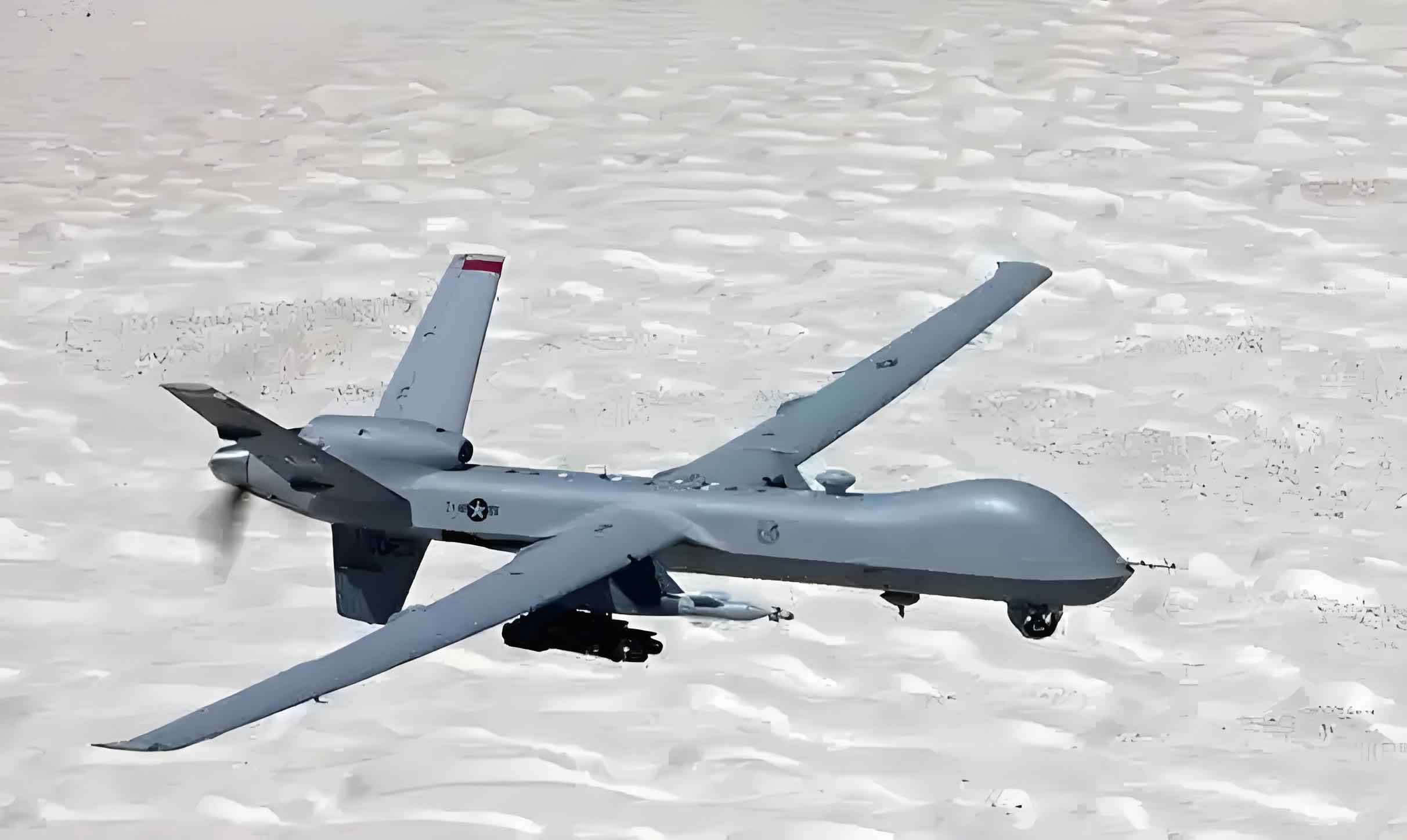
The concept of military UAVs encompasses a wide range of systems, from large strategic drones to small tactical units. Their versatility allows for diverse applications, but this also demands highly skilled pilots capable of managing complex missions. Currently, while some military UAV pilots, particularly those operating medium to large systems, are subject to flight license management similar to manned aircraft, many others lack formal资质 oversight. This inconsistency can lead to variations in proficiency, potentially compromising mission success and safety. To address this, we propose a certification model that aligns with military training standards, such as the Military Training Outline, while incorporating elements from civilian drone pilot certification. By doing so, we can establish a unified system that ensures all military UAV pilots meet rigorous competency standards, fostering a culture of excellence and innovation in UAV operations.
Civilian UAV pilot certification has evolved significantly, offering valuable lessons for military applications. Under the regulation of national aviation authorities like the Civil Aviation Administration of China (CAAC), civilian drone pilots must obtain licenses or certificates for operations beyond certain weight thresholds, typically excluding drones under 4 kg. The certification process involves training by accredited institutions and assessment by authorized bodies, such as the Aircraft Owners and Pilots Association of China (AOPA). This system has standardized pilot competencies, covering areas like aeronautical knowledge, flight planning, and emergency procedures. For instance, as of 2018, over 44,000 civilian drone pilots have been certified in China, demonstrating the scalability of such models. Key aspects include theoretical exams, practical flight tests, and ongoing education, all of which can be adapted for military contexts. By studying civilian frameworks, we can identify best practices for military UAV pilot certification, ensuring robustness and relevance.
To develop a certification model for military UAV pilots, we first define the target audience. We propose focusing on soldiers in UAV operator roles, as well as trainees in military academies. Eligibility criteria should include political reliability, a minimum educational level (e.g., associate degree or higher), and at least three years of experience in UAV-related duties. This ensures that candidates have a foundational understanding of military UAV operations before certification. The certification process should be voluntary, with applications reviewed by unit commanders to maintain operational integrity. By setting clear prerequisites, we can streamline the certification pipeline and enhance the quality of military UAV pilots.
The training system forms the core of our certification model. We advocate for a tripartite approach integrating in-unit training, centralized academy programs, and individual online self-study. This “三位一体” method leverages existing military structures while incorporating flexible learning opportunities. The curriculum should be derived from the Military Training Outline, aligned with civilian certification standards, and tailored to military UAV specifics. We have systematized the content into five key courses, as summarized in Table 1 below. This table outlines the学时 allocation, delivery methods, and备注 for each course, ensuring a comprehensive skill development pathway.
| 序号 | Course Name | Training Method | 学时 Total | Theory 学时 | Practice 学时 | 备注 |
|---|---|---|---|---|---|---|
| 1 | UAV System Overview | In-unit training | 16 | 16 | 0 | Based on outline training |
| 2 | UAV Equipment Structure | In-unit training | 14 | 14 | 0 | Based on outline training; includes拓展训练 |
| 3 | UAV Flight Preparation | In-unit training | 26 | 2 | 24 | Based on outline training |
| 4 | UAV Flight Operations | In-unit training and centralized training | 58 | 6 | 52 | Combines outline training and拓展训练 |
| 5 | Aviation Regulations and Meteorology | In-unit training and centralized training | 16 | 16 | 0 | Includes online self-study components |
| Total | 130 | 54 | 76 | Overall training hours distribution | ||
The training delivery involves multiple stages. In-unit training, conducted by military coaches, covers outline-based content and is assessed internally. For example, courses like UAV System Overview and UAV Equipment Structure are taught through hands-on drills and simulations, emphasizing practical skills for military UAV operations.拓展训练, or extended training, is pursued via online military education platforms, allowing pilots to learn at their own pace. Centralized training, organized by military academies in collaboration with civilian bodies like AOPA, provides intensive instruction on advanced topics. This hybrid model ensures that military UAV pilots gain both foundational knowledge and specialized expertise, adapting to the dynamic nature of modern warfare.
To quantify the training effectiveness, we can introduce a performance metric. Let $T_{\text{total}}$ represent the total training hours, and $C_i$ denote the competency score for course $i$. The overall training outcome $O$ can be modeled as a weighted sum: $$ O = \sum_{i=1}^{5} w_i \cdot C_i $$ where $w_i$ are weights assigned based on course importance, with $\sum w_i = 1$. For instance, if flight operations are deemed critical for military UAV missions, we might set $w_4 = 0.4$. This formula helps in standardizing assessments across different training batches.
考核 is a pivotal component of the certification model. We propose a dual assessment system comprising theoretical and practical exams, administered by a joint panel from military units, academies, and civilian experts. The theoretical exam tests knowledge in areas such as aviation regulations, meteorology, UAV principles, and system构造. A question bank of over 1000 items should be established, with 100 randomly selected for each exam. The passing score is set at 80%, ensuring a high standard. The score $S_{\text{theory}}$ can be calculated as: $$ S_{\text{theory}} = \frac{N_{\text{correct}}}{N_{\text{total}}} \times 100 $$ where $N_{\text{correct}}$ is the number of correct answers and $N_{\text{total}} = 100$. This objective measure reduces bias and enhances reliability for military UAV pilot certification.
The practical exam evaluates hands-on skills essential for military UAV missions, including mission planning, pre-flight checks, takeoff, navigation, task execution, landing, and emergency response. Conducted during actual flight exercises, it is assessed by experts using a standardized rubric. The practical score $S_{\text{practical}}$ is derived from multiple criteria, such as accuracy, safety, and efficiency. We can express this as: $$ S_{\text{practical}} = \sum_{j=1}^{m} \alpha_j \cdot P_j $$ where $P_j$ are performance indicators (e.g., landing precision, obstacle avoidance) and $\alpha_j$ are weights summing to 1. A minimum score of 80% is required to pass, aligning with civilian benchmarks. This rigorous approach ensures that military UAV pilots are proficient in real-world scenarios, crucial for combat effectiveness.
To integrate the dual assessments, we define an overall certification score $S_{\text{cert}}$: $$ S_{\text{cert}} = \beta \cdot S_{\text{theory}} + (1 – \beta) \cdot S_{\text{practical}} $$ where $\beta$ is a weighting factor, typically set at 0.4 to emphasize practical skills for military UAV operations. A pilot must achieve $S_{\text{cert}} \geq 80$ to qualify. This formula balances theoretical knowledge and practical ability, reflecting the holistic demands of military UAV piloting.
The certification mechanism employs a “one exam, dual certificates” model, promoting civil-military integration. Upon passing the assessments, pilots receive a military UAV pilot qualification certificate issued by military authorities, alongside a civilian drone pilot certificate from AOPA. This dual recognition broadens talent development channels and facilitates knowledge exchange between sectors. The certification process should be overseen by a dedicated committee to ensure transparency and adherence to standards. Regular audits and updates to the curriculum, based on feedback from military UAV operations, will keep the system relevant and effective.
Implementing this certification model offers numerous benefits. It standardizes skill levels across military units, reduces accident risks, and enhances interoperability in joint operations. By leveraging civilian expertise, it also fosters innovation and cost-efficiency. However, challenges such as resource constraints and resistance to change must be addressed through phased rollouts and pilot programs. We recommend starting with small UAV units and expanding gradually, incorporating lessons learned into the framework.
In conclusion, our proposed professional qualification certification model for military UAV pilots synthesizes military training requirements with civilian certification practices. Through a structured training system, rigorous assessment, and dual certification, it aims to elevate the competency and readiness of military UAV operators. As military UAV technology continues to evolve, such models will be vital for maintaining operational superiority. We encourage further research into adaptive learning tools and international standards to refine this approach. By prioritizing the development of skilled pilots, we can unlock the full potential of military UAVs in modern defense strategies.
To support ongoing efforts, we suggest exploring advanced simulations and AI-driven training modules for military UAV pilots. These technologies can enhance situational awareness and decision-making skills, key for complex missions. Additionally, cross-training with allied forces could provide valuable insights, fostering global best practices. Ultimately, a robust certification system will not only improve individual performance but also contribute to the broader goals of military modernization and security.