
From a young age, I was captivated by the idea of flight. Growing up in China, I had the fortune of a supportive family that allowed me to indulge in my passion for model aircraft. I spent countless hours with remote-controlled helicopters, fascinated by their potential but frustrated by their limitations. They were difficult to control, often crashing instantly, and I dreamed of creating a system that could make them hover autonomously, like a perfectly obedient spirit in the air. This childhood obsession planted the seed for what would become my life’s work: advancing the frontier of China drone technology.
My academic journey was unconventional. Dissatisfied with the conventional path, I sought to study topics that truly ignited my curiosity. At university, I focused on electronics and engineering, driven by a desire to solve complex problems. For my final year project, I decided to tackle the challenge of automated flight control for remote-controlled helicopters. I convinced a couple of classmates to join me, and we embarked on this ambitious research. The school provided a modest grant, but progress was slow. After months of work, our demonstration failed, and we received a poor grade. Unwilling to accept defeat, I spent the next two months working alone, day and night, in a rented space. Finally, in early 2006, I built the first prototype of an automatic flight control system. To my surprise, when I offered it for sale on online hobbyist forums, orders started coming in. This was the humble beginning of my venture into the world of China drone innovation.
The core technical problem I aimed to solve was automated stabilization and hovering. The principle involves fusing data from various sensors to control the aircraft’s actuators. We can represent the core feedback control logic with a simplified formula. The aircraft’s desired state (e.g., stable hover at a point) is compared with its measured state, and a control signal is generated to minimize the error. Using data from an Inertial Measurement Unit (IMU), GPS, and a compass, the system calculates necessary adjustments. A fundamental aspect of the PID (Proportional-Integral-Derivative) controller used can be expressed as:
$$ u(t) = K_p e(t) + K_i \int_0^t e(\tau) d\tau + K_d \frac{de(t)}{dt} $$
Where \( u(t) \) is the control output (e.g., motor command), \( e(t) \) is the error between desired and measured attitude/position, and \( K_p \), \( K_i \), \( K_d \) are tuning constants. This formula, while foundational, was just the start. The real challenge was implementing this reliably on lightweight, affordable hardware for China drone applications.
In 2006, while continuing postgraduate studies, I formally co-founded a company with my project partners. We started in a small rented apartment in Shenzhen, with just a handful of employees. Recruiting top talent was difficult initially, as convincing skilled engineers to work in such conditions was a challenge. Our focus was on helicopter flight control systems—a niche within a niche. After two years of struggle, my co-founders left, a common breaking point for patience in a startup. Ironically, soon after, our first mature system, XP3.1, was launched, and the company finally saw a glimmer of hope. With renewed technical strength from new recruits, we began to dominate this small global market. By 2010, monthly sales had grown significantly, and we secured an investment from our university’s affiliated fund.
The real inflection point came when we recognized a larger trend: the rise of multi-rotor aircraft. Feedback from an international agent revealed that the market for camera gimbals used on multi-rotors was vastly larger than for helicopter controllers. We swiftly adapted our flight control technology to multi-rotor platforms. At the time, the market was fragmented with DIY kits from companies in Germany and China. We entered this space with a more integrated approach and quickly gained reputation. Within a year, we captured over 50% of the market share for multi-rotor flight controllers. This marked the explosive growth phase for our China drone enterprise.
The company’s revenue growth was staggering, as shown in the table below. This growth was fueled by a relentless pace of product innovation, each designed to make advanced aerial technology more accessible.
| Year | Revenue | Approximate Annual Growth |
|---|---|---|
| 2010 | ~3 | Base Year |
| 2013 | >800 | Over 26000% from 2010 |
| 2014 | >2400 (Est. 3x 2013) | ~200% from 2013 |
Our product strategy had two pillars: professional-grade systems and consumer-friendly, ready-to-fly drones. For professional users, we launched a series of products with names inspired by Chinese cultural heritage, like “WooKong” and “Naza.” These included advanced flight controllers, ground station systems, and high-precision gimbals. For the mass market, we introduced the Phantom series. This was a game-changer. For a long time, aerial photography enthusiasts needed technical skills to assemble and solder components. We implemented a radical integration strategy. The Phantom 2 Vision+, for instance, came with its own camera pre-installed. It was the first truly “out-of-the-box” flying camera. This product democratized aerial imaging, bringing the power of China drone technology to ordinary consumers at a fraction of the historical cost. The price-performance equation was key. We leveraged economies of scale and China’s manufacturing prowess to drive down costs. The cost evolution of our core flight control system illustrates this well:
$$ C_{system}(t) = C_{components}(t) + C_{R\&D}(t) / N(t) $$
Where \( C_{system} \) is the unit cost, \( C_{components} \) is the bill-of-materials cost (which fell dramatically with smartphone component commoditization), \( C_{R\&D} \) is the non-recurring engineering cost, and \( N(t) \) is the cumulative production volume, which grew exponentially. As \( N(t) \) increased, the amortized R&D cost per unit plummeted, allowing us to offer sophisticated technology at consumer prices.
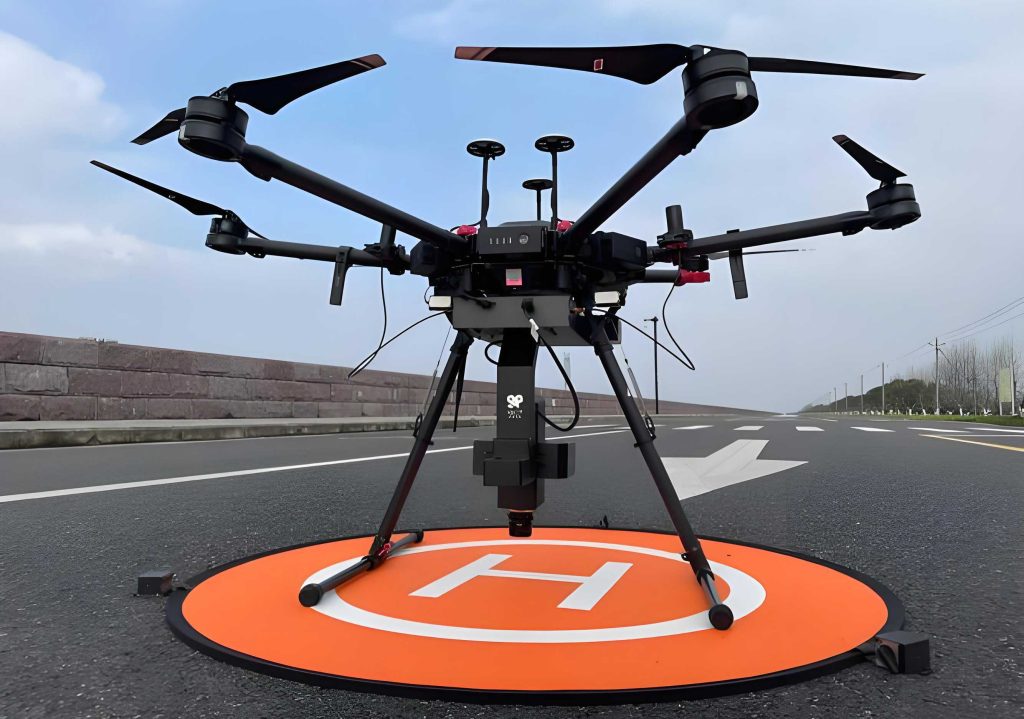
The image above captures the essence of what we create: a compact, powerful China drone, ready to unlock new perspectives. A modern consumer drone like the Phantom is a marvel of integration, synthesizing multiple subsystems into a cohesive whole. The table below breaks down these core systems and their functions.
| System | Key Components | Primary Function |
|---|---|---|
| Flight Control System | IMU, GPS, Compass, Barometer, Flight Controller CPU | Stabilization, Navigation, Automated Flight Modes (e.g., Return-to-Home) |
| Propulsion System | Brushless Motors, Electronic Speed Controllers (ESCs), Propellers | Generating lift and enabling maneuverability |
| Gimbal & Imaging System | 3-Axis Brushless Gimbal, Camera, Image Sensor | Stabilizing the camera for smooth video and photo capture |
| Communication System | Radio Transmitter/Receiver, Digital Image Transmission (e.g., Wi-Fi or Lightbridge) | Pilot control and real-time First Person View (FPV) video feed |
| Power System | Lithium Polymer (LiPo) Battery, Power Management Circuit | Providing energy for all systems, determining flight time |
Our philosophy was to make high-tech products affordable. While a carbon-fiber body might offer marginal performance gains, it would also make the China drone prohibitively expensive. We focused on optimizing plastic composites and system efficiency to achieve flight times of 20-25 minutes, which met most users’ needs. This strategic pricing crushed competitors who relied on exotic materials to justify premium prices. The market responded overwhelmingly. Our China drones found applications far beyond hobbyists: power line inspection, agricultural monitoring, search and rescue, and cinematic filmmaking for major TV shows and movies worldwide.
The global success of our China drone products is a testament to their originality. We didn’t just follow trends; we created a new product category. In many developed countries, there’s a culture that readily embraces well-engineered tools. When we introduced our products to filmmakers in Hollywood, they immediately saw the value and became enthusiastic advocates. User-generated content from around the globe, shot with our drones, showcased breathtaking vistas—from sweeping cityscapes to intimate wildlife encounters—fundamentally changing how people see the world. This global footprint solidified our position as a leader not just in China drone manufacturing, but in the global civilian drone industry, commanding a dominant share of the worldwide market.
Aggressive market expansion has always been our priority. We believe market share is more critical than short-term profit margins. Our competitive strategy is rooted in China’s unparalleled manufacturing ecosystem and dense supply chains. The formula for our market strategy can be summarized as:
$$ MS(t) \propto \frac{V(t)}{P(t)} $$
Where \( MS(t) \) is market share, \( V(t) \) is sales volume, and \( P(t) \) is price. By driving \( V(t) \) up through innovation and aggressive pricing, we achieve a virtuous cycle: higher volume leads to greater economies of scale, which lowers unit cost \( C(t) \), allowing us to maintain competitive pricing \( P(t) \) or reduce it further, thus driving \( V(t) \) even higher and increasing \( MS(t) \). We reinvest the profits from this cycle into R&D to sustain the innovation flywheel. This approach has allowed our China drone company to consistently outpace competitors.
Of course, rapid growth brings challenges, with regulatory uncertainty being the most significant. Airspace management for drones is still evolving globally. Even in countries with advanced aviation frameworks, rules are often unclear. We proactively engage with authorities and build safety features into our products. For instance, our China drones use geofencing via GPS to automatically prevent flight in restricted zones like airports. They also have altitude limits and a fail-safe Return-to-Home function. We believe that responsible innovation and dialogue with regulators are essential for integrating drones safely into daily life.
Our innovation extends beyond flying platforms. Recognizing the value of our core stabilization technology, we developed a handheld 3-axis gimbal system called Ronin. This product, derived from our aerial gimbal technology, allows cinematographers to achieve silky-smooth camera movements without bulky traditional equipment like dollies or cranes. We developed it in just six months and priced it at a fraction of existing professional gear, once again disrupting the market. This also serves as a strategic hedge, ensuring the company’s resilience even if aerial drone regulations become more restrictive.
The journey has demanded immense perseverance. In the early days, building a capable team was difficult. I learned that the most valuable colleagues are often those who grow with the company from the ground up—they are pragmatic, resourceful, and possess the logical analysis skills and open mindset to master new challenges. To reward such dedication, we have implemented generous compensation schemes, including awarding cars to top performers. The message is simple: we value those who bet on the vision early and work hard to realize it. While the work environment is demanding and intolerant of complacency, the rewards—both personal and in terms of impact—are extraordinary.
Looking ahead, the potential for China drone technology is boundless. As the product lines become more complex, development cycles lengthen, requiring larger, more skilled teams. We will continue to leverage China’s manufacturing and supply chain advantages to maintain our offensive strategy. The goal remains to bring transformative technology to as many people as possible. I firmly believe that when young engineers and entrepreneurs focus on creating their dream products with integrity and innovation, China will solidify its position as a competitive, technology-leading nation. The story of the China drone is still being written, and it is a narrative of turning personal passion into a global revolution, proving that from China can come world-leading products that define their categories and inspire the world.