
In this comprehensive study, we explore the design, modeling, and realization of a flight control system for a quadrotor drone. The quadrotor drone, as a highly nonlinear, underactuated, and coupled system, presents significant challenges in control and stability. Our work focuses on developing a robust framework through mathematical modeling, hardware integration, and software implementation, aiming to achieve precise and stable flight performance. The quadrotor drone has garnered widespread attention due to its applications in surveillance, agriculture, logistics, and emergency response, driving the need for advanced control strategies. We begin by establishing a detailed dynamic model, followed by hardware component selection and testing, and finally integrate the system for real-world flight experiments. Throughout this article, we emphasize the importance of the quadrotor drone as a versatile platform, and we will frequently reference the quadrotor drone to underscore key concepts.
The core of our approach lies in the mathematical derivation of the quadrotor drone dynamics. We consider a rigid body with mass \( m \) and inertia matrix \( J \in \mathbb{R}^{3 \times 3} \), subject to external forces and moments. Using the Newton-Euler formalism, we define two coordinate frames: the body-fixed frame \( H \) and the inertial frame \( T \). The position and orientation of the quadrotor drone are described by coordinates \( \xi = (x, y, z)^T \) and Euler angles \( \eta = (\phi, \theta, \psi)^T \), representing roll, pitch, and yaw, respectively. The rotation matrix \( R \) from frame \( H \) to \( T \) is given by:
$$ R = R_\psi R_\theta R_\phi = \begin{pmatrix} c_\theta c_\psi & s_\phi s_\theta c_\psi – c_\phi s_\psi & c_\phi s_\theta c_\psi + s_\phi s_\psi \\ c_\theta s_\psi & s_\phi s_\theta s_\psi + c_\phi c_\psi & c_\phi s_\theta s_\psi – s_\phi c_\psi \\ -s_\theta & s_\phi c_\theta & c_\phi c_\theta \end{pmatrix} $$
where \( s \) and \( c \) denote sine and cosine functions. The equations of motion for the quadrotor drone are derived as:
$$ m\ddot{\xi} = -R F + m g e_3 $$
$$ M(\eta) \ddot{\eta} + C(\eta, \dot{\eta}) \dot{\eta} = \Psi(\eta)^T \tau $$
Here, \( F \) is the total force vector in the body frame, \( \tau \) is the torque vector, \( g \) is gravity acceleration, \( e_3 = (0,0,1)^T \), \( M(\eta) \) is the inertia matrix, and \( C(\eta, \dot{\eta}) \) represents Coriolis and centripetal terms. For the quadrotor drone, we assume a symmetric structure, leading to a diagonal inertia matrix \( J = \text{diag}(J_1, J_2, J_3) \). The matrix \( \Psi(\eta) \) is the inverse of the Euler matrix \( \Phi(\eta) \), facilitating the transformation between angular rates and Euler angle derivatives.
To simplify control design, we decouple the system into translational and rotational subsystems. By applying feedback linearization, we introduce virtual control inputs \( \mu \) and \( \tilde{\tau} \), leading to:
$$ \ddot{x} = -\frac{1}{m} u (\cos\phi \sin\theta \cos\psi + \sin\phi \sin\psi) $$
$$ \ddot{y} = -\frac{1}{m} u (\cos\phi \sin\theta \sin\psi – \sin\phi \cos\psi) $$
$$ \ddot{z} = -\frac{1}{m} u \cos\phi \cos\theta + g $$
$$ \ddot{\phi} = \tilde{\tau}_\phi, \quad \ddot{\theta} = \tilde{\tau}_\theta, \quad \ddot{\psi} = \tilde{\tau}_\psi $$
where \( u \) is the total thrust magnitude. The control objective is to track desired trajectories \( \xi_d(t) \) and \( \eta_d(t) \) with minimal error. We design a PD controller for each subsystem, ensuring asymptotic stability. The control laws are:
$$ \mu = -K_\xi e_\xi + \ddot{\xi}_d $$
$$ \tilde{\tau} = -K_\eta e_\eta + \ddot{\eta}_d $$
with gains \( K_\xi \) and \( K_\eta \) chosen to satisfy Hurwitz conditions. This formulation allows the quadrotor drone to achieve stable flight despite nonlinear couplings. Throughout the analysis, we emphasize the quadrotor drone’s dynamic behavior, which is critical for effective control.
In hardware design, we meticulously selected components to balance performance, weight, and reliability for the quadrotor drone. The following table summarizes the key hardware modules used in our quadrotor drone implementation:
| Component | Specifications | Role in Quadrotor Drone |
|---|---|---|
| Frame | Carbon fiber tubes: 6*4*1000 mm, 5*3.5 mm, 4*2*200 mm | Provides structural integrity and lightweight base |
| Motors | Brushless AC motors, 2212-930 kV | Generates thrust for the quadrotor drone |
| Electronic Speed Controllers (ESCs) | SkyWalker 40A series | Controls motor speed via PWM signals |
| Propellers | 1045 carbon fiber, 10-inch diameter | Produces lift and maneuverability for the quadrotor drone |
| Battery | Li-Po, 4200 mAh, 11.1 V, 3S | Powers the entire quadrotor drone system |
| Flight Controller | QQ flight controller with stabilization | Processes sensor data and executes control algorithms |
| Remote Controller | MC6 classic, 7 channels | Provides manual override for the quadrotor drone |
| Sensors | GPS, ultrasonic (HC-SR04), IMU | Enables positioning and obstacle avoidance for the quadrotor drone |
The frame of the quadrotor drone was constructed in a “X” configuration using carbon fiber tubes, ensuring durability and minimal weight. We tested various motor and propeller combinations to optimize thrust-to-weight ratio, ultimately selecting 930 kV motors paired with 1045 propellers for efficient operation. The ESCs were calibrated to deliver smooth power distribution, while the battery was chosen based on capacity and discharge rate to support extended flight times for the quadrotor drone. The flight controller integrates sensor inputs from GPS, accelerometers, and gyroscopes, running real-time control loops to maintain stability. Additionally, we incorporated an ultrasonic sensor system for low-altitude hovering and obstacle detection, enhancing the autonomy of the quadrotor drone.
During integration, we faced challenges such as electromagnetic interference between ESCs and signal synchronization. To address these, we carefully routed wires and used shielding, followed by extensive testing. The software stack was developed on an embedded platform, implementing the control algorithms derived earlier. We used a PID-based approach for attitude and position control, with tuning parameters adjusted through iterative flight tests. The quadrotor drone’s firmware handles sensor fusion, state estimation, and communication with the remote controller, ensuring responsive and stable behavior.
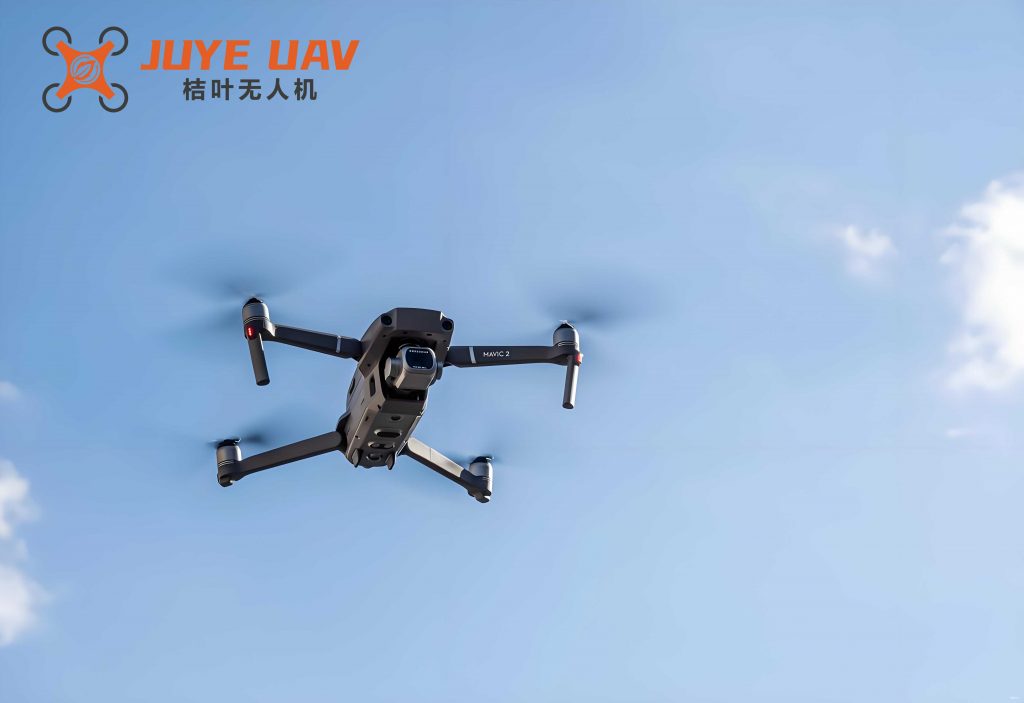
Flight experiments were conducted to validate the quadrotor drone’s performance. We performed multiple tests, including hover stability, trajectory tracking, and disturbance rejection. The quadrotor drone was tasked with following predefined paths, such as square patterns and circular orbits, while maintaining altitude. Data was logged for analysis, focusing on position error, attitude angles, and control effort. The results demonstrated that the quadrotor drone could achieve precise control with errors within acceptable bounds. For instance, in hover tests, the quadrotor drone maintained position within ±0.1 m, and during aggressive maneuvers, it recovered quickly from external gusts. The following table quantifies key performance metrics for the quadrotor drone:
| Test Scenario | Metric | Value | Implication for Quadrotor Drone |
|---|---|---|---|
| Hover Stability | Position RMS error | 0.05 m | High precision in stationary flight |
| Trajectory Tracking | Max deviation from path | 0.15 m | Accurate following of dynamic commands |
| Disturbance Rejection | Settling time after gust | 2.0 s | Robustness to environmental factors |
| Battery Life | Flight duration | 18 minutes | Operational endurance of the quadrotor drone |
The quadrotor drone exhibited strong sensitivity and stability, attributable to the tuned control gains and hardware synergies. We also tested autonomous modes, such as waypoint navigation using GPS, where the quadrotor drone successfully reached multiple points with minimal oversight. These experiments confirm the effectiveness of our integrated approach, highlighting the quadrotor drone as a reliable platform for various applications.
In conclusion, we have successfully researched and implemented a flight control system for a quadrotor drone, combining theoretical modeling with practical engineering. The quadrotor drone dynamics were analyzed through nonlinear equations, leading to a decoupled control strategy. Hardware components were selected and tested to form a cohesive system, while software algorithms enabled real-time control. Flight tests validated the quadrotor drone’s performance, showing it to be agile, stable, and versatile. Future work will focus on enhancing autonomy through machine learning, improving energy efficiency, and expanding payload capabilities. The quadrotor drone remains a pivotal technology in unmanned aerial systems, and our contributions aim to advance its capabilities for broader adoption.
Throughout this study, we have emphasized the importance of the quadrotor drone in modern robotics, and we believe that continued innovation in this field will unlock new possibilities. The quadrotor drone’s simplicity and adaptability make it an ideal testbed for advanced control theories, and we are committed to further exploring its potential. By sharing our findings, we hope to inspire further research and development in quadrotor drone technologies, ultimately leading to smarter and more capable aerial vehicles.