
In recent years, the application of unmanned aerial vehicles (UAVs) has expanded rapidly from military domains into civilian sectors, including power line inspection, weather modification, marine monitoring, border patrol, and live news or event broadcasting. With advancements in technology, UAVs have seen significant improvements in performance, operability, and reliability. However, their safety and reliability levels still lag behind those of manned aircraft. As the use of UAVs proliferates and accident data accumulates, the high accident rate characteristic of UAV systems has become increasingly apparent. Incidents such as disruptions to civil aviation operations, unauthorized cargo transport, crashes causing property damage, and even casualties are reported globally. For instance, statistics from the Federal Aviation Administration (FAA) indicate that encounters between pilots and UAVs in the first three quarters of 2015 were 2.7 times higher than in the same period in 2014, exceeding 600 incidents, highlighting the growing threat UAVs pose to aviation safety.
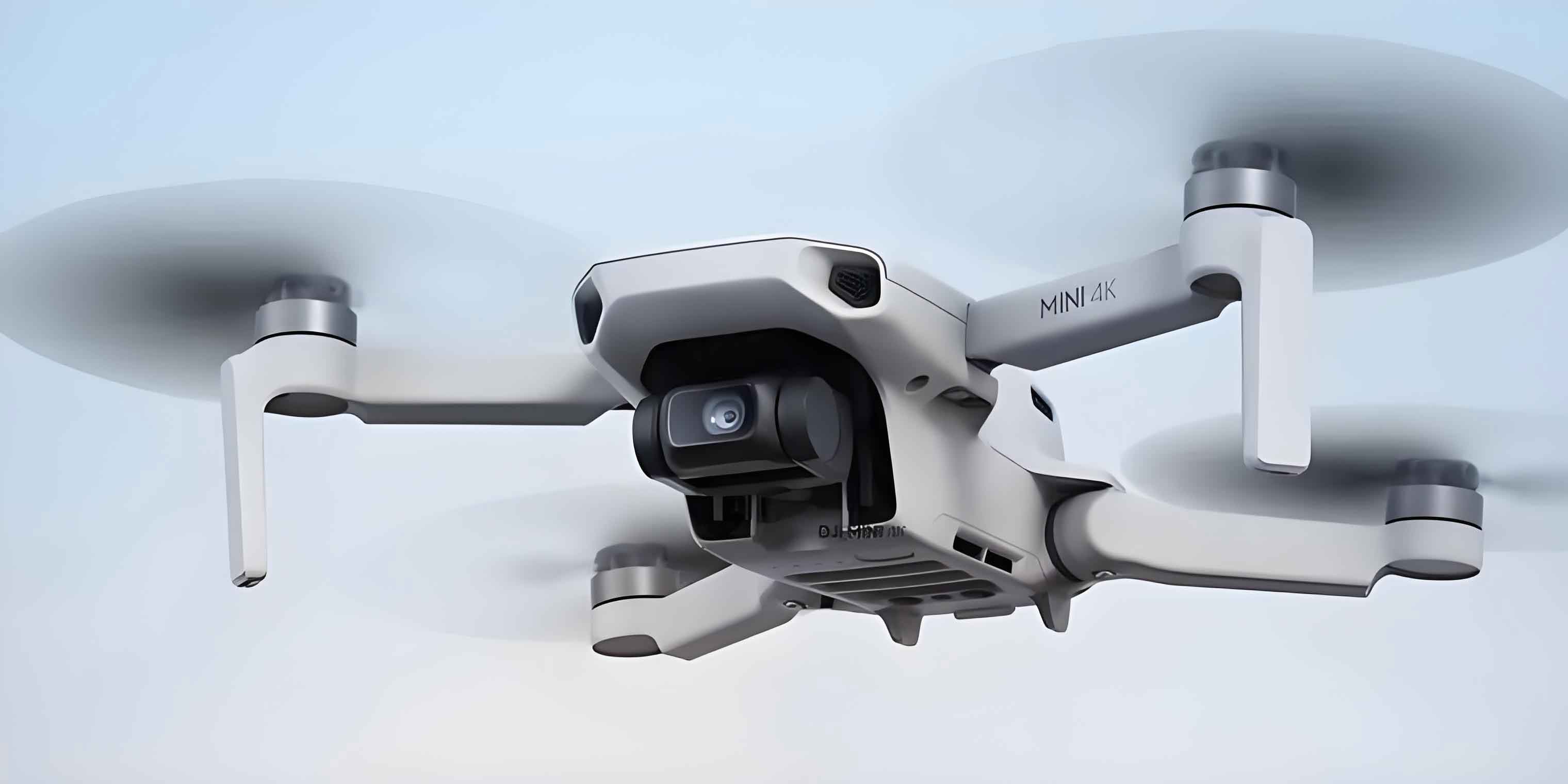
This article delves into the analysis of military and civilian UAV system accidents, with a particular focus on civilian UAV incidents, to understand the underlying causes and propose mitigation strategies. By examining accident reporting mechanisms, statistical data, and regulatory frameworks, we aim to provide insights that can enhance the safety of UAV operations. The emphasis will be on civilian UAV systems, as their integration into shared airspace poses unique challenges. Throughout this discussion, the term “civilian UAV” will be frequently referenced to underscore the importance of addressing safety in non-military applications.
Military UAV System Accident Reporting and Investigation Mechanisms
For military UAV systems, the United States has established a mature accident reporting mechanism. When a military UAV accident occurs, the owning entity is required to follow Department of Defense Instruction DODI 6055.07, “Mishap Notification, Investigation, Reporting, and Record Keeping,” and complete the DA FORM 2397-U, “Unmanned Aircraft System Accident Report (UASAR).” This form captures comprehensive information, including UAV specifications, accident details, flight data, and environmental conditions. The investigation of U.S. Air Force UAV accidents is conducted by the Aircraft Accident Investigation Board (AIB) in accordance with directives such as AFPD 51-5, AFI 51-503, and AFI 51-507. The AIB produces two reports: a summary and a full version, with the chairperson as the sole author. If approved for public release, these reports are listed on dedicated websites, providing transparency and lessons learned.
The effectiveness of this mechanism lies in its structured approach, which ensures that data is systematically collected and analyzed. However, compared to civilian UAV systems, military operations often involve classified information, which may limit public access to some details. Nonetheless, the principles of thorough investigation and reporting are crucial for improving UAV safety across all domains.
Analysis of U.S. Air Force UAV Catastrophic Accidents
This analysis covers 81 catastrophic accidents involving 11 models from three major UAV classes—RQ/MQ-1 Predator, RQ-4 Global Hawk, and MQ-9 Reaper—over a 13-year period from 2000 to 2013. The accident causes are categorized into three main types: human factors, UAV system failures, and environmental/other factors. This classification aligns with international standards for accident analysis and is adapted to reflect UAV-specific characteristics. The distribution of accidents across these categories is summarized in Table 1.
| Cause Category | Number of Accidents | Percentage |
|---|---|---|
| Human Factors | 21 | 25.92% |
| UAV System Failures | 56 | 69.14% |
| Environmental/Other | 4 | 4.94% |
| Total | 81 | 100% |
From Table 1, it is evident that human factors account for less than 30% of accidents, which is lower than the proportion typically seen in manned aircraft accidents. In contrast, UAV system failures constitute nearly 70%, indicating that technical reliability is a predominant concern in military UAV operations. To further dissect the system failure category, we break it down into subcategories: flight control, structure, design and construction, propulsion system, equipment, operational limits and documentation, command and control link, and ground station. The detailed distribution is presented in Table 2.
| Failure Subcategory | Number of Accidents | Percentage of System Failures |
|---|---|---|
| Propulsion System | 19 | 33.93% |
| Equipment | 30 | 53.57% |
| Command and Control Link | 4 | 7.14% |
| Flight Control | 1 | 1.79% |
| Structure | 1 | 1.79% |
| Design and Construction | 1 | 1.79% |
| Total System Failures | 56 | 100% |
The data reveals that equipment and propulsion system failures are the most significant contributors, together accounting for over 87% of system-related accidents. This can be attributed to historical factors: the UAV market was previously small, and manufacturers often repurposed engines from other applications rather than developing dedicated UAV propulsion systems, compromising safety and reliability. To quantify the impact of these failures, we can model the accident rate due to system failures using a reliability function. Let $$ R(t) = e^{-\lambda t} $$ represent the reliability of a UAV system over time \( t \), where \( \lambda \) is the failure rate. If we consider the proportion of accidents caused by system failures, the effective failure rate for military UAVs can be expressed as $$ \lambda_{\text{system}} = \frac{N_{\text{system}}}{T_{\text{total}}} $$, where \( N_{\text{system}} \) is the number of system failure accidents and \( T_{\text{total}} \) is the total operational time. Although exact flight hours are not provided in the dataset, the high percentage underscores the need for enhanced design standards.
A notable case involves an RQ-1B Predator that crashed during landing in 2002 due to strong wind gusts, leading to loss of pitch control and structural damage. This incident highlights the importance of addressing environmental factors in UAV design, particularly for automatic landing systems. Another case involved electromagnetic interference in a control servo, causing unintended turns and a crash. These examples illustrate how system vulnerabilities can lead to catastrophic outcomes, emphasizing the necessity of rigorous testing and redundancy.
Civilian UAV System Accident/Incident Reporting and Investigation Mechanisms
For civilian UAV systems, the reporting framework in the United States is evolving. Since October 2009, the FAA has collected data through the UAS Accident and Incident Preliminary Reports Database (UAS A&I). As of August 21, 2014, the FAA had received 274 reports, though 170 were later removed due to national security concerns involving the Department of Homeland Security. The remaining 104 incidents were reported by various entities, including academic institutions (e.g., Kansas State University), NASA (e.g., Dryden Flight Research Center), law enforcement agencies (e.g., Seattle Police Department), the Department of Commerce (e.g., National Oceanic and Atmospheric Administration), the Department of the Interior (e.g., National Business Center Aviation Management), special airworthiness certificate holders (e.g., Lockheed Martin), and the Department of Energy (e.g., Oak Ridge National Laboratory). The FAA publishes basic information such as time, location, model, and description but does not conduct in-depth analyses. Currently, there is no effective investigation mechanism for civilian UAV accidents, though the National Transportation Safety Board (NTSB) revised 49 CFR Part 830 to include UAV accident reporting requirements for incidents involving fatalities, serious injuries, or significant damage to UAVs weighing over 136 kg. Additionally, FAA Part 107.9 mandates that operators of small UAVs report accidents within 10 days if they result in serious injury, loss of consciousness, or property damage exceeding $500.
Internationally, the International Society of Air Safety Investigators (ISASI) published the “Unmanned Aircraft System Handbook and Accident/Incident Investigation Guidelines” in January 2015, aiming to standardize investigation procedures for civilian UAV accidents. These guidelines address gaps in data collection, training, and regulatory applicability, reflecting the growing recognition of civilian UAV safety as a critical issue. The emphasis on civilian UAV operations is paramount, as their proliferation in shared airspace increases the risk of collisions and other hazards.
Analysis of FAA Civilian UAV System Accidents/Incidents
This analysis covers 104 accidents/incidents involving 44 civilian UAV models reported to the FAA between 2010 and 2014. The causes are categorized similarly to military accidents: human factors, UAV system failures, and environmental/other factors. The distribution is summarized in Table 3.
| Cause Category | Number of Accidents/Incidents | Percentage |
|---|---|---|
| Human Factors | 10 | 9.62% |
| UAV System Failures | 90 | 86.54% |
| Environmental/Other | 4 | 3.85% |
| Total | 104 | 100% |
Table 3 shows that human factors account for less than 10% of civilian UAV accidents, which is even lower than in military UAVs and far below the typical proportion in manned aviation. In contrast, system failures dominate at over 86%, highlighting a significant reliability gap in civilian UAV technology. This high percentage for civilian UAV systems underscores the urgent need for improved design and manufacturing standards. To further analyze system failures, we break them down into subcategories, as shown in Table 4.
| Failure Subcategory | Number of Accidents/Incidents | Percentage of System Failures |
|---|---|---|
| Equipment | 39 | 43.33% |
| Command and Control Link | 36 | 40.00% |
| Propulsion System | 10 | 11.12% |
| Design and Construction | 2 | 2.22% |
| Flight Control | 1 | 1.11% |
| Ground Station | 2 | 2.22% |
| Total System Failures | 90 | 100% |
Equipment and command-and-control link failures are the most prevalent, together comprising over 83% of system-related incidents. This is often due to inadequate production controls, lack of traceability, and minimal redundancy in civilian UAV designs, especially for lightweight models. For instance, a Zephyr-type civilian UAV experienced a crash in 2014 due to electromagnetic interference from servo wiring, leading to loss of control. Such incidents reveal vulnerabilities that could be mitigated through better shielding and redundancy. To model the safety impact, we can define a safety index for civilian UAVs: $$ S_{\text{civilian}} = 1 – \frac{A_{\text{system}}}{A_{\text{total}}} $$, where \( A_{\text{system}} \) is the number of system failure accidents and \( A_{\text{total}} \) is the total accidents. From Table 3, $$ S_{\text{civilian}} = 1 – \frac{90}{104} \approx 0.135 $$, indicating a low safety level attributable to system failures. This metric emphasizes the critical need for enhancing the inherent safety of civilian UAV systems through regulatory frameworks.
The prevalence of civilian UAV accidents also relates to operational environments. Unlike military UAVs, which often operate in controlled airspace, civilian UAVs are deployed in diverse settings, from urban areas to remote regions, increasing exposure to environmental risks. However, the data shows that environmental factors account for only a small fraction of incidents, suggesting that technical improvements should be the primary focus for civilian UAV safety.
UAV System Accidents and Airworthiness Requirements
The disparity in accident cause distributions between military and civilian UAV systems points to different safety priorities. In manned aviation, human factors typically dominate accident statistics, but for UAVs, system failures are the leading cause. This indicates that enhancing the inherent safety of UAV designs is crucial for reducing accident rates. The adoption of new technologies and standards, particularly airworthiness requirements, can effectively uplift safety levels. Internationally, organizations like NATO have developed airworthiness standards for UAVs, such as STANAG 4671, “Unmanned Aircraft System Airworthiness Requirements (USAR),” and the Joint Authorities for Rulemaking of Unmanned Systems (JARUS) has issued CS-LURS for light unmanned rotorcraft. By comparing the accident causes from Tables 2 and 4 with these requirements, we find that many system failure causes align with specific design clauses in airworthiness standards.
For example, the 2002 Predator landing accident involved loss of control due to wind gusts, which relates to USAR.253(a) on handling qualities during gust conditions. Similarly, the 2014 Zephyr crash due to electromagnetic interference corresponds to USAR.685(e) and USAR.1431(g), which mandate protection against electromagnetic interference for control systems. These correlations suggest that implementing airworthiness requirements can address common failure modes. To quantify the potential impact, consider a reliability improvement model: if airworthiness standards reduce the failure rate of a subsystem by a factor \( k \), the new accident rate due to system failures becomes $$ \lambda_{\text{new}} = \lambda_{\text{old}} \times (1 – k) $$. For civilian UAVs, where system failures account for 86.54% of accidents, even a modest reduction in \( \lambda \) could significantly lower overall accident rates.
Moreover, the difference in system failure percentages between military (69.14%) and civilian UAVs (86.54%) may reflect the incorporation of airworthiness requirements in military designs, whereas civilian UAVs often lack such rigorous standards. This underscores the importance of developing and enforcing airworthiness regulations for civilian UAV systems. Key areas include propulsion system certification, equipment redundancy, and command-and-control link security. For instance, civilian UAVs frequently use off-the-shelf components without adequate testing, leading to high equipment failure rates. Airworthiness requirements could mandate stricter quality control and environmental testing, similar to those for manned aircraft.
To further analyze this, we can use a risk assessment formula for civilian UAV operations: $$ R = P_{\text{failure}} \times C $$, where \( R \) is the risk, \( P_{\text{failure}} \) is the probability of a system failure, and \( C \) is the consequence (e.g., property damage or injury). From the data, \( P_{\text{failure}} \) for civilian UAVs is high, but airworthiness standards aim to reduce it through design and testing protocols. For example, redundancy in command-and-control links, as required by USAR.1605, can lower \( P_{\text{failure}} \) for link-related accidents. Implementing such requirements for civilian UAVs could enhance safety, especially in densely populated areas where the consequences of failures are severe.
Case Studies and Airworthiness Alignment
Detailed case studies illustrate how airworthiness requirements can prevent accidents. In the military case, the Predator landing accident underscored the need for robust gust response capabilities, which are addressed in USAR.253(a). For civilian UAVs, the Zephyr incident highlighted electromagnetic interference vulnerabilities, covered by USAR.685(e) and USAR.1431(g). These examples demonstrate that airworthiness clauses directly target common failure mechanisms. Expanding on this, we can consider a hypothetical civilian UAV used for package delivery: if its command-and-control link fails due to interference, redundancy mechanisms mandated by airworthiness standards could switch to a backup system, preventing a crash. This is particularly relevant for civilian UAV operations in urban environments, where signal interference is common.
Another aspect is the human factor in civilian UAV accidents. While human errors are less frequent in UAV operations compared to manned aircraft, they still occur, often due to inadequate training or operational errors. Airworthiness requirements can indirectly reduce human factors by improving system automation and fail-safes. For instance, USAR.1301 on flight crew interfaces can enhance usability, minimizing pilot error. However, the data shows that human factors are a minor contributor in civilian UAV accidents, so the primary focus should remain on technical reliability.
To model the overall safety improvement from airworthiness adoption, we can use a composite safety score: $$ S_{\text{overall}} = w_1 \cdot S_{\text{system}} + w_2 \cdot S_{\text{human}} + w_3 \cdot S_{\text{env}} $$, where \( w_i \) are weights based on accident proportions. For civilian UAVs, \( w_1 \) would be high (e.g., 0.865), so improving \( S_{\text{system}} \) through airworthiness has a large impact. This aligns with the goal of reducing civilian UAV accidents in shared airspace.
Conclusions and Recommendations
Based on the analysis of military and civilian UAV accident data, it is clear that system failures are the dominant cause of accidents in both domains, but especially for civilian UAV systems. Human factors play a smaller role compared to manned aviation, indicating that enhancing the inherent safety of UAV designs is the most effective strategy for reducing accident rates. The comparison with international airworthiness requirements, such as NATO’s STANAG 4671, shows that many accident causes can be mitigated through specific design and testing clauses. Therefore, establishing or完善 domestic airworthiness requirements for UAV systems, particularly for civilian UAV applications, is crucial. This will help lower the high system failure rates observed in the data.
Furthermore, there is a need to develop or improve accident reporting and investigation mechanisms for civilian UAV systems. While the U.S. has made strides with FAA Part 107 and NTSB reporting, a more standardized approach akin to military procedures could enhance data collection and analysis. This would facilitate continuous safety improvements and regulatory updates. Recommendations include:
- Implement comprehensive airworthiness standards for civilian UAVs, focusing on propulsion, equipment, and command-and-control link reliability.
- Mandate redundancy and testing for critical systems in civilian UAV designs, especially for operations in populated areas.
- Establish a centralized database for civilian UAV accidents with detailed investigation reports, similar to military AIB reports, to promote transparency and learning.
- Enhance training for civilian UAV operators and investigators, incorporating lessons from military experiences.
- Promote international collaboration on airworthiness frameworks to ensure consistency and safety in global civilian UAV operations.
In summary, the safety of civilian UAV systems can be significantly improved by adopting rigorous airworthiness requirements and robust accident investigation protocols. As civilian UAV usage continues to expand, these measures will be essential for ensuring safe integration into airspace and protecting public safety. The repeated emphasis on civilian UAV throughout this analysis underscores its importance in the evolving aviation landscape.
To encapsulate the relationship between accident causes and airworthiness, we can propose a formula for safety enhancement: $$ \Delta S = \alpha \cdot C_{\text{airworthiness}} – \beta \cdot A_{\text{baseline}} $$, where \( \Delta S \) is the improvement in safety, \( \alpha \) is the effectiveness of airworthiness measures, \( C_{\text{airworthiness}} \) is the compliance level with airworthiness requirements, \( \beta \) is a decay factor, and \( A_{\text{baseline}} \) is the baseline accident rate. For civilian UAVs, increasing \( C_{\text{airworthiness}} \) through regulations can drive \( \Delta S \) positive, reducing accidents over time.
In conclusion, the journey toward safer UAV operations requires a multifaceted approach, with airworthiness at its core. By learning from both military and civilian accident data, we can pave the way for a future where UAVs, especially civilian UAVs, operate reliably and safely in our skies.