
The rapid proliferation of civilian drones represents a paradigm shift in technology application, offering unprecedented benefits for economic and social development. From precision agriculture and infrastructure inspection to disaster response and logistical delivery, these unmanned aerial vehicles (UAVs) are transforming industries.
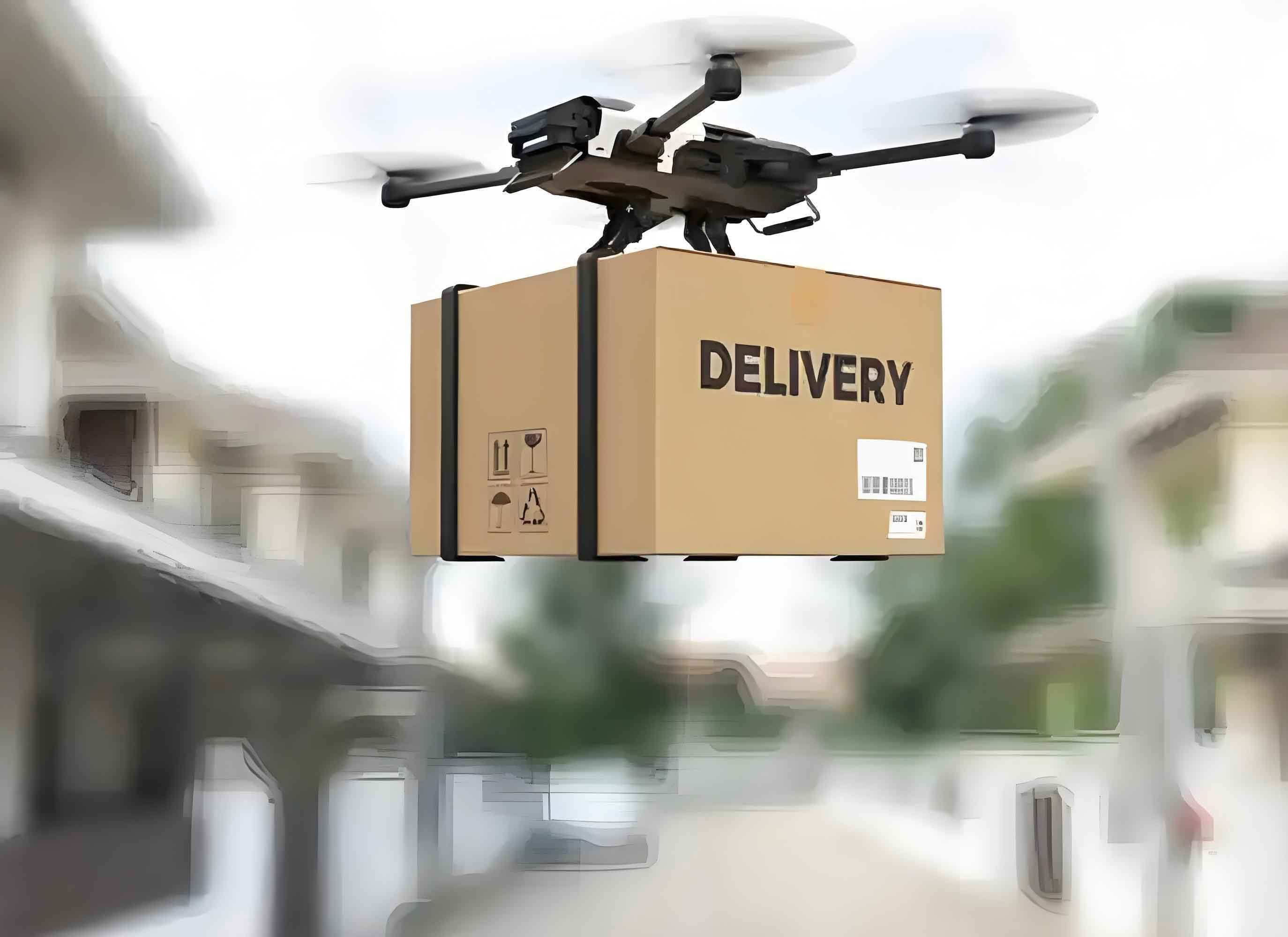
However, this very accessibility and versatility of civilian drones also render them potent tools for malicious actors. The dual-use nature of this technology necessitates robust regulatory frameworks to mitigate significant risks to national security, public order, and individual rights. The United States, as an early and extensive adopter, has developed a comprehensive, multi-layered approach to governing the civilian drone ecosystem. This paper analyzes the spectrum of risks posed by civilian drones, examines the evolving American regulatory practice encompassing legal structures, enforcement mechanisms, and lifecycle management, and derives actionable insights for the formulation of effective governance strategies in other jurisdictions, with a particular focus on China’s regulatory landscape.
The Multifaceted Risks of Civilian Drone Abuse
The misuse of civilian drones creates a complex threat matrix that extends far beyond mere nuisance. The risks can be categorized and modeled to understand their potential impact. A fundamental risk assessment formula can be applied:
$$ R = P \times S $$
Where \( R \) is the total risk, \( P \) is the probability of a malicious event occurring, and \( S \) is the severity of its consequences. The widespread availability of civilian drones significantly increases \( P \), while their capabilities amplify \( S \) across several domains.
| Risk Category | Specific Threats | Potential Severity (S) & Impact Vector |
|---|---|---|
| National Security | Weaponization (explosives delivery), Espionage (surveillance of sensitive sites), Infrastructure sabotage (power grids, communications). | High; Direct threat to state integrity, critical infrastructure, and military operations. |
| Public Safety & Order | Disruption of aviation (airport incursions), Smuggling (contraband into prisons), Mass surveillance, Public nuisance, Propagation of illicit information. | High-Medium; Economic disruption, endangerment of public safety, and undermining of social management systems. |
| Privacy & Civil Liberties | Unauthorized surveillance, Data harvesting, Stalking, Voyeurism. | Medium; Erosion of personal privacy, psychological harm, and potential for blackmail or harassment. |
The probability \( P \) is further influenced by factors such as the technical barrier to operation (lower for many civilian drones), the cost of acquisition, and the perceived anonymity of operators. The convergence of high \( P \) and high \( S \) scenarios, such as the use of a commercially available drone for a targeted attack, constitutes a paramount regulatory challenge.
The American Regulatory Ecosystem: A Holistic Framework
The United States has approached the governance of civilian drones not as a singular problem but as a systemic challenge requiring integration into the National Airspace System (NAS). Its framework is built on a triad of legislation, dedicated enforcement, and proactive, technology-informed management across the entire lifecycle of the civilian drone.
1. Legislative and Enforcement Architecture
The foundation is a tiered legal structure. At the apex, congressional acts like the FAA Modernization and Reform Act of 2012 and the FAA Extension, Safety, and Security Act of 2016 provided the statutory mandate for the Federal Aviation Administration (FAA) to integrate civilian drones into the NAS. This empowered the FAA to move from case-by-case authorizations to developing comprehensive rules.
The cornerstone of operational regulation is Title 14 of the Code of Federal Regulations (CFR), particularly Part 107: Small Unmanned Aircraft Systems. This rule established the baseline for commercial operations of civilian drones under 55 lbs, covering pilot certification, operational limitations (visual line-of-sight, altitude, speed), and aircraft registration. The FAA supplements these rules with Advisory Circulars, Orders, and Guidance documents, creating a living regulatory body. Furthermore, state legislatures have enacted laws addressing privacy and trespass concerns, creating a federal-state regulatory layer.
Enforcement is centralized under the FAA, which possesses the authority to investigate violations, issue fines, and suspend or revoke certificates. The creation of specialized offices like the Unmanned Aircraft Systems (UAS) Integration Office and the UAS Identification and Tracking Aviation Rulemaking Committee (ARC) demonstrates an institutional commitment to developing tailored policies and technical standards for civilian drones.
2. Lifecycle Management of Civilian Drones
American regulation extends beyond mere flight rules to encompass the entire chain from design to disposal, recognizing that risks can be mitigated at multiple points.
| Lifecycle Stage | Key Regulatory & Technical Measures | Risk Mitigation Objective |
|---|---|---|
| Research & Development (R&D) |
|
Prevent intrusion into sensitive areas; Enable tracking and accountability; Ensure mechanical safety. |
| Sales & Acquisition |
|
Link drone to owner/operator; Ensure basic operator competence. |
| Operation & Use |
|
Minimize mid-air collision risk; Manage dense airspace traffic; Allow flexibility without compromising safety. |
| Post-Market & Enforcement |
|
Deter malicious and negligent use; Promote a culture of safety; Protect critical assets. |
The effectiveness \( E \) of this lifecycle management can be conceptualized as a function of its coverage and stringency:
$$ E = \sum_{i=1}^{n} (C_i \cdot S_i) $$
Where \( C_i \) is the comprehensiveness of controls at stage \( i \) (R&D, Sales, etc.), and \( S_i \) is the stringency of enforcement at that stage. The American model seeks to maximize \( E \) by intervening at multiple stages with legally binding and technical controls.
Analysis and Implications for Regulatory Development
The U.S. experience is instructive but not directly transplantable. Its system evolved from a mature aviation governance culture. Key takeaways for other nations include:
- Centralized Authority with Clear Mandate: A primary aviation authority (like the FAA) must be explicitly empowered by law to regulate all aspects of civilian drone operations. Fragmented authority among multiple agencies leads to gaps and confusion.
- Risk-Based, Proportional Regulation: The rules should scale with risk. Part 107’s distinction for “small” civilian drones created a feasible path for widespread commercial use, while larger drones face more stringent aircraft-type certification. This can be modeled as:
$$ Regulatory\ Burden \propto \frac{(Mass \cdot Capability \cdot Operational\ Complexity)}{Intended\ Safeguards} $$
- Technology as Both Subject and Tool of Regulation: Regulations must mandate or incentivize safety-enhancing technologies (like Remote ID and geofencing) in the civilian drones themselves. Simultaneously, authorities must employ technology (like LAANC, monitoring systems) to manage the airspace efficiently.
- The Critical Role of Registration and Pilot Identity: Accountability is foundational. A simple, user-friendly, but mandatory registration system for owners and a certification system for pilots establish a traceable chain of responsibility.
- Dynamic and Adaptive Legal Framework: The rules must be living documents. The shift from blanket prohibitions to the Part 107 framework, and the ongoing development of Remote ID and beyond visual line-of-sight (BVLOS) rules, show the necessity of iterative updates based on technological and operational experience.
Towards a Proactive Governance Model: Recommendations for Reform
Drawing from the analysis, a proactive governance model for civilian drones should be structured around several pillars. For jurisdictions like China, which faces rapid growth and clear risks of “black flights,” the following integrated approach is proposed:
Pillar 1: Codified, Hierarchical Legal Framework. A dedicated national law or a comprehensive chapter within existing civil aviation law should establish the fundamental principles, definitions, and authorities for civilian drone management. This high-level law must explicitly empower a lead agency. It should then be supported by detailed implementation regulations covering classification, registration, flight operations, and penalties. Local regulations can address specific concerns but must align with the national framework to avoid contradiction.
Pillar 2: Unified Enforcement and Airspace Management. A single, clearly identified agency must be the unequivocal enforcer. This agency should operate a unified national information platform that integrates:
- Real-name registration of users and civilian drones.
- A dynamic, digitally accessible airspace map showing prohibited, restricted, and permitted zones.
- An automated flight approval system (similar to LAANC) for controlled airspace access.
- A mechanism for monitoring compliance and investigating violations.
The enforcement agency must also have the legal tools and trained personnel to impose meaningful sanctions.
Pillar 3: Technologically-Embedded Compliance. Regulations should mandate safety-by-design features for civilian drones sold in the market. The effectiveness of geofencing \( E_f \) can be seen as:
$$ E_f = 1 – \frac{N_{violation}}{N_{total}} $$
where \( N_{violation} \) is attempts to breach a virtual boundary and \( N_{total} \) is total operations near it. Standards should require:
- Remote ID: Broadcasting identity and location during flight.
- Geo-awareness: Inability to take off or enter coordinates of permanently prohibited zones (e.g., major airports, government complexes).
- Performance Limits: Software-enforced ceilings on altitude and range based on drone category and pilot certification level.
Pillar 4: Stakeholder Education and Industry Partnership. A continuous public education campaign is vital to cultivate a culture of responsible use. Furthermore, regulators should actively collaborate with manufacturers and software developers of civilian drones to shape technical standards and ensure regulatory features are effectively implemented at the design stage.
| Regulatory Pillar | Core Component | Desired Outcome |
|---|---|---|
| Legal Framework | Clear, hierarchical laws from principle to implementation details. | Predictability, legal certainty, and comprehensive coverage. |
| Enforcement & Airspace | Unified agency with digital management platform (registration, zoning, approvals). | Accountability, efficient airspace use, and effective deterrence. |
| Technical Compliance | Mandatory Remote ID, geo-awareness, and performance limiting. | “Baked-in” safety, reduced intentional misuse, enhanced monitoring capability. |
| Education & Partnership | Public campaigns and industry collaboration on standards. | Cultivated culture of safety and innovation within guardrails. |
Conclusion
The proliferation of civilian drones presents a classic governance challenge of the digital age: fostering beneficial innovation while preempting severe misuse. The American regulatory practice demonstrates that effective governance of civilian drones requires a synergistic approach. It is not solely about restrictive flight rules but involves a strategic blend of foundational legislation, empowered enforcement, and the intelligent application of technology across the device’s entire lifecycle. This system views the civilian drone not just as an aircraft to be controlled but as a node in a larger information and transportation network that must be managed. For other nations, the key lesson is the necessity of moving from reactive, ad-hoc measures to a proactive, systemic framework. This framework must be legally robust, centrally coordinated, technologically savvy, and adaptable. By establishing clear rules of the sky, embedding safety into the technology itself, and ensuring traceability and accountability, societies can harness the tremendous potential of civilian drones while decisively mitigating the risks of their abuse. The safe integration of civilian drones into our national airspace and social fabric is not an endpoint but a continuous process of assessment, adaptation, and collaboration.