
In the rapidly evolving field of aerial imaging, China UAV drone technology has become a cornerstone for diverse applications such as traffic surveillance, agricultural monitoring, military reconnaissance, and disaster response. The ability of drones to capture high-resolution visual data over vast areas enables unprecedented scene analysis. However, small object detection in China UAV drone images poses significant challenges due to factors like motion blur from high-speed flight and the diminutive size of objects when viewed from high altitudes. These challenges often lead to the loss of critical details, making it difficult for conventional deep learning models to achieve accurate detection. In this article, we present a novel approach that integrates foreground refinement with a multidimensional inductive bias self-attention network to address these issues. Our method aims to enhance detection precision while optimizing computational efficiency, specifically tailored for the complex environments encountered in China UAV drone operations.
The proliferation of China UAV drone systems has underscored the need for robust object detection algorithms. Small objects, such as vehicles or pedestrians in aerial imagery, often occupy only a few pixels and are susceptible to being obscured by complex backgrounds. Traditional detection models, including convolutional neural networks (CNNs) and Transformers, struggle with these scenarios. CNNs excel at capturing local features but may lack global contextual understanding, whereas Transformers model long-range dependencies but can lose fine-grained spatial details due to the sequential processing of image patches. Moreover, motion blur induced by drone movement further degrades image quality, necessitating super-resolution techniques that are computationally expensive when applied to entire images. To overcome these limitations, we propose a framework that selectively refines foreground regions and employs a self-attention mechanism enriched with inductive biases for better feature representation. This approach is particularly relevant for China UAV drone applications, where efficiency and accuracy are paramount.
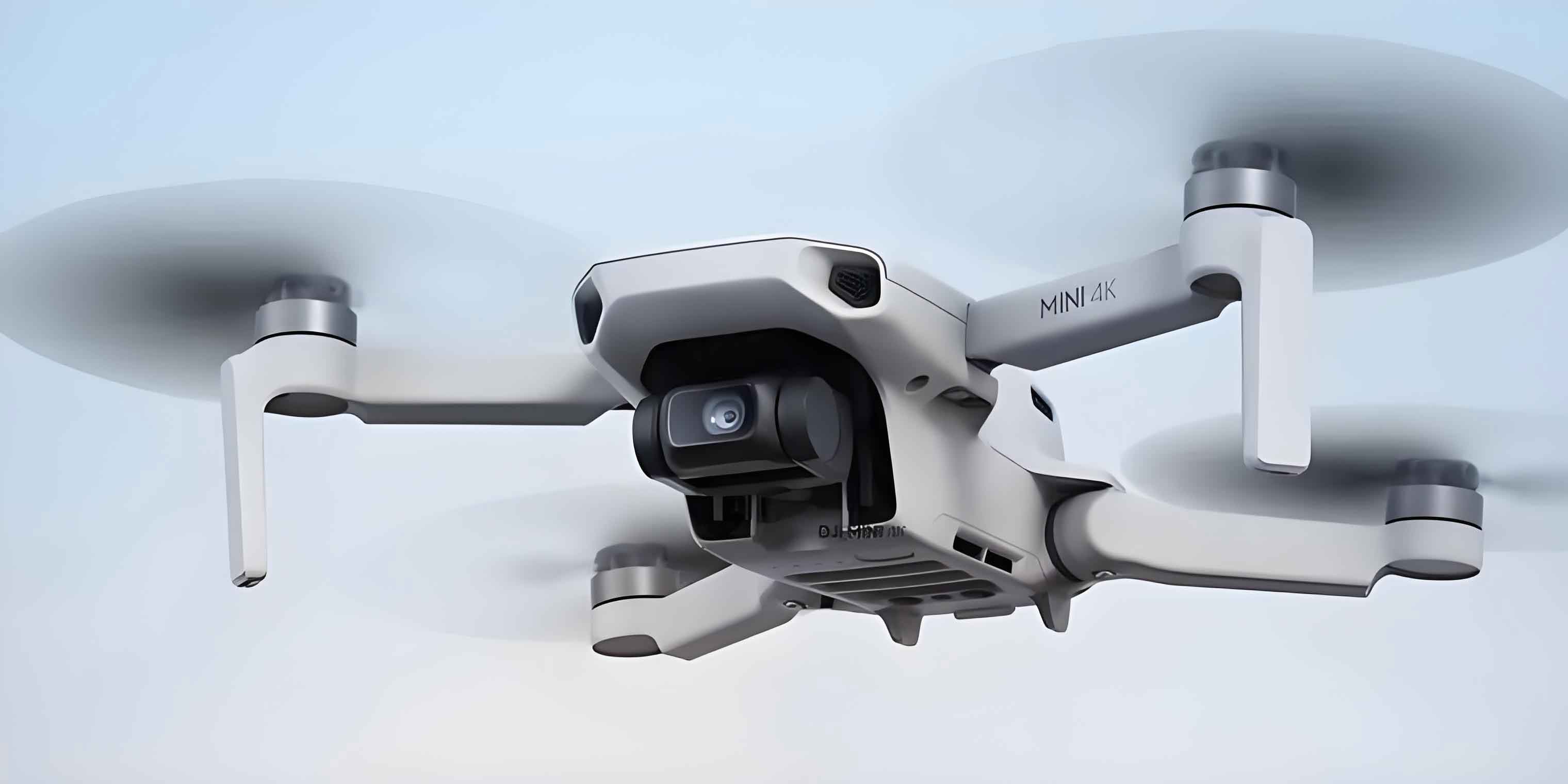
Our work is motivated by the unique demands of China UAV drone imagery, which often involves vast landscapes with sparsely distributed objects. Processing entire high-resolution images with diffusion models for super-resolution is inefficient, as it wastes resources on irrelevant background areas. Similarly, the inherent separation between local and global features in hybrid CNN-Transformer architectures can hinder small object detection. We introduce two key components: a Foreground Refinement Module (FRM) that uses a class-agnostic multi-layer aggregated activation map to identify and enhance only regions of interest, and a Multidimensional Inductive Bias Self-Attention Network (MIBSN) that decomposes self-attention across spatial dimensions while incorporating inductive biases for improved local-global feature integration. This combination not only reduces computational burden but also boosts detection performance, making it highly suitable for real-time China UAV drone scenarios.
To provide context, small object detection in China UAV drone images has been explored in prior research. Methods like YOLO variants and Transformer-based detectors such as DETR have shown promise but often fall short in handling motion blur and scale variations. Diffusion models have emerged as powerful tools for image restoration, yet their application to drone imagery is limited by computational costs. Our approach builds on these advances by integrating targeted refinement with an attention mechanism that emphasizes spatial awareness. By focusing on foreground areas, we leverage diffusion models more efficiently, and through multidimensional self-attention, we enhance the model’s ability to discern small objects against cluttered backgrounds. This is crucial for China UAV drone operations, where detecting tiny targets in dynamic environments can impact safety and effectiveness.
The core of our method lies in the seamless fusion of FRM and MIBSN. We begin by detailing the Foreground Refinement Module. Given an input image from a China UAV drone, we extract multi-scale feature maps from a backbone network. Let \(A^{(l)} \in \mathbb{R}^{H^l \times W^l \times C^l}\) represent the feature map at layer \(l\), where \(l = 1, 2, \dots, L\). We flatten each feature map to \(A’^{(l)} \in \mathbb{R}^{(H^l \times W^l) \times C^l}\) and compute its covariance matrix to capture inter-channel correlations:
$$C^{(l)} = \frac{1}{H^l \times W^l} (A’^{(l)})^T A’^{(l)}$$
Next, we perform eigenvalue decomposition on \(C^{(l)}\) to obtain the principal eigenvector \(v_{\text{max}}^{(l)}\), which corresponds to the direction of maximum variance in the feature space. This vector is used to project the feature map and generate a saliency activation map:
$$f_{\text{AMCAM}}^{(l)} = A^{(l)} v_{\text{max}}^{(l)}$$
We assign dynamic weights \(w^{(l)}\) based on the principal eigenvalue \(\lambda_{\text{max}}^{(l)}\) to emphasize more discriminative layers:
$$w^{(l)} = \frac{\lambda_{\text{max}}^{(l)}}{\sum_{l=1}^{L} \lambda_{\text{max}}^{(l)}}$$
The final activation map is computed as a weighted sum:
$$f_{\text{AMCAM}} = \sum_{l=1}^{L} w^{(l)} f_{\text{AMCAM}}^{(l)}$$
After normalization, we binarize the map using a threshold \(\tau = \mu + 2\sigma\) (where \(\mu\) and \(\sigma\) are the mean and standard deviation) to produce a foreground mask \(M_{\text{fg}}(i,j)\). This mask identifies regions containing small objects, allowing us to apply a conditional diffusion model only to these areas, thereby reducing computational load. The diffusion model follows a denoising process, where at each timestep \(t\), we predict noise \(\epsilon_\theta(x_t, t, z)\) given the noisy image \(x_t\) and condition \(z\) (the low-resolution input). The mean for the next step is estimated as:
$$\mu_\theta(x_t, t, z) = \frac{1}{\sqrt{\alpha_t}} \left( x_t – \frac{\beta_t}{\sqrt{1 – \bar{\alpha}_t}} \epsilon_\theta(x_t, t, z) \right)$$
where \(\alpha_t = 1 – \beta_t\) and \(\bar{\alpha}_t = \prod_{i=1}^{t} \alpha_i\). This targeted refinement preserves details crucial for small object detection in China UAV drone images, such as edges and textures, while background regions are upsampled using bilinear interpolation for efficiency.
The second component, the Multidimensional Inductive Bias Self-Attention Network, addresses the limitations of standard self-attention in capturing spatial information. We design a multidimensional self-attention module that decomposes attention along horizontal and vertical dimensions. For an input feature map \(S \in \mathbb{R}^{H \times W \times C}\), we split it into \(S_H, S_V \in \mathbb{R}^{H \times W \times C’}\) with \(C’ = C/2\). For the horizontal dimension, we partition \(S_H\) into \(M\) non-overlapping strips \(X_i \in \mathbb{R}^{h \times W \times C’}\), where \(h\) is the strip height. Self-attention is computed per strip:
$$\hat{X}_i = f_{\text{Attention}}(W_Q X_i, W_K X_i, W_V X_i)$$
We adopt a value-sharing strategy by setting \(K = V\) to reduce parameters. The outputs are concatenated to form the horizontal attention result \(H\text{-Attention}\). Similarly, vertical attention \(V\text{-Attention}\) is computed. To inject inductive biases, we incorporate a parallel Inductive Bias Perception Path (IBPP) that operates on \(S_H\) and \(S_V\). This path involves structured decomposition of features into \(S_H \in \mathbb{R}^{H \times W \times p \times q}\) and applies dual projections:
$$\text{IBPP}(S_H) = f_{\text{Flatten}}(\sigma(S_H W_p W_q))$$
where \(\sigma\) denotes the SiLU activation function, and \(W_p \in \mathbb{R}^{p \times p}\) and \(W_q \in \mathbb{R}^{q \times q}\) are projection matrices. The outputs from multidimensional attention and IBPP are combined in a multi-head setting. For \(K\) heads, the output for head \(k\) is:
$$z_k = \begin{cases}
H\text{-Attention}_k + \text{IBPP}(S_H) & \text{for } k = 1, \dots, K/2 \\
V\text{-Attention}_k + \text{IBPP}(S_V) & \text{for } k = K/2+1, \dots, K
\end{cases}$$
The final multidimensional self-attention output is:
$$\text{MSA} = W_O f_{\text{Concat}}(z_1, z_2, \dots, z_K)$$
This design enhances spatial position awareness, which is vital for locating small objects in China UAV drone images. Following MSA, we employ a Hybrid Enhanced Feed-Forward module (EHFF) that uses deformable convolutions to adapt to object shapes. Given the output \(X’\) from MSA, we split it along channels into groups \(U_1, U_2, \dots, U_r\) and apply deformable convolutions \(\phi_d(\cdot)\) with offsets \(d\):
$$\text{EHFF}(X’) = \text{LN}(F_2[\|\phi_3(U_1) \phi_5(U_2)\|])$$
where LN is layer normalization, \(F_2\) is a fully connected layer, and \(\|\) denotes concatenation. This allows dynamic receptive fields, improving sensitivity to local geometries.
Furthermore, MIBSN includes a Scale Coupling Module (SCM) that interacts with self-attention through multi-scale convolutions (e.g., 1×1, 3×3, 5×5 kernels) to preserve features across scales. Finally, a Localized Neighborhood Interaction module (LNI) aggregates neighborhood features in the decoder progressively. For features \(F_1, F_2, \dots, F_n\) transformed from high-dimensional sequences, LNI performs dilated convolution and ReLU activation:
$$F’_i = f_{\text{ReLU}}(f_{\text{Conv}_{\text{dil}}}(\|F_i F_{i+1}\|))$$
This ensures that small object details are retained in the prediction maps. The integration of FRM and MIBSN creates a robust pipeline for small object detection in China UAV drone imagery, balancing computational efficiency with high accuracy.
To validate our approach, we conducted extensive experiments on three datasets relevant to China UAV drone applications: VisDrone2019, UAVDT, and NWPU VHR-10. These datasets feature diverse aerial scenes with small objects, making them ideal benchmarks. Our implementation uses PyTorch, with a baseline model of RTDETR. We trained the model using the Auto optimizer, with an initial learning rate of \(1 \times 10^{-2}\), weight decay of \(5 \times 10^{-4}\), and momentum of \(9 \times 10^{-1}\). Input image sizes were set to 1536 pixels on the longer side for VisDrone2019, 1080 pixels for UAVDT, and 1024 pixels for NWPU VHR-10. We evaluated performance using precision (P), recall (R), mean average precision (mAP) over IoU thresholds from 0.5 to 0.95, and AP@50 (average precision at IoU threshold 0.5).
The results demonstrate the superiority of our method. On VisDrone2019, our approach achieved an AP@50 of 53.2% and mAP of 32.8%, outperforming state-of-the-art detectors like YOLOv8, DINO, and RTDETR. This highlights the effectiveness of our multidimensional attention and foreground refinement in handling complex drone scenes. For UAVDT, we obtained an AP@50 of 38.7% and mAP of 23.4%, showing significant gains due to enhanced local feature learning. On NWPU VHR-10, a remote sensing dataset akin to China UAV drone imagery, we reached an AP@50 of 93.9% and mAP of 64.5%, underscoring the generalization capability of our method. Below, we summarize key comparative results in tables to illustrate these advancements.
| Model | Backbone | Precision (%) | Recall (%) | AP@50 (%) | mAP (%) |
|---|---|---|---|---|---|
| YOLOv8 | CSPDarkNet | 57.6 | 45.8 | 46.1 | 27.7 |
| YOLOv9 | GELAN | 56.9 | 47.0 | 46.7 | 28.3 |
| DINO | ResNet50 | 59.5 | 45.8 | 43.1 | 24.9 |
| RTDETR | HGNetv2 | 60.4 | 44.1 | 43.5 | 25.0 |
| Our Method | HGNetv2 | 61.6 | 52.7 | 53.2 | 32.8 |
This table shows that our method achieves the highest scores across metrics, particularly in recall and AP@50, indicating better detection of small objects in China UAV drone images. The improvement stems from the focused refinement and attention mechanisms that reduce background interference.
| Components | Precision (%) | Recall (%) | AP@50 (%) | mAP (%) |
|---|---|---|---|---|
| Baseline (RTDETR) | 60.4 | 44.1 | 43.5 | 25.0 |
| + MSA (Multidimensional Self-Attention) | 59.3 | 44.1 | 44.7 | 27.3 |
| + IBPP (Inductive Bias Perception Path) | 57.4 | 47.4 | 47.0 | 28.5 |
| + EHFF (Enhanced Hybrid Feed-Forward) | 61.4 | 47.9 | 47.5 | 29.3 |
| + SCM (Scale Coupling Module) | 62.0 | 49.7 | 48.5 | 29.4 |
| + LNI (Localized Neighborhood Interaction) | 60.7 | 50.5 | 51.0 | 31.1 |
| + FRM (Foreground Refinement Module) | 61.6 | 52.7 | 53.2 | 32.8 |
The ablation study confirms the contribution of each component. Adding MSA improves spatial awareness, while IBPP enhances local feature encoding. EHFF and SCM further boost performance by adapting to object scales and shapes. LNI ensures detail retention, and FRM provides the largest gain by refining foreground regions. This stepwise improvement validates our design choices for China UAV drone image analysis.
We also evaluated the efficiency of our Foreground Refinement Module. By processing only foreground areas identified via the activation map, we reduce computational costs significantly. For instance, on VisDrone2019, applying diffusion models to 60% of image regions yields detection performance comparable to full-image processing, as shown in the formula for computational complexity reduction from \(O(HWC)\) to \(O(M_{\text{fg}}C)\), where \(M_{\text{fg}}\) is the number of foreground pixels. This efficiency is crucial for real-time China UAV drone applications, where resource constraints are common.
In terms of qualitative results, our method excels in detecting small objects under challenging conditions like motion blur and occlusion. Visual comparisons with baseline models reveal that our approach better localizes distant vehicles and pedestrians in cluttered scenes, thanks to the multidimensional attention that captures both horizontal and vertical dependencies. The foreground refinement also restores sharp details, such as vehicle edges, which are often lost in blurry China UAV drone images. These advantages translate to higher precision and recall, as evidenced by the experimental data.
Looking at broader implications, our work addresses key pain points in China UAV drone surveillance. The ability to detect small objects accurately can enhance safety in traffic monitoring or search-and-rescue missions. By integrating diffusion models selectively, we pave the way for efficient image enhancement in drone-based systems. Moreover, the multidimensional self-attention network offers a blueprint for future architectures that balance local and global features without the separation issues seen in hybrid models. This is particularly relevant as China UAV drone technology advances, requiring more sophisticated computer vision solutions.
However, our method has limitations. It currently focuses on static images and does not leverage temporal information from video sequences, which could further improve detection in dynamic China UAV drone footage. Future work will explore spatiotemporal feature fusion and enhance activation map quality using video context. Additionally, we aim to optimize the diffusion model for faster inference, making it more suitable for real-time drone operations.
In conclusion, we have presented a novel framework for small object detection in China UAV drone images, combining foreground refinement with multidimensional inductive bias self-attention. Our method significantly improves accuracy while conserving computational resources, as demonstrated on multiple datasets. The fusion of these components enables robust performance in complex aerial scenes, advancing the state-of-the-art for China UAV drone applications. We believe this approach will contribute to safer and more efficient drone-based systems, and we have made our code publicly available to foster further research in this vital area.