
In the evolving landscape of unmanned aerial vehicles, the quadrotor drone has emerged as a pivotal technology, driving innovations across sectors such as agriculture, surveillance, and logistics. As an educator and researcher focused on engineering pedagogy, I have identified significant gaps in traditional training methodologies for quadrotor drone operations, where theoretical instruction often remains disconnected from practical application. This disconnect not only hampers skill acquisition but also raises safety and cost concerns. To address these challenges, our team developed a full-scale quadrotor drone teaching platform, complemented by a structured curriculum, enabling immersive, risk-free learning experiences indoors. This initiative transforms how quadrotor drone education is delivered, merging hands-on飞行 with interactive theory.
The quadrotor drone teaching platform is engineered to replicate real-world flight conditions while ensuring safety and accessibility. At its core, the hardware comprises a 650mm carbon fiber foldable frame, an APM open-source flight controller, a 6-channel 2.4GHz remote controller, and an AC mains power supply, eliminating battery limitations. This full-scale quadrotor drone design allows learners to engage with industry-standard components, fostering a deeper understanding of UAV mechanics. The platform’s weighted base and quick-release mechanism secure the quadrotor drone during operation, preventing accidents and enabling continuous use in classroom settings.
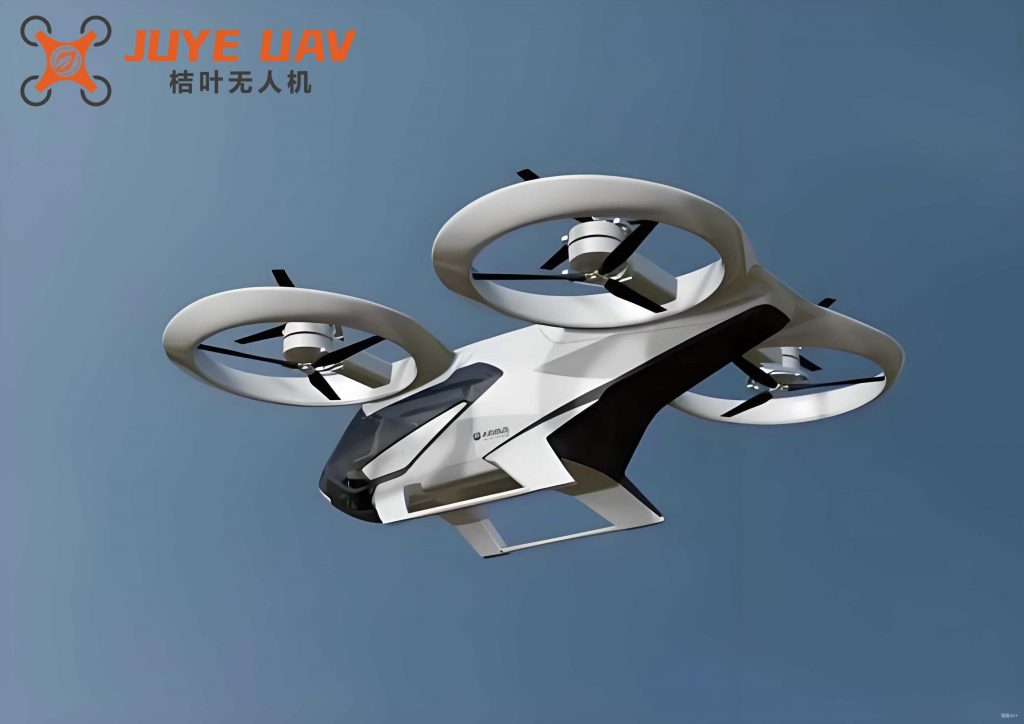
To elucidate the quadrotor drone’s hardware specifications, the table below summarizes key components and their functions:
| Component | Specification | Role in Quadrotor Drone System |
|---|---|---|
| Frame | 650mm carbon fiber, foldable | Provides structural integrity and portability for the quadrotor drone |
| Flight Controller | APM open-source, with integrated sensors (IMU, magnetometer, barometer) | Processes flight data and stabilizes the quadrotor drone via control algorithms |
| Power System | AC mains power adapter | Ensures unlimited flight duration for the quadrotor drone, reducing operational costs |
| Remote Controller | 6-channel, 2.4GHz frequency | Enables manual piloting and parameter adjustment of the quadrotor drone |
| Ground Station Software | Mission Planner, connected via Wi-Fi | Displays real-time telemetry and allows mission planning for the quadrotor drone |
The dynamics of a quadrotor drone are fundamental to its control and stability. We model the quadrotor drone using Newton-Euler equations, where the translational motion is governed by:
$$ m \ddot{\mathbf{r}} = \mathbf{F} – mg\mathbf{e}_3 $$
Here, \( m \) represents the mass of the quadrotor drone, \( \ddot{\mathbf{r}} \) is the acceleration vector, \( \mathbf{F} \) is the total thrust force generated by the rotors, and \( g \) is the gravitational constant. The rotational dynamics are described by:
$$ \mathbf{I} \dot{\boldsymbol{\omega}} + \boldsymbol{\omega} \times \mathbf{I} \boldsymbol{\omega} = \boldsymbol{\tau} $$
In this equation, \( \mathbf{I} \) denotes the inertia tensor of the quadrotor drone, \( \boldsymbol{\omega} \) is the angular velocity vector, and \( \boldsymbol{\tau} \) is the torque vector. These equations underpin the design of control systems for the quadrotor drone, enabling precise maneuverability.
For control implementation, we employ a hierarchical approach, combining proportional-integral-derivative controllers for attitude stabilization. The control input for the quadrotor drone’s altitude, for instance, can be expressed as:
$$ F = mg + m \ddot{z}_d + K_{p,z} e_z + K_{d,z} \dot{e}_z $$
where \( F \) is the total thrust, \( z_d \) is the desired altitude, \( e_z = z_d – z \) is the altitude error, and \( K_{p,z} \) and \( K_{d,z} \) are controller gains tuned for the quadrotor drone. Additionally, the state-space representation linearized around hover conditions facilitates advanced control strategies:
$$ \dot{\mathbf{x}} = A \mathbf{x} + B \mathbf{u} $$
with state vector \( \mathbf{x} = [x, y, z, \dot{x}, \dot{y}, \dot{z}, \phi, \theta, \psi, p, q, r]^T \) encompassing position, velocity, Euler angles, and angular rates of the quadrotor drone, and matrices \( A \) and \( B \) derived from system dynamics.
Sensor fusion is critical for accurate state estimation in quadrotor drones. We integrate data from accelerometers, gyroscopes, and magnetometers using a Kalman filter, with prediction steps defined as:
$$ \hat{\mathbf{x}}_{k|k-1} = F_k \hat{\mathbf{x}}_{k-1|k-1} + B_k \mathbf{u}_k $$
$$ P_{k|k-1} = F_k P_{k-1|k-1} F_k^T + Q_k $$
Here, \( \hat{\mathbf{x}} \) is the estimated state, \( P \) is the error covariance, and \( Q \) is the process noise covariance for the quadrotor drone. This enhances the reliability of flight data displayed on the ground station.
The curriculum developed for the quadrotor drone teaching platform is structured into four modular components: Fundamental Knowledge, Basic Principles, Classroom Simulations, and Field Applications. Each module targets distinct learning outcomes, catering to beginners, intermediate users, and advanced researchers. The table below outlines the curriculum framework:
| Module | Core Topics | Learning Objectives | Target Audience |
|---|---|---|---|
| Fundamental Knowledge | UAV regulations, safety protocols, quadrotor drone anatomy, assembly procedures | Identify quadrotor drone parts, perform pre-flight checks, understand legal frameworks | Beginners (e.g., students, hobbyists) |
| Basic Principles | Aerodynamics of quadrotor drones, control theory, sensor calibration, power management | Explain flight dynamics, tune PID controllers, analyze sensor data for quadrotor drones | Intermediate learners (e.g., engineering students) |
| Classroom Simulations | Virtual flight training via software, fault injection scenarios, parameter optimization exercises | Develop piloting skills in a safe environment, troubleshoot common quadrotor drone issues | All levels, emphasizing hands-on practice |
| Field Applications | Real-world mission planning, data collection using quadrotor drones, integration with IoT systems | Design autonomous missions, apply quadrotor drone technology to practical problems | Advanced users (e.g., researchers, professionals) |
To quantify the educational impact, we assess learning outcomes through various methods. The following table details assessment strategies for different competency levels related to quadrotor drone operation:
| Competency Level | Key Skills | Assessment Tools | Example Tasks for Quadrotor Drone |
|---|---|---|---|
| Beginner | Basic assembly, safe takeoff/landing, understanding controls | Multiple-choice quizzes, practical flight tests, peer evaluations | Assemble a quadrotor drone frame, execute a hover maneuver |
| Intermediate | Control parameter tuning, flight pattern execution, data logging | Simulation reports, flight mission logs, oral presentations | Tune PID gains to stabilize a quadrotor drone in wind conditions |
| Advanced | Algorithm development, autonomous navigation, system integration | Research papers, capstone projects, competition entries | Implement a SLAM algorithm for quadrotor drone indoor mapping |
The quadrotor drone teaching platform incorporates interactive software tools, such as Mission Planner, which provides real-time telemetry display. This allows learners to visualize parameters like altitude, battery status, and attitude angles of the quadrotor drone, reinforcing theoretical concepts. For instance, students can observe how changes in control gains affect the quadrotor drone’s response, linking mathematical models to physical behavior.
In terms of safety and cost-effectiveness, our platform offers significant advantages over traditional outdoor training. The table below compares key aspects:
| Aspect | Traditional Quadrotor Drone Training | Our Indoor Quadrotor Drone Platform |
|---|---|---|
| Safety Risks | High (outdoor hazards, weather dependencies, battery failures) | Low (controlled environment, weighted base, AC power supply) |
| Equipment Cost | Elevated (frequent battery replacement, repair costs from crashes) | Reduced (durable design, no battery wear, reusable components) |
| Training Time | Extended (limited by weather and daylight, setup delays) | Flexible (indoor operation, continuous sessions, instant feedback) |
| Learning Efficiency | Moderate (theory-practice separation, slower skill acquisition) | High (integrated approach, interactive simulations, faster mastery) |
To further elaborate on the quadrotor drone’s technical parameters, typical values used in our platform are summarized here:
| Parameter | Symbol | Value | Unit | Description |
|---|---|---|---|---|
| Mass | \( m \) | 1.8 | kg | Total mass of the quadrotor drone including payload |
| Arm Length | \( L \) | 0.325 | m | Distance from center to each rotor of the quadrotor drone |
| Rotor Thrust Coefficient | \( k_f \) | 1.2e-5 | N/(rad/s)^2 | Converts rotor speed to thrust for the quadrotor drone |
| Rotor Torque Coefficient | \( k_m \) | 2.1e-7 | Nm/(rad/s)^2 | Relates rotor speed to drag torque in the quadrotor drone |
| Moment of Inertia (x-axis) | \( I_{xx} \) | 0.025 | kg·m² | Inertia about roll axis of the quadrotor drone |
| Moment of Inertia (y-axis) | \( I_{yy} \) | 0.025 | kg·m² | Inertia about pitch axis of the quadrotor drone |
| Moment of Inertia (z-axis) | \( I_{zz} \) | 0.035 | kg·m² | Inertia about yaw axis of the quadrotor drone |
The control architecture for the quadrotor drone involves nested loops. The inner loop manages attitude using PID controllers, with the control law for roll angle \( \phi \) given by:
$$ u_\phi = K_{p,\phi} e_\phi + K_{i,\phi} \int e_\phi \, dt + K_{d,\phi} \dot{e}_\phi $$
where \( e_\phi = \phi_d – \phi \) is the roll error for the quadrotor drone, and \( u_\phi \) is the control output. Similarly, the outer loop handles position control, often employing trajectory tracking algorithms. For waypoint navigation, we use a proportional guidance law:
$$ \mathbf{a}_c = K_v (\mathbf{v}_d – \mathbf{v}) + K_p (\mathbf{r}_d – \mathbf{r}) $$
with \( \mathbf{a}_c \) as the commanded acceleration for the quadrotor drone, \( \mathbf{r}_d \) and \( \mathbf{v}_d \) as desired position and velocity, and gains \( K_p \) and \( K_v \).
In classroom implementations, the quadrotor drone platform has been deployed across educational levels, from secondary schools to universities. For example, in a high school STEM program, students used the platform to learn about aerodynamics and coding, programming simple flight patterns for the quadrotor drone. At the university level, engineering courses integrate the quadrotor drone into control systems labs, where students design and test algorithms, observing real-time effects on the quadrotor drone’s behavior. Feedback indicates that this hands-on approach significantly boosts engagement and retention of complex concepts related to quadrotor drones.
To address scalability, the curriculum includes collaborative projects involving multiple quadrotor drones. Swarm coordination algorithms, such as consensus-based formation control, are explored. The dynamics for each quadrotor drone in a swarm can be coupled through communication graphs, modeled as:
$$ \dot{\mathbf{x}}_i = f(\mathbf{x}_i) + \sum_{j \in N_i} K_{ij} (\mathbf{x}_j – \mathbf{x}_i) $$
where \( \mathbf{x}_i \) is the state of the i-th quadrotor drone, \( N_i \) is its neighbor set, and \( K_{ij} \) are coupling gains. This expands the educational scope to emerging fields like multi-agent systems.
Economic analysis reveals that the quadrotor drone teaching platform reduces long-term training costs. By avoiding battery degradation and minimizing crash-related damages, institutions can allocate resources more efficiently. The table below breaks down cost comparisons over a typical training cycle:
| Cost Category | Conventional Quadrotor Drone Training (per year) | Our Platform (per year) | Savings |
|---|---|---|---|
| Battery Replacement | $500 (assuming 10 batteries at $50 each) | $0 (AC power) | $500 |
| Repair and Maintenance | $800 (due to outdoor crash damages) | $200 (minor indoor wear) | $600 |
| Insurance and Permits | $300 (for outdoor flight permissions) | $50 (indoor use waiver) | $250 |
| Total | $1600 | $250 | $1350 |
Furthermore, the platform supports research and development in quadrotor drone technology. Advanced users can modify the open-source flight controller code, implementing custom algorithms for tasks like obstacle avoidance or computer vision integration. For instance, a common enhancement involves adding a camera module to the quadrotor drone for image processing, with algorithms for object detection running on onboard processors.
The educational methodology emphasizes active learning through simulation-based exercises. Using software-in-the-loop (SITL) simulations, learners can test control strategies for the quadrotor drone before real flight, reducing risks. The simulation environment models quadrotor drone dynamics with high fidelity, incorporating noise and disturbances to mimic real-world conditions. This preparatory step ensures that students gain confidence and competence before operating the physical quadrotor drone.
Looking ahead, we plan to integrate augmented reality features into the quadrotor drone teaching platform, overlaying real-time data and virtual obstacles onto the physical environment. This will create an even more immersive learning experience for quadrotor drone operators. Additionally, expanding the curriculum to include topics like machine learning for autonomous quadrotor drone navigation will keep pace with technological advancements.
In conclusion, the full-scale quadrotor drone teaching platform represents a holistic solution to UAV education challenges. By seamlessly blending theoretical instruction with practical飞行 experiences, it enhances safety, reduces costs, and accelerates skill acquisition for quadrotor drone operations. The accompanying curriculum ensures that learners at all levels can engage meaningfully with quadrotor drone technology, from basic principles to advanced applications. As the demand for skilled quadrotor drone operators grows, such integrated platforms will play a crucial role in shaping the future of aerospace education and industry readiness.