
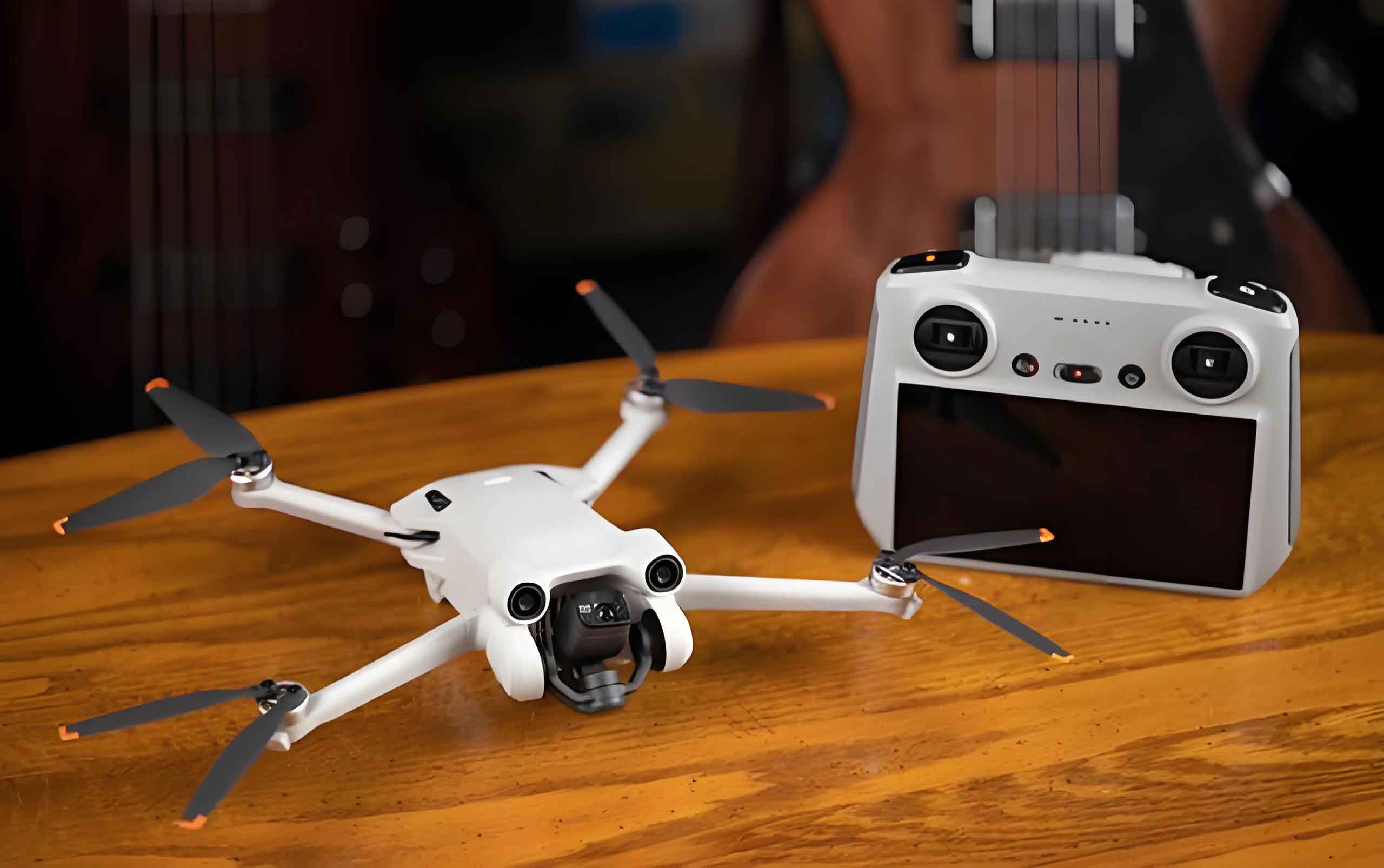
This research addresses the critical challenges in agricultural logistics through an innovative truck-multi-drone collaborative system. We develop a comprehensive two-stage optimization framework integrating drone technology to enhance perishable goods transportation efficiency while satisfying operational constraints. Our approach combines mathematical modeling with heuristic algorithms to solve complex routing problems inherent in fresh produce supply chains.
The mathematical foundation comprises two interconnected MILP models. Stage 1 minimizes facility activation costs while ensuring regional coverage:
$$ \min Z_1 = \sum_{k=1}^{k_{\max}} \alpha_k + \left\{ \sum_{n \in N} \sum_{m \in M} d_{\text{man}} (\text{Loc}_n, \text{Loc}_m) \phi_n \right\} + \sum_{n \in N} \phi_n f_n + \gamma \sum_{p \in P} \sum_{n \in N} \rho (\text{Loc}_p, \text{Loc}_n) Z_{pn} $$
Subject to coverage constraints:
$$ \sum_{n \in N} \phi_n \geq 1 $$
$$ \sum_{n \in N} \sigma_{pn} \phi_n \geq 1 \quad \forall p \in P $$
$$ \sigma_{pn} > 1 – \left( \frac{d_{pn}}{R_{\max}} \right) \quad \forall p \in P, n \in N $$
Stage 2 optimizes routing costs considering Unmanned Aerial Vehicle capabilities:
$$ \min Z_2 = \sum_{i \in V_s} \sum_{j \in V_s} \sum_{k \in K} d_{ij} \cdot x_{ijk} \cdot \alpha_k + \gamma \sum_{i \in N_s} \sum_{j \in P} \sum_{q \in N_s} \sum_{k \in K} y_{ijqk} \left( d_{ij} + d_{jk} \left( \frac{2}{HU_{jmk}} \beta_k Q_u – 1 \right) \right) $$
Critical constraints include:
$$ \sum_{j \in V_s^+} \sum_{k \in K} x_{ijk} \geq 1 \quad \forall i \in N_s, i \neq j $$
$$ \sum_{k \in K} \sum_{q \in N_s} \sum_{h \in N_s} \beta_l \cdot y_{hiql} = \frac{2 Q_{ij}^* \beta_k}{Q_u} \quad \forall i \in P, j \in M, k \in K $$
$$ t_{(n_s+1)k} \leq T_{\max} \quad \forall k \in K $$
The algorithm framework integrates facility location and routing optimization:
- Facility Location Phase:
- Generate candidate facilities using spatial clustering
- Evaluate coverage and activation costs
- Select optimal facility set satisfying $$ R_{\max} $$ constraints
- Routing Optimization Phase:
- Initialize solution population with adaptive encoding
- Apply local search with neighborhood operators:
- Drone-truck reassignment
- Demand reallocation
- Route recombination
- Evaluate solutions using fitness function $$ F = \frac{1}{Z_1 + Z_2} $$
- Implement elite preservation and diversification
Numerical experiments validate model performance across diverse scenarios:
| Test Set | Method | Cost (Z) | Runtime (s) | Gap (%) |
|---|---|---|---|---|
| TSG4 | MILP (Gurobi) | 7,549.62 | 500.0 | 0.00 |
| Genetic Algorithm | 7,559.62 | 27.0 | 0.13 | |
| Two-Phase Heuristic | 7,446.24 | 38.9 | -1.37 | |
| TSG7 | MILP (Gurobi) | 39,417.25 | 500.0 | 0.00 |
| Genetic Algorithm | 40,690.17 | 200.6 | 3.23 | |
| Two-Phase Heuristic | 37,536.10 | 200.1 | -4.77 |
Key performance metrics demonstrate the superiority of drone-assisted systems:
| Performance Metric | Truck-Only | Truck-Drone System | Improvement |
|---|---|---|---|
| Total Cost (RMB) | 524,464.72 | 368,471.21 | 29.76% |
| Delivery Time (hours) | 24.0 | 23.72 | 1.17% |
| Vehicles Utilized | 23 | 17 | 26.09% |
| Unmanned Aerial Vehicle Sorties | 164 | 124 | 24.39% |
| Perishable Loss Rate | 12.7% | 8.3% | 34.65% |
The operational mechanics of drone technology in our system follow these principles:
$$ t’_{qk} \geq t’_{hk} + \sum_{j \in P} \left[ \frac{d_{hq}}{v_k} + \frac{d_{hj}}{v_u} + \frac{d_{jh}}{v_u} \cdot \left( \frac{2 Q_{jm}}{Q_u \sum_{l \in K} \sum_{a \in N_s} \sum_{b \in N_s} \beta_l \cdot y_{ajbl}} – 1 \right) \right] y_{hjhk} $$
$$ + \sum_{j \in P} \left[ \frac{d_{hj}}{v_u} + \frac{d_{jq}}{v_u} \cdot \left( \frac{2 Q_{jm}}{Q_u \sum_{l \in K} \sum_{a \in N_s} \sum_{b \in N_s} \beta_l \cdot y_{ajbl}} – 1 \right) \right] y_{hjqk} – B (1 – x_{hqk}) $$
This research demonstrates significant advancements in agricultural logistics through three key contributions:
- Novel two-stage MILP formulation integrating splittable demand and regional constraints for truck-drone coordination
- Efficient hybrid heuristic algorithm combining facility location optimization with adaptive large neighborhood search
- Empirical validation showing 29.76% cost reduction and 34.65% decrease in perishable losses compared to traditional systems
The integration of drone technology enables dynamic rerouting based on real-time constraints:
$$ \text{Drone Deployment Feasibility} = \begin{cases} 1 & \text{if } \rho(\text{Loc}_p, \text{Loc}_n) \leq R_{\max} \text{ and } \sum_{j \in P} \sum_{i \in N} \sum_{q \in N} y_{ijqk} HU_{jmk} \leq Q_k^{\max} \\ 0 & \text{otherwise} \end{cases} $$
Future research directions include dynamic reoptimization for weather disruptions, integration of AI for predictive demand allocation, and hybrid energy management systems for extended Unmanned Aerial Vehicle operations. The proposed framework establishes a foundation for sustainable, efficient logistics in perishable goods supply chains through advanced drone technology applications.