
As I delve into the realm of autonomous systems, I am fascinated by the evolution of control technology, which traces back millennia to inventions like the “wooden horse carriage” and “wooden ox and horse” in ancient times. With the advent of modern control theory, robust control, fuzzy control, and computer control techniques have been applied across military, industrial, management, and daily life domains. Unmanned aerial vehicles (UAVs), or drones, as pilotless aircraft, have rapidly developed over the past decade, propelled by military applications and now permeating civilian use. These versatile machines are controllable and capable of executing diverse tasks. Today, drones serve multifunctional roles: from military reconnaissance and disaster relief logistics to civilian applications like aerial photography, performances, surveying, and rescue operations. As human progress continues, what trends will shape drone development? What novel roles will emerge? How can research optimize drones to better benefit humanity? In many scenarios such as surveillance, rescue, and displays, drones often operate in formations, making the study of drone formation control paramount. This article explores the principles of drone formation control, focusing on formation assembly and obstacle avoidance methods, with an emphasis on artificial potential field (APF) techniques for path planning.
The significance of drone formation cannot be overstated in today’s technologically advancing world. Drone technology has transcended theoretical stages and military applications, maturing into civilian and commercial domains. In civilian sectors, drones are used in agriculture for tasks like fertilization, while commercially, they range from recreational drones to spectacular formation displays in events. The advent of drone formation technology has broadened applications, accelerating the integration of this high-tech innovation into daily life. Single drones offer unique advantages, such as small size, ease of operation, and portability, but limitations arise due to limited payload capacity, field of view, and energy constraints, restricting their efficacy in military and transport missions. To overcome these challenges, a straightforward solution is deploying multiple drones collaboratively—forming a drone formation. A drone formation involves multiple drones maintaining specific configurations during flight, ensuring formation integrity. This approach yields several benefits: it enables multi-angle surveillance for enhanced information accuracy, improves mission reliability and efficiency by allowing continued operation if some drones fail, and addresses payload limitations through cooperative tasks like lifting and transport. However, controlling a drone formation requires specialized algorithms beyond single-drone control, necessitating coordinated strategies for motion planning and obstacle avoidance.
To understand drone formation control, it is essential to classify drones. Major categories include fixed-wing drones, rotary-wing drones, airships, parafoil drones, and flapping-wing drones. Rotary-wing drones, particularly quadrotors, are widely used due to their simple structure and maneuverability. In military contexts, they aid in target detection and exploration; in civilian uses, they serve aerial photography and crop spraying. Future applications may expand to delivery services. Quadrotors feature a symmetrical design with four motors, a central flight control computer, and critical equipment. They typically adopt ‘+’ or ‘X’ configurations, with ‘X’ types offering greater agility and wider fields of view for photography. The body radius R relates to the maximum rotor radius r. Quadrotors exhibit six motion states: vertical ascent/descent, pitch, roll, yaw, forward/backward, and lateral movement. A quadrotor platform comprises the drone body, onboard computer, indoor navigation system, and computer terminal. The onboard computer acts as a hub, processing data from the flight controller—which computes real-time position, attitude, and yaw—and transmitting waypoint information back, forming a closed-loop control. Ground terminals enable remote monitoring and control via software.
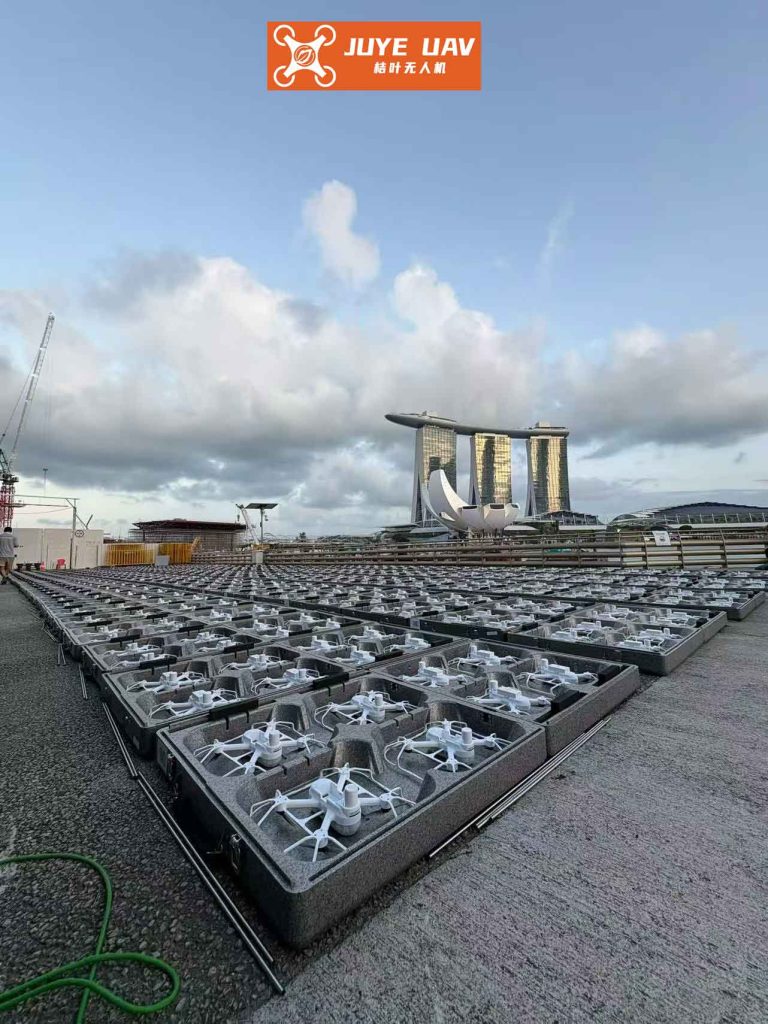
In drone formation control, path planning is crucial. As drones are increasingly employed in demanding industries like automation and manufacturing, enabling autonomous path planning is vital. Robots, including drones, must navigate static and dynamic environments with obstacles, requiring algorithms to find short, collision-free paths to goals. Navigation methods can be categorized into classical approaches—such as roadmap construction, cell decomposition, and artificial potential field (APF) methods—and reactive techniques like fuzzy logic, neural networks, neuro-fuzzy systems, and bio-inspired algorithms. The APF method is prevalent in mobile robot and drone navigation due to its robustness and intelligence, making it suitable for complex environments. It also addresses the challenge of coordinating multiple controllers on a single platform to avoid mutual collisions, a key issue in drone formation.
The APF method for path control is inspired by electric fields, where drones are guided by combined attractive and repulsive forces. In this framework, drones and obstacles are virtually assigned similar charges, causing repulsion, while drones and goals have opposite charges, causing attraction. The resultant force directs the drone toward the destination while avoiding obstacles. Mathematically, the total potential $U(q)$ at a point $q$ in space is the sum of attractive potential $U_{att}(q)$ from the goal and repulsive potential $U_{rep}(q)$ from obstacles. The force $F(q)$ is the negative gradient of the potential:
$$F(q) = -\nabla U(q) = -\nabla (U_{att}(q) + U_{rep}(q))$$
The attractive potential is often defined as a quadratic function of distance to the goal:
$$U_{att}(q) = \frac{1}{2} k_{att} \cdot d^2(q, q_{goal})$$
where $k_{att}$ is a positive gain constant, and $d(q, q_{goal})$ is the Euclidean distance between the drone’s position $q$ and the goal $q_{goal}$. The attractive force $F_{att}(q)$ is:
$$F_{att}(q) = -\nabla U_{att}(q) = -k_{att} \cdot (q – q_{goal})$$
The repulsive potential increases as the drone approaches obstacles, typically modeled as:
$$U_{rep}(q) = \begin{cases} \frac{1}{2} k_{rep} \left( \frac{1}{d(q, O)} – \frac{1}{d_0} \right)^2 & \text{if } d(q, O) \leq d_0 \\ 0 & \text{if } d(q, O) > d_0 \end{cases}$$
where $k_{rep}$ is a positive repulsive gain, $d(q, O)$ is the minimum distance to any obstacle $O$, and $d_0$ is the influence distance of the obstacle. The repulsive force $F_{rep}(q)$ is:
$$F_{rep}(q) = -\nabla U_{rep}(q) = \begin{cases} k_{rep} \left( \frac{1}{d(q, O)} – \frac{1}{d_0} \right) \frac{1}{d^2(q, O)} \nabla d(q, O) & \text{if } d(q, O) \leq d_0 \\ 0 & \text{if } d(q, O) > d_0 \end{cases}$$
For drone formation, the APF method can be extended to include inter-drone forces to maintain formation geometry and avoid collisions. The total force on the $i$-th drone in a formation is:
$$F_i(q_i) = F_{att,i}(q_i) + \sum_{j \neq i} F_{rep,ij}(q_i, q_j) + \sum_{O} F_{rep,iO}(q_i, O)$$
where $F_{att,i}$ is the attractive force to the goal, $F_{rep,ij}$ is the repulsive force from other drones $j$ to ensure spacing, and $F_{rep,iO}$ is the repulsive force from obstacles. This formulation enables cohesive drone formation movement toward objectives while avoiding collisions.
Drone formation assembly methods are diverse, each with unique principles. I summarize key approaches in Table 1, highlighting their characteristics and applications in drone formation control.
| Method | Description | Advantages | Disadvantages |
|---|---|---|---|
| Behavior-Based | Uses predefined behaviors (e.g., flocking, following) for local interactions. | Flexible, scalable, robust to disturbances. | May lack global optimization, difficult to guarantee precise formation. |
| Virtual Structure | Treats the formation as a rigid virtual body; drones maintain relative positions. | Provides precise formation control, easy to implement trajectories. | Less adaptable to dynamic environments, requires central coordination. |
| Artificial Potential Field (APF) | Employs attractive and repulsive forces for goal-reaching and obstacle avoidance. | Simple, computationally efficient, suitable for real-time applications. | Susceptible to local minima, may cause oscillations near obstacles. |
| Graph Theory | Models formation with graphs; uses Laplacian matrices for consensus control. | Formal theoretical foundation, handles communication constraints. | Complex to design, requires network connectivity. |
| Leader-Follower | Designates a leader drone; followers track its trajectory with offsets. | Simplifies control, reduces communication needs. | Single point of failure (leader), propagation of errors. |
For obstacle avoidance in drone formation, various techniques exist. I outline primary methods in Table 2, focusing on their relevance to drone formation navigation.
| Method | Description | Suitability for Drone Formation |
|---|---|---|
| Visibility Graph | Constructs a graph of visible paths between nodes; finds shortest collision-free paths. | Effective for static environments, but computationally heavy for large formations. |
| Free Space | Decomposes free space into convex regions; plans paths within them. | Good for structured environments, may struggle with dynamic obstacles. |
| Grid-Based | Divides environment into grids; uses search algorithms (e.g., A*) for pathfinding. | Simple to implement, but resolution affects performance and memory usage. |
| Genetic Algorithm | Uses evolutionary optimization to evolve paths over generations. | Handles complex constraints, but slow for real-time drone formation control. |
| APF-Based | Integrates repulsive forces from obstacles into potential fields for real-time avoidance. | Highly suitable for dynamic environments and real-time drone formation adjustments. |
To delve deeper into drone formation dynamics, consider a formation of $N$ drones. Let $q_i \in \mathbb{R}^3$ denote the position of the $i$-th drone. The desired formation can be defined by a set of relative position vectors $d_{ij}$ between drones $i$ and $j$. The formation error $e_i$ for drone $i$ is:
$$e_i = \sum_{j \in \mathcal{N}_i} ( \| q_i – q_j \| – \| d_{ij} \| )^2$$
where $\mathcal{N}_i$ is the set of neighbors of drone $i$. A control law based on APF can minimize this error while incorporating obstacle avoidance. For instance, a combined potential function for drone $i$ is:
$$U_i(q_i) = U_{att,i}(q_i) + U_{form,i}(q_i) + U_{rep,i}(q_i)$$
where $U_{att,i}$ is the goal attraction, $U_{form,i}$ enforces formation geometry (e.g., using spring-like potentials between drones), and $U_{rep,i}$ handles obstacles. The formation potential might be:
$$U_{form,i}(q_i) = \sum_{j \in \mathcal{N}_i} \frac{1}{2} k_{form} ( \| q_i – q_j \| – d_{ij} )^2$$
with $k_{form}$ as a formation gain. The corresponding force is:
$$F_{form,i}(q_i) = -k_{form} \sum_{j \in \mathcal{N}_i} ( \| q_i – q_j \| – d_{ij} ) \frac{q_i – q_j}{\| q_i – q_j \|}$$
This approach ensures that the drone formation maintains cohesion and shape during flight, adapting to environmental changes.
In practice, implementing drone formation control requires addressing challenges like communication delays, sensor noise, and scalability. For example, in a decentralized drone formation, each drone relies on local information from sensors and limited communication with neighbors. The dynamics of a quadrotor drone can be modeled using Newton-Euler equations. Let $m$ be the drone mass, $g$ gravity, and $T$ the total thrust. The translational dynamics are:
$$m \ddot{q} = \begin{bmatrix} 0 \\ 0 \\ -mg \end{bmatrix} + R \begin{bmatrix} 0 \\ 0 \\ T \end{bmatrix} + F_{ext}$$
where $R$ is the rotation matrix from body to inertial frame, and $F_{ext}$ includes external forces like wind or APF-based control forces. For attitude control, Euler angles or quaternions are used. In a drone formation, these dynamics must be coordinated across multiple drones.
The APF method, while powerful, has limitations such as local minima where the net force becomes zero before reaching the goal. Enhancements like virtual obstacles or hybrid approaches can mitigate this. For drone formation, integrating APF with other methods—such as graph theory for consensus—can improve performance. A consensus algorithm ensures that drones agree on shared variables (e.g., velocity or heading). The consensus error for a variable $x_i$ is:
$$\dot{x}_i = \sum_{j \in \mathcal{N}_i} a_{ij} (x_j – x_i)$$
where $a_{ij}$ are edge weights of the communication graph. Combining this with APF forces allows synchronized drone formation movements.
Beyond APF, other path planning techniques contribute to drone formation control. For instance, model predictive control (MPC) optimizes trajectories over a horizon, considering constraints. The cost function for drone $i$ might be:
$$J_i = \sum_{t=0}^{T} \left( \| q_i(t) – q_{goal} \|^2 + \lambda \sum_{j \neq i} \| q_i(t) – q_j(t) \|^2 \right)$$
subject to dynamics and obstacle constraints. This is computationally intensive but offers optimal paths for drone formation.
In terms of applications, drone formation technology is revolutionizing industries. In agriculture, formations of drones can cover large fields efficiently for crop monitoring or spraying. In search and rescue, formations provide wide-area coverage to locate survivors. In entertainment, synchronized drone formations create dazzling light shows. The military uses formations for surveillance and coordinated strikes. As autonomy improves, drone formations may enable automated logistics, such as swarm-based delivery systems.
To illustrate the complexity of drone formation control, consider a scenario with dynamic obstacles. Each drone must predict obstacle trajectories and adjust its path accordingly. Using APF with velocity obstacles (VO) method, the repulsive potential can be modified to account for relative velocities. Let $v_{drone}$ and $v_{obs}$ be velocities of the drone and obstacle. The relative velocity $v_{rel} = v_{drone} – v_{obs}$. The time to collision $t_c$ is estimated, and the repulsive force is scaled by $1/t_c$ to prioritize imminent collisions. This enhances safety in drone formation navigation.
Moreover, energy efficiency is critical for drone formation endurance. Path planning can minimize energy consumption by optimizing trajectories. The power consumption $P$ for a drone is often proportional to thrust $T$ and velocity $v$. A simplified model is:
$$P = c_1 T + c_2 \| v \|^2$$
where $c_1$ and $c_2$ are constants. For a drone formation, the total energy can be reduced by coordinating speeds and formations to reduce drag or leverage aerodynamic effects, such as vortex surfing in fixed-wing formations.
In summary, drone formation control is a multifaceted field integrating control theory, robotics, and computer science. Through methods like APF, drones can achieve autonomous, collision-free navigation in formations. The synergy of assembly and obstacle avoidance techniques enables robust applications across sectors. As research progresses, advances in AI, communication, and sensor technology will further enhance drone formation capabilities, paving the way for smarter, more efficient systems that profoundly impact society.
Reflecting on this exploration, I gain a deeper understanding of drone formation principles and challenges. The continuous evolution of technology promises exciting developments, from adaptive formations in uncertain environments to large-scale swarms with collective intelligence. By refining control algorithms and addressing practical issues, drone formations will undoubtedly become integral to future technological landscapes, driving innovation and improving quality of life.