
As an expert in the field of unmanned aerial systems, I have witnessed the rapid advancement of drone technology and its expanding applications across various sectors, including aerial photography, inspection, agriculture, and defense. The flight test phase is a critical component in ensuring drone performance and safety, yet traditional procedures often suffer from inefficiencies and heightened risks. In this article, I will delve into the optimization of drone flight test procedures, emphasizing the integral role of comprehensive drone training. Through systematic improvements and the integration of advanced methodologies, we can enhance both efficiency and safety, ultimately fostering innovation in the industry. The insights shared here are based on extensive experience and aim to provide a detailed framework for practitioners.
The importance of optimizing drone flight test procedures cannot be overstated. From my perspective, this optimization directly contributes to heightened efficiency and safety. For instance, by streamlining pre-flight checks, we can reduce preparation time significantly. Consider the following formula that quantifies efficiency improvement: $$ E_{\text{gain}} = \frac{T_{\text{old}} – T_{\text{new}}}{T_{\text{old}}} \times 100\% $$ where \( E_{\text{gain}} \) represents the percentage gain in efficiency, \( T_{\text{old}} \) is the time taken under traditional procedures, and \( T_{\text{new}} \) is the time under optimized procedures. In practice, I have observed gains exceeding 30% through automation. Moreover, safety enhancements can be modeled using risk reduction metrics: $$ R_{\text{reduction}} = \frac{I_{\text{before}} – I_{\text{after}}}{I_{\text{before}}} $$ where \( R_{\text{reduction}} \) is the risk reduction factor, and \( I \) denotes incident rates. Effective drone training programs are pivotal here, as they equip operators with the skills to implement these optimized protocols, thereby minimizing human error and mitigating potential hazards.
Beyond efficiency and safety, optimizing flight test procedures drives technological innovation. Through rigorous testing and data analysis, we can identify performance gaps and refine drone designs. The data collected during tests, such as flight stability parameters, can be expressed as: $$ S = \int_{0}^{t} \left( \alpha \cdot v(t) + \beta \cdot a(t) \right) dt $$ where \( S \) is a stability index, \( v(t) \) is velocity, \( a(t) \) is acceleration, and \( \alpha, \beta \) are weighting coefficients. This quantitative approach, reinforced by continuous drone training, allows for iterative improvements. In my work, I have seen how structured training sessions enable teams to better interpret data, leading to breakthroughs in autonomy and reliability. Thus, investing in drone training is not merely procedural but a catalyst for advancement.
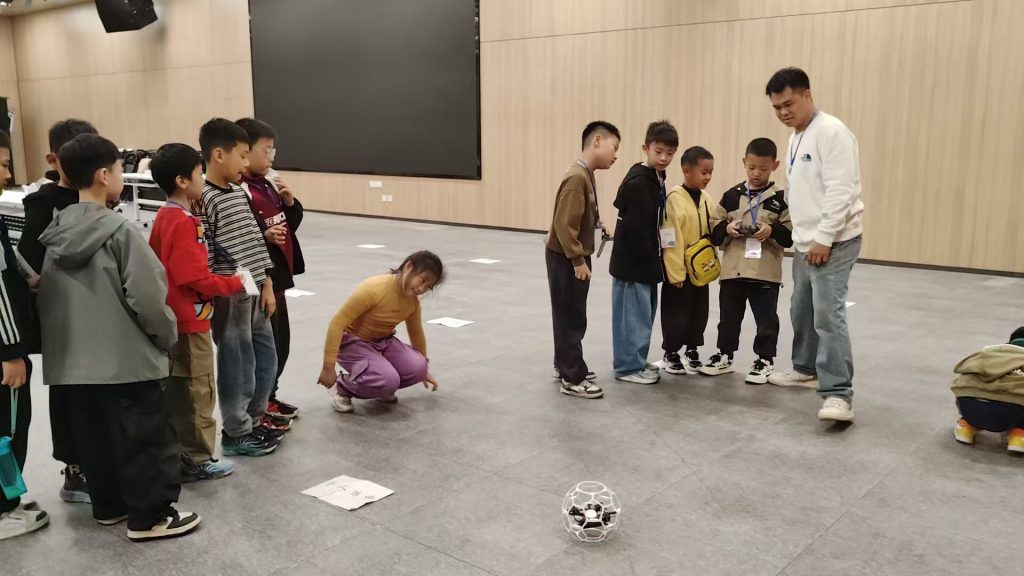
However, current drone flight test procedures often exhibit significant shortcomings. From my analysis, pre-flight preparations are frequently inadequate. For example, checks on mechanical structures, electrical systems, and sensors may be cursory, leading to failures mid-flight. This is where targeted drone training can make a difference—by instilling a culture of thoroughness. To illustrate common issues, I have compiled Table 1, which contrasts typical deficiencies with desired standards in pre-flight checks.
| Deficiency Area | Traditional Approach | Optimized Standard | Role of Drone Training |
|---|---|---|---|
| Mechanical Inspection | Visual check only | Automated scanning with diagnostics | Training on using diagnostic tools |
| Electrical Systems | Basic voltage test | Comprehensive load and continuity tests | Simulated fault scenarios in training |
| Communication Links | Range test in open field | Multi-environment signal strength analysis | Training on interference mitigation |
| Sensor Calibration | Manual calibration | Automated calibration algorithms | Hands-on calibration workshops |
During flight tests, monitoring and management are often insufficient. In my experience, real-time tracking of parameters like position, speed, and attitude can be fragmented, increasing the likelihood of incidents. Enhanced drone training programs should cover advanced monitoring techniques, such as using telemetry data for predictive analytics. The relationship between monitoring coverage and safety can be expressed as: $$ P_{\text{safe}} = 1 – e^{-\lambda \cdot C} $$ where \( P_{\text{safe}} \) is the probability of a safe flight, \( \lambda \) is a risk constant, and \( C \) represents monitoring coverage intensity. By improving \( C \) through better training and technology, we can boost \( P_{\text{safe}} \). Additionally, emergency response mechanisms are frequently underdeveloped; regular drone training drills on contingency protocols are essential to bridge this gap.
Post-flight summary and feedback mechanisms are another weak point. Often, debriefings are superficial, lacking in-depth analysis. From my viewpoint, this hinders continuous improvement. A robust feedback loop, integrated with drone training, can transform these sessions into learning opportunities. For instance, after each test, data should be analyzed using statistical models: $$ \Delta P = \mu \cdot \sum_{i=1}^{n} \frac{F_i}{D_i} $$ where \( \Delta P \) is the performance delta, \( \mu \) is a learning coefficient, \( F_i \) are feedback points, and \( D_i \) are data points from the flight. This formula emphasizes how structured feedback, coupled with training, drives progress. Moreover, expanding feedback channels—such as via online platforms—can incorporate insights from broader drone training communities, fostering collective growth.
To address these issues, I propose a multi-faceted optimization strategy. Starting with pre-flight preparations, we must adopt comprehensive checklists and leverage automation. As shown in Table 2, a detailed pre-flight protocol can be established, emphasizing the integration of drone training to ensure adherence.
| Step | Action | Tools/Methods | Drone Training Element |
|---|---|---|---|
| 1 | Drone Hardware Inspection | Automated diagnostic software | Training on software usage and interpretation |
| 2 | Battery and Power System Check | Load testers and capacity analyzers | Practical sessions on battery management |
| 3 | Communication System Validation | RF spectrum analyzers | Workshops on signal optimization |
| 4 | Flight Path Planning | GIS and simulation software | Training in route planning and risk assessment |
| 5 | Weather and Environmental Assessment | Real-time weather APIs | Education on environmental factors in drone training |
During the flight test, monitoring and management must be enhanced through technology and training. Implementing real-time data dashboards allows for instant decision-making. The efficiency of such systems can be modeled as: $$ M_{\text{eff}} = \frac{\sum_{i=1}^{k} D_i \cdot A_i}{T_{\text{response}}} $$ where \( M_{\text{eff}} \) is monitoring efficiency, \( D_i \) are data streams, \( A_i \) are analysis weights, and \( T_{\text{response}} \) is response time. Regular drone training on these dashboards ensures operators can react swiftly to anomalies. Furthermore, emergency protocols should be ingrained through simulated scenarios in drone training curricula, reducing panic and improving outcomes.
Post-flight, a systematic summary and feedback mechanism is crucial. I recommend establishing a digital repository for all test data, analyzed with machine learning algorithms to identify patterns. The improvement cycle can be described by: $$ I_{n+1} = I_n + \gamma \cdot (F_n – I_n) $$ where \( I_n \) is the iteration performance, \( \gamma \) is a feedback incorporation rate, and \( F_n \) is feedback quality. This iterative process is reinforced by continuous drone training, where lessons learned are disseminated across teams. Additionally, creating feedback forums encourages participation from all stakeholders, making drone training a collaborative effort.
In conclusion, optimizing drone flight test procedures is a dynamic and essential endeavor. Through meticulous pre-flight preparations, enhanced in-flight monitoring, and robust post-flight analysis, we can achieve significant gains in efficiency and safety. Central to this optimization is the emphasis on comprehensive drone training, which empowers operators to implement best practices and adapt to evolving technologies. As drone applications continue to proliferate, the role of structured training will only grow in importance. By fostering a culture of continuous learning and innovation, we can ensure that drone flight tests not only meet current standards but also pave the way for future advancements. The journey toward optimization is ongoing, and with dedicated efforts in drone training, we can navigate the challenges and unlock the full potential of unmanned aerial systems.