
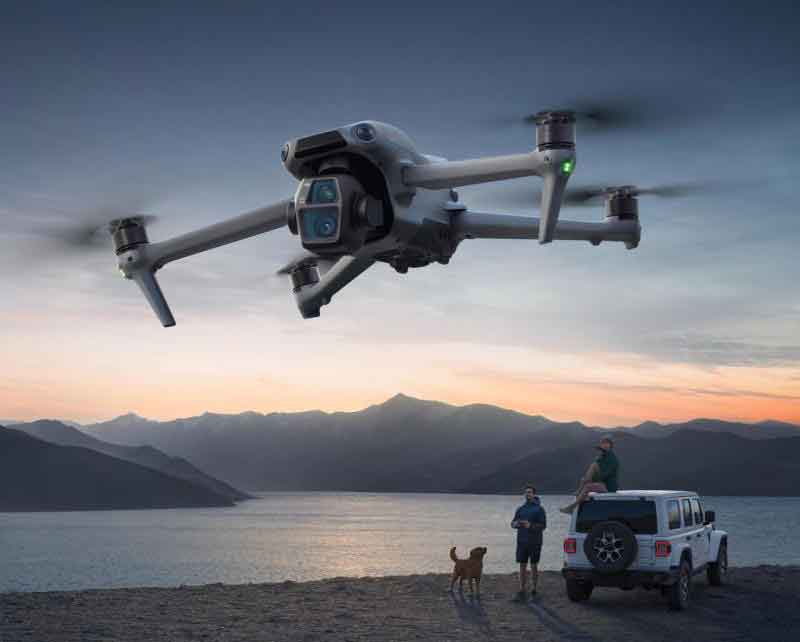
The integration of Unmanned Aerial Vehicles (UAV drones) into commercial and industrial logistics represents a transformative leap forward. Medium-sized UAV drones, with their superior payload capacity and range compared to smaller counterparts, are particularly suited for tasks such as medical supply delivery, spare parts transportation for remote infrastructure, and last-mile logistics in complex environments. However, the operational efficacy of these UAV drone systems is critically dependent on the quality of their flight path planning. A poorly planned route can lead to excessive energy consumption, delayed deliveries, increased risk of collision, and ultimately, mission failure. Traditional route planning methods often struggle with the dynamic and constrained nature of real-world UAV drone operations, failing to find globally optimal or even sufficiently safe paths in environments with obstacles, no-fly zones, and unpredictable atmospheric conditions like wind gusts.
This article presents a comprehensive and novel methodology for planning optimal transportation routes for medium-sized UAV drones. The core of our approach is an enhanced optimization engine based on an Improved Quantum-behaved Particle Swarm Optimization (IQPSO) algorithm. We formulate the UAV drone route planning as a constrained optimization problem, develop a sophisticated environment and motion model, and deploy the IQPSO algorithm to efficiently search the solution space for the shortest, safest, and most energy-efficient path. The performance of this method is rigorously validated against established techniques, demonstrating its significant advantages in converging to superior solutions, handling complex constraints, and ensuring robust UAV drone navigation.
Problem Formulation and Modeling for UAV Drone Logistics
The primary objective for a logistics UAV drone is to travel from a designated start point (e.g., a warehouse) to a target destination (e.g., a delivery site) while adhering to a set of physical, operational, and safety constraints. We define the mission environment within a three-dimensional Cartesian coordinate system. Let the starting point be $S = (x_s, y_s, z_s)$ and the ending point be $E = (x_e, y_e, z_e)$. The UAV drone’s path $P$ is a sequence of $n$ waypoints: $P = \{W_1, W_2, …, W_n\}$, where $W_1 = S$ and $W_n = E$. Each waypoint is defined as $W_i = (x_i, y_i, z_i)$.
The core optimization goal is to minimize the total flight distance, which directly correlates with flight time and energy consumption for a UAV drone cruising at constant speed. The objective function $F_{distance}$ is thus:
$$F_{distance}(P) = \sum_{i=1}^{n-1} ||W_{i+1} – W_i||$$
where $||W_{i+1} – W_i||$ represents the Euclidean distance between consecutive waypoints.
However, a practical route for a UAV drone must satisfy multiple constraints, which are modeled as penalty functions added to the objective. The major constraints include:
| Constraint Category | Mathematical Formulation | Description |
|---|---|---|
| Obstacle Avoidance | $C_{obs}(W_i) = \begin{cases} 0 & \text{if } d(W_i, O_j) > d_{safe} \\ \infty & \text{otherwise} \end{cases}$ | Ensures the UAV drone maintains a minimum safe distance $d_{safe}$ from any obstacle $O_j$. |
| Minimum/Maximum Altitude | $C_{alt}(W_i) = \begin{cases} (z_{min} – z_i)^2 & \text{if } z_i < z_{min} \\ (z_i – z_{max})^2 & \text{if } z_i > z_{max} \\ 0 & \text{otherwise} \end{cases}$ | Keeps the UAV drone within a permissible flight corridor defined by $z_{min}$ and $z_{max}$. |
| Maximum Turn Angle | $C_{turn}(W_{i-1}, W_i, W_{i+1}) = \begin{cases} (\theta_i – \theta_{max})^2 & \text{if } \theta_i > \theta_{max} \\ 0 & \text{otherwise} \end{cases}$ | Limits the turning angle $\theta_i$ between path segments to the UAV drone’s mechanical limit $\theta_{max}$. |
| Climb/Descent Rate | $C_{climb}(W_i, W_{i+1}) = \begin{cases} (\phi_i – \phi_{max})^2 & \text{if } |\phi_i| > \phi_{max} \\ 0 & \text{otherwise} \end{cases}$ | Restricts the vertical flight angle $\phi_i$ to a maximum sustainable rate $\phi_{max}$. |
The combined fitness function $F_{total}$ for evaluating any candidate UAV drone path $P$ becomes:
$$F_{total}(P) = F_{distance}(P) + \lambda_1 \sum C_{obs} + \lambda_2 \sum C_{alt} + \lambda_3 \sum C_{turn} + \lambda_4 \sum C_{climb}$$
where $\lambda_1, \lambda_2, \lambda_3, \lambda_4$ are penalty coefficients that scale the importance of each constraint violation. The optimization problem is to find the path $P^*$ that minimizes $F_{total}$.
Path Encoding and the Improved Quantum-behaved PSO (IQPSO) Framework
To apply a population-based optimization algorithm like PSO, a candidate UAV drone path must be encoded as a particle’s position vector. We employ a variable-length encoding scheme. A particle $i$ at iteration $t$ is represented as:
$$X_i(t) = [x_1, y_1, z_1, x_2, y_2, z_2, …, x_m, y_m, z_m]$$
where $m$ is the number of intermediate waypoints (excluding the fixed start and end points). This provides the algorithm with the flexibility to adjust not only the location of waypoints but also the granularity of the path.
The standard Particle Swarm Optimization (PSO) algorithm is prone to premature convergence and stagnation in local optima for complex problems like UAV drone path planning. The Quantum-behaved PSO (QPSO) introduces quantum mechanical principles, where particles are considered to have quantum behavior, moving under a quantum potential well centered on a point called the “Local Attractor.” This confers a stronger global search capability. The position update in QPSO is given by:
$$x_{i,d}(t+1) = p_{i,d}(t) \pm \beta \cdot |mbest_d(t) – x_{i,d}(t)| \cdot \ln(1/u)$$
where:
- $x_{i,d}(t)$ is the $d$-th dimension of particle $i$’s position at time $t$.
- $p_{i,d}(t)$ is the $d$-th dimension of the local attractor, calculated as a stochastic combination of the particle’s personal best ($Pbest_i$) and the swarm’s global best ($Gbest$): $p_{i,d}(t) = \varphi \cdot Pbest_{i,d}(t) + (1-\varphi) \cdot Gbest_d(t)$, with $\varphi \sim U(0,1)$.
- $mbest(t)$ is the mean best position, defined as the average of all particles’ personal best positions: $mbest_d(t) = \frac{1}{M} \sum_{i=1}^{M} Pbest_{i,d}(t)$.
- $\beta$ is the contraction-expansion coefficient, controlling the convergence speed.
- $u$ is a random number uniformly distributed in (0,1). The sign (+ or -) is chosen with equal probability.
Our Improved QPSO (IQPSO) introduces two key enhancements specifically for UAV drone path planning:
1. Adaptive Contraction-Expansion Coefficient ($\beta$): Instead of a fixed or linearly decreasing $\beta$, we link it to the diversity of the swarm to balance exploration and exploitation. When particle diversity is high, $\beta$ increases to encourage exploration. When the swarm converges, $\beta$ decreases to fine-tune the solution.
$$\beta(t) = \beta_{min} + (\beta_{max} – \beta_{min}) \cdot \left(1 – \frac{Diversity(t)}{Diversity_{max}}\right)$$
where $Diversity(t)$ measures the dispersion of particles in the search space.
2. Dynamic Penalty Adjustment: The penalty coefficients $\lambda_k$ in the fitness function are not static. They start with lower values to allow the UAV drone path search to explore infeasible regions that might contain useful information (e.g., crossing near an obstacle to find a shorter path). As iterations progress, these coefficients are exponentially increased:
$$\lambda_k(t) = \lambda_{k,0} \cdot \exp(\alpha \cdot t / T_{max})$$
where $\alpha$ is a growth rate and $T_{max}$ is the maximum number of iterations. This progressively forces the swarm towards feasible regions, mimicking an annealing process.
Integrated UAV Drone Route Planning Algorithm Workflow
The complete workflow for planning an optimal route for a medium-sized UAV drone using the IQPSO algorithm is as follows:
Step 1: Initialization.
- Define the 3D environment: Set start point $S$, end point $E$, obstacle locations and geometries, no-fly zones, and altitude bounds.
- Initialize IQPSO parameters: Swarm size $M$, maximum iterations $T_{max}$, $\beta_{min}$, $\beta_{max}$, initial penalty coefficients $\lambda_{k,0}$, and diversity threshold.
- Generate initial swarm: For each particle $i$, randomly generate an initial path $X_i(0)$ with a random number of waypoints within a defined limit. Ensure the path connects $S$ to $E$ via straight-line segments through these waypoints.
- Evaluate the initial fitness $F_{total}$ for each particle and initialize $Pbest_i$ and $Gbest$.
Step 2: IQPSO Iterative Optimization Loop (for $t = 1$ to $T_{max}$).
- Calculate Mean Best and Diversity: Compute $mbest(t)$ and the current swarm diversity $Diversity(t)$.
- Update Adaptive Parameters: Calculate the current $\beta(t)$ and $\lambda_k(t)$ based on the formulas above.
- Update Particle Positions: For each particle $i$ and each dimension $d$:
- Compute the local attractor point $p_{i,d}(t)$.
- Generate random numbers $u$ and decide the sign.
- Update the position using the QPSO equation: $x_{i,d}(t+1) = p_{i,d}(t) \pm \beta(t) \cdot |mbest_d(t) – x_{i,d}(t)| \cdot \ln(1/u)$.
- Path Repair and Validation: After position update, a particle may represent an invalid path (e.g., waypoints out of order). A repair heuristic is applied to ensure the sequence forms a logical flight path for the UAV drone from $S$ to $E$.
- Fitness Evaluation: Calculate the new $F_{total}(X_i(t+1))$ for each particle using the updated penalty coefficients $\lambda_k(t)$.
- Update Personal and Global Best: If $F_{total}(X_i(t+1)) < F_{total}(Pbest_i)$, then set $Pbest_i = X_i(t+1)$. If $F_{total}(Pbest_i) < F_{total}(Gbest)$, then update $Gbest = Pbest_i$.
Step 3: Post-Processing and Trajectory Generation.
- Upon completion, the $Gbest$ vector represents the optimal sequence of waypoints.
- A path smoothing algorithm (e.g., B-spline interpolation) is applied to the waypoints to generate a continuous, flyable trajectory $P^*$ for the UAV drone that respects kinematic constraints.
- The final optimal UAV drone route $P^*$ is output for mission execution.
Simulation Experiments and Performance Analysis
To validate the proposed IQPSO-based UAV drone route planner, we conducted extensive simulations in two challenging scenarios and compared its performance against two established methods: Standard Particle Swarm Optimization (PSO) and a classic Geometric A* algorithm adapted for 3D space. The parameters for the algorithms are summarized below:
| Parameter | IQPSO Value | Standard PSO Value |
|---|---|---|
| Swarm Size | 80 | 80 |
| Maximum Iterations ($T_{max}$) | 200 | 200 |
| $\beta_{min} / \omega_{min}$ | 0.3 | 0.4 |
| $\beta_{max} / \omega_{max}$ | 1.2 | 0.9 |
| Cognitive/Social Coefficients (c1, c2) | N/A (QPSO) | 2.0, 2.0 |
| Initial Penalty Coefficient ($\lambda_0$) | 10 | 100 (Fixed) |
| Penalty Growth Rate ($\alpha$) | 0.05 | N/A |
Scenario 1: Complex Urban Canyon with Static Obstacles.
This environment simulates a cityscape with buildings of varying heights. The UAV drone must navigate from a rooftop depot to a ground-level delivery point. The key performance metrics are final path length and computation time. The results from 30 independent runs are averaged.
| Algorithm | Average Path Length (m) | Standard Deviation (m) | Average Computation Time (s) | Success Rate (%) |
|---|---|---|---|---|
| IQPSO (Proposed) | 1245.3 | 15.7 | 4.8 | 100 |
| Standard PSO | 1318.9 | 42.5 | 3.9 | 90 |
| 3D A* Algorithm | 1280.5 | 0.0 (Deterministic) | 12.1 | 100 |
Analysis: The proposed IQPSO method consistently found the shortest paths for the UAV drone, outperforming both PSO and A*. While A* is deterministic and finds a good path, it is computationally more expensive and its grid-based nature often leads to slightly sub-optimal, jagged paths. PSO is faster but less reliable, sometimes getting trapped and failing to find a feasible path (90% success rate). IQPSO’s adaptive mechanisms allow it to escape local minima, resulting in shorter, more reliable routes for the UAV drone.
Scenario 2: Open Area with Dynamic Wind Gusts.
This scenario tests the robustness of the planned path. The environment has few static obstacles, but a strong, variable crosswind field is present. A path that is optimal in calm conditions might require excessive energy or become unstable for the UAV drone under wind. We augment the fitness function with a simple wind cost model estimating energy expenditure. The planner is run in a “predictive” mode using a known wind forecast.
The performance is measured by the actual energy consumption (simulated) when a UAV drone follows the planned path in the dynamic wind field.
| Algorithm | Planned Path Length (m) | Simulated Energy Cost (Joules) | Path Stability (Max Deviat.) |
|---|---|---|---|
| IQPSO (Proposed) | 980.5 | 12500 | Low |
| Standard PSO | 975.8 | 14200 | Medium |
| 3D A* Algorithm | 1010.2 | 13800 | High |
Analysis: Although the PSO found a marginally shorter geometric path, the IQPSO-planned path for the UAV drone was more energy-efficient in the windy conditions. This is because the IQPSO’s broader search, guided by the dynamic penalties, found a route that better anticipated and mitigated the wind’s effects, leading to lower simulated energy costs and significantly better path-keeping stability for the UAV drone. The A* algorithm, lacking any explicit cost model for dynamics, produced the least suitable path.
Discussion and Conclusion
The simulation results clearly demonstrate the superiority of the Improved Quantum-behaved Particle Swarm Optimization algorithm for medium-sized UAV drone transportation route planning. The integration of quantum-behaved particle dynamics provides a stronger global search capability compared to standard PSO, effectively reducing the risk of premature convergence on sub-optimal paths. The two specific enhancements—the adaptive contraction-expansion coefficient and the dynamic penalty adjustment—work in concert to intelligently balance the exploration of the search space and the exploitation of promising regions, all while progressively enforcing the critical flight constraints for the UAV drone.
This methodology generates shorter, more energy-efficient, and more reliable flight paths for UAV drones compared to conventional geometric and optimization-based planners. The ability to seamlessly incorporate complex, non-linear constraints (like dynamic wind models or complex no-fly zones) into the fitness function makes this approach highly flexible and applicable to a wide range of real-world logistics scenarios for UAV drones.
Future work will focus on extending this framework for multi-UAV drone fleet coordination, where collision avoidance between drones becomes an additional constraint. Furthermore, integrating real-time sensor data for online re-planning in response to unexpected obstacles or weather changes will be a critical step towards fully autonomous and resilient UAV drone logistics networks. The IQPSO-based planner establishes a robust foundation for these advanced applications, ensuring that medium-sized UAV drones can operate safely and efficiently in increasingly complex airspace.