
In the operation and maintenance management of mountainous centralized photovoltaic (PV) power plants, UAV drone technology is progressively replacing traditional manual inspection methods. While manual inspections, sometimes aided by monitoring devices, have been the norm, they are fraught with limitations including significant time consumption, high labor intensity, and potential safety hazards for personnel in complex terrains. UAV drones, leveraging their aerial capabilities, are exceptionally suited for vast mountainous installations. They not only substantially reduce the consumption of manpower and material resources but also significantly enhance the timeliness, coverage, and stability of maintenance operations. This article delves into the critical problem of path planning for UAV drones in PV inspections, using a specific case study as a foundation. The research focuses intensively on the rationality of area division, the efficiency of UAV drone path planning, and the comprehensive application of vehicle-drone collaborative systems. By optimizing these key aspects, the aim is to elevate the efficiency and accuracy of UAV drone inspections, thereby ensuring the safe and stable operation of PV power plants. This study provides theoretical support for the application of UAV drones in PV inspection and contributes practical insights to the sustainable development of the photovoltaic industry.
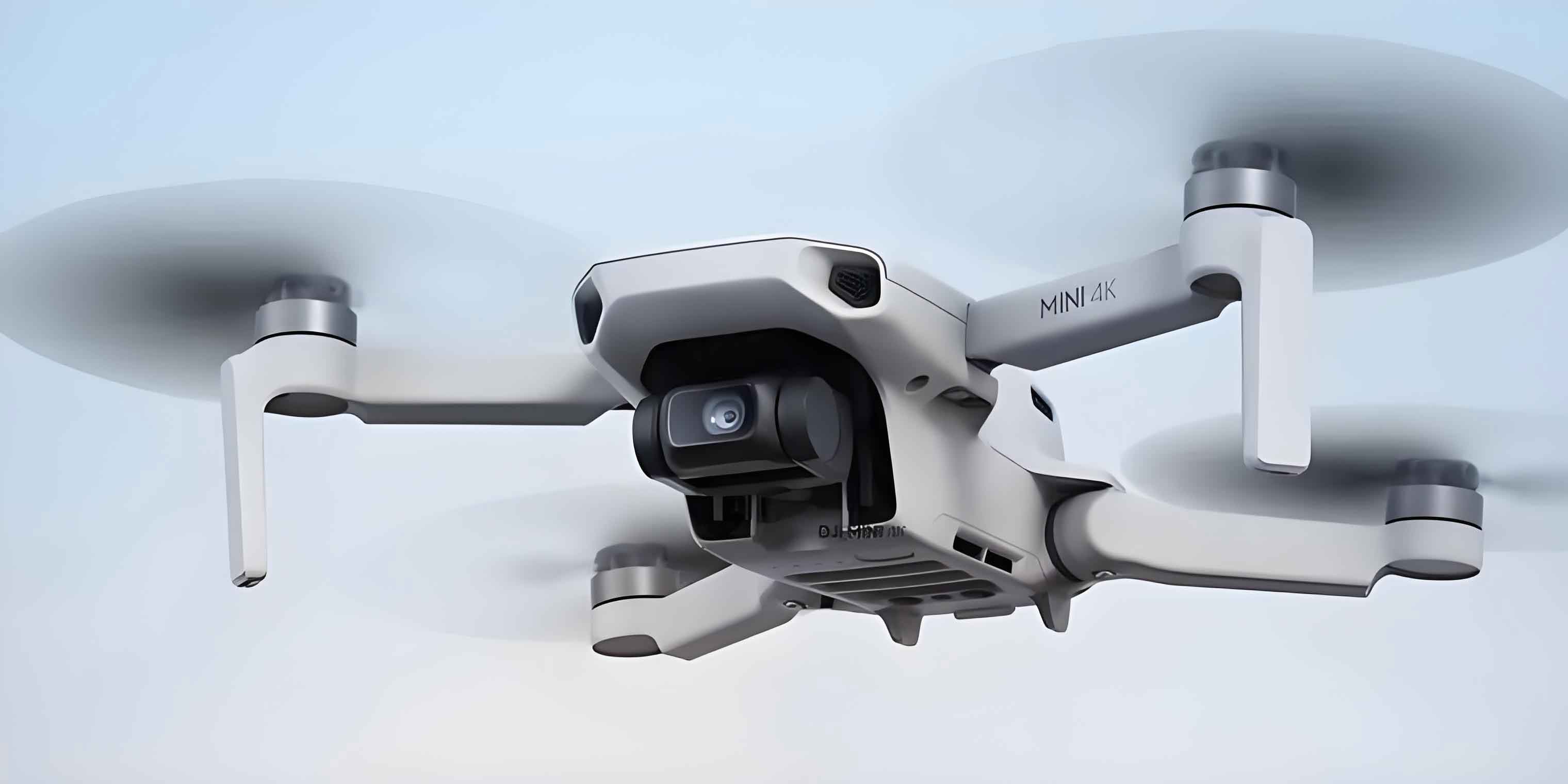
The process of UAV drone inspection path planning can be systematically deconstructed into four interrelated key technical modules, which together form the theoretical framework and technical system for achieving intelligent and efficient inspection of PV power plants.
1. Overview of the Case Study PV Power Plant
The subject of this case study is a large-scale mountainous PV power plant covering an area of 1116 acres, with a total installed capacity of 45 MW. It achieved full-capacity grid connection on September 28, 2024, with 15 unit transformers successfully commissioned. The project innovatively adopts a “PV+” model, leveraging abundant local solar energy and land resources. This approach not only enables efficient photovoltaic power generation but also promotes diversified land use and increases agricultural income. Post-operation, the plant is expected to generate approximately 78.69 million kWh of electricity annually, with an estimated annual output value of 22.03 million yuan.
Given the plant’s extensive area, complex mountainous terrain, and the presence of large-scale equipment with numerous unpredictable factors, manual inspection is not only time-consuming and labor-intensive but also poses risks to personnel safety. To address these challenges, UAV drones play a pivotal role. Their aerial perspective and precise positioning capabilities allow for the timely detection of equipment failures, foreign object遮挡, hot spots, and other anomalies, ensuring the safe and stable operation of the plant. This inspection modality enhances work efficiency, reduces labor costs, and provides robust support for the long-term maintenance of the plant, safeguarding its continuous and efficient production of green energy.
| Parameter | Value | Description |
|---|---|---|
| Total Area | 1116 acres | Land area occupied by the PV plant. |
| Installed Capacity | 45 MW | Maximum power output of the plant. |
| Number of Unit Transformers | 15 | Key electrical equipment nodes. |
| Estimated Annual Generation | 78.69 GWh | Expected yearly electricity production. |
| Topography | Mountainous | Primary characteristic of the plant terrain. |
2. Division of UAV Drone Inspection Areas
Effective management and inspection of a large-scale PV plant necessitate intelligent area division. For the case study plant, it is scientifically partitioned into several logical regions. To efficiently organize and analyze the numerous PV module strings, the Minimum Bounding Rectangle (MBR) method is employed to define the rectangular boundary for each string. This ensures accurate capture of each string’s spatial extent, facilitating subsequent regional division and inspection planning.
To precisely describe the position and orientation of each PV string, a feature vector is introduced:
$$ p_i = (x_i, y_i, \theta_i) $$
where \( x_i \) and \( y_i \) are the planar coordinates of the center of PV string \( i \), and \( \theta_i \) is its orientation angle, a crucial parameter for understanding solar irradiation reception. The distance \( d(p_i, p_j) \) between two strings is a comprehensive metric calculated based on both their planar coordinates and orientation angles, reflecting not just physical separation but also the influence of orientation on layout and potential inspection sequencing:
$$ d(p_i, p_j) = \sqrt{(x_i – x_j)^2 + (y_i – y_j)^2} + \alpha |\theta_i – \theta_j| $$
Here, \( \alpha \) is a weighting factor that balances the importance of Euclidean distance versus angular difference in the clustering process.
Subsequently, the Density-Based Spatial Clustering of Applications with Noise (DBSCAN) algorithm is utilized for initial “corner area” or macro-region division. The key parameters are the neighborhood radius \( \epsilon \) and the minimum number of points \( MinPts \). For the strings within each macro-cluster, an improved Agglomerative Hierarchical Clustering algorithm is applied for finer subdivision. Let \( S \) be the set of all PV strings. Each string \( p_i \in S \) is then clustered into a specific sub-partition \( C_k \). This two-tiered clustering approach ensures that strings within the same final partition are geographically proximate and have similar orientations, which is optimal for linear UAV drone flight path planning.
| Partition ID | Macro-Cluster ID | Number of Strings | Mean Center (x, y) | Mean Orientation \( \theta \) | DBSCAN \( \epsilon \) | DBSCAN \( MinPts \) |
|---|---|---|---|---|---|---|
| P1 | C1 | 42 | (105.3, 198.7) | 32° | 50 m | 5 |
| P2 | C1 | 38 | (152.1, 245.6) | 47° | 50 m | 5 |
| P3 | C2 | 55 | (298.8, 156.2) | 15° | 45 m | 6 |
| P4 | C3 | 29 | (410.5, 320.9) | 60° | 55 m | 4 |
3. UAV Drone Inspection Path Planning Within a Partition
Following the division of the entire plant into manageable partitions, the focus shifts to planning an efficient flight path for the UAV drones within a single partition. Assuming all PV strings are rectangular with a consistent aspect ratio, the path planning must comprehensively consider the positions and dimensions of the strings, as well as the field of view (FOV) of the camera carried by the UAV drone.
The core requirement is complete coverage: the camera’s FOV must fully encompass every PV string during the flight to avoid missed inspections or redundant image capture. Let the width and height of a PV string \( i \) be \( w_i \) and \( h_i \), respectively. Let the width and height of the camera’s FOV at the planned flight altitude be \( W \) and \( H \). The flight altitude \( h \) is determined based on the required ground sampling distance (GSD) for defect detection. The coverage condition for string \( i \) can be formalized as:
$$ W \geq w_i + 2m, \quad H \geq h_i + 2n $$
where \( m \) and \( n \) are safety margins added to ensure the entire string, including its edges, is within the frame, accounting for slight positioning errors of the UAV drone.
For a partition arranged in a roughly grid-like pattern with \( M \) rows and \( N \) columns of strings, the UAV drone’s flight path \( L \) can be modeled. Let \( dx \) be the horizontal center-to-center distance between adjacent strings in a row, and \( dy \) be the vertical center-to-center distance between adjacent rows. A typical “lawnmower” or boustrophedon path pattern is often optimal. The total path length \( L \) for covering all strings is:
$$ L = (N-1) \cdot dx \cdot M + (M-1) \cdot dy $$
The distances \( dx \) and \( dy \) are adapted to the actual string dimensions and the camera’s FOV to maximize efficiency, often calculated as:
$$ dx = w_i + \Delta x, \quad dy = h_i + \Delta y $$
where \( \Delta x \) and \( \Delta y \) are optimized overlaps or gaps determined by \( W, H, m, \) and \( n \). The objective is to minimize \( L \) while satisfying the coverage condition for every string, which is a variant of the Coverage Path Planning (CPP) problem.
To determine the optimal order for the UAV drone to inspect the \( K \) partitions \( \{P_1, P_2, …, P_K\} \), one must solve a sequencing problem akin to the Traveling Salesman Problem (TSP). Let \( O = \{o_1, o_2, …, o_K\} \) be a permutation representing the inspection order. The goal is to find the order \( O^* \) that minimizes the total transit distance between partitions, starting and ending at a designated operations base \( B \):
$$ O^* = \arg\min_O \left( dist(B, P_{o_1}) + \sum_{k=1}^{K-1} dist(P_{o_k}, P_{o_{k+1}}) + dist(P_{o_K}, B) \right) $$
where \( dist(\cdot) \) represents the Euclidean or path distance. Metaheuristic algorithms like the Genetic Algorithm (GA) are well-suited for solving this optimization due to their effectiveness with combinatorial problems.
| Partition ID | String ID | String Center (x, y) [m] | String Size (w, h) [m] | Camera FOV (W, H) [m] | Planned \( dx \) [m] | Planned \( dy \) [m] |
|---|---|---|---|---|---|---|
| P1 | S1_01 | (100.5, 100.2) | (2.0, 1.0) | (3.0, 2.0) | 2.5 | 1.5 |
| P1 | S1_02 | (125.3, 115.8) | (2.0, 1.0) | (3.0, 2.0) | 2.5 | 1.5 |
| P2 | S2_01 | (200.1, 200.7) | (2.0, 1.0) | (3.0, 2.0) | 2.5 | 1.5 |
| P3 | S3_01 | (300.8, 300.4) | (2.5, 1.5) | (4.0, 3.0) | 3.0 | 2.0 |
4. Vehicle-UAV Drone Collaborative Inspection System
Addressing the challenges of complex mountainous terrain and the limited flight endurance of UAV drones, a Vehicle-UAV Drone Collaborative (VUC) inspection scheme is proposed. This system synergistically combines the strengths of both platforms: the UAV drone is responsible for high-altitude, broad-coverage scanning, using its agility and top-down perspective to rapidly survey the entire 1116-acre PV area and identify potential anomalies. Concurrently, a ground inspection vehicle, equipped with specialized diagnostic tools (e.g., infrared cameras, electrical testers), is deployed to perform detailed, close-up inspection and confirmation of issues flagged by the UAV drone.
The two platforms are connected via real-time data transmission links, enabling seamless information sharing and true collaborative tasking. For instance, the UAV drone can stream live video or transmit coordinates of a suspected hot spot. The ground vehicle can then navigate directly to that location for verification and detailed analysis. This collaborative approach not only improves inspection efficiency and accuracy but also enables a rapid response to confirmed faults. It ensures the safe and stable operation of the plant, maximizing the utilization of solar resources and providing a solid foundation for long-term, efficient operations.
To model and optimize this VUC system, we develop a framework that integrates UAV drone endurance management and overall system efficiency. We define the following key variables for a given partition \( k \):
- \( S_k \): The area of partition \( k \) (m²).
- \( v_{uav} \): The cruising speed of the UAV drone (m/s).
- \( T_{fly} \): The effective single-flight endurance of the UAV drone (seconds), determined by battery capacity and power consumption.
- \( T_{chg/swap} \): The time required for battery charging or swapping (seconds).
- \( T_{travel, vehicle} \): The time for the ground vehicle to travel between rendezvous points or to specific defect locations (seconds).
- \( P_{damage} \): The probability of the UAV drone sustaining damage during a single inspection sortie (e.g., from wind, collision), which is often higher in complex terrain.
The inspection efficiency \( E_k \) of the system for partition \( k \), measured as area covered per unit of total operational time, can be expressed as:
$$ E_k = \frac{S_k}{T_{total, k}} $$
where \( T_{total, k} \) is the total time to complete the inspection of partition \( k \), including UAV drone flight time, ground vehicle movement time, and any coordination/waiting periods. In a model where the UAV drone operates from the moving ground vehicle as a mobile base, \( T_{total, k} \) must account for multiple flight cycles due to battery limits. If \( N_{flights, k} \) flights are needed to cover \( S_k \), then:
$$ T_{total, k} \approx N_{flights, k} \cdot T_{fly} + (N_{flights, k} – 1) \cdot T_{chg/swap} + T_{travel, vehicle}(path_k) $$
A safety or reliability metric \( R_k \) for the UAV drone component can be defined as the probability of completing the partition inspection without incident:
$$ R_k = (1 – P_{damage})^{N_{flights, k}} $$
Ultimately, we aim to maximize a composite performance index \( I_k \) that balances efficiency and safety, potentially defined as a weighted product or sum:
$$ I_k = \omega_E \cdot \frac{E_k}{E_{max}} + \omega_R \cdot R_k $$
where \( \omega_E \) and \( \omega_R \) are weighting factors reflecting operational priorities, and \( E_{max} \) is a normalization factor. The collaborative system’s path planning now becomes a complex optimization of both the UAV drone’s flight paths within partitions, the sequence of partitions, and the ground vehicle’s route to serve as an effective mobile support base, minimizing \( T_{total} \) while managing \( P_{damage} \).
| Partition ID | Area \( S_k \) (m²) | UAV Speed \( v_{uav} \) (m/s) | Flight Time \( T_{fly} \) (min) | Battery Swap \( T_{chg/swap} \) (min) | Damage Prob./Sortie \( P_{damage} \) | Flights Needed \( N_{flights,k} \) | System Efficiency \( E_k \) (m²/min) | UAV Safety \( R_k \) | Composite Index \( I_k \) (ω_E=0.7, ω_R=0.3) |
|---|---|---|---|---|---|---|---|---|---|
| P1 | 10,000 | 5 | 10 | 5 | 0.01 | 1 | 666.7 | 0.990 | 0.876 |
| P2 | 20,000 | 5 | 15 | 5 | 0.02 | 2 | 571.4 | 0.960 | 0.812 |
| P3 | 15,000 | 5 | 12 | 4 | 0.015 | 2 | 535.7 | 0.970 | 0.793 |
| P4 | 8,000 | 4 | 18 | 6 | 0.025 | 1 | 333.3 | 0.975 | 0.706 |
5. Discussion and Integration
The proposed three-phase methodology—partitioning, intra-partition path planning, and vehicle-UAV drone collaboration—forms a comprehensive framework for optimizing UAV drone inspections in challenging environments. The use of density-based and hierarchical clustering for area division ensures that the fundamental units for path planning are geographically and topographically coherent, which is a prerequisite for efficient flight. The mathematical formalization of the coverage path planning problem allows for the application of rigorous optimization techniques, moving beyond heuristic waypoint plotting.
The introduction of the VUC model addresses the most critical practical constraint for UAV drones: limited endurance. By treating the ground vehicle as a mobile energy and logistics hub, the operational range of the UAV drone system is effectively extended. The performance metrics \( E_k \), \( R_k \), and \( I_k \) provide a quantitative basis for comparing different operational strategies, partition divisions, and technology choices (e.g., drones with longer endurance vs. faster battery swaps).
Field validation of this integrated technical scheme has demonstrated significant improvements in inspection efficiency and accuracy, confirming its practical value for the O&M management of mountainous centralized PV power plants. The proposed framework offers a new, intelligent, and efficient pathway for PV plant maintenance, contributing to lower levelized cost of energy (LCOE) and higher reliability of renewable power generation. Future work will involve integrating real-time terrain data and dynamic obstacles into the path planning algorithms, implementing advanced computer vision for real-time anomaly detection during flight to enable adaptive paths, and further optimizing the collaborative logistics model between the ground vehicle and multiple UAV drones.
6. Conclusion
This study has presented a detailed analysis and optimization framework for UAV drone inspection path planning in the context of large-scale, mountainous photovoltaic power plants. By systematically addressing the problems of intelligent area division using clustering algorithms, efficient coverage path planning within those areas, and the synergistic collaboration between UAV drones and ground vehicles, a robust methodology for enhancing O&M operations is established. The formal mathematical models for string characterization, distance metrics, coverage conditions, path length, and collaborative system performance provide a solid foundation for algorithmic implementation and continuous improvement. The widespread adoption of such optimized UAV drone-based inspection systems is pivotal for ensuring the economic viability, safety, and long-term sustainability of solar energy assets, particularly in logistically challenging environments. As UAV drone technology, sensors, and artificial intelligence continue to advance, their role in the predictive and preventative maintenance of critical energy infrastructure will only become more profound and indispensable.