
In recent years, the rapid development and widespread adoption of civilian drones have revolutionized various sectors, including agriculture, healthcare, disaster response, and entertainment. These unmanned aerial vehicles offer unprecedented convenience and efficiency, transforming how we approach tasks from aerial photography to delivery services. However, alongside these benefits, a growing concern has emerged: the phenomenon of “black flights” or unauthorized operations of civilian drones. These incidents, where drones are flown without proper licenses, permits, or within restricted zones, pose significant risks to public safety, airspace秩序, and national security. As a legal scholar focusing on technology and criminal law, I have observed an alarming increase in such cases, prompting a critical examination of whether existing legal frameworks, particularly criminal law, are adequate to address these threats. This article delves into the criminal legal issues surrounding unauthorized flights of civilian drones, arguing that while administrative penalties may suffice for minor infractions, severe cases demand criminal sanctions to uphold justice and deterrence. Through a detailed analysis of relevant laws, potential offenses, and practical considerations, I aim to provide a comprehensive perspective on how our legal system can balance innovation with safety in the era of ubiquitous civilian drones.
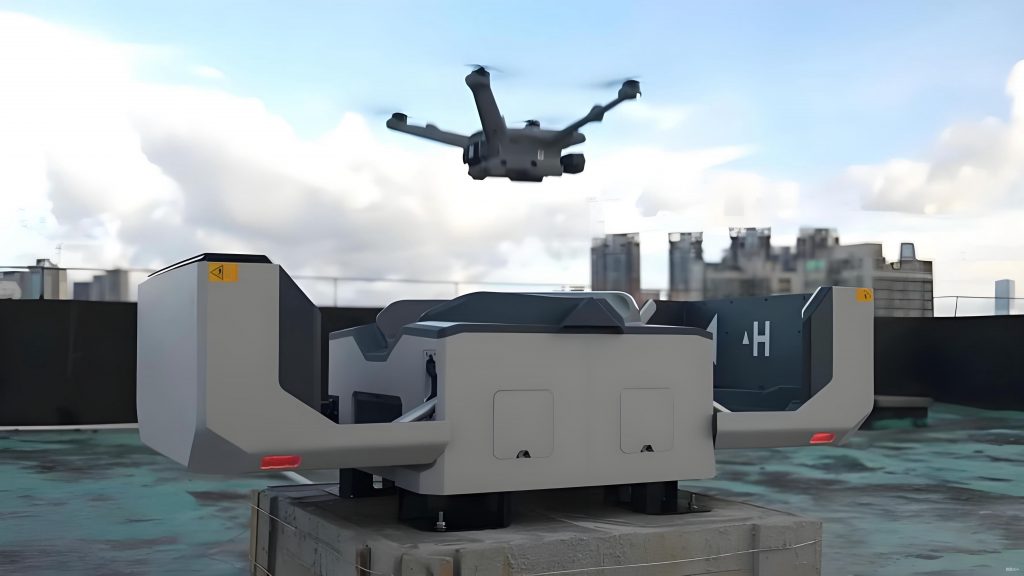
The proliferation of civilian drones has been fueled by advancements in technology, making them more accessible and affordable to the general public. From hobbyists capturing stunning landscapes to businesses optimizing logistics, civilian drones have become integral to modern life. However, this accessibility comes with challenges, as many operators may not be aware of or choose to ignore regulatory requirements. Unauthorized flights of civilian drones, often referred to as “black flights,” encompass a range of activities, such as flying without a pilot license, operating in prohibited airspace like near airports or military installations, or failing to register the device. These actions can lead to dire consequences, including mid-air collisions with manned aircraft, disruptions to air traffic, and breaches of sensitive information. In my research, I have found that the frequency and severity of such incidents are escalating, necessitating a robust legal response. While administrative measures like fines and license revocations exist, their deterrent effect is often limited, especially when operators prioritize convenience over compliance. Therefore, exploring the role of criminal law in curbing unauthorized flights of civilian drones is not only timely but essential for safeguarding our collective security.
To understand the legal landscape, it is crucial to review the existing regulations governing civilian drones. In many jurisdictions, civilian drones fall under the umbrella of general aviation, subject to laws that ensure airspace safety and order. For instance, in China, the Civil Aviation Law serves as the foundational statute, classifying civilian drones as part of general aviation and outlining basic requirements for operations. Additionally, administrative regulations, departmental rules, and local ordinances have been enacted to provide more detailed guidance. These laws typically address three key aspects: operational licensing, flight permissions, and registration systems. Below, I summarize the primary regulatory components in a table to clarify the framework applicable to civilian drones.
| Regulatory Aspect | Key Requirements | Applicability to Civilian Drones |
|---|---|---|
| Operational Licensing | Enterprises must obtain a general aviation business license; individuals may need a pilot license based on drone weight and usage. | For commercial operations or drones above certain weight thresholds; exemptions for indoor or enclosed space flights. |
| Flight Permissions | Prior approval from air traffic control for planned flights, especially in controlled airspace like near airports. | Required in designated no-fly zones; some areas may allow flight without permission under specific conditions. |
| Registration | Mandatory registration for drones above a specified weight (e.g., 250 grams), with details like owner name and contact. | Ensures traceability and accountability; failure to register may not constitute a black flight but is a violation. |
This regulatory framework aims to mitigate risks by setting clear standards for operating civilian drones. However, as I analyze enforcement data, gaps emerge: many operators bypass these requirements, leading to unauthorized flights. The definition of “black flights” for civilian drones can be categorized into three main types, which I outline in another table for clarity.
| Type of Unauthorized Flight | Description | Examples with Civilian Drones |
|---|---|---|
| Unlicensed Operations | Flying without a valid pilot license or business permit where required. | An individual operating a heavy-lift civilian drone for commercial photography without a license. |
| Unauthorized Flights | Conducting flights without prior approval in controlled airspace. | Flying a civilian drone near an airport without air traffic control clearance. |
| Exceeding Authorized Scope | Deviating from approved flight paths or conditions. | A civilian drone operator intentionally flying beyond the designated隔离 area, risking collisions. |
These unauthorized activities involving civilian drones are not merely technical violations; they can escalate into serious threats. For example, a civilian drone entering airport airspace might force flight delays or even cause accidents. In my assessment, the potential harm justifies a closer look at criminal liability. Before delving into specific offenses, it is essential to establish why criminal law should intervene. The principle of ultima ratio in criminal law suggests that penalties should be reserved for the most severe cases where other measures fail. With civilian drones, administrative sanctions often prove insufficient due to low fines and limited enforcement resources. Moreover, the symbolic power of criminal law can enhance deterrence, signaling that society takes these risks seriously. From a public policy perspective, protecting airspace秩序 is akin to safeguarding terrestrial安全, as threats from above can cascade into ground-level disasters. Thus, I argue that criminalizing egregious unauthorized flights of civilian drones is necessary to fill this regulatory gap.
The necessity of criminal regulation for civilian drones black flights can be mathematically framed using a risk-assessment model. Let $R$ represent the overall risk posed by unauthorized flights of civilian drones, which depends on factors like frequency of incidents, potential damage, and existing deterrents. We can express this as:
$$ R = f(F, D, S) $$
where $F$ is the frequency of black flights involving civilian drones, $D$ is the potential damage per incident (e.g., to aircraft or infrastructure), and $S$ is the strength of current sanctions (administrative measures). If administrative penalties are weak, $S$ is low, leading to higher $R$. Criminal penalties increase $S$, thereby reducing $R$. This logical relationship underscores the need for criminal intervention when dealing with reckless operations of civilian drones.
Now, turning to potential criminal offenses, unauthorized flights of civilian drones may fall under several existing罪名 in criminal codes, depending on the circumstances. I will analyze four key crimes: endangering public safety by dangerous means, negligent endangerment,聚众扰乱交通秩序罪 (gathering to disturb traffic order), and illegal acquisition of state secrets. For each, I break down the构成要件 using a formulaic approach to illustrate how civilian drones operations might satisfy them. Note that these analyses are based on general legal principles, adapted to the context of civilian drones.
First, consider the crime of endangering public safety by dangerous means. This offense applies when an act, other than arson, breach of dikes, explosion, or poisoning, poses a grave danger to public安全. For civilian drones black flights, the构成要件 can be modeled as:
$$ C_1 = \{ A, H, I \} $$
where $A$ denotes the act (unauthorized flight of a civilian drone), $H$ represents the hazard (comparable to traditional dangerous methods), and $I$ indicates the intent (knowledge and willingness to risk public safety). In practice, if someone deliberately flies a civilian drone into a busy airport zone, aware that it could collide with planes, this meets $A$, $H$, and $I$. The hazard $H$ can be assessed objectively based on drone weight, speed, and environment. For instance, a civilian drone weighing over 7 kg flying at high speed near an airport poses a significant hazard, akin to reckless driving in airspace. The intent $I$ requires proof that the operator knew the risks—this might be inferred from warnings or training. If convicted, penalties can range from imprisonment to life sentences, reflecting the seriousness of endangering public safety with civilian drones.
Second, the crime of negligent endangerment involves causing serious harm through过失. For civilian drones, this might occur when an operator fails to foresee risks, leading to accidents. The构成要件 can be expressed as:
$$ C_2 = \{ A, O, N \} $$
where $A$ is the act (e.g., careless operation of a civilian drone), $O$ is the outcome (severe injury, death, or property damage), and $N$ is negligence (lack of due care). Unlike intentional crimes, here the operator does not desire harm but疏忽地 ignores safety protocols. For example, a hobbyist flying a civilian drone in a park might lose control and strike a person, causing injury. If the operator should have known better—say, by ignoring weather conditions—negligence is established. This offense highlights that even non-malicious use of civilian drones can have criminal implications if recklessness prevails.
Third, gathering to disturb traffic order is relevant when unauthorized flights of civilian drones disrupt air traffic without necessarily endangering lives. This crime typically requires聚众 (gathering of three or more people) and intentional disruption. In the context of civilian drones, a group coordinating flights to block airport approaches could qualify. The构成要件 can be summarized as:
$$ C_3 = \{ G, D, L \} $$
where $G$ is group action (multiple civilian drones operators), $D$ is disruption of traffic秩序 (e.g., flight delays), and $L$ is lack of public safety threat (if no immediate danger exists). This crime targets the organizational aspect, penalizing ringleaders while sparing participants. It serves as a middle ground for cases where civilian drones cause nuisance rather than catastrophe.
Fourth, illegal acquisition of state secrets becomes applicable if civilian drones are used for espionage, such as filming military installations. The构成要件 involve:
$$ C_4 = \{ M, S, I \} $$
where $M$ is the method (e.g., using a civilian drone for surveillance), $S$ is the acquisition of state secrets, and $I$ is intent to obtain them illegally. Civilian drones equipped with high-resolution cameras can easily capture sensitive data, making this a potent threat. Operators who knowingly fly over restricted areas to collect information may face severe penalties, especially if linked to foreign entities.
To further illustrate how these offenses interact with civilian drones operations, I present a comparative table below, detailing key elements and examples.
| Criminal Offense | Key Elements | Application to Civilian Drones Black Flights | Potential Penalties |
|---|---|---|---|
| Endangering Public Safety by Dangerous Means | Intentional act creating public danger comparable to traditional hazards. | Deliberately flying a civilian drone into aircraft flight paths, risking collision. | 3–10 years imprisonment; up to life or death if harm occurs. |
| Negligent Endangerment | Negligent act causing serious harm to public safety. | Accidentally crashing a civilian drone into a crowd due to poor maintenance. | Based on harm caused; typically lower than intentional crimes. |
| Gathering to Disturb Traffic Order | Group action intentionally disrupting traffic without immediate safety threat. | Organizing multiple civilian drones to hover near an airport, causing delays. | Penalties for organizers; often fines or short imprisonment. |
| Illegal Acquisition of State Secrets | Using unauthorized means to obtain state secrets with intent. | Deploying a civilian drone to photograph military bases for personal gain. | Severe imprisonment, especially if secrets are泄露. |
In my analysis, the decision to prosecute unauthorized flights of civilian drones under criminal law should be guided by proportionality. Not every violation warrants criminal charges; minor infractions might be better handled administratively. However, when civilian drones operations cross a threshold—such as posing imminent danger or causing significant disruption—criminal sanctions become appropriate. This aligns with the legal maxim “nulla poena sine lege” (no penalty without law), as I am not advocating for new crimes but for applying existing ones to novel contexts like civilian drones. The key is to ensure that罪 and罚 are clearly defined and consistently enforced.
Moreover, the rapid evolution of civilian drones technology necessitates ongoing legal adaptation. As drones become more autonomous, issues of liability may shift from operators to manufacturers or software developers. For instance, if a civilian drone malfunctions due to a design flaw, leading to a black flight incident, criminal responsibility could extend beyond the user. In such cases, legal frameworks must balance innovation with accountability, perhaps through stringent product safety standards for civilian drones. Additionally, international cooperation is vital, as civilian drones can easily cross borders, complicating jurisdiction. Harmonizing regulations for civilian drones globally can prevent safe havens for offenders.
To encapsulate the risk assessment for civilian drones black flights, we can use a probabilistic model. Let $P(C)$ be the probability of a criminal incident involving civilian drones, which depends on factors like operator compliance $O_c$, regulatory enforcement $E_r$, and technological safeguards $T_s$. We can write:
$$ P(C) = 1 – e^{-\lambda(O_c, E_r, T_s)} $$
where $\lambda$ is a rate function influenced by these variables. Strengthening criminal laws for civilian drones increases $E_r$, thereby reducing $P(C)$. This mathematical perspective reinforces the deterrent value of criminal penalties.
In conclusion, the unauthorized flights of civilian drones represent a significant challenge at the intersection of technology and law. Through this first-person exploration, I have argued that criminal law has a crucial role to play in addressing severe cases, complementing administrative measures. By analyzing potential offenses and their构成要件, I demonstrate that existing legal tools can be effectively applied to civilian drones black flights, provided that interpretations remain flexible and evidence-based. The goal is not to stifle innovation but to ensure that the skies remain safe for all. As civilian drones continue to proliferate, a balanced approach—emphasizing education, registration, and proportionate criminal sanctions—will be essential. Ultimately, safeguarding public安全 and秩序 requires vigilance and adaptability, with criminal law serving as a last resort against the most reckless uses of civilian drones.
Reflecting on this issue, I believe that ongoing dialogue among lawmakers, industry stakeholders, and legal experts is vital to refine policies. Future research might explore specific case studies or comparative analyses across jurisdictions to identify best practices for regulating civilian drones. For now, by recognizing the criminal dimensions of unauthorized flights, we take a step toward a safer and more orderly integration of civilian drones into our airspace.