
As a critical enabler for low-altitude flight activities, the development of the drone industry is intrinsically linked to the burgeoning low-altitude economy. This emerging sector represents a new engine for high-quality economic growth. Understanding the spatial dynamics of its core actors—the enterprises—is fundamental for optimizing industrial layout and fostering robust development. From the perspective of the industrial chain, this analysis systematically examines the spatial distribution patterns of China drone enterprises across upstream, midstream, and downstream sectors, and explores the coordinated relationships between these segments. The goal is to provide insights for strategic planning and policy formulation aimed at strengthening the entire industrial ecosystem.
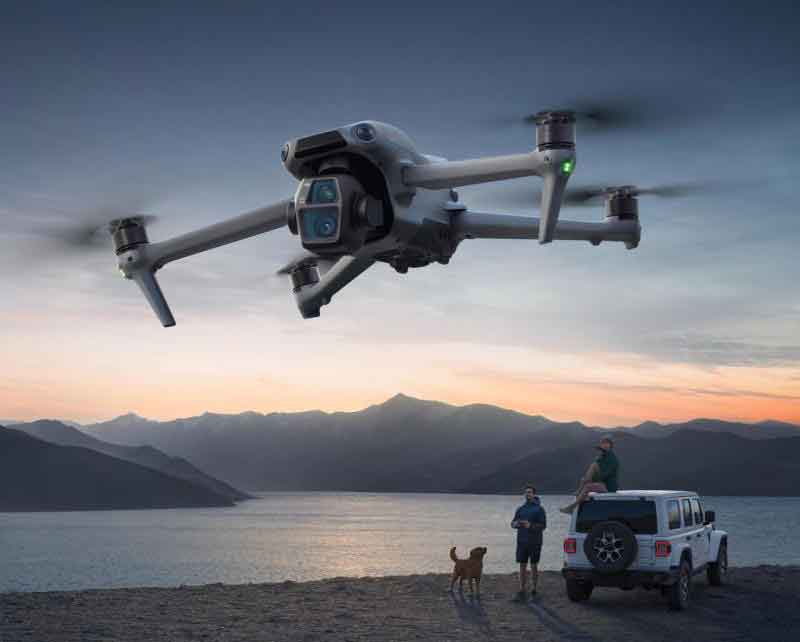
The China drone ecosystem is a complex and rapidly evolving field. Its industrial chain can be systematically deconstructed into three primary segments: upstream (supply), midstream (integration), and downstream (application). The upstream sector forms the foundation, encompassing raw material suppliers (e.g., composite materials, metals), component manufacturers (e.g., batteries, motors, propellers), and core system developers responsible for flight control, navigation, communication, and data processing systems. The midstream sector is focused on the integration of these components into final drone products. Finally, the downstream sector comprises service providers that offer operation, maintenance, training, and data analysis, ultimately delivering value across diverse application scenarios such as logistics, agriculture, inspection, and mapping. This analysis concentrates on the core production and service segments, excluding end-user enterprises that utilize drones as a tool within their primary business.
Methodology: Mapping the China Drone Enterprise Landscape
To capture a comprehensive view of the China drone industrial base, a database of enterprises was constructed using a large-scale commercial enterprise information platform, which aggregates public data from official national business registries. The data retrieval and processing followed a multi-stage protocol to ensure relevance and accuracy, with a snapshot date of December 31, 2024.
1. Data Retrieval and Construction: A keyword-based search was performed using terms including “drone,” “unmanned aerial vehicle,” and “UAV” across enterprise name, business scope, and product description fields. The initial dataset included all enterprises in a normal operational status (e.g., active, in business).
2. Data Classification and Cleaning: Enterprises were then classified into the upstream, midstream, or downstream segments based on a detailed analysis of their registered business scopes. For instance, a company listing “carbon fiber composite material sales” and “UAV” would be classified as an upstream raw material supplier. A company with “UAV manufacturing” as its primary scope was classified as midstream. Manual verification was conducted on a sample of leading and median enterprises against public news and financial reports to validate the classification. After removing records with incomplete location data, the final database contained 9,851 unique China drone enterprises.
3. Spatial Analysis Framework: The geographic coordinates of each enterprise were obtained and aggregated at the prefecture-level city scale. Spatial analysis techniques were employed to identify distribution patterns:
- Kernel Density Estimation (KDE): This technique visualizes the concentration of enterprise point data. The density value at any location is calculated based on the number of nearby enterprises, with a higher value indicating a denser cluster. The formula is given by:
$$ f(x) = \frac{1}{nh^{2}} \sum_{i=1}^{n} K\left(\frac{x – x_i}{h}\right) $$
where $f(x)$ is the estimated density at location $x$, $K()$ is the kernel function, $h$ is the bandwidth (search radius), $n$ is the total number of points, and $x_i$ is the location of enterprise $i$.
- Global Moran’s I: This statistic measures the overall spatial autocorrelation of enterprise counts across cities, indicating whether the distribution is clustered, dispersed, or random. It is calculated as:
$$ I = \frac{z \sum_{p=1}^{z} \sum_{j=1}^{z} W_{pj}(n_p – \bar{n})(n_j – \bar{n})}{S^2 \sum_{p=1}^{z} \sum_{j=1}^{z} W_{pj}} $$
where $z$ is the number of cities, $W_{pj}$ is the spatial weight matrix between city $p$ and $j$, $n_p$ and $n_j$ are the enterprise counts in those cities, $\bar{n}$ is the mean enterprise count, and $S^2$ is the variance. A positive and significant $I$ value indicates spatial clustering of the China drone industry.
Spatial Distribution Characteristics of China Drone Enterprises
Overall Distribution: A Highly Concentrated Core-Periphery Pattern
The China drone industry exhibits a distinct “East-Dense, West-Sparse; South-More, North-Less” macro pattern. The vast majority of enterprises are concentrated in the eastern and southern coastal regions. A pronounced core-periphery structure is evident, closely aligned with the geography of China’s major city clusters.
The global Moran’s I index for all drone enterprises is 0.019, which is statistically significant, confirming a non-random, clustered spatial pattern. The kernel density map reveals several high-density cores. The Pearl River Delta, centered on Shenzhen and Guangzhou, stands out with the absolute highest density peak, forming the primary national hub for the China drone ecosystem. Secondary high-density clusters are found in the Yangtze River Delta (around Shanghai, Nanjing, Suzhou, Hefei), the Chengdu-Chongqing region, the Beijing-Tianjin-Hebei region, and the Guanzhong Plain centered on Xi’an. Most provincial capitals also form smaller-scale agglomeration areas.
| Region | Number of Enterprises | Proportion of National Total |
|---|---|---|
| Eastern China | 4,721 | 47.92% |
| Western China | 2,523 | 25.61% |
| Central China | 1,792 | 18.19% |
| Northeastern China | 815 | 8.28% |
Upstream Sector: The Foundation with the Strongest Agglomeration
The upstream sector is the most populous segment of the China drone industrial chain, comprising 6,536 enterprises, or approximately 66.4% of the total. This includes raw material suppliers (2,642), component manufacturers (1,953), and core system developers (2,474). Its spatial agglomeration is the most intense among all segments, with a Global Moran’s I of 0.022.
Shenzhen and Guangzhou together account for over 20% of all upstream enterprises, highlighting the Pearl River Delta’s dominance, particularly in core systems like flight controllers and gimbals, which are heavily concentrated here due to the presence of leading firms. Other significant upstream clusters are found in Xi’an (leveraging its aerospace heritage), Chengdu, and Changsha. The distribution of raw material and component suppliers is somewhat more dispersed but still focused in key manufacturing hubs.
Midstream Sector: Focused Integration Hubs
The midstream sector, involving the final assembly and manufacturing of complete drones, consists of 1,264 enterprises (12.8%). While also clustered (Moran’s I = 0.015), its geographic footprint is slightly more concentrated than the upstream. Shenzhen is the undisputed leader, home to a significant portion of the world’s commercial drone manufacturing capacity, including industry giants. Other important midstream hubs include Beijing, Chengdu, Zhengzhou, and Nanjing. These cities often combine strong upstream supply chains with significant R&D capabilities to foster their midstream China drone manufacturing activities.
Downstream Sector: Market-Driven and Dispersed
The downstream sector, encompassing service providers, includes 2,289 enterprises (23.2%). This segment shows the weakest spatial autocorrelation (Moran’s I = 0.007, not significant), indicating a more dispersed pattern aligned with market demand. Service providers need to be close to their clients across the country, leading to a broader presence. While still present in the major hubs, downstream enterprises have a significant footprint in central, western, and northeastern cities like Changchun, Harbin, and Xining, serving local agricultural, industrial, and public service markets. This “hub-and-spoke” model sees services radiating from core manufacturing regions into broader application markets.
| Industrial Chain Segment | Number of Enterprises | Global Moran’s I | Spatial Characteristic |
|---|---|---|---|
| Upstream (Raw Materials, Components, Core Systems) | 6,536 | 0.022* | Highly clustered; dominant in Pearl River Delta. |
| Midstream (Whole Machine Manufacturing) | 1,264 | 0.015* | Clustered; strongly focused in Shenzhen. |
| Downstream (Service Providers) | 2,289 | 0.007 | Dispersed; follows market demand nationwide. |
| Total / Average | 9,851 | 0.019* | Clustered core-periphery pattern. |
Spatial Coordination and Typology of Cities in the China Drone Chain
The relative strength of a city’s upstream, midstream, and downstream segments defines its role and coordination within the broader China drone industrial network. By comparing a city’s enterprise count in each segment to the national average for all cities, we can categorize cities into four functional types, each with distinct characteristics and development imperatives.
| City Type | Upstream | Midstream | Downstream | Strategic Implication | Example Cities |
|---|---|---|---|---|---|
| Coordinated | High | High | High | Has a complete, synergistic industrial chain; serves as a national core. | Shenzhen, Guangzhou, Beijing, Shanghai, Nanjing, Chengdu, Hangzhou, Xi’an |
| Demand-Driven (e.g., Upstream-Demand) | Low | High | High | Strong in mid/downstream but lacks upstream suppliers; needs to “fill the chain.” | Haikou, Nanchang, Ningbo, Dongguan, Wuxi |
| Guidance-Driven (e.g., Upstream-Guidance) | High | Low | Low | Has a singular strength (e.g., components); needs to “extend the chain.” | Zhenjiang, Changzhou, Daqing, Fuzhou, Xining |
| Cultivation | Low | Low | Low | Early-stage development; needs to leverage local advantages to “cultivate the chain.” | Majority of cities, especially in central & western regions. |
1. Coordinated Cities: These are the powerhouses of the China drone industry. Typically major metropolitan areas, provincial capitals, or pilot low-altitude economy zones (e.g., Shenzhen, Chengdu), they boast strong representation across all three chain segments. They benefit from excellent infrastructure, rich talent pools, significant R&D investment, and proactive policy support. Their development strategy should focus on leading technological innovation, enhancing global competitiveness, and optimizing internal chain synergies.
2. Demand-Driven Cities: These cities have developed robust capabilities in two segments but lack a third, creating a “missing link” that demands attention. For example, a city strong in midstream manufacturing and downstream services but weak in upstream components (an “Upstream-Demand” city) faces supply chain vulnerabilities. Their strategy must focus on targeted investment and policy to attract or foster enterprises in the missing segment, thereby building a more resilient and self-sufficient local China drone ecosystem.
3. Guidance-Driven Cities: These cities possess a notable comparative advantage in a single segment. This could be a strong upstream component base rooted in traditional manufacturing or a thriving downstream service market fueled by local agricultural or industrial demand. The challenge is to leverage this “anchor” to guide the development of the adjacent segments of the chain, creating a more integrated local industry. For instance, a city with strong drone component manufacturing should seek to attract final assembly plants and service companies.
4. Cultivation Cities: Representing the largest number of cities, this type has a minimal presence across the drone industrial chain. Often located in peripheral regions of major city clusters or in less developed areas, they represent the future growth frontier for the China drone market. Their strategy should not be imitation but intelligent niche development. They should identify local unique advantages—such as specific agricultural crops, tourist landscapes, or infrastructure inspection needs—and cultivate downstream service applications first, potentially growing backward into other chain segments over time.
Conclusion and Policy Implications
The spatial analysis of the China drone industry reveals a complex and maturing landscape characterized by strong agglomeration forces, yet with distinct functional differentiation across the industrial chain. The upstream and midstream sectors exhibit high geographic concentration, forming specialized clusters that drive innovation and scale. In contrast, the downstream sector is more dispersed, following market logic. This structure has given rise to cities with varying levels of chain coordination and completeness.
For policymakers and industry stakeholders, a one-size-fits-all approach is ineffective. Development strategies must be tailored to the specific typology of each city or region within the China drone industrial network:
- For Coordinated Cities: Policy should focus on sustaining leadership by investing in next-generation technologies (e.g., BVLOS operations, advanced sense-and-avoid, AI-powered analytics), fostering international collaboration, and strengthening the linkages between enterprise clusters, universities, and research institutes to maintain global competitiveness.
- For Demand-Driven and Guidance-Driven Cities: Industrial policy should be highly targeted. Demand-driven cities require precise “supply chain filling” incentives to attract missing link enterprises. Guidance-driven cities need “chain extension” strategies, using their anchor segment as a foundation to build complementary businesses, potentially through specialized industrial parks or innovation platforms focused on their strength.
- For Cultivation Cities: The priority is to activate latent demand. This can be achieved through demonstration projects that showcase the value of drone applications in local key industries (e.g., precision spraying for specialty orchards, power line inspection in mountainous areas). Simplifying regulatory hurdles for commercial drone operations and providing initial training and subsidy programs can help spark the local China drone service economy, planting the seeds for future industrial growth.
Nationally, there is a need for coordinated planning to avoid excessive homogeneous competition between clusters while ensuring that the benefits of the low-altitude economy, powered by the China drone industry, can spread to a broader range of regions. By adopting this differentiated, chain-based perspective, China can optimize its drone industrial geography, enhance the resilience of its supply chains, and solidify its position as a global leader in this transformative technological field.