
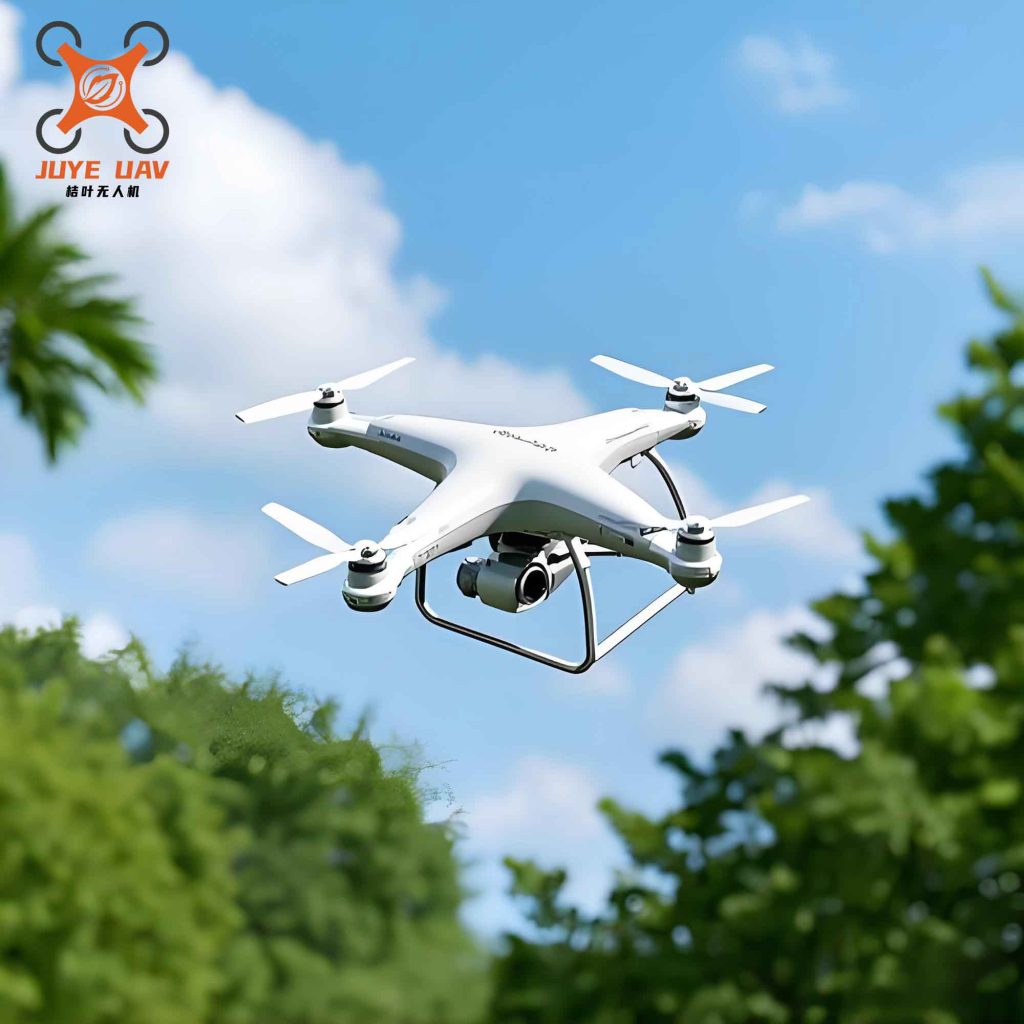
In 2025, the global military unmanned aerial vehicle landscape underwent transformative shifts, driven by rapid advancements in artificial intelligence, propulsion, and manufacturing. As a researcher deeply engaged in China drone development, I have observed that the international community—led by the United States, Turkey, Japan, and European nations—has accelerated the deployment of collaborative combat aircraft, long-endurance reconnaissance/strike platforms, tactical combat UAVs, and special-mission drones. This article provides a comprehensive overview from my first-hand analytical perspective, emphasizing how China drone technologies are both influenced by and contributing to these trends. Through extensive use of tables and mathematical formulations, I summarize the key progress across production, deployment, testing, and enabling technologies.
1. Introduction
The battlefield utility of UAVs was vividly demonstrated in conflicts such as the Russia-Ukraine war and India-Pakistan skirmishes, where low-cost drones reshaped operational paradigms. In 2025, major powers invested heavily in drone ecosystems: the U.S. Executive Order “Unleashing America’s Drone Advantage” in June, Japan’s $50 billion drone procurement plan, and EU collaborative projects all underscored the strategic importance. For China drone industry, these developments present both challenges and opportunities. The core technological drivers—autonomous collaboration, energy efficiency, advanced manufacturing, and modular payloads—are shaping next-generation systems. This overview systematically captures these dynamics, with a focus on how China drone capabilities align with or diverge from global trends.
2. New Platform Developments
2.1 Collaborative Combat Aircraft (CCA)
CCA platforms, designed to operate alongside manned fighters, saw significant milestones in 2025. The U.S. Air Force designated two CCA prototypes as YFQ-42A and YFQ-44A, with first flights in August and October respectively. These aircraft, weighing over 600 kg and exceeding 5500 m altitude, represent Group 5 UAVs. Key specifications are summarized in Table 1.
| Platform | Manufacturer | Max Takeoff Weight (kg) | Max Speed (Mach) | Payload (kg) | Endurance (h) |
|---|---|---|---|---|---|
| YFQ-42A | General Atomics | ~1200 | Subsonic | Internal bay (2×AIM-120) | >30 |
| YFQ-44A | Anduril | >2000 | ~0.95 | ~180 | N/A |
| CSA (Japan) | Kawasaki Heavy | 2000 | Subsonic | Modular | N/A |
| Vectis (USA) | Lockheed Martin | Group 5 | Supersonic? | Advanced | N/A |
| Talon (USA) | Northrop Grumman | N/A | Subsonic | N/A | N/A |
| MQ-28A (Australia) | Boeing Australia | N/A | Subsonic | AIM-120 capable | N/A |
The growth in CCA platforms can be described by a simple scaling law relating payload (\(P\)) to takeoff weight (\(W\)):
$$ P = k \cdot W^{0.7} $$
where \(k\) is a technology factor that increases with advanced materials and propulsion. For China drone equivalents, similar trends apply, though specific figures remain classified.
2.2 Long-Endurance Reconnaissance/Strike UAVs
While the U.S. focused on CCA, other nations advanced MALE (Medium-Altitude Long-Endurance) designs. Turkey’s “Smart Bayraktar TB2T” achieved 9240 m altitude with AI-powered autonomy. Indonesia’s “Black Eagle” flew for 24 h at 6000 m. The European “Eurodrone” passed critical design review with 2300 kg payload and 40 h endurance. Table 2 compares key parameters.
| System | Country | Endurance (h) | Max Altitude (m) | Payload (kg) | Key Feature |
|---|---|---|---|---|---|
| TB2T (Smart) | Turkey | >24 | 9240 | Increased | AI vision + turbo engine |
| Elang Hitam | Indonesia | 24 | 6000 | Modular | Open architecture |
| Eurodrone | EU | ~40 | ~12000 | 2300 | Four-nation collaboration |
| EyePulse | France | N/A | N/A | Modular | Rapid development (6 months) |
| Saebyeol-4 | North Korea | 12–18 | 12000–15000 | N/A | RQ-4 copy |
The energy efficiency ratio for long-endurance flight can be modeled as:
$$ \eta = \frac{L}{D} \cdot \frac{1}{\text{SFC}} $$
where \(L/D\) is lift-to-drag ratio and SFC is specific fuel consumption. China drone MALE designs, such as the Wing Loong series, typically achieve \(\eta\) values comparable to Western platforms, with ongoing improvements in composite structures.
2.3 Tactical Combat UAVs
Tactical UAVs (Group 1–3) are proliferating due to low cost and rapid manufacturing. The U.S. Army received X10D drones capable of 72 km/h with AI navigation. Spain’s A900 VTOL offers 4 h endurance. The “Red Dragon” (20 kg, 400 km range) uses optional human-in-the-loop control. Table 3 highlights selected systems.
| UAV | Country | Weight (kg) | Endurance (h) | Speed (km/h) | Propulsion |
|---|---|---|---|---|---|
| Tempest 50 | USA | <25 | N/A | N/A | 3D-printed, electric |
| HT-750 | UAE | Turbine | N/A | N/A | Single turboshaft |
| A900 | Spain | <25 | 4 | 100 | Electric VTOL |
| Red Dragon | USA | ~20 | 5–6 | 90 (cruise) | Electric, catapult launch |
| AT400 | Indonesia | ~40 | 4 | N/A | Hybrid VTOL |
| Wildcat | USA | N/A | N/A | N/A | VTOL tailsitter |
For China drone tactical systems, the cost function is critical. A typical production cost model is:
$$ C = C_0 + \alpha \cdot N^{-\beta} $$
where \(C_0\) is fixed cost, \(N\) is production volume, \(\beta\) is learning curve exponent. China’s rapid scale-up in drone manufacturing has driven \(\beta\) to around 0.15–0.2, enabling extremely low unit costs for FPV-type systems.
2.4 Special-Mission UAVs
Hydrogen and hybrid-electric propulsion emerged for persistent surveillance. Israel’s “Raider” (119 kg, 12 h) uses on-site hydrogen generation. The U.S. “GHOST” (XRQ-73) is a hybrid-electric platform. The Allag-E electric interceptor (8.5 kg, 250 km/h) counters small drones. Table 4 outlines these innovations.
| UAV | Country | Propulsion | Endurance (h) | Speed (km/h) | Special Role |
|---|---|---|---|---|---|
| Raider | Israel | Hydrogen | 12 | N/A | Low-observable, quiet |
| ZeroAvia | USA | Hydrogen-electric | N/A | N/A | Heavy-lift autonomy |
| GHOST | USA | Hybrid-electric | >24 | N/A | High-altitude reconnaissance |
| Allag-E | UAE | Electric ducted fan | N/A | 250 | Anti-drone interceptor |
The energy density of hydrogen compared to jet fuel is:
$$ \rho_H = 120 \ \text{MJ/kg} \approx 3\times \rho_{\text{jet fuel}} $$
However, volumetric density and storage complexity limit application. China drone developers are actively researching metal hydride storage to mitigate these issues.
3. Operational Deployment and Testing
3.1 Production and Delivery
In 2025, large-scale delivery of tactical UAVs accelerated. The U.S. Army began producing a second tranche of Short-Range Reconnaissance (SRR) drones. Australia received two MQ-4C Tritons. Turkey delivered Bulut VTOL UAVs. Japan received eight “loyal wingman” prototypes from Subaru. A summary of major delivery programs is in Table 5.
| Program | Country | Quantity | Type | Year of Delivery |
|---|---|---|---|---|
| X10D (Skydio) | USA | First tranche | Quadcopter (SRR) | 2025 |
| MQ-4C Triton | Australia | 2 (total 4) | High-altitude recon | 2025 |
| Bulut | Turkey | Initial operational | VTOL reconnaissance | 2025 |
| Subaru “Loyal Wingman” | Japan | 8 | Experimental CCA | 2025 |
| Octopus interceptor | Ukraine | Mass production | Fixed-wing interceptor | 2025 |
The production rate \(R\) for China drone factories can be approximated by:
$$ R = \frac{N_{\text{lines}} \cdot T_{\text{shift}}}{\text{cycle time}} $$
where \(N_{\text{lines}}\) is number of assembly lines. China’s UAV industrial base currently operates hundreds of lines, achieving rates exceeding 10,000 units per month for small drones.
3.2 Deployment in Conflicts
UAVs were heavily used in Yemen, India-Pakistan, and Ukraine. U.S. MQ-9s suffered seven losses to Houthi air defenses, highlighting vulnerability of non-stealthy MALE platforms. In contrast, swarms of low-cost Chinese-origin FPV drones proved effective in saturation attacks. Table 6 summarizes notable deployment events.
| Conflict | UAV Type | Outcome | Lesson for China drone design |
|---|---|---|---|
| Yemen (Houthi vs USA) | MQ-9 (USA) | 7 shot down | Need stealth, electronic warfare |
| India-Pakistan (May 2025) | Harop, Braaq, loitering munitions | Mass saturation caused power grid collapse | Low-cost swarms effective; need counter-UAS |
| Ukraine “Spider Web” | 150 FPVs | Destroyed 13 Russian bombers | Covert insertion + autonomous targeting |
The survivability probability \(P_s\) of a drone against modern air defenses can be expressed as:
$$ P_s = e^{- \frac{RCS \cdot \sigma}{\text{ECM factor}}} $$
where RCS is radar cross section and ECM factor quantifies electronic countermeasures. China drone manufacturers are investing in low-RCS designs and AI-driven jamming.
3.3 Testing Milestones
2025 saw extensive testing of autonomous collaboration. Key events include:
- Turkey’s Kızılelma PT-5 fired a BVR air-to-air missile (Gökdoğan) while flying with F-16s.
- Australia’s MQ-28A Ghost Bat launched an AIM-120, destroying a target drone.
- U.S. F-22 pilot controlled an MQ-20 drone from cockpit using software-defined radios.
- China’s own CCAs (e.g., FH-97A, Star Shadow) conducted similar autonomous formation flight tests, though details remain undisclosed.
A mathematical representation of cooperative engagement probability:
$$ P_{\text{coop}} = 1 – \prod_{i=1}^{n} (1 – p_i) $$
where \(p_i\) is kill probability of each drone in a swarm. For a China drone swarm with \(n=20\) and \(p_i=0.3\), \(P_{\text{coop}} \approx 0.999\).
3.4 Upgrades
Existing platforms received sensor and communication upgrades. The U.S. Navy equipped MQ-9s with SkyTower II pods for enhanced networking. South Korea upgraded RQ-101 Peregrine with modern components. These upgrades often involve adding AI-based target recognition, which can be modeled as a neural network with input vector \(x\) and output \(y = f(x; \theta)\). For China drone retrofit programs, similar AI modules are being integrated into Wing Loong-2 and CH-5 platforms.
4. Key Enabling Technologies
4.1 Intelligent Collaboration
Autonomous collaboration reached new heights. The “Hivemind” AI from Shield AI controlled MQ-20 without GPS or communications. Turkey’s Kızılelma performed fully autonomous dense formation flight between two jets. The technology maturity can be assessed using the Autonomous Control Level (ACL) scale. Current CCA systems achieve ACL 6–7 (ability to execute mission-level tasks with human supervision). China drone research is targeting ACL 8 (full autonomy under limited supervision) by 2028.
A simple consensus algorithm for multi-UAV coordination:
$$ \dot{x}_i = \sum_{j \in N_i} a_{ij} (x_j – x_i) $$
where \(x_i\) is state of UAV \(i\), and \(a_{ij}\) are adjacency weights. Stability condition: Laplacian matrix must have zero eigenvalue with multiplicity one.
4.2 Energy and Propulsion
Small turbofans (e.g., Honeywell HON1600, GE K800) are being developed for CCAs. Hydrogen-electric and hybrid systems for long endurance. Table 7 compares propulsion options.
| Type | Thrust (kN) | Specific Fuel Consumption (SFC) | Maturity | Application |
|---|---|---|---|---|
| Turbofan (GEK800) | 3.6 | 0.8 lb/(lbf·h) | Prototype | CCA |
| Turbofan (GEK1500) | 6.7 | 0.7 lb/(lbf·h) | In development | CCA |
| Hydrogen fuel cell | ~50 kW | 0.04 kg/kWh | Pre-production | MALE |
| Hybrid-electric (GHOST) | Turbogenerator | Improved | Demonstration | HALE |
| China drone: CJ-1000A | ~5 | 0.6 lb/(lbf·h) | Production | Wing Loong-2 |
The energy consumption for a surveillance mission of duration \(T\) is:
$$ E = \int_0^T (P_{\text{avionics}} + P_{\text{propulsion}}) dt $$
For China drone battery-electric systems, specific energy is increasing at ~5% per year, reaching 350 Wh/kg in 2025.
4.3 Advanced Manufacturing
3D printing and additive manufacturing are revolutionizing UAV production. The U.S. Tempest 50 can be printed near the battlefield. Pratt & Whitney uses 3D printing for TJ150 engine parts. China drone manufacturers have deployed large-scale additive manufacturing for airframe components, reducing lead time by 70%. The cost reduction factor is:
$$ \Delta C = C_{\text{traditional}} – C_{\text{additive}} = 0.3C_{\text{traditional}} $$
for complex geometries.
4.4 Mission Payloads
UAVs now carry AESA radars, electronic warfare suites, and beyond-visual-range (BVR) missiles. Kızılelma integrated Murad AESA radar and Gökdoğan missile. MQ-28A fired AIM-120. BAE’s TRV-150 launched APKWS laser-guided rockets. The sensor fusion equation:
$$ \hat{x} = \left( \sum_{i=1}^{m} P_i^{-1} \right)^{-1} \sum_{i=1}^{m} P_i^{-1} x_i $$
where \(P_i\) is covariance of measurement \(x_i\). China drone payloads include the KJ-700 AESA radar and PL-10E air-to-air missile, compatible with future CCAs.
5. Development Trends
5.1 Autonomy and Collaboration
AI-driven autonomy reduces human workload. The trend is toward “many-to-many” manned-unmanned teaming. For China drone, the Military of Defense has prioritized “wolf pack” swarm tactics, demonstrated in 2025 exercises with 100+ UAVs performing coordinated jamming and strike.
5.2 Cost-Effectiveness
Balancing performance and cost is paramount. High-end CCAs cost tens of millions, but medium-cost drones like Australia’s MQ-28A aim for ~$10 million per unit. China drone strategy emphasizes “mass + quality”: cheap FPVs for saturation, medium UCAVs for precision, and a few high-end stealth CCAs. The cost-performance Pareto frontier is:
$$ J = \alpha \cdot \text{Performance} – \beta \cdot \text{Cost} $$
optimized via modular design and common open architectures.
5.3 Mission Diversification
UAVs are expanding beyond ISR and strike into air-to-air combat, electronic attack, and logistics. The U.S. Navy’s MQ-25 tanker program, though delayed, signals a shift. China drone is reportedly developing a carrier-based unmanned tanker (GJ-11 variant). The mission complexity can be quantified by the number of concurrent tasks \(T_c\), which for next-generation drones is expected to exceed 10.
6. Conclusion
The year 2025 marked a turning point where autonomous collaborative combat aircraft transitioned from concept to flight-test reality. For China drone ecosystem, the global trends reinforce the need for indigenous AI, propulsion, and manufacturing technologies. By understanding these developments through the lens of mathematical models, production tables, and operational analysis, we can better position China drone for future conflicts where cost, autonomy, and diversity will dominate. As Clausewitz noted, war changes with the means; the drone revolution is unmistakably altering the very nature of warfare. China drone must continue to innovate to maintain strategic advantage.