
In modern warfare, the integration of advanced electro-optical systems with unmanned aerial vehicles has revolutionized battlefield operations. As a researcher in this field, I have closely followed the development of compact photoelectric pods designed for military drones, which are transforming small and micro drones from mere intelligence-gathering tools into versatile combat platforms. These pods enable functionalities such as reconnaissance, target designation, and damage assessment, thereby enhancing the operational capabilities of military drone units. In this article, we will delve into the evolution, technical specifications, and operational applications of these compact systems, highlighting key advancements and future trends. The rapid miniaturization of sensors and stabilization technologies has allowed for the deployment of high-performance pods on lightweight drones, making them indispensable assets in asymmetric conflicts and multi-domain operations.
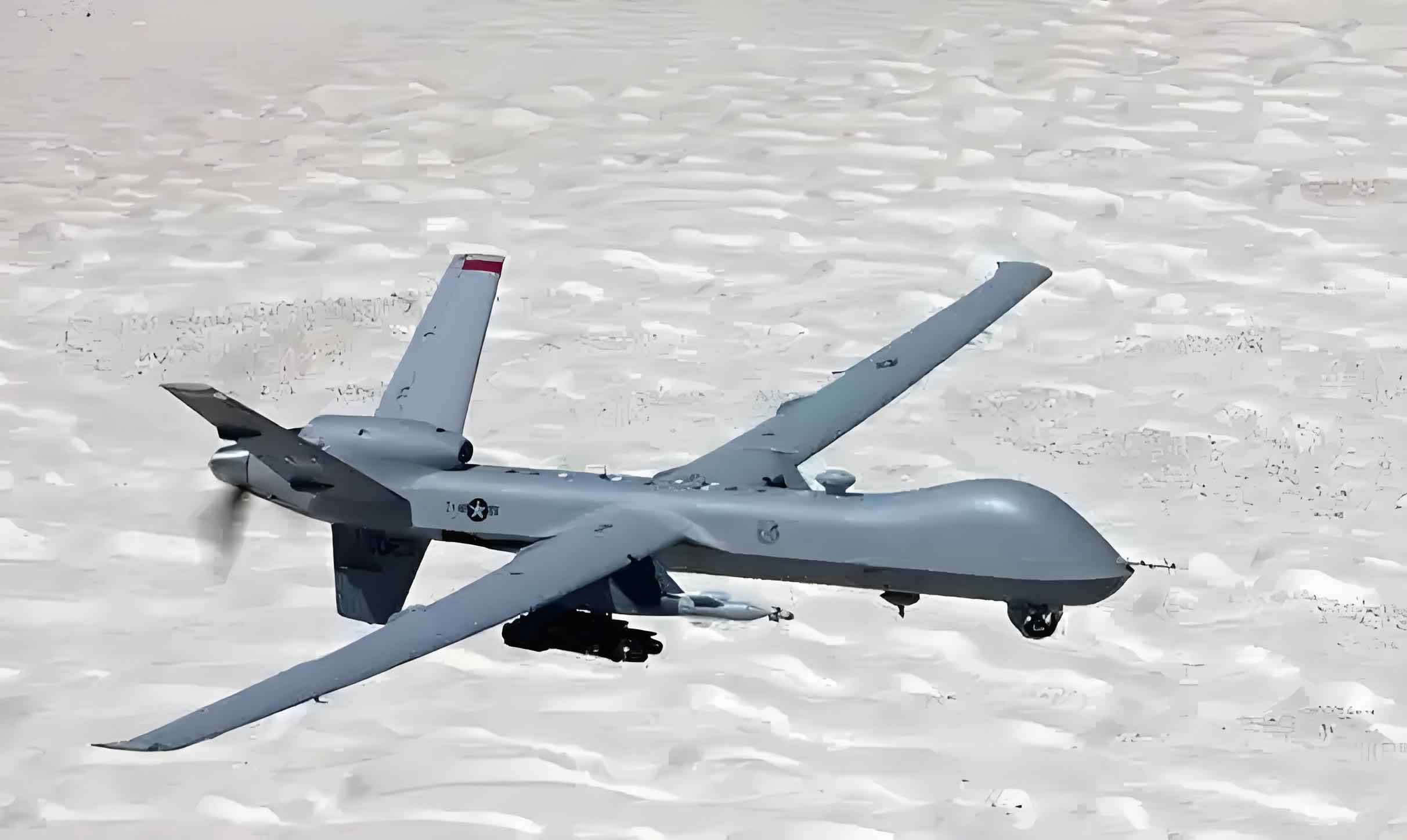
The concept of mounting electro-optical payloads on military drones dates back to the early 2000s, when large drones like the MQ-1 Predator were equipped with bulky pods for surveillance. However, with the advent of small and micro drones, there has been a pressing need to reduce the size, weight, and power (SWaP) requirements of these payloads. Compact photoelectric pods typically weigh less than 8 kg and are designed for drones with a maximum takeoff weight under 50 kg, such as those in Groups I and II of the U.S. Army’s classification system. These pods integrate multiple sensors, including visible-light cameras, infrared imagers, laser rangefinders, and laser designators, into a single stabilized unit. The drive toward miniaturization has been fueled by advancements in focal plane arrays, micro-electro-mechanical systems (MEMS), and power-efficient electronics, enabling military drones to perform complex missions with greater stealth and agility.
From a technical perspective, the performance of a compact photoelectric pod for military drones can be evaluated using several key parameters. For instance, the detection range for a target depends on the sensor resolution and atmospheric conditions. We can express the maximum detection range \(R_{det}\) using a simplified formula based on the Johnson criteria: $$R_{det} = \frac{H_{target}}{\theta_{res} \cdot N_{cycles}}$$ where \(H_{target}\) is the target height, \(\theta_{res}\) is the angular resolution of the sensor in radians, and \(N_{cycles}\) is the number of cycles required for detection (typically 1-2 for detection, 4-6 for recognition). For a military drone pod with an infrared sensor of 640×512 pixels and a field of view of 2°, the angular resolution \(\theta_{res}\) can be calculated as: $$\theta_{res} = \frac{FOV}{N_{pixels}}$$ where \(FOV\) is the field of view in radians and \(N_{pixels}\) is the number of pixels along the horizontal axis. Assuming a 2° FOV (0.0349 radians) and 640 pixels, \(\theta_{res} \approx 5.45 \times 10^{-5}\) radians. For a standard NATO target of 2.3 m height, the detection range would be approximately: $$R_{det} = \frac{2.3}{5.45 \times 10^{-5} \cdot 2} \approx 21,100 \text{ m or 21.1 km}$$ However, practical ranges are often lower due to factors like atmospheric attenuation and noise, which can be modeled with the contrast transmission function: $$C_{eff} = C_0 \cdot e^{-\sigma R}$$ where \(C_0\) is the initial contrast, \(\sigma\) is the attenuation coefficient, and \(R\) is the range. This highlights the importance of high-sensitivity sensors in compact pods for military drones.
Over the past decade, numerous companies worldwide have developed compact photoelectric pods for military drones, each with unique features. Below, we compare some representative models from the United States, Israel, and China, focusing on their technical specifications. The table summarizes key parameters such as weight, dimensions, sensor types, and laser capabilities, which are critical for assessing their suitability in various military drone operations.
| Specification | StormCaster-DX (U.S.) | Alticam 11EOIR5 (U.S.) | T-STAMP-XD (Israel) | Zenmuse H20T (China) |
|---|---|---|---|---|
| Weight (g) | 1250 | 6200 | 5750 | 828 |
| Dimensions | 174 mm × 174 mm × 194 mm | 254 mm diameter | 193 mm diameter | 167 mm × 135 mm × 161 mm |
| Stabilization | 3-axis gimbal | 4-axis stabilized | 3-axis stabilized | 3-axis gimbal |
| Visible Camera | Not included | 640×480, 0.8°–32° FOV, 40x zoom | 1920×1080, 2°–34° FOV, 67x zoom | 5184×3888 zoom, 4056×3040 wide |
| Infrared Camera | Dual-FOV LWIR, 640×512 | Cooled MWIR, 640×480, 1.6°–22° FOV | Cooled MWIR, 640×512, 2°–30° FOV | Uncooled LWIR, 640×512, 40.6° FOV |
| Laser Rangefinder | Yes, 13 km max | Yes, 4.5 km max | Yes, 15 km max | Yes, 1.2 km max |
| Laser Designator | Yes, 1064 nm, STANAG 3733 | Yes, 1064 nm, STANAG 3733 | Yes, 1064 nm, STANAG 3733 | No |
| IMU/GPS | Integrated | Not specified | Integrated | Integrated |
From the table, it is evident that Western models, particularly from the U.S. and Israel, often include laser designators compliant with NATO standards, enabling them to guide semi-active laser-guided munitions. In contrast, Chinese models like the Zenmuse H20T, while lightweight and compact, lack laser designation capabilities, focusing more on reconnaissance and surveillance. This disparity underscores the different operational philosophies: Western military drone pods emphasize multi-role combat integration, whereas Chinese pods prioritize cost-effectiveness and basic ISR functions. However, recent trends show that Chinese manufacturers are catching up, with new models incorporating advanced sensors. The performance gap can be quantified using a composite score \(S\) based on weight \(w\), detection range \(R\), and functionality \(f\): $$S = \alpha \cdot \frac{1}{w} + \beta \cdot R + \gamma \cdot f$$ where \(\alpha\), \(\beta\), and \(\gamma\) are weighting coefficients representing the importance of each parameter for military drone applications. For instance, if we set \(\alpha = 0.3\), \(\beta = 0.5\), and \(\gamma = 0.2\), with \(f\) on a scale of 1–10 (10 indicating full laser designation), the StormCaster-DX might score higher due to its lightweight design and laser capabilities.
The operational applications of compact photoelectric pods on military drones are vast and evolving. In intelligence, surveillance, and reconnaissance (ISR) missions, these pods provide real-time video feeds, allowing ground forces to monitor enemy movements without exposing themselves. For example, during the Nagorno-Karabakh conflict, military drones equipped with electro-optical pods were used extensively for battlefield awareness. In target designation, pods with laser designators can illuminate targets for precision-guided weapons, creating a seamless “sensor-to-shooter” chain. We have seen this in recent demonstrations where a military drone like the Jump 20, carrying an Alticam 11EOIR5 pod, designated targets for miniature laser-guided missiles. The effectiveness of such systems can be modeled using the probability of successful engagement \(P_{success}\): $$P_{success} = P_{det} \cdot P_{track} \cdot P_{designate} \cdot P_{hit}$$ where \(P_{det}\) is the probability of detection, \(P_{track}\) is the probability of tracking, \(P_{designate}\) is the probability of accurate laser designation, and \(P_{hit}\) is the probability of weapon hit. For a military drone pod with a detection range of 10 km and a tracking accuracy of 1 mrad, \(P_{track}\) might exceed 0.9 under clear conditions. Moreover, in damage assessment, military drones hover over strike areas to capture post-attack imagery, enabling commanders to evaluate outcomes and decide on re-engagement. This capability reduces collateral damage and optimizes resource allocation in dynamic environments.
Looking ahead, the development of compact photoelectric pods for military drones faces several challenges and opportunities. One key area is sensor technology: achieving higher resolution and sensitivity while reducing SWaP. For instance, quantum dot infrared photodetectors (QDIPs) offer promise for next-generation thermal imagers, with detectivity \(D^*\) expressed as: $$D^* = \frac{R \sqrt{A \Delta f}}{NEP}$$ where \(R\) is responsivity, \(A\) is detector area, \(\Delta f\) is bandwidth, and NEP is noise-equivalent power. Improving \(D^*\) allows military drone pods to detect targets at longer ranges with smaller apertures. Another challenge is integration: combining multiple sensors, laser systems, and navigation modules into a compact housing without compromising performance. Modular designs with standardized interfaces, such as the Sensor Open Systems Architecture (SOSA), are gaining traction for military drone applications, facilitating upgrades and interoperability. Additionally, artificial intelligence (AI) is being embedded into pods for automatic target recognition (ATR), reducing operator workload. The ATR accuracy \(A_{ATR}\) can be described by a confusion matrix, with overall accuracy calculated as: $$A_{ATR} = \frac{TP + TN}{TP + TN + FP + FN}$$ where TP, TN, FP, and FN are true positives, true negatives, false positives, and false negatives, respectively. For military drone pods operating in cluttered environments, achieving high \(A_{ATR}\) is critical to minimize false alarms.
In terms of global trends, the United States continues to lead in innovation, with projects like the Army’s Future Vertical Lift (FVL) program driving requirements for lightweight pods on military drones. Israel maintains its edge in stabilization and multi-sensor fusion, while China is rapidly advancing through civilian-military integration, as seen in companies like DJI. However, supply chain vulnerabilities, such as reliance on foreign semiconductors, pose risks to the production of these pods. To address this, countries are investing in domestic manufacturing capabilities for critical components. Furthermore, the proliferation of military drones with compact pods has sparked discussions on counter-drone technologies, leading to a cat-and-mouse dynamic in modern warfare. The effectiveness of electronic warfare against military drone pods can be analyzed using the jamming-to-signal ratio (JSR): $$JSR = \frac{P_j G_j}{P_s G_s} \cdot \frac{R_s^2}{R_j^2}$$ where \(P_j\) and \(P_s\) are jamming and signal powers, \(G_j\) and \(G_s\) are antenna gains, and \(R_j\) and \(R_s\) are ranges. High JSR can degrade the performance of military drone pods, necessitating robust encryption and frequency-hopping techniques.
In conclusion, compact photoelectric pods have become a cornerstone of military drone operations, enabling a wide array of missions from reconnaissance to precision strike. Their development reflects broader trends in miniaturization, multi-sensor integration, and AI augmentation. As someone involved in this field, I believe that future advancements will focus on autonomous operation, swarm coordination, and resilience in contested environments. For military drones to remain effective, pods must evolve to include hyperspectral imaging, laser communications, and anti-jamming features. The ongoing research in materials science, such as metamaterials for stealth, will further enhance the survivability of these systems. Ultimately, the synergy between military drones and compact photoelectric pods will continue to reshape the battlefield, offering commanders unprecedented situational awareness and tactical flexibility.
To summarize the technical evolution, we can conceptualize the progress in compact pods for military drones using a capability maturity model (CMM), where Level 1 represents basic surveillance, Level 2 adds target tracking, Level 3 incorporates laser designation, and Level 4 achieves full autonomy. Most current systems are at Level 2–3, with aspirations toward Level 4. The rate of improvement \(\frac{dC}{dt}\) in capability \(C\) over time \(t\) can be approximated by an exponential growth model: $$\frac{dC}{dt} = kC$$ where \(k\) is a constant dependent on R&D investment. Given the rapid pace of innovation, we expect military drone pods to reach new heights in the coming decade, solidifying their role as force multipliers in both conventional and asymmetric conflicts.