
In this article, I will delve into the fascinating world of quadrotor drones, focusing on their flight control algorithms. As an enthusiast and researcher in unmanned aerial systems, I have observed the rapid evolution of these versatile machines. Quadrotor drones, with their unique design and capabilities, have become pivotal in both civilian and military applications. Their compact size, agility, and ability to hover make them ideal for tasks ranging from aerial photography to disaster response. However, the control of quadrotor drones presents significant challenges due to their underactuated, coupled, and nonlinear dynamics. Here, I aim to provide a detailed overview of common flight control algorithms, utilizing tables and formulas to enhance understanding, and I will frequently reference the term “quadrotor drone” to emphasize its centrality in this discussion.
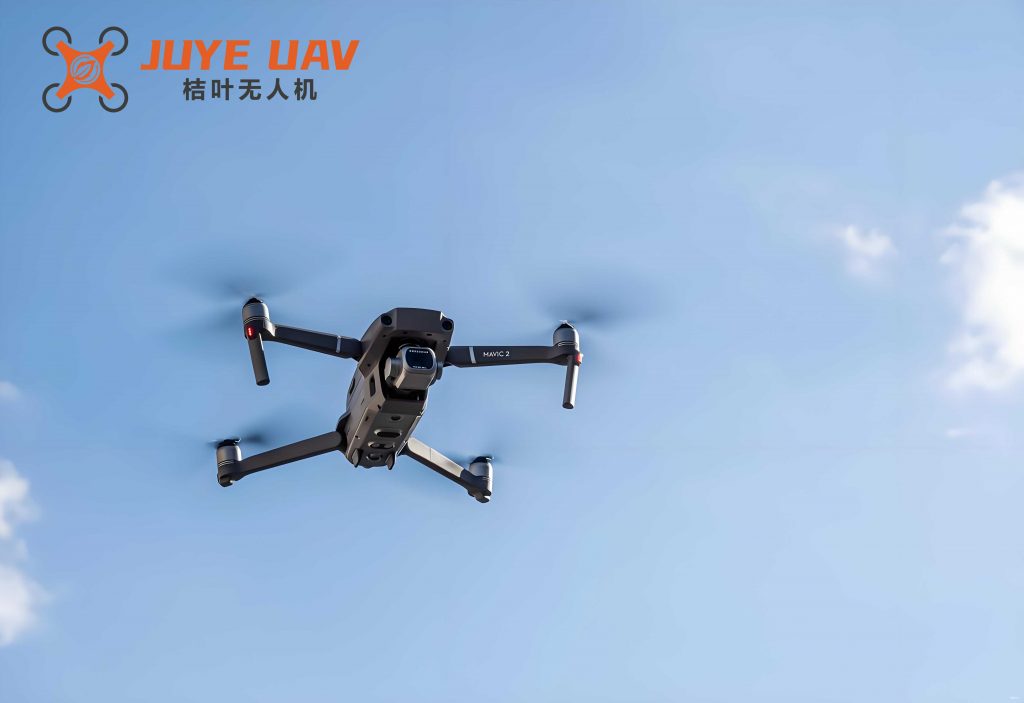
To begin, let me introduce the basic structure of a quadrotor drone. A typical quadrotor drone features a symmetric cross-shaped frame with four rotors rigidly attached at each end. This configuration allows for balanced thrust and torque management. The rotors are usually arranged such that two diagonally opposite rotors rotate clockwise, while the other two rotate counterclockwise. This arrangement cancels out the net torque, preventing unwanted rotation and simplifying control analysis. The quadrotor drone’s movements—pitch, roll, yaw, and vertical ascent/descent—are achieved by differentially varying the speeds of these rotors. For instance, to initiate a pitch motion, the front rotor’s speed is increased while the rear rotor’s speed is decreased, and similarly for other maneuvers. This fundamental control principle underpins all advanced algorithms for quadrotor drones.
As I explore the control strategies, it is essential to understand the dynamic model of a quadrotor drone. The equations of motion are derived from Newton-Euler principles and involve complex interactions. For a quadrotor drone, the translational dynamics can be expressed as:
$$ \ddot{x} = \frac{1}{m} (u_x \cos\phi \sin\theta \cos\psi + u_y \sin\phi \sin\psi) $$
$$ \ddot{y} = \frac{1}{m} (u_x \cos\phi \sin\theta \sin\psi – u_y \sin\phi \cos\psi) $$
$$ \ddot{z} = \frac{1}{m} (u_x \cos\phi \cos\theta) – g $$
where \( x, y, z \) represent the position in an inertial frame, \( m \) is the mass of the quadrotor drone, \( g \) is gravitational acceleration, and \( \phi, \theta, \psi \) are the roll, pitch, and yaw angles, respectively. The control inputs \( u_x, u_y, u_z \) are related to the rotor thrusts. The rotational dynamics are given by:
$$ I \dot{\omega} + \omega \times I \omega = \tau $$
where \( I \) is the inertia matrix, \( \omega \) is the angular velocity vector, and \( \tau \) is the torque vector generated by the rotors. These equations highlight the nonlinear and coupled nature of the quadrotor drone, making control design nontrivial. To facilitate control, a simplified model is often used, but achieving precision requires advanced algorithms.
Now, I will summarize the basic control actions for a quadrotor drone in a table. This table outlines how varying rotor speeds produces different motions, which is foundational for implementing any flight control algorithm for quadrotor drones.
| Motion | Rotor 1 | Rotor 2 | Rotor 3 | Rotor 4 |
|---|---|---|---|---|
| Pitch | Increase | No Change | Decrease | No Change |
| Roll | No Change | Decrease | No Change | Increase |
| Yaw | Increase | Decrease | Increase | Decrease |
| Vertical Ascent | Increase | Increase | Increase | Increase |
| Vertical Descent | Decrease | Decrease | Decrease | Decrease |
This table illustrates the intuitive yet coordinated control required for a quadrotor drone. Each motion involves specific changes in rotor speeds, and these actions must be combined for complex maneuvers. The quadrotor drone’s control system must handle these interactions seamlessly, which is where advanced algorithms come into play.
Moving on, I will discuss several common flight control algorithms for quadrotor drones. These algorithms have been developed to address the challenges of stability, robustness, and autonomy. I will start with the Proportional-Integral-Derivative (PID) control, which is widely used due to its simplicity. Then, I will cover Back-stepping control and Active Disturbance Rejection Control (ADRC), each offering unique advantages for quadrotor drones.
Proportional-Integral-Derivative (PID) Control for Quadrotor Drones
PID control is a cornerstone in the control of quadrotor drones. Its popularity stems from its straightforward structure and effectiveness without requiring an exact model of the system. For a quadrotor drone, PID controllers are often applied to each degree of freedom—pitch, roll, yaw, and altitude—independently or in a cascaded manner. The PID control law computes the control input \( u(t) \) based on the error \( e(t) \) between the desired and actual states. The standard form is:
$$ u(t) = K_p e(t) + K_i \int_0^t e(\tau) d\tau + K_d \frac{de(t)}{dt} $$
where \( K_p \), \( K_i \), and \( K_d \) are the proportional, integral, and derivative gains, respectively. These gains must be tuned carefully to achieve stable flight for the quadrotor drone. In practice, a quadrotor drone might use separate PID loops for attitude and position control. For example, the inner loop controls the angles \( \phi, \theta, \psi \), while the outer loop controls \( x, y, z \). This decoupling simplifies the control design but may not fully address coupling effects.
To elaborate, consider the pitch control of a quadrotor drone. Let \( \theta_d \) be the desired pitch angle and \( \theta \) be the actual angle. The error is \( e_\theta(t) = \theta_d – \theta(t) \). The PID controller outputs a control signal:
$$ u_\theta(t) = K_{p,\theta} e_\theta(t) + K_{i,\theta} \int_0^t e_\theta(\tau) d\tau + K_{d,\theta} \dot{e}_\theta(t) $$
This signal is then mapped to rotor speed commands using the table above. However, tuning these gains for a quadrotor drone can be challenging due to nonlinearities. I have found that methods like Ziegler-Nichols or heuristic tuning are commonly used, but they may not suffice for aggressive maneuvers. Below is a table summarizing the roles of PID gains in the context of a quadrotor drone.
| Gain | Effect on Quadrotor Drone | Typical Tuning Consideration |
|---|---|---|
| Proportional (\( K_p \)) | Reduces steady-state error; high values can cause oscillations. | Increase until the quadrotor drone responds quickly but without overshoot. |
| Integral (\( K_i \)) | Eliminates residual error; can lead to integral windup. | Set low to avoid slow response; use anti-windup techniques. |
| Derivative (\( K_d \)) | Damps oscillations; sensitive to noise. | Increase for smoother flight; filter high-frequency noise. |
Despite its simplicity, PID control has limitations for quadrotor drones, especially in handling external disturbances and model uncertainties. This has led to the development of more advanced algorithms, which I will discuss next.
Back-stepping Control for Quadrotor Drones
Back-stepping control is a recursive method that systematically designs controllers for nonlinear systems like quadrotor drones. It breaks down the system into subsystems and designs virtual control laws step by step. For a quadrotor drone, this approach can handle the nonlinear dynamics more effectively than PID. The key idea is to start from the innermost subsystem and work outward, ensuring stability at each step using Lyapunov functions.
Consider a simplified model of a quadrotor drone for pitch motion. Let the state variables be \( x_1 = \theta \) (pitch angle) and \( x_2 = \dot{\theta} \) (pitch rate). The dynamics can be written as:
$$ \dot{x}_1 = x_2 $$
$$ \dot{x}_2 = f(x) + g(x) u $$
where \( f(x) \) represents nonlinear terms and \( g(x) \) is a control gain. In Back-stepping, I first treat \( x_2 \) as a virtual control for the \( x_1 \) subsystem. Define an error \( z_1 = x_{1,d} – x_1 \), where \( x_{1,d} \) is the desired pitch angle. Choose a Lyapunov function \( V_1 = \frac{1}{2} z_1^2 \). Its derivative is:
$$ \dot{V}_1 = z_1 \dot{z}_1 = z_1 (\dot{x}_{1,d} – x_2) $$
To stabilize \( z_1 \), I design a virtual control \( \alpha_1 \) such that \( x_2 \) should equal \( \alpha_1 \), where:
$$ \alpha_1 = \dot{x}_{1,d} + k_1 z_1 $$
with \( k_1 > 0 \). Then, \( \dot{V}_1 = -k_1 z_1^2 \), ensuring convergence. Next, define the error for the second subsystem: \( z_2 = x_2 – \alpha_1 \). The actual control input \( u \) is designed to stabilize \( z_2 \). The Lyapunov function for the full system is \( V_2 = V_1 + \frac{1}{2} z_2^2 \). Its derivative becomes:
$$ \dot{V}_2 = -k_1 z_1^2 + z_2 (f(x) + g(x) u – \dot{\alpha}_1 + z_1) $$
By choosing \( u \) as:
$$ u = \frac{1}{g(x)} (-f(x) + \dot{\alpha}_1 – z_1 – k_2 z_2) $$
where \( k_2 > 0 \), I obtain \( \dot{V}_2 = -k_1 z_1^2 – k_2 z_2^2 \), guaranteeing asymptotic stability. This recursive process can be extended to all states of the quadrotor drone, including roll, yaw, and position.
For a quadrotor drone, Back-stepping offers robustness against model uncertainties, but it requires accurate knowledge of the system dynamics. To summarize the steps, I provide a table outlining the Back-stepping procedure for a generic quadrotor drone subsystem.
| Step | Action | Lyapunov Function | Virtual Control Law |
|---|---|---|---|
| 1 | Define error for first state (e.g., angle). | \( V_1 = \frac{1}{2} z_1^2 \) | \( \alpha_1 = \dot{x}_{1,d} + k_1 z_1 \) |
| 2 | Define error for second state (e.g., angular rate). | \( V_2 = V_1 + \frac{1}{2} z_2^2 \) | Actual control \( u \) derived from stability condition. |
| 3 | Extend to higher-order subsystems if needed. | \( V_n = V_{n-1} + \frac{1}{2} z_n^2 \) | Recursive design until all states are controlled. |
This method has been successfully applied to quadrotor drones, but it can be computationally intensive. Moreover, the performance of a quadrotor drone under Back-stepping control depends on the accuracy of the model, which leads me to the next algorithm.
Active Disturbance Rejection Control (ADRC) for Quadrotor Drones
Active Disturbance Rejection Control (ADRC) is a modern control technique that excels in handling disturbances and uncertainties, making it highly suitable for quadrotor drones. ADRC does not rely on a precise model; instead, it estimates and compensates for total disturbances in real-time. For a quadrotor drone, this means robustness against wind gusts, payload variations, and model inaccuracies. The ADRC framework consists of three main components: a Tracking Differentiator (TD), an Extended State Observer (ESO), and a Nonlinear State Error Feedback (NLSEF) law.
For a second-order system like the altitude control of a quadrotor drone, let the dynamics be:
$$ \ddot{z} = f(z, \dot{z}, w) + b u $$
where \( z \) is the altitude, \( f \) represents unknown dynamics and disturbances, \( w \) is external noise, \( b \) is a control gain, and \( u \) is the control input. ADRC treats \( f \) as an extended state \( x_3 = f \). The ESO estimates both the states and this extended state. The TD provides a smooth reference signal and its derivative. The NLSEF generates the control law based on the errors between the estimated states and the desired trajectory.
Mathematically, for a quadrotor drone’s altitude, define the state vector \( \mathbf{x} = [x_1, x_2, x_3]^T = [z, \dot{z}, f]^T \). The ESO can be designed as:
$$ \dot{\hat{x}}_1 = \hat{x}_2 + \beta_1 (z – \hat{x}_1) $$
$$ \dot{\hat{x}}_2 = \hat{x}_3 + \beta_2 (z – \hat{x}_1) + b u $$
$$ \dot{\hat{x}}_3 = \beta_3 (z – \hat{x}_1) $$
where \( \hat{x}_i \) are estimates, and \( \beta_1, \beta_2, \beta_3 \) are observer gains tuned for fast convergence. The control law is then:
$$ u = \frac{1}{b} (u_0 – \hat{x}_3) $$
where \( u_0 \) is the output of the NLSEF, typically a nonlinear function of the tracking errors. For instance, if the desired altitude is \( z_d \), the TD produces \( v_1 \approx z_d \) and \( v_2 \approx \dot{z}_d \). The errors are \( e_1 = v_1 – \hat{x}_1 \) and \( e_2 = v_2 – \hat{x}_2 \). Then, \( u_0 \) can be:
$$ u_0 = k_1 \text{fal}(e_1, \alpha_1, \delta) + k_2 \text{fal}(e_2, \alpha_2, \delta) $$
where \( \text{fal} \) is a nonlinear function defined as:
$$ \text{fal}(e, \alpha, \delta) = \begin{cases}
|e|^\alpha \text{sign}(e), & |e| > \delta \\
e / \delta^{1-\alpha}, & |e| \le \delta
\end{cases} $$
This nonlinearity enhances the performance of the quadrotor drone by providing rapid response for large errors and smooth adjustment for small errors. The ADRC structure effectively decouples the control from the system’s internal dynamics, making it ideal for a quadrotor drone operating in uncertain environments.
To illustrate the advantages of ADRC for quadrotor drones, I present a table comparing it with PID and Back-stepping control.
| Algorithm | Key Features | Advantages for Quadrotor Drones | Limitations |
|---|---|---|---|
| PID Control | Simple, model-free, easy to implement. | Widely used, stable for basic maneuvers of quadrotor drones. | Poor handling of disturbances and nonlinearities. |
| Back-stepping Control | Systematic design, handles nonlinearities. | Provides stability guarantees for quadrotor drones. | Requires accurate model, computationally heavy. |
| ADRC | Disturbance estimation, model-independent. | High robustness and adaptability for quadrotor drones. | Complex tuning of observer and nonlinear gains. |
This comparison underscores why ADRC is gaining popularity for quadrotor drones, especially in applications requiring resilience. However, the choice of algorithm depends on the specific requirements of the quadrotor drone mission.
Beyond these algorithms, I must address the broader challenges in quadrotor drone flight control. The future of quadrotor drones hinges on solving key issues such as accurate modeling, autonomous flight, and decision-making. Each of these aspects is critical for advancing quadrotor drone technology.
Challenges and Future Trends in Quadrotor Drone Flight Control
As I reflect on the current state of quadrotor drones, several challenges stand out. First, establishing precise dynamic models is fundamental. Most models for quadrotor drones rely on simplifications that ignore factors like aerodynamic drag, rotor dynamics, and structural flexibility. These omissions can lead to control inaccuracies. For example, the drag force on a quadrotor drone during high-speed flight can be modeled as:
$$ F_d = \frac{1}{2} \rho C_d A v^2 $$
where \( \rho \) is air density, \( C_d \) is the drag coefficient, \( A \) is the cross-sectional area, and \( v \) is the velocity. Incorporating such terms into the control design can improve the performance of quadrotor drones. Future research should focus on data-driven modeling techniques, such as system identification or machine learning, to capture these effects for quadrotor drones.
Second, achieving autonomous flight control is a major goal for quadrotor drones. Autonomous quadrotor drones must navigate complex environments without human intervention. This requires advanced algorithms for path planning, obstacle avoidance, and real-time adaptation. For instance, a quadrotor drone might use a combination of visual sensors and Lidar to map its surroundings. The control algorithm must then generate trajectories that avoid obstacles while minimizing energy consumption. A common approach is model predictive control (MPC), which solves an optimization problem online. For a quadrotor drone, MPC can be formulated as:
$$ \min_{u} \int_{t}^{t+T} ( \| \mathbf{x}(\tau) – \mathbf{x}_d(\tau) \|^2_Q + \| \mathbf{u}(\tau) \|^2_R ) d\tau $$
$$ \text{subject to: } \dot{\mathbf{x}} = f(\mathbf{x}, \mathbf{u}), \quad \mathbf{x} \in \mathcal{X}, \quad \mathbf{u} \in \mathcal{U} $$
where \( \mathbf{x} \) is the state vector of the quadrotor drone, \( \mathbf{x}_d \) is the desired trajectory, \( Q \) and \( R \) are weighting matrices, and \( \mathcal{X} \) and \( \mathcal{U} \) are constraints. Implementing MPC for quadrotor drones is computationally demanding but promising for autonomy.
Third, autonomous decision-making is essential for intelligent quadrotor drones. When a quadrotor drone faces unexpected events, such as an intruding object, it must decide on evasive actions autonomously. This involves high-level reasoning and learning capabilities. Reinforcement learning (RL) is emerging as a tool for training quadrotor drones to make such decisions. In RL, the quadrotor drone interacts with its environment and learns a policy \( \pi(\mathbf{s}) \) that maps states \( \mathbf{s} \) to actions \( \mathbf{a} \) to maximize a reward. For a quadrotor drone, the reward might penalize collisions and energy use while encouraging task completion. The policy can be represented by a neural network, and training requires extensive simulation or real-world trials.
To summarize these trends, I present a table outlining future research directions for quadrotor drones.
| Area | Description | Potential Techniques | Impact on Quadrotor Drones |
|---|---|---|---|
| Accurate Modeling | Incorporate aerodynamic effects, uncertainties, and payload variations. | System identification, finite element analysis, machine learning. | Enhances control precision and robustness of quadrotor drones. |
| Autonomous Flight | Enable self-navigation and task execution without human input. | MPC, SLAM (Simultaneous Localization and Mapping), sensor fusion. | Expands applications of quadrotor drones in delivery, inspection, etc. |
| Autonomous Decision-Making | Allow quadrotor drones to react to dynamic environments intelligently. | Reinforcement learning, fuzzy logic, swarm intelligence. | Increases safety and efficiency of quadrotor drones in complex scenarios. |
These advancements will propel quadrotor drones toward greater autonomy and reliability. As a researcher, I believe that integrating multiple algorithms—such as combining ADRC with learning-based methods—could yield breakthroughs for quadrotor drones.
Conclusion
In this comprehensive review, I have explored the realm of flight control algorithms for quadrotor drones. From the foundational PID control to the sophisticated ADRC, each algorithm offers unique benefits for stabilizing and maneuvering quadrotor drones. I have emphasized the importance of tables and formulas to elucidate these concepts, and I have consistently used the term “quadrotor drone” to maintain focus. The quadrotor drone’s versatility stems from its mechanical design, but realizing its full potential requires advanced control strategies. As challenges like modeling inaccuracies and autonomy persist, ongoing research will undoubtedly refine these algorithms. The future of quadrotor drones is bright, with trends pointing toward intelligent, adaptive systems capable of operating in diverse environments. I am confident that continued innovation will make quadrotor drones even more integral to our technological landscape, driving progress in fields from logistics to emergency response. The journey of mastering quadrotor drone control is complex, but it is a journey worth pursuing for the immense possibilities it unlocks.
To further illustrate the mathematical underpinnings, let me provide additional formulas relevant to quadrotor drones. The dynamics of a quadrotor drone can be represented in a state-space form for control design. Define the state vector as \( \mathbf{X} = [x, y, z, \dot{x}, \dot{y}, \dot{z}, \phi, \theta, \psi, p, q, r]^T \), where \( p, q, r \) are the body angular rates. The control input vector is \( \mathbf{U} = [U_1, U_2, U_3, U_4]^T \), corresponding to the total thrust and torques. The equations can be linearized around a hover condition for simplicity, but nonlinear controllers like Back-stepping or ADRC handle the full model. For instance, the relationship between control inputs and rotor speeds for a quadrotor drone is:
$$ U_1 = b (\omega_1^2 + \omega_2^2 + \omega_3^2 + \omega_4^2) $$
$$ U_2 = b l (\omega_4^2 – \omega_2^2) $$
$$ U_3 = b l (\omega_3^2 – \omega_1^2) $$
$$ U_4 = d (\omega_2^2 + \omega_4^2 – \omega_1^2 – \omega_3^2) $$
where \( \omega_i \) are the rotor speeds, \( b \) is the thrust coefficient, \( d \) is the drag coefficient, and \( l \) is the arm length. This mapping is crucial for converting controller outputs into actual commands for the quadrotor drone.
In summary, the control of quadrotor drones is a rich field blending theory and practice. Whether using PID for its simplicity or ADRC for its robustness, the goal remains to achieve stable and precise flight. As quadrotor drones evolve, so too will the algorithms that guide them, paving the way for smarter and more capable aerial systems. I hope this review provides valuable insights into the current state and future directions for quadrotor drone flight control.