
The evolution of Unmanned Aircraft Systems (UAS) has fundamentally altered the operational landscape of modern militaries. As these systems transition from supplemental intelligence assets to primary platforms for complex missions—including persistent surveillance, precision strike, electronic warfare, and manned-unmanned teaming—the need for rigorous, mission-centric performance standards becomes paramount. Among these, flying qualities stand as a critical, yet historically under-defined, pillar. Flying qualities, in the context of a military UAV, define the dynamic characteristics that govern how effectively the total system—air vehicle, flight control system (FCS), datalink, ground control station (GCS), and operator—can accomplish specified mission tasks safely and reliably.
The absence of a dedicated, widely accepted flying qualities specification for military UAVs is a significant operational and safety gap. While manned aviation benefits from mature standards like MIL-STD-1797 for fixed-wing aircraft and ADS-33 for rotorcraft—developed through decades of pilot-in-the-loop testing and operational feedback—UAV development has often relied on ad-hoc adaptations or focused solely on airworthiness derived from manned precedents. This approach is insufficient. High-profile accidents, such as the instability-induced crash of a Predator or the structural failure of the Helios prototype, underscore that unique UAV dynamics and control architectures necessitate their own evaluation framework. The core challenge lies in shifting the evaluation focus from the physiological and perceptual experience of an onboard pilot to the functional performance of a distributed, often highly automated, system in executing concrete mission objectives.
This article, from my perspective as a researcher in the field, synthesizes current thought and proposes a comprehensive architecture for military UAV flying qualities specification. The central thesis is that the specification must be built upon a Mission-Task-Element (MTE) methodology, providing a direct link between quantified dynamic performance and tangible operational utility.
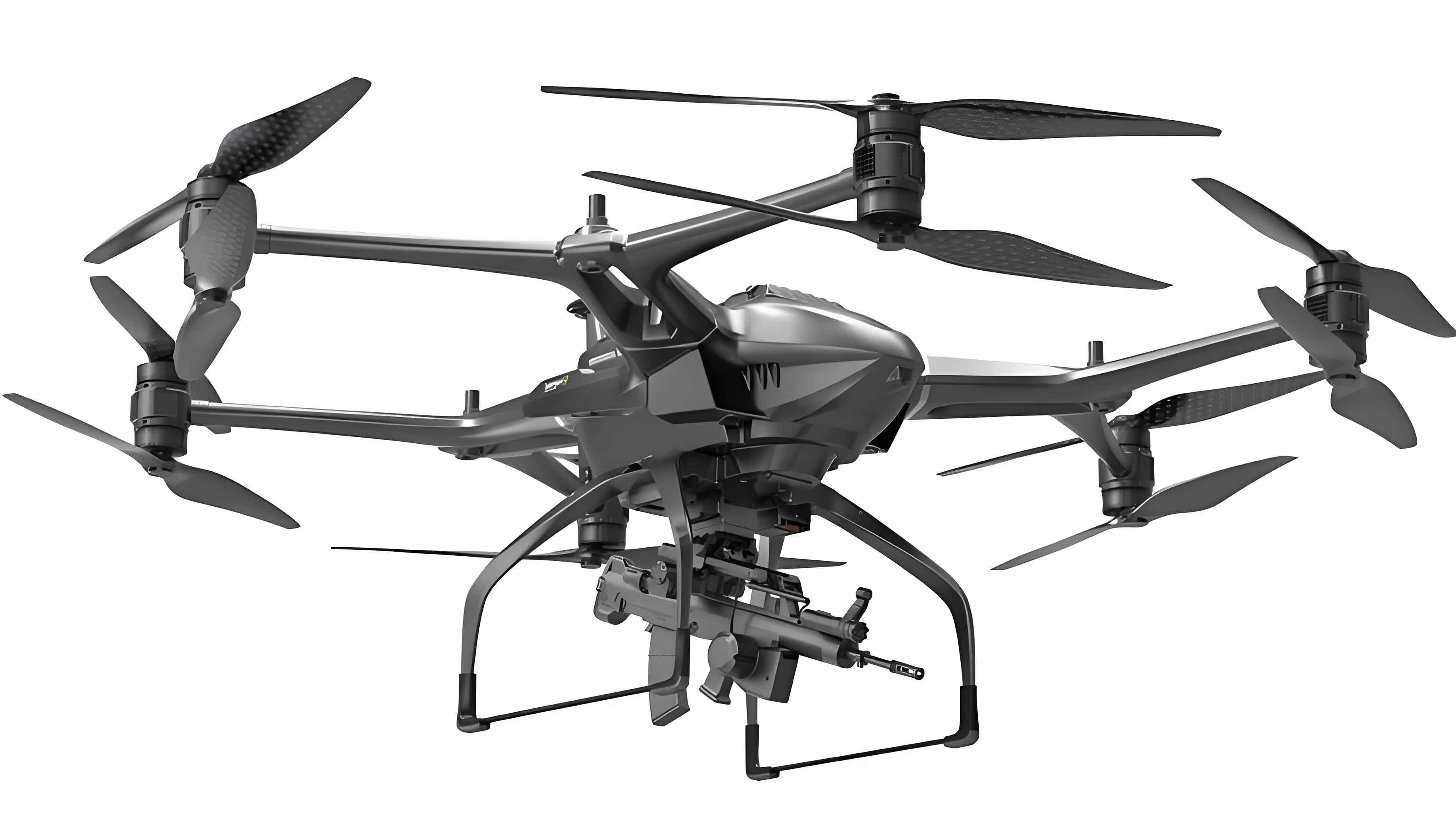
The diversity and complexity of modern military UAV operations demand a structured approach to categorization. A one-size-fits-all standard is impractical when comparing a hand-launched reconnaissance mini-UAV to a high-altitude, long-endurance (HALE) strategic platform. Therefore, a three-dimensional classification system is essential to contextualize flying qualities requirements.
| Dimension | Categories | Rationale & Influence on Standards |
|---|---|---|
| Mission Task Elements (MTE) | Take-off/Runway Launch, Catapult Launch, Vertical Take-off, Climb, Cruise/Hold, Dash, Orbit/Persistent Loiter, Sensor Pointing/Track, Dive/Attack Maneuver, Precision Landing, Shipboard Recovery, Nap-of-the-Earth (NOE) Flight, Formation Keeping, Manned-Teammate Following. | Forms the core of the specification. Each MTE defines a specific, testable objective (e.g., “achieve a stabilized climb at 10 m/s from launch to 200m AGL within 30 seconds”). Requirements for stability, agility, and precision are directly derived from the demands of these tasks. |
| Functional Role | Reconnaissance/Surveillance (ISR), Strike/Attack, Electronic Attack (EA), Communications Relay, Cargo/Logistics, Swarm Entity, Manned-Unmanned Teaming (MUM-T) Wingman. | Influences the priority and stringency of MTEs. A strike UAV requires exceptional precision in terminal dive MTEs, while a swarm entity prioritizes ultra-robust relative position-keeping and collision avoidance MTEs over individual agility. |
| Vehicle Class | Group 1-2 (Micro/Mini), Group 3 (Tactical), Group 4-5 (Strategic/MALE/HALE). Based on weight, speed, and operating regime. | Acknowledges fundamental aerodynamic and scale differences. Bandwidth requirements for a small, agile military UAV will be inherently higher than for a large, sluggish one for the same MTE. Standards set achievable, class-appropriate performance bounds. |
The interaction of these dimensions creates a requirements matrix. For example, the flying qualities for a “Precision Landing” MTE will have different quantitative thresholds for a Group 3 Tactical ISR military UAV versus a Group 5 Strategic cargo military UAV, and different again for an Attack military UAV performing a high-angle dive onto a target.
The MTE-Centric Specification Architecture
Adopting and adapting the successful framework of ADS-33, the proposed military UAV flying qualities specification revolves around three interconnected pillars: a library of well-defined MTEs, objective quantitative metrics, and subjective assessment criteria tailored to the unmanned context.
1. Mission Task Element (MTE) Description: Each MTE is not merely a name but a precise flight test card. A robust MTE description must include:
- Test Objective: The specific operational goal (e.g., “Maintain a stable sensor track on a moving ground target while in a 500m radius orbit at 2000m AGL”).
- Initial & Terminal Conditions: Defined airspeed, altitude, attitude, and configuration.
- Procedure & Constraints: A detailed narrative of the maneuver. For a “Dash from Loiter” MTE: “From a stabilized orbit at 80 m/s, initiate maximum allowable acceleration to 150 m/s along a designated ground track, maintaining altitude ±15m. Upon reaching 150 m/s, stabilize for 10 seconds.”
- Performance Standards: Quantitative tolerances for tracking error, time to complete, spatial deviation, and fuel/energy use. These are often tiered (e.g., Desired, Adequate, Unacceptable).
- Environmental & System Conditions: Specification of atmospheric turbulence level (e.g., Dryden model intensity), wind speed, and the applicable UAV control mode (e.g., fully automated, operator-supervised, manual rate control).
2. Objective Quantitative Assessment
Objective metrics provide the mathematical backbone for compliance testing. These are derived from frequency and time-domain analysis of the military UAV’s response to controls or disturbances. Key parameter sets include:
a) Small-Amplitude/High-Frequency Response (Bandwidth & Phase Delay): Critical for precision tracking and disturbance rejection. For an attitude command system, attitude bandwidth ($\omega_{\text{BW}}$) and phase delay ($\tau_p$) are calculated from the frequency response of attitude output to control input.
$$
\omega_{\text{BW}} = \text{Frequency where phase crosses -135}^\circ
$$
$$
\tau_p = -\frac{\Delta \Phi_{180}}{57.3 \cdot \Delta \omega} \quad \text{at} \quad \omega = \omega_{180}
$$
Where $\Delta \Phi_{180}$ is the phase change (in degrees) around the frequency where phase is -180° ($\omega_{180}$). Higher bandwidth and lower phase delay are required for aggressive, precise MTEs. A proposed requirement for a Class 3 Attack military UAV in a tracking MTE might be: $\omega_{\text{BW\_attitude}} \geq 2.5 \text{ rad/s}$ and $\tau_p \leq 0.15 \text{ s}$ for Level 1 (Desired) performance.
| UAV Class & Role | Typical MTE | Min Attitude Bandwidth (rad/s) – Desired (Level 1) | Max Phase Delay (s) – Desired (Level 1) |
|---|---|---|---|
| Group 3, Attack | Moving Target Track | 2.5 | 0.15 |
| Group 4, MALE ISR | Persistent Area Orbit | 1.2 | 0.25 |
| Group 1, Mini ISR | Urban Close Inspection | 3.5 | 0.10 |
b) Moderate Amplitude Quickness: Measures the agility for larger, rapid maneuvers like evasive breaks or target acquisition turns. It is defined as the ratio of peak angular rate to the control input used to achieve it (e.g., stick step). For roll axis:
$$
\text{Roll Quickness} = \frac{p_{\text{peak}}}{\delta_{\text{lat\_step}}}
$$
Higher quickness values correlate with better agility. Requirements are MTE-dependent; a military UAV engaged in air-to-air evasion requires higher quickness than one on a steady cargo route.
c) Disturbance Rejection & Stability: Measures the system’s ability to maintain state in the presence of turbulence or other upsets. Key metrics include:
- Attitude Hold Accuracy: Maximum deviation in pitch/roll/yaw from command in specified turbulence.
- Position Keep Accuracy: For GPS-guided loiter or hover MTEs, the circular error probable (CEP) in winds.
- Dutch Roll Damping: For fixed-wing military UAVs, a minimum damping ratio ($\zeta_d$) ensures satisfactory directional stability. A requirement might be $\zeta_d \geq 0.08$.
3. Subjective Assessment: The Modified UAV Cooper-Harper Scale
While objective metrics are vital, the human operator (or the “system” as a whole) remains the final arbiter of workload and task feasibility. The classic Cooper-Harper scale, designed for onboard pilots, is inadequate for military UAV operations where control is indirect and workload is shared between human and machine. A modified scale is proposed, evaluating the total system workload.
This scale synthesizes two components:
- Operator Compensation/Attention Demand: The cognitive and manual effort required from the GCS operator to achieve the MTE performance standards.
- Flight Control System Activity: The aggressiveness and frequency of control surface/actuator commands generated automatically by the FCS to maintain trajectory and stability.
The system workload is then categorized, leading to a Handling Qualities Rating (HQR). The decision tree is as follows:
Level 1 (HQR 1-3): System performance is precise, stable, and requires minimal operator attention. FCS activity is smooth and non-excessive. The military UAV is a cooperative partner. “Desired” performance.
Level 2 (HQR 4-6): Task is achievable but requires moderate to considerable operator compensation (frequent trimming, close monitoring) and/or the FCS is visibly active with frequent control bursts. Performance is adequate but not comfortable or precise. “Adequate but needs improvement.”
Level 3 (HQR 7-9): Task completion is challenging. Operator is at the limits of acceptable workload (intense concentration, high control rates), and/or FCS activity is saturated or oscillatory. Military UAV is barely controllable within the MTE tolerances. “Controllable but unsatisfactory.”
Beyond Scale: Loss of control or inability to complete the MTE.
This framework allows test evaluators to assign an HQR based on a holistic view: “To achieve the precision landing MTE, the operator had to make continuous, high-gain throttle adjustments (High Compensation), and the elevator was oscillating at 2 Hz near touchdown (High FCS Activity). The task was completed within standards but with high pilot workload and marginal stability. HQR = 6.”
4. Command-Response Types and System Architecture
The flying qualities of a military UAV are inextricably linked to its flight control architecture and the modes available to the operator. Unlike manned aircraft where the primary interface is direct mechanical or feel-filtered control, UAVs employ layered response types.
| Command Type | System Response | Typical Use Case | Relevant Flying Qualities Metrics |
|---|---|---|---|
| Rate Command (RC) | Stick deflection commands angular rate (p, q, r). Center stick holds current attitude. | Manual piloting for take-off/landing, emergency override. | Bandwidth, quickness, damping. |
| Attitude Command / Attitude Hold (ACAH) | Stick deflection commands pitch/roll angle. System holds attitude when stick centered. | Standard stabilized flight, loiter, most operator-supervised tasks. | Attitude bandwidth, phase delay, hold accuracy. |
| Velocity Command / Velocity Hold | Commands ground or airspeed vector. System uses attitude to maintain speed. | Precision transit, station keeping in wind. | Speed response dynamics, disturbance rejection. |
| Trajectory Command (Path / Waypoint) | Commands a 4D path (lat, lon, alt, time). FCS manages all control surfaces to follow path. | Fully autonomous mission execution, coordinated swarm maneuvers. | Path following error (cross-track, along-track, vertical), time error. |
The specification must define requirements for each relevant command-response type used in operational MTEs. The performance of a military UAV in ACAH mode during a sensor track MTE is evaluated using attitude-oriented metrics, while its performance in a fully autonomous multi-waypoint navigation MTE is evaluated using path-following metrics.
5. The Critical Role of Environmental Tolerance: Wind and Gust Response
A military UAV’s utility is severely compromised if it can only operate in calm conditions. Flying qualities must specify performance in realistic atmospheric disturbances. This is formalized as “Environmental Degradation” allowances within MTEs.
For example, a “Position Keep” MTE will have different performance standards (e.g., CEP radius) for different wind conditions:
- Wind Condition A (Calm): 10 kt steady wind, light turbulence. CEP ≤ 10 m.
- Wind Condition B (Moderate): 20 kt steady wind, with moderate turbulence (e.g., Dryden model, moderate intensity). CEP ≤ 25 m.
- Wind Condition C (Severe): 30 kt gusting wind, severe turbulence. MTE may be deemed “not required” or have greatly relaxed standards (CEP ≤ 50 m).
Gust rejection is quantified by the peak and settling response to a defined gust input (e.g., a “1-cosine” gust). A key parameter is the gust response peak factor:
$$
\text{GRPF} = \frac{\text{Peak Attitude Deviation from Command during Gust}}{\text{Steady-State Deviation in Same Gust}}
$$
A well-damped military UAV FCS will have a low GRPF (close to 1), indicating minimal overshoot and quick recovery, which is crucial for stable sensor operation and passenger comfort in cargo variants.
6. Broader Implications: Certification, Autonomy, and Swarms
The development of a military UAV flying qualities standard is not an academic exercise but a prerequisite for safe, efficient, and certifiable operations.
a) Airworthiness and Certification: A clear, quantitative flying qualities standard provides the basis for Type Certification of military UAVs. Compliance with MTEs and associated metrics becomes verifiable evidence that the system is “fit to fly” its intended mission. This moves beyond structural airworthiness to performance airworthiness.
b) Enabling Higher Autonomy: As military UAVs evolve towards higher levels of autonomy (e.g., on-board conflict resolution, complex team tactics), the FCS itself becomes the primary “pilot.” The modified Cooper-Harper scale’s “FCS Activity” component directly assesses this autonomous pilot’s workload and smoothness. Flying qualities standards will define what constitutes “good” and “safe” autonomous flying behavior.
c) Swarm and MUM-T Operations: For swarm entities, the “vehicle” under evaluation may be the collective behavior. MTEs would include “Formation Morphing,” “Collective Obstacle Avoidance,” and “Density Management.” Flying qualities metrics expand to include inter-vehicle state errors (relative position, velocity), collision probability, and the stability of the distributed control algorithms. In MUM-T, the flying qualities of the unmanned wingman must be predictable and compatible with the manned lead’s own handling to ensure effective tactical coordination.
Conclusion: The Path Forward
The formulation of a dedicated flying qualities specification for military UAVs is an urgent and necessary endeavor. The framework proposed here—anchored in Mission Task Elements, structured by a three-dimensional classification, and evaluated through both objective metrics and a system-oriented subjective scale—provides a robust foundation. It acknowledges that the flying qualities of a military UAV are an emergent property of the total human-machine system, not just the airframe.
The critical next step is the collaborative development of a shared database of flight test results across diverse military UAV types and MTEs. This empirical data is essential to calibrate the quantitative thresholds in the specification, moving from proposed values to validated requirements. By establishing what “good flying” means for unmanned systems, we can drive design toward greater safety, reliability, and mission effectiveness, ensuring that the military UAV of tomorrow is not just a remotely piloted aircraft, but a truly capable and trustworthy aerial asset.