
The rapid proliferation and diversification of military drone systems have starkly highlighted a critical gap in their developmental and operational framework: the lack of a dedicated, universally accepted flying qualities specification. Unlike their manned counterparts, which are guided by decades of refinement in standards like MIL-STD-1797 and ADS-33, unmanned aerial systems (UAS) often rely on ad-hoc adaptations of these manned vehicle criteria. This approach is fundamentally flawed, as it fails to account for the unique “pilot-out-of-the-loop” reality, varying levels of autonomy, and the integrated system-of-systems nature of a military drone, encompassing the air vehicle, ground control station (GCS), datalink, and mission payloads. The consequences of this gap are evident in historical mishaps and statistically higher accident rates for unmanned platforms, underscoring that flight safety and mission effectiveness are intrinsically tied to quantifiable handling characteristics. This paper, therefore, proposes and elaborates a comprehensive framework for establishing flying qualities specifications tailored specifically for military drone systems, with the Mission Task Element (MTE) methodology at its core.
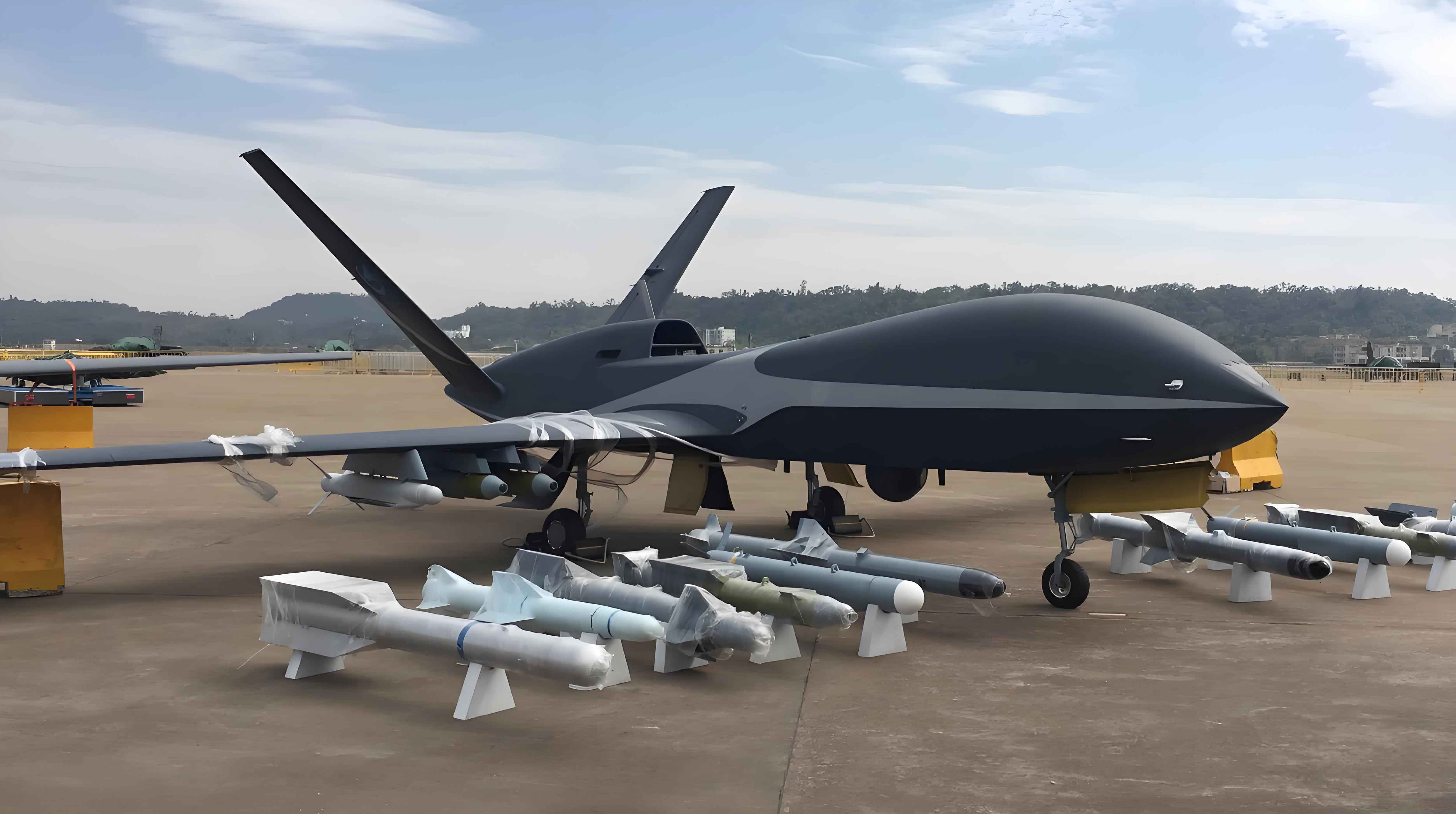
The proposed architecture rejects the notion of simply mapping manned aircraft limits onto unmanned systems. Instead, it posits that the flying qualities of a military drone must be evaluated based on the complete system’s ability to execute defined operational tasks safely and effectively. The MTE approach, pioneered in the ADS-33 specification for rotary-wing aircraft, provides an ideal foundation. It shifts the focus from open-loop aircraft characteristics to closed-loop task performance. For a military drone, this closed loop may involve a human operator at a ground station, an autonomous flight control system, or a hybrid of both. The specification must be agnostic to the specific control input source (e.g., GCS operator command vs. onboard autonomous system command) but must clearly define the input and response parameters for evaluation. The overarching goal is to create a specification that guides the design, testing, and certification of military drone systems to ensure they possess the requisite stability, controllability, and precision to fulfill their demanding roles.
Core Architecture: A Three-Dimensional Classification Framework
The foundation of a robust flying qualities specification for military drone systems is a logical classification system. A one-size-fits-all standard is impractical given the vast spectrum of unmanned platforms, from hand-launched micro drones to large high-altitude long-endurance (HALE) vehicles. Inspired by the task-oriented philosophy of ADS-33 but extending it to address UAS-specific complexities, a three-dimensional classification matrix is proposed. This matrix ensures that evaluation criteria are appropriately scoped and relevant to the specific type of military drone and its intended use.
The three defining axes are: Mission Task Elements (MTE), Functional Usage, and Vehicle Class. Each axis is detailed below, with its constituent categories summarized in Table 1.
| Dimension | Categories | Description/Rationale |
|---|---|---|
| Mission Task Elements (MTE) | Take-off, Climb, Level Flight, Descent, Loiter, Landing, Attitude Hold, Speed Hold, Position Hold, Target Tracking, Precision Hover (for VTOL), Nap-of-the-Earth Flight (for rotary-wing), Formation Keeping. | Defines the fundamental building blocks of military missions. Specifications are tied to performance in executing these discrete tasks, making the standard applicable to various control response types. |
| Functional Usage | Reconnaissance/Surveillance, Attack/Strike, Communications Relay, Transport/Cargo, General Utility, Manned-Unmanned Teaming (MUM-T), Swarm/Collective. | Tailors performance standards to mission objectives. Swarm and MUM-T categories are separated due to their unique emphasis on collaborative and emergent behaviors rather than individual vehicle performance alone. |
| Vehicle Class | Micro/Small, Medium, Large. (Based on take-off weight, wingspan/rotor diameter, and operational Reynolds number). | Acknowledges inherent performance differences. Applying identical stability margins or damping ratios across vastly different scales is unrealistic. Classification prevents over-constraining small platforms or under-constraining large ones. |
The MTE axis is the primary organizer for the specification. Each MTE, such as “precision landing” or “low-altitude terrain following,” will have a dedicated task description and associated performance standards. This axis ensures the specification remains focused on operational utility. The Functional Usage axis provides a crucial filter. The agility and precision required for an attack drone engaging a moving target are fundamentally different from the station-keeping endurance required for a communications relay platform. The Swarm/Collective category is particularly novel, necessitating metrics that evaluate the group’s cohesive behavior, robustness to loss of individuals, and collective task completion efficiency, moving beyond single-vehicle dynamics.
The Vehicle Class axis introduces necessary granularity. A classification based on a combination of take-off weight and operational Reynolds number is effective. For specification purposes, a simplified tri-class system is recommended:
- Micro/Small: Typically Group 0-II (e.g., take-off weight < 25 kg, very low Reynolds number).
- Medium: Typically Group III-IV (e.g., tactical drones like the MQ-1C Gray Eagle).
- Large: Typically Group V and above (e.g., strategic drones like the RQ-4 Global Hawk).
This stratification ensures that bandwidth requirements for a micro military drone performing aggressive target tracking are not mistakenly applied to a large transport drone, for which smooth, low-frequency responses are more critical.
Task Description and Performance Standardization
For each cell within the three-dimensional matrix (e.g., “Medium Attack Drone performing a Precision Landing MTE”), a precise Task Description Sheet must be formulated. This sheet is the contractual basis for flight testing and evaluation. It removes ambiguity and defines exactly what the military drone system must accomplish. The structure of each sheet should include:
- Test Objective: States the purpose of the MTE in operational terms (e.g., “To assess the system’s ability to achieve a precise touchdown point under crosswind conditions, simulating a confined-area landing”).
- Task Description: Details the initial conditions (airspeed, altitude, attitude, configuration), the defined maneuver or flight path (e.g., “Descend on a 3-degree glideslope to a designated point, maintaining centerline alignment”), and the termination conditions (e.g., “Main gear touchdown within a defined zone”). It must specify the command source (e.g., “Initiated by a single GCS operator command” or “Fully autonomous from waypoint trigger”).
- Performance Standards: Establishes quantitative, measurable criteria for success. These are typically divided into levels (e.g., Desired, Adequate, Unacceptable) and may include constraints on time, spatial accuracy (lateral and vertical deviation), and attitude limits. Crucially, these standards should be defined for multiple environmental conditions, particularly different wind levels. For example:
$$ \text{Desired Performance: Touchdown within } \pm 1.5 \text{ m longitudinally, } \pm 0.5 \text{ m laterally in winds } < 5 \text{ m/s.}$$
$$ \text{Adequate Performance: Touchdown within } \pm 3.0 \text{ m longitudinally, } \pm 1.5 \text{ m laterally in winds } < 10 \text{ m/s.}$$
Evaluation Methodology: Objective Metrics and Subjective Criteria
Assessing a military drone’s compliance with the flying qualities specification requires a two-pronged approach: Objective, Quantitative Metrics and a revised Subjective Criteria scale adapted for unmanned systems.
Objective Quantitative Metrics
These metrics provide analytical, repeatable measures of the military drone’s dynamic response. They are largely borrowed and adapted from manned specifications but must be interpreted within the UAS context. Key parameter sets include:
- Small-Amplitude/High-Frequency Response: Characterized by Bandwidth ($\omega_{BW}$) and Phase Delay ($\tau_p$) from frequency response analysis, indicating speed and crispness of response to operator or autonomous system inputs.
- Moderate-Amplitude/Mid-Frequency Response: Evaluated using time-domain metrics like Attitude Quickness ($Q$), defined for a roll maneuver as:
$$ Q_{\phi} = \frac{p_{peak}}{\Delta \phi_{peak}} $$
where $p_{peak}$ is the peak roll rate and $\Delta \phi_{peak}$ is the corresponding peak roll attitude change. - Large-Amplitude Response: Assessed by metrics like Minimum Achievable Time Constant or maximum attainable attitude rate within actuator limits.
- Disturbance Rejection Stability: Defined by modal characteristics such as damping ratio ($\zeta$) and natural frequency ($\omega_n$) for the Dutch roll, phugoid, or other relevant modes. Adequate damping is critical for a military drone to automatically recover from turbulence or other upsets without excessive control activity.
The boundary values separating Level 1 (Satisfactory), Level 2 (Adequate), and Level 3 (Unacceptable) performance for these metrics must be established through extensive simulation and flight testing across the matrix of military drone types. Initial values can be informed by manned analogues but must be validated and refined with unmanned-specific data.
Subjective Criteria: The Modified Cooper-Harper Scale for Military Drones
The classic Cooper-Harper scale, used by test pilots to rate handling qualities, is centered on pilot workload and compensation. For a military drone, the “pilot” is distributed between the human operator (if in the loop) and the flight control system (FCS). Therefore, a modified rating scale is essential. The proposed scale evaluates the Total Workload (TWL) of the combined human-machine system to accomplish the MTE.
TWL is synthesized from two components:
- Operator Compensation/Correction (Rop): The degree to which the GCS operator must provide corrective inputs or monitor the system intensely. This is a subjective rating by the operator, analogous to pilot workload.
- Flight Control System Activity (Rfc): An objective measure of the FCS’s control effort, which can be quantified by metrics like the RMS of control surface deflections, actuator duty cycle, or a composite index like Theil’s Inequality Coefficient (TIC) comparing commanded vs. achieved states. High FCS activity indicates poor inherent stability or excessive disturbance sensitivity.
A composite rating can be conceptualized as a weighted sum:
$$ TWL = w_o \cdot R_{op} + w_f \cdot R_{fc} $$
where $w_o$ and $w_f$ are weighting factors that may vary with autonomy level (e.g., $w_o$ is high for manually controlled drones, $w_f$ is high for fully autonomous drones). The modified decision tree, leading to a rating from 1 to 10, uses this TWL concept. The core question becomes: “Is the total workload (human + machine) required to achieve the MTE performance standard acceptable?” Table 2 outlines the revised rating structure.
| Total Workload (TWL) Assessment | Aircraft & System Response Characteristics | Rating | Flying Qualities Level |
|---|---|---|---|
| Minimal workload. System performance is precise, stable, and predictable. Desired performance easily attainable. | Excellent, highly desirable. System requires negligible compensation. | 1 | Level 1 ($\text{Rating} \in [1, 3.5)$) Satisfactory |
| Low to moderate workload. Desired performance attainable with some attention. | Good, pleasant to operate. Minor but pleasant deficiencies. | 2 | |
| Moderate workload. Desired performance requires considerable attention/effort. Adequate performance is easy to attain. | Some mildly unpleasant deficiencies. Fair. | 3 | |
| Considerable workload. Adequate performance requires high attention/effort. | Moderately objectionable deficiencies. | 4 | Level 2 ($\text{Rating} \in [3.5, 6.5)$) Adequate |
| High workload. Adequate performance requires maximum tolerable operator effort and/or high FCS activity. | Very objectionable but tolerable deficiencies. | 5 | |
| Very high workload. Barely able to maintain adequate performance. | Major deficiencies. Controllability not in question. | 6 | |
| Extreme workload. Inability to maintain adequate performance is likely. Control can be retained for emergency completion. | Major deficiencies. Considerable pilot/operator skill required. | 7 | Level 3 ($\text{Rating} \in [6.5, 8.5)$) Unacceptable |
| Control is maintained with extreme difficulty. MTE cannot be completed safely. | Major deficiencies. Intense concentration required for control. | 8 | |
| Loss of control is imminent or has occurred. | Critical deficiencies. Uncontrollable. | 9, 10 |
Command-Response Types and Wind Tolerance Specifications
Two additional pillars are critical for a complete military drone flying qualities specification: defining command-response types and establishing explicit wind tolerance criteria.
Command-Response Types
Military drones utilize diverse control architectures, from direct rate command to fully autonomous trajectory following. The specification must define the expected behavior for standard control modes. Common types for a military drone include:
- Attitude Command / Attitude Hold (ACAH): Stick input commands a pitch/roll attitude, which is held when the stick is centered.
- Rate Command / Attitude Hold (RCAH): Stick input commands an angular rate; returning the stick to center holds the current attitude.
- Trajectory Command / Trajectory Hold: High-level input (e.g., a guided weapon’s steering command) commands a flight path angle or lateral acceleration to follow a specific ground track.
- Velocity Vector Command / Hold: Commands and holds specific groundspeed and course.
The specification must map which MTEs are applicable to which command-response types and define the relevant evaluation parameters for each (e.g., attitude bandwidth for ACAH, trajectory tracking error for trajectory command).
Wind Tolerance and Disturbance Rejection
A military drone must operate reliably in adverse weather. The specification must include requirements for performance degradation in wind. This involves two aspects:
- Response to Discrete Gusts: Similar to ADS-33, limits can be placed on the peak attitude rate per unit gust velocity. For example, for a lateral gust:
$$ \frac{p_{pk}}{V_g} \leq \text{Limit Value} $$
where $p_{pk}$ is the peak roll rate response and $V_g$ is the gust velocity. Different limit values define Level 1, 2, and 3 performance. - Performance in Steady Wind: For MTEs like Position Hold or Loiter, maximum allowable station-keeping error should be specified for given wind speeds. A metric like the Track Deviation Ratio (TDR) for a circling loiter can be used:
$$ \text{TDR} = \frac{D}{R} $$
where $D$ is the diameter of the circle containing the actual flight path and $R$ is the commanded loiter radius. Table 3 provides an example specification.
| Wind Condition | Desired Performance (Level 1) | Adequate Performance (Level 2) | Remarks |
|---|---|---|---|
| Steady Wind < 10 m/s | Position held within a 5 m radius circle. | Position held within a 10 m radius circle. | Applicable to Medium/Large military drones. |
| Steady Wind 10-15 m/s | Position held within a 10 m radius circle. | Position held within a 20 m radius circle. | |
| Discrete Gust of 5 m/s | Peak deviation < 2 m. Settling time < 3 s. | Peak deviation < 5 m. Settling time < 6 s. | Gust model (e.g., “1-cosine”) must be defined. |
Conclusion and Path Forward
The proposed framework establishes a structured, mission-oriented architecture for developing flying qualities specifications for military drone systems. By anchoring the specification in a three-dimensional matrix of Mission Task Elements, Functional Usage, and Vehicle Class, it ensures relevance and scalability across the diverse spectrum of unmanned platforms. The integration of objective metrics with a modified subjective rating scale, which synthesizes operator and flight control system workload, provides a comprehensive assessment methodology tailored to the unique “pilot-out-of-the-loop” paradigm. Furthermore, explicit treatment of command-response types and wind tolerance criteria addresses key operational realities for military drones.
The critical next step, which presents the most significant challenge, is the population of this framework with validated quantitative data. The boundary values for bandwidth, quickness, damping ratios, and wind tolerance metrics cannot be set by theory alone; they must be derived from a comprehensive and standardized database of flight test results across all categories of military drone systems. This necessitates coordinated effort to define common flight test maneuvers, data recording formats, and analysis procedures specifically for unmanned systems. The proposed framework provides the necessary structure to organize, analyze, and ultimately standardize this data, paving the way for the establishment of formal, evidence-based flying qualities specifications that will enhance the safety, reliability, and mission effectiveness of military drone systems worldwide.