
As we stand at the cusp of a global strategic opportunity in low-altitude economic development, I observe that drone surveying has emerged as a pivotal force in geospatial information. In my view, the integration of drone technology with remote sensing, Geographic Information Systems (GIS), Global Navigation Satellite Systems (GNSS), and advanced sensors is driving a digital and intelligent transformation across the entire chain of geographic data acquisition, processing, and application. This synergy is not just a technological leap; it represents a fundamental shift in how we approach fields like new foundational surveying, territorial spatial planning, 3D city modeling, natural resource monitoring, and emergency response. The efficiency, precision, and cost-effectiveness of drones have rendered traditional methods obsolete in many scenarios, yet this rapid adoption brings forth systemic security challenges that demand immediate attention. From my experience, the proliferation of drones in surveying has transitioned from a niche tool to a mainstream asset, with market growth rates soaring and adoption surpassing traditional means. However, this prosperity masks latent threats that, if unaddressed, could undermine both industrial growth and national security.
In this article, I will delve into the security risks inherent in drone surveying, analyze their root causes, and propose comprehensive mitigation strategies. Throughout, I emphasize the critical role of drone training as a cornerstone for safety and compliance. By weaving in data, tables, and formulas, I aim to provide a structured analysis that underscores the urgency of a holistic approach. Let me begin by outlining the current landscape. The low-altitude economy, recognized as an emerging growth engine, relies heavily on geospatial data, and drones are at its forefront. According to industry reports, the market for drone-based surveying in China has seen annual growth rates exceeding 35%, with operations now dominating the sector. This expansion, however, has escalated risks from localized technical glitches to overarching governance dilemmas, prompting national security agencies to flag illegal drone mapping as a新兴隐患. Thus, in my assessment, securing drone surveying is not merely an operational concern but a strategic imperative for safeguarding our geospatial integrity and economic stability.
Security Risks in Drone Surveying: A Detailed Examination
From my perspective, the security risks in drone surveying can be broadly categorized into data security risks and operational compliance risks. Each category permeates multiple stages of the workflow, and their interplay exacerbates vulnerabilities. I will dissect these with examples and summaries to highlight their impact.
Data Security Risks
In my observation, data security risks span the entire lifecycle: acquisition, transmission, storage, usage, and sharing. At each juncture, lapses can lead to significant breaches. During acquisition and transmission, for instance, many commercial drones lack mandatory encryption features, opting for plaintext transmission to boost efficiency. This leaves raw geospatial data susceptible to interception by third-party devices, resulting in leaks of high-precision information. In storage, I have seen organizations store sensitive data on unencrypted servers or portable drives, or even on public cloud platforms, risking exposure through device loss or cyber-attacks. In usage and sharing, the absence of stringent approval systems allows staff to copy data arbitrarily or share it with unqualified partners, amplifying leakage potential. Moreover, data tampering poses a grave threat; I recall cases where hackers altered drone-captured road coordinates, causing construction errors and massive financial losses. Deliberate data manipulation by surveyors for project acceptance or profit further compounds this, misleading decisions and harming public interest.
To encapsulate these risks, I propose a formula for data risk assessment: $$ Risk_{data} = \sum_{i=1}^{n} (V_i \times P_i \times C_i) $$ where \( V_i \) represents vulnerability at stage \( i \), \( P_i \) is the probability of breach, and \( C_i \) denotes the consequence impact. This model helps quantify exposures and prioritize mitigations.
| Stage | Risk Type | Example | Potential Impact |
|---|---|---|---|
| Acquisition | Interception | Plaintext transmission | Data theft, privacy violation |
| Transmission | Eavesdropping | Unencrypted signals | Real-time data loss |
| Storage | Unauthorized access | Cloud storage breaches | Massive data leaks |
| Usage | Tampering | Coordinate alteration | Financial loss, safety hazards |
| Sharing | Over-disclosure | Sharing with unverified parties | National security threats |
This table underscores the multifaceted nature of data risks, which I believe necessitates integrated countermeasures.
Operational Compliance Risks
Turning to operational aspects, I note that regulatory violations are rampant due to the accessibility of drones and open-source software. Laws such as the Surveying and Mapping Law and the Interim Regulations on Flight Management of Unmanned Aircraft mandate certifications for both operators and activities. Yet, statistics reveal a disparity: while registered drones and flight hours have skyrocketed, the number of licensed operators remains limited. This gap fuels non-compliance, with unqualified individuals or firms undertaking projects through illicit means like subcontracting. Even among licensed entities, operators often lack the trifecta of飞行操作, surveying expertise, and safety awareness—a deficit I attribute to inadequate drone training. In practice, I have witnessed pilots bypassing airspace applications, flying beyond approved zones, or disabling electronic geofences, directly endangering air defense and public order.
To model this, consider a compliance score: $$ Compliance = \frac{Q_o + Q_e + Q_s}{3} $$ where \( Q_o \) is operational skill, \( Q_e \) is expertise in surveying, and \( Q_s \) is safety management knowledge. Low scores indicate high risk, highlighting the need for enhanced drone training programs.
| Risk Factor | Description | Common Manifestations | Associated Penalties |
|---|---|---|---|
| Lack of资质 | Operating without proper certifications | Unlicensed pilots,挂靠 arrangements | Fines, equipment confiscation |
| Airspace Violations | Flying in restricted or unapproved zones | Ignoring geofences, no permits | Legal sanctions, flight bans |
| Skill Deficits | Insufficient piloting or surveying skills | Poor data quality, accidents | Project failures, liability claims |
| Safety Negligence | Disregarding protocols for data or flight | No encryption, reckless operations | Data breaches, public hazards |
In my analysis, these operational lapses stem from deeper systemic issues, which I will explore next.
Root Causes of Security Risks: A Systemic Perspective
Reflecting on the underlying drivers, I identify three primary causes: incomplete法律法规, fragmented监管体系, and weak industry自律. Each contributes to the vulnerability landscape, and their interplay complicates mitigation efforts.
Incomplete Legal and Regulatory Framework
From my standpoint, while China has enacted laws on drones, they lag behind technological evolution. The rapid innovation in drone capabilities and applications outpaces legislative updates, creating gray areas. For example, there are no clear standards for classifying sensitive data—like 3D models near military zones—leading to unintentional disclosures by surveyors unsure of保密 boundaries. Technical standards for data encryption and transmission protocols are also lacking, resulting in inconsistent practices across firms. Penalties for offenses, often fines between 10,000 and 100,000 yuan, are disproportionately low compared to potential national security damages, failing to deter misconduct. I argue that this legal ambiguity necessitates urgent reforms, with a focus on defining涉密 data and mandating security protocols.
A formula to illustrate regulatory adequacy could be: $$ Adequacy_{law} = \frac{Coverage \times Clarity \times Severity}{Time_{lag}} $$ where \( Coverage \) is scope of regulations, \( Clarity \) is definition precision, \( Severity \) is penalty strength, and \( Time_{lag} \) is update delay. Low values signal gaps requiring intervention.
Fragmented监管体系
In my experience,监管 of drone surveying involves multiple agencies: civil aviation for airspace, natural resources for data security, and public security for public safety. This multiplicity, without robust coordination, breeds inefficiencies. For instance, airspace approvals for flights above 120 meters can be time-consuming, prompting surveyors to fly without permits to meet deadlines. Moreover, departments rarely share information, leaving测绘地理信息主管部门 in the dark about合规 status. I have seen cases where非法测绘 cases fall through cracks due to jurisdictional模糊, with查处 cycles stretching weeks, allowing perpetrators to destroy evidence. The flexibility and隐蔽性 of drone operations further challenge monitoring, as监管 bodies struggle to track all activities in real-time.
| Agency | Primary Role | Key Challenges | Coordination Needs |
|---|---|---|---|
| Civil Aviation | Airspace management, flight approvals | 审批 delays, enforcement capacity | Real-time data sharing with others |
| Natural Resources | Survey资质, data security oversight | Lack of flight info,识别 difficulties | Integrated monitoring platforms |
| Public Security | Public safety, illegal flight查处 | Evidence collection,跨部门移交 | Streamlined case transfer mechanisms |
This table highlights the disjointed nature of监管, which I believe calls for a unified approach.
Weak Industry自律
Lastly, I observe that the drone surveying industry lacks strong self-regulation. Many firms, driven by profit, cut corners by hiring unqualified personnel, using subpar equipment, or operating in禁飞区. In data handling, they skimp on encryption to save costs, oblivious to the threats. Industry associations, in my view, have not fully leveraged their potential to foster自律 through robust rules, training, or peer pressure. Without effective约束, unsafe practices persist, undermining collective security. Here, drone training emerges as a pivotal remedy; yet, current programs are often superficial, failing to instill the necessary综合能力. I advocate for mandatory, standardized drone training that blends flight skills, surveying knowledge, and safety protocols, enforced through certification and continuous education.
To quantify自律 levels, one might use: $$ Self\_Regulation = \frac{Adherence + Training\_Investment + Transparency}{3} $$ where higher values indicate a healthier industry culture, directly tied to comprehensive drone training initiatives.
Exploring Risk Mitigation Mechanisms: A Path Forward
Having dissected the risks and causes, I now propose a tripartite mitigation framework centered on legal enhancements,监管强化, and industry自律. Throughout, I stress the integral role of drone training in bridging gaps and building resilience.
完善法律法规体系
From my perspective, legal reforms must accelerate to keep pace with technology. I recommend clarifying responsibilities in drone surveying activities and细化安全管理规定 for data lifecycle stages. For instance, mandate encryption for storage and transmission using national-standard algorithms, and set strict介质 requirements for data storage. Penalties should be escalated beyond fines to include license revocations,从业资格 restrictions, and criminal charges for severe cases. A deterrent effect can be modeled as: $$ Deterrence = \sum (Penalty \times Detection\_Probability) $$ where increasing either factor boosts compliance. By aligning penalties with potential harms, we can curb violations more effectively.
Moreover, I urge the establishment of clear data classification standards—perhaps using a formula like $$ Sensitivity = f(Military\_Proximity, Infrastructure\_Criticality) $$ to guide surveyors on保密 protocols. This, combined with regular legal updates, will reduce ambiguity and foster a culture of compliance.
强化全链条监管能力
In my view,监管 needs a holistic overhaul via multi-departmental synergy and technological innovation. I propose creating a coordination body, such as a无人机监管协调机构, to delineate roles across事前,事中, and事后 phases, ensuring seamless执法. Information-sharing mechanisms should be institutionalized for real-time data exchange on飞行计划 and approvals. Technologically, investing in a “星-空-地” monitoring network—using radar, radio frequency detection, and AI—can enhance surveillance. For example, AI algorithms can analyze flight轨迹 to flag anomalies like敏感区域盘旋, with alerts sent to监管 platforms. Blockchain can secure审批 records against tampering. Additionally,强制推广电子围栏 with破解 detection will harden空域 security.
Here, drone training intersects with监管: by educating operators on这些 technologies and regulations, we reduce unintentional breaches. I envision监管 platforms that incorporate drone training modules for certification renewals, creating a feedback loop of compliance.
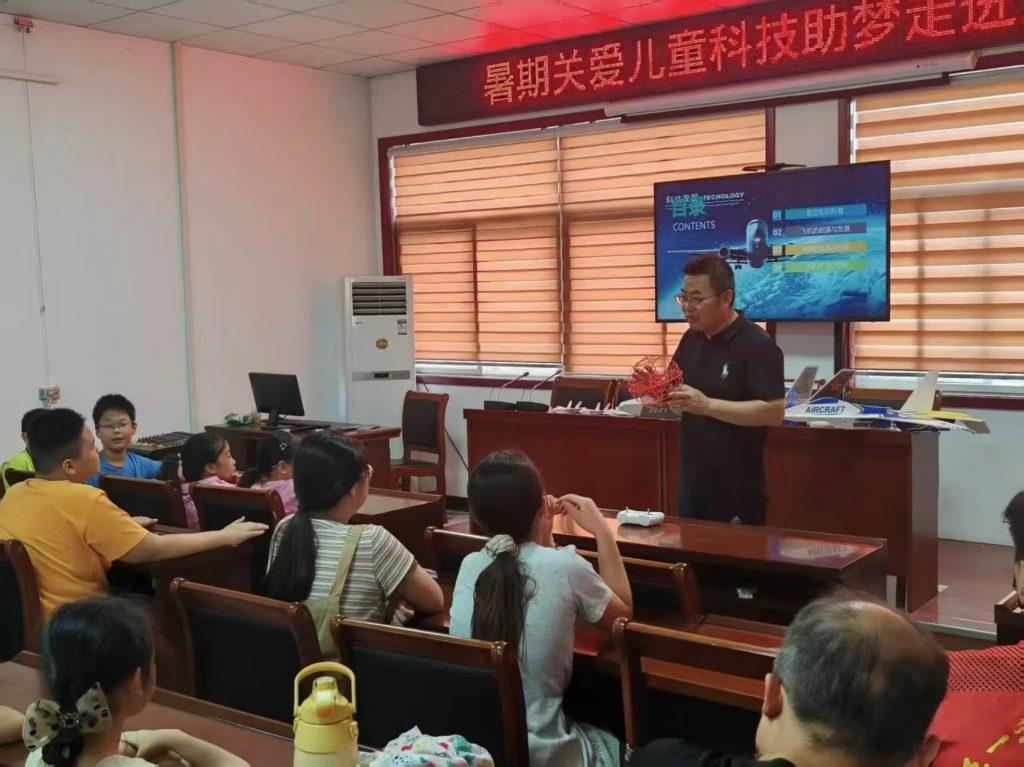
This image symbolizes the essence of effective drone training: hands-on, scenario-based learning that equips operators with the skills to navigate complex regulatory and technical landscapes. In my opinion, integrating such visuals into training programs can enhance engagement and retention, ultimately reducing operational risks.
健全行业自律体系
Lastly, I advocate for a robust自律 system built on信用评价 and education. A信用评价模型 should assess firms on资质合规,安全投入, and事故记录, with results公开 to influence market access. Incentives for high performers and sanctions for laggards will drive behavioral change. Crucially,常态化普法宣传 and安全教育培训 must be intensified. Associations and authorities should leverage events like the “8·29” Surveying Law Day to disseminate法规, while organizing regular drone training workshops for leaders, technicians, and pilots. These sessions should cover空域管理, data保密, and应急处理, with certification as a prerequisite for employment. I propose a training effectiveness metric: $$ Training\_Impact = \frac{Knowledge\_Gain \times Behavior\_Change}{Time\_Invested} $$ where sustained improvements signal success.
In my experience, drone training is not a one-off event but a continuous process. By embedding it into industry norms, we can cultivate a safety-first mindset that complements regulatory efforts. For instance,模拟 exercises on handling data breaches or airspace incursions can build muscle memory for real-world scenarios.
| Component | Description | Expected Outcome | Frequency |
|---|---|---|---|
| Flight Skills | Piloting techniques, emergency procedures | Reduced accident rates | Annual refreshers |
| Surveying Expertise | Data acquisition methods, accuracy standards | High-quality geospatial outputs | With new technology adoption |
| Security Protocols | Encryption, access controls, compliance laws | Minimized data breaches | Bi-annual updates |
| Regulatory Knowledge | Airspace rules,资质 requirements | Fewer violations | Linked to legal changes |
| Ethical Conduct | Awareness of national security implications | Responsible data handling | Integrated into all modules |
This table outlines a comprehensive drone training curriculum that, in my estimation, can significantly mitigate risks by addressing both technical and human factors.
Conclusion: Toward a Paradigm of Systemic Governance
In conclusion, I assert that the burgeoning field of drone surveying is an inevitable trend propelled by technological progress, but its attendant security risks cannot be overlooked. The治理 of these risks must transcend piecemeal solutions and embrace a new范式 of系统治理,综合治理, and源头治理. Through relentless innovation in institutions, management, and technology—and with drone training as a recurrent theme—we can harness the immense potential of drones for low-altitude economic growth while safeguarding national geospatial security and public safety. From my vantage point, the journey requires collective action: policymakers must refine laws, regulators must integrate systems, and industry must uphold自律. By doing so, we lay a solid foundation for high-quality development and high-level security, ensuring that the skies remain a realm of opportunity rather than vulnerability. Let us commit to this endeavor, with drone training as our steadfast companion in building a resilient future.
To reiterate, every stakeholder—from solo operators to large firms—must prioritize drone training as a non-negotiable element of their operations. Only through education and vigilance can we turn challenges into strengths, securing our geospatial frontiers for generations to come.