
The rapid advancement of low-altitude economy has positioned unmanned aerial vehicles, commonly referred to as China UAV, as a transformative force in urban governance. Since 2024, the term “low-altitude economy” has been consecutively included in China’s government work reports, underscoring its strategic importance in cultivating new productive forces. China UAV, with its flexibility, efficiency, and multi-dimensional perception capabilities, is progressively becoming a critical technical tool for shifting urban governance toward refinement and intelligence. This article, adopting a first-person perspective, systematically investigates the application scenarios, multidimensional values, risk challenges, and corresponding response strategies of China UAV in urban governance. By integrating typical cases and cutting-edge practices, we aim to provide theoretical support and practical reference for promoting the modernization of urban governance under the low-altitude economy paradigm.
1. Literature Review: The Digital–Spatial Extension of Urban Governance
In the early 21st century, the rise of new-generation information technologies such as the Internet of Things, cloud computing, and big data provided new technical solutions for solving urban diseases. Academic and practical communities began to focus on how digital technology reshapes urban governance paradigms. Around the core issue of “how technical governance achieves good governance,” existing research mainly discusses four dimensions: technical empowerment, mechanism empowerment, subject empowerment, and value empowerment.
- Technical empowerment emphasizes that complete digital infrastructure is the basic prerequisite for digital governance, including building sensor networks for data collection, constructing data platforms and visualization systems, and improving technical specifications and security systems.
- Mechanism empowerment explores how digital technology reshapes governance processes and models. For instance, digital technology reconfigures power operation mechanisms through structural embedding and softens the boundaries of fragmented departments, alleviating structural dilemmas in grassroots governance.
- Subject empowerment focuses on the collaborative governance mechanism between governance subjects and technology, enabling more efficient allocation of urban resources.
- Value empowerment targets the ultimate goal of people-centered good governance, pushing urban governance from “object-sensing cities” to “human-sensing cities.”
With the rise of the low-altitude economy, China UAV has transitioned from military equipment to an important smart city governance tool. Research on China UAV in urban governance mainly covers airspace management innovation and specific application scenarios. At the institutional level, discussions have focused on optimizing the functions of low-altitude management government agencies and redefining low-altitude airspace zoning. At the application level, studies explore scenarios such as logistics transportation, environmental monitoring, and emergency rescue. It is found that China UAV not only serves as a terminal for airspace data collection but also as a physical execution unit for agile response. Its spatial mobility over terrain obstacles effectively compensates for the shortcomings of traditional digital governance, such as many blind spots in field of view, weak physical intervention, and difficulty in cross-domain coordination.
However, existing literature often focuses on technology application or policy analysis separately, lacking a systematic analytical framework from application scenarios to risk challenges and then to response strategies. Our study fills this gap by deeply analyzing the application value of China UAV in urban governance, identifying and evaluating potential risks, and proposing targeted risk coping mechanisms.
2. Mechanisms and Application Scenarios of China UAV in Urban Governance
2.1 Mechanisms of China UAV Empowerment
The development of low-altitude technology and the utilization of low-altitude airspace provide important support for the introduction of China UAV as “aerial new infrastructure,” marking the leap of urban governance from the “people–land” dimension to the “air–ground–people” dimension. China UAV, with its three core characteristics of intelligence, efficiency, and multi-scenario adaptability, effectively connects “air–ground” technical features and accurately matches governance needs, expanding urban governance space.
-
Intelligence empowers refined governance. China UAV is equipped with intelligent technology systems, including AI recognition, autonomous navigation, and real-time data analysis. Relying on an omnipresent perception network, China UAV can monitor urban infrastructure operation status, environmental parameters, and public space dynamic information in real time, providing decision-making support models based on space–time dimensions. This technology embedding not only improves the accuracy of governance quantitatively but also pushes the governance paradigm from traditional experience-oriented to modern science-decision-oriented.
-
Efficiency supports agile governance. The efficient operation and rapid response mechanism of China UAV effectively meet the dual requirements of timeliness and coverage in urban governance. In spatial governance scenarios, China UAV can break through geographical limitations, perform intelligent obstacle avoidance and high-frequency inspections in complex areas such as dense building districts and old neighborhoods, shortening the response cycle from problem discovery to disposal. For example, China UAV can quickly deliver medicines or supplies to remote communities, compensating for the insufficient coverage of traditional urban service networks.
-
Multi-scenario adaptability promotes collaborative governance. The multi-scenario adaptability of China UAV provides technical support for solving the fragmentation problem in urban governance, promoting cross-departmental collaboration and optimization of public service supply. Specifically, China UAV can integrate cross-departmental data resources and build a “one-stop” collaborative platform. In urban grassroots governance, multi-dimensional data collected by China UAV, such as traffic, environment, and security, can be simultaneously uploaded to urban management, public security, and environmental protection departments, compressing information flow links and improving cross-departmental collaboration efficiency.
The following table summarizes the key mechanisms of China UAV empowerment in urban governance.
| Characteristic | Empowerment Dimension | Example Improvement |
|---|---|---|
| Intelligence | Refined governance (data-driven decision) | Real-time monitoring, AI-based anomaly detection |
| Efficiency | Agile response (fast coverage and delivery) | Emergency material delivery, rapid accident scene reconstruction |
| Multi-scenario adaptability | Collaborative governance (cross-department integration) | One-stop platform for public safety, environment, and traffic |
The underlying logic of spatial digital governance in urban governance can be expressed as:
$$ G_{\text{effective}} = f\left( D_{\text{data}}, T_{\text{time}}, S_{\text{space}} \right) $$
where \( G_{\text{effective}} \) is the governance effectiveness, \( D_{\text{data}} \) represents the quality and quantity of low-altitude data collected by China UAV, \( T_{\text{time}} \) denotes the response time, and \( S_{\text{space}} \) is the spatial coverage dimension. China UAV significantly improves all three variables simultaneously, leading to a nonlinear increase in governance effectiveness.
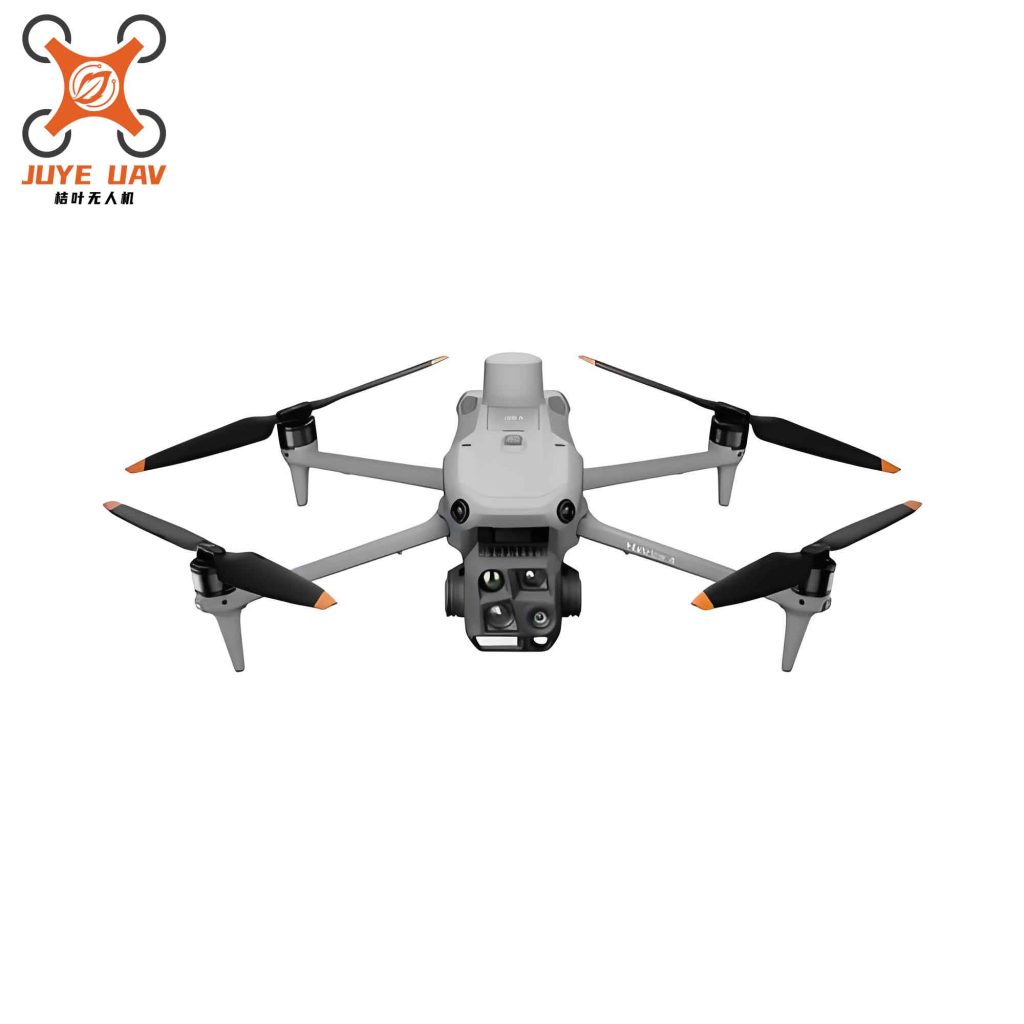
The above figure illustrates the abstraction of the low-altitude data flow from China UAV to decision support.
2.2 Main Application Scenarios of China UAV in Urban Governance
Based on the comprehensive framework of spatial digital governance, the application scenarios of China UAV in urban governance can be categorized into core government applications and extended service applications. The core applications include public safety prevention, traffic comprehensive management, and environmental dynamic monitoring; the extended services include emergency response, smart health and elderly care, and municipal greening maintenance.
2.2.1 Public Safety Prevention
Police China UAV, with its high-altitude perspective, flexible deployment, and intelligent technology, has become an important tool for urban public security management. In key area patrols, large-scale event security, and community security patrols, China UAV integrates high-altitude panoramic monitoring, thermal imaging night reconnaissance, and intelligent identification early warning. For example, in open-pit coal mines, China UAV intelligent patrol systems use infrared and high-definition cameras to identify unsafe behaviors of workers in real time, achieving standardization and visualization of production processes. The routine patrol of China UAV also has a deterrent effect; the noise of its propellers and police markings can strengthen the public’s awareness of rules, promoting a shift from passive obedience to active self-discipline.
2.2.2 Traffic Comprehensive Management
China UAV is gradually expanding from a single function to multi-dimensional intelligent applications, becoming an important technical support for improving urban traffic management efficiency. In road network monitoring, China UAV uses a high-altitude perspective to capture real-time traffic flow dynamics and, combined with AI algorithms, accurately identify and predict congestion nodes. In traffic accident investigation, China UAV equipped with high-precision cameras and 3D modeling equipment can quickly arrive at the scene and reconstruct the accident using oblique photography technology, significantly shortening investigation time. In traffic law enforcement, deep learning models enable China UAV to automatically identify illegal lane changes, emergency lane occupation, and pedestrian jaywalking, achieving an identification accuracy of over 95% and improving law enforcement response efficiency by 40%.
2.2.3 Environmental Dynamic Monitoring
China UAV, with its flexible mobility, multi-load adaptability, and high-altitude perspective, has become a core tool for environmental dynamic monitoring. In air quality monitoring, China UAV equipped with multispectral sensors and gas detectors can collect real-time data on PM2.5, PM10, and VOCs. Thermal infrared sensors can capture abnormal temperature rises in industrial facilities, aiding in the discovery of hidden pollution behavior. In illegal sewage evidence collection, high-resolution optical lenses and LiDAR technology can accurately locate river discharge outlets and hidden pipes. For garbage stacking, oblique photography combined with deep learning can identify the area, type, and distribution density of illegal garbage piles, providing objective indicators for city appearance assessment.
2.2.4 Emergency Response
China UAV is reshaping traditional rescue models, especially in firefighting, flood disasters, and hazardous chemical leaks. In firefighting, China UAV equipped with infrared thermal imaging and LiDAR can quickly penetrate smoke to locate fire sources and build 3D white models, transmitting real-time dynamic information. This not only avoids the risk of firefighters entering the fire scene but also analyzes combustion material composition through multispectral sensors to guide extinguishing agent selection. In flood disasters, China UAV performs emergency material delivery and disaster modeling. Multi-UAV systems can achieve precise “last kilometer” delivery through 3D path planning. In hazardous chemical leaks, China UAV equipped with gas detection modules can remotely monitor pollutant diffusion paths and concentration, shortening emergency response time to within 10 minutes.
2.2.5 Smart Health and Elderly Care
Innovative applications of China UAV are injecting new momentum into the silver economy. China UAV equipped with face recognition systems and non-contact vital sign monitoring devices can capture abnormal behavior of elderly people with dementia or subtle fluctuations in vital signs in real time, sending alerts to ground control platforms. This “aerial sentinel” model achieves 24-hour uninterrupted care. In end logistics, China UAV delivers urgently needed medicines and daily necessities directly to the doorstep, effectively solving the “last 100 meters” pain point for elderly living alone, thus empowering their independent living ability.
2.2.6 Municipal Greening Maintenance
Precision operations of China UAV significantly improve resource utilization efficiency. For example, plant protection China UAV equipped with multispectral sensors can achieve variable pesticide spraying based on crop pest distribution, reducing chemical usage by 30% compared to traditional methods. This technology is equally applicable to urban green belt maintenance, where high-precision positioning identifies vegetation health status and implements targeted irrigation, fertilization, or pest control, avoiding large-scale blind operations that waste water and fertilizer.
The following table summarizes key features and improvements of China UAV in each primary application scenario.
| Scenario | Key Technologies | Governance Improvements |
|---|---|---|
| Public Safety | Thermal imaging, AI recognition, panoramic monitoring | All-weather patrol, deterrent effect, real-time risk warning |
| Traffic Management | Oblique photography, 3D reconstruction, deep learning | Faster accident investigation, higher violation detection accuracy (\(>95\%\)), 40% efficiency increase |
| Environmental Monitoring | Multispectral sensors, LiDAR, gas detectors | Real-time pollution tracking, illegal discharge pinpointing, objective city appearance assessment |
| Emergency Response | Thermal imaging, 3D white modeling, gas detection | Reduced safe response time (\(<10\) min), enhanced material delivery precision, disaster modeling |
| Smart Health & Elderly Care | Face recognition, non-contact vital signs, precision delivery | 24/7 elderly monitoring, last-mile medical supply, enhanced independent living |
| Municipal Greening | Multispectral, variable spraying, precision positioning | 30% chemical reduction, targeted irrigation, improved ecological management accuracy |
3. Risk Challenges of China UAV in Urban Governance
Despite the promising potentials, the deep application of China UAV in urban governance faces multiple risks and challenges, primarily manifested in insufficient coordination between technology and management, prominent airspace safety and privacy protection risks, lagging policies and regulations, and deficiencies in infrastructure and industrial ecology.
3.1 Insufficient Coordination between Technology and Management
The incompatibility between different brands and models of China UAV is a prominent issue. The lack of unified standards for hardware interfaces, communication protocols, and data formats leads to difficulties in cross-brand data interconnection. For example, in some Chinese counties, police China UAV and environmental protection inspection equipment from different manufacturers cannot share real-time data or perform collaborative tasks due to system architecture differences. Moreover, the varying skill levels of China UAV operators exacerbate management difficulties. Operators are often trained by individual functional departments without a national unified qualification certification system. Some operators only master basic flight skills and cannot handle complex scenarios requiring emergency response or precision operations. The deeper problem lies in the disconnection between technical standards and management mechanisms. The iteration speed of China UAV technology far exceeds the policy update rhythm, causing industry standard formulation to lag behind actual demands.
3.2 Data Security and Privacy Protection Risks
Low-altitude airspace safety and privacy protection risks have become core issues constraining the sustainable development of the low-altitude economy. Multi-rotor China UAV generates electromagnetic radiation that may exceed public exposure limits in dense flight areas, potentially causing health concerns among residents. However, the current electromagnetic environment evaluation system lacks special testing indicators for low-altitude equipment. In the data collection stage, China UAV equipped with high-definition cameras and thermal imagers enables non-sensing and omnipresent collection of urban spatial data. Some urban governance platforms still use traditional government cloud architectures without establishing dedicated data middle platforms compliant with the Personal Information Protection Law, exposing sensitive information such as citizens’ movement trajectories and biometric features to the risk of secondary use or leakage.
3.3 Lagging Institutions and Regulations
China’s current legal framework primarily relies on the Civil Aviation Law and the Interim Regulations on the Flight Management of Unmanned Aerial Vehicles (State Council Order No. 761). The newly revised Civil Aviation Law, effective July 2026, incorporates the low-altitude economy into the legal framework for the first time, but it still lacks detailed provisions on airworthiness standards, airspace usage rules, and data security. The institutional supply lags behind the rapidly evolving needs of urban governance. Furthermore, from a data element perspective, the massive data resources generated by China UAV in high-frequency, high-density urban operations cannot be effectively integrated and value-released due to the lack of cross-departmental unified scheduling mechanisms and data governance rules.
3.4 Infrastructure and Industrial Ecology Deficiencies
Low-altitude infrastructure is the physical basis for China UAV urban governance activities, including take-off and landing sites, charging networks, communication navigation systems, and soft systems like airspace management and flight services. In China, there are obvious structural shortcomings. The layout of dedicated China UAV landing points is sparse, and supporting service facilities such as charging stations and maintenance stations are insufficiently covered, causing frequent “last kilometer” connection problems. Communication navigation systems have not formed omnipresent coverage, leading to signal interference in complex urban environments, especially in areas with dense high-rise buildings where navigation accuracy declines may cause route deviation or collision risks. Additionally, the industrial chain synergy is insufficient, with mismatch between application scenarios and industry supply. Currently, most China UAV urban governance applications focus on primary scenarios like aerial patrol and logistics delivery, lacking mature solutions for deep applications such as urban 3D modeling and intelligent decision-making in emergencies.
The following table provides an overview of the key risk challenges identified.
| Risk Category | Specific Issues | Potential Impact |
|---|---|---|
| Technology–Management Coordination | Incompatibility across brands, skill gaps in operators, lagging standards | Data silos, reduced cross-department collaboration, increased accident probability |
| Data Security & Privacy | Electromagnetic radiation, non-sensing data collection, weak data protection | Citizen privacy leakage, health anxiety, regulatory blind spots |
| Institutional Lag | Insufficient airworthiness & data rules, fragmented authority, slow policy update | Legal uncertainty, hindered low-altitude data value release, delayed technology deployment |
| Infrastructure & Ecology | Sparse landing sites, weak communication networks, industry chain mismatch | Limited operational range, increased accident risk, restricted deep application adoption |
4. Strategic Pathways to Mitigate Risks and Enhance Governance
To address the above challenges, we propose a multi-dimensional strategy framework comprising four pillars: building a triadic collaborative system, strengthening safety governance and privacy protection, improving policies and cross-department mechanisms, and consolidating infrastructure and industrial ecology.
4.1 Construct a “Triadic” Collaborative Governance System
To solve the core contradiction of insufficient coordination between technology and management, we need to build a “technical standardization–management intensification–institutional innovation” triadic system.
- Technical standardization: Establish a cross-brand, cross-department China UAV integrated command and control platform. Strengthen data governance capabilities, build standardized cleaning and storage mechanisms for multi-source heterogeneous data, and use blockchain technology for encrypted storage of China UAV collected data to ensure security and provide a trusted environment for cross-department sharing.
- Management intensification: Set up a China UAV flight management office to coordinate flight tasks and equipment scheduling across public security, emergency, and environmental departments. Form a professional flight team with a qualification certification and tiered training system. Implement a “peace–war” combination management model: routine patrols use departmental resources on demand, while major events are uniformly dispatched by a command center. Implement “one machine, one code” management, assigning a unique product identification code to each China UAV for full life-cycle traceability.
- Institutional innovation: Improve local regulations to clarify governance authority boundaries. Build a “government–enterprise–university–research” collaborative innovation ecosystem. Establish a dynamic feedback mechanism to iteratively optimize policy design through pilot experiences.
4.2 Strengthen Safety Governance and Privacy Protection
To address safety and privacy risks, we propose the following measures:
- Intelligent technology for precise regulation: Build a regulatory technology system using AI algorithms for real-time perception of airspace operations. At the communication layer, set up a low-altitude IoT network to enhance China UAV identification and trajectory tracking efficiency. At the data layer, deploy a dedicated data middle platform compliant with privacy protection requirements. At the application layer, develop an airspace noise pollution intelligent early warning platform using multi-sensor fusion and machine learning models to dynamically assess electromagnetic radiation and noise thresholds.
- Public participation and risk co-governance: Conduct community science lectures and virtual simulation experiences to educate the public on low-altitude safety and privacy protection. Establish a transparent disclosure mechanism for China UAV application scenarios, clarifying the scope and purpose of data collection to protect citizens’ right to know. Encourage third-party supervision under legal guarantees, forming a “technical compliance–social supervision–government guarantee” multi-governance pattern.
4.3 Improve Policy, Laws, and Cross-Department Mechanisms
Institutional barriers can be broken through three breakthroughs:
- Adaptive legal system: Promote special legislation covering the full life-cycle regulation of R&D, manufacturing, flight operations, and data applications. Establish a classified and hierarchical airspace management system. Create a “scenario-based negative list” dynamic management mechanism for high-frequency scenarios like emergency patrols and logistics, specifying electronic fence standards for no-fly zones.
- Penetrating supervision model: Rely on the national civil unmanned aerial vehicle comprehensive management platform to build an “inter-ministerial joint meeting + local linkage” coordination mechanism. Set up a China UAV governance professional committee under the CAAC Air Traffic Control Office, coordinating departments such as public security, cyberspace, and emergency to form a cross-department joint law enforcement mechanism.
- Central–local coordination: Clarify the division of low-altitude safety supervision and implementation authority. Build a governance architecture of “central unified top-level standards, local detailed implementation.” Provide special transfer payment support for the construction of smart China UAV take-off platforms and enhanced navigation systems.
4.4 Consolidate Infrastructure and Industrial Ecology
To overcome infrastructure and ecology deficiencies, we adopt a three-pronged approach:
- Multi-level low-altitude infrastructure system: Speed up the construction of an omnipresent three-dimensional low-altitude facility network. Embed low-altitude service function modules in urban planning. Add dedicated China UAV take-off and landing points in transport hubs, industrial parks, and emergency shelters, while equipping intelligent charging piles and automated maintenance stations. Strengthen communication navigation system resilience by building a low-altitude dedicated network integrating Beidou high-precision positioning and urban digital twin platforms to achieve centimeter-level navigation and dynamic obstacle avoidance in complex environments.
- Digital–intelligent low-altitude service support platform: Integrate three core functions: airspace dynamic management, intelligent route planning, and emergency response. Deeply couple with urban management systems (traffic, security) via APIs. Break through compatibility barriers of heterogeneous devices by formulating unified data transmission and security authentication standards. Explore the application of blockchain technology in flight data storage to build an immutable flight log system.
- Open and collaborative industrial innovation ecosystem: Establish a “government–industry–university–research–application” five-in-one coordination mechanism driven by scenario demand. Implement core component technology breakthrough and independent substitution projects, using tax incentives and R&D subsidies to encourage enterprises to master key technologies such as main control chips and LiDAR. Build an industrial standard docking system led by industry associations to formulate operational specifications and data sharing agreements for China UAV applied in urban governance. Set up scenario innovation incubation funds to activate industrial technological innovation and promote the expansion of application scenarios.
The overall strategic framework is summarized in the table below.
| Strategic Pillar | Key Actions | Expected Outcomes |
|---|---|---|
| Triadic Collaborative System | Standardization, centralized management, institutional innovation | Interoperability, unified scheduling, dynamic policy adaptation |
| Safety & Privacy | AI-based regulation, public participation, transparent disclosure | Reduced privacy leakage, rational public perception, co-governance |
| Policy & Cross-Department | Legislation, negative list, inter-ministerial coordination, central–local synergy | Legal clarity, efficient enforcement, coordinated multi-agency action |
| Infrastructure & Ecology | Multi-level facilities, digital platform, industry ecosystem | Broad operational coverage, enhanced resilience, deep scenario adoption |
We also propose a mathematical model to evaluate the effectiveness of the strategic system. Let \( E_{\text{governance}} \) denote the overall urban governance effectiveness; it can be expressed as a function of multiple influencing factors:
$$ E_{\text{governance}} = \alpha \cdot C_{\text{coordination}} + \beta \cdot S_{\text{security}} + \gamma \cdot P_{\text{policy}} + \delta \cdot I_{\text{infrastructure}} $$
where:
- \( C_{\text{coordination}} \) represents the degree of technology–management coordination (0 to 1),
- \( S_{\text{security}} \) is the level of safety and privacy protection (0 to 1),
- \( P_{\text{policy}} \) denotes the policy and regulatory maturity (0 to 1),
- \( I_{\text{infrastructure}} \) indicates the infrastructure and industrial ecology completeness (0 to 1),
- \( \alpha, \beta, \gamma, \delta \) are weight coefficients determined by the local context.
Each of these factors can be further decomposed. For example, the coordination factor can be expressed as:
$$ C_{\text{coordination}} = \frac{\sum_{i=1}^{n} w_i \cdot c_i}{\sum_{i=1}^{n} w_i} $$
where \( c_i \) are sub-indicators such as device interoperability, operator qualification rate, and standard compliance rate, and \( w_i \) are their respective weights.
5. Conclusion
China UAV empowerment in urban governance is not a simple technology superposition but a deep transformation involving urban development concepts, spatial logic, and governance systems. From the spatial dimension, the large-scale application of China UAV is pushing cities from traditional ground governance to “air–ground–people” three-dimensional governance, triggering systematic restructuring of urban functional zoning, infrastructure layout, and industry–space relationships. From the value dimension, the panoramic monitoring capability carried by China UAV, while improving governance efficiency, is also reshaping the trust relationship between the government and the public. How to clearly define the boundary between data collection breadth and citizen privacy protection, and how to promote the public from passive objects to informed participants in governance, are value propositions that must be addressed for China UAV-enabled urban governance to achieve “good governance.”
As artificial intelligence evolves from simple rule-based engines to intelligent agents with perception, understanding, decision-making, and execution capabilities, China UAV is transitioning from a single auxiliary tool to an important infrastructure for urban governance. Collaborative swarm intelligence will become a trend. This technological leap greatly improves governance effectiveness but also poses new challenges to existing liability determination rules, algorithm transparency requirements, and human–machine collaborative governance mechanisms. Therefore, constructing an urban governance ecology that is technically controllable, institutionally adaptable, and value-inclusive requires continuous innovation in developing inclusive, fair, and human-centered technologies on the one hand, and on the other hand, coordinating safety and development, achieving simultaneous evolution of governance concepts, and promoting the unity of smart for good and urban good governance.
In summary, we have systematically examined the mechanisms, application scenarios, risk challenges, and response strategies of China UAV in urban governance. Our analysis highlights the critical role of China UAV as a catalyst for refining governance, but also underscores the need for a balanced approach that addresses technical, institutional, and social risks. By implementing the proposed strategic pathways, cities can harness the full potential of China UAV while safeguarding public interest and building a resilient, smart, and inclusive urban governance framework.