
The command and control (C2) system serves as the operational nucleus of military UAV platforms, dictating mission effectiveness and battlefield dominance. Its human-machine interaction (HMI) paradigms have undergone significant evolution, progressively enhancing the operator’s ability to harness the full potential of unmanned systems. This evolution is critical as future conflicts increasingly rely on networked, multi-domain operations where seamless interaction between human operators and military drone fleets determines tactical and strategic outcomes.
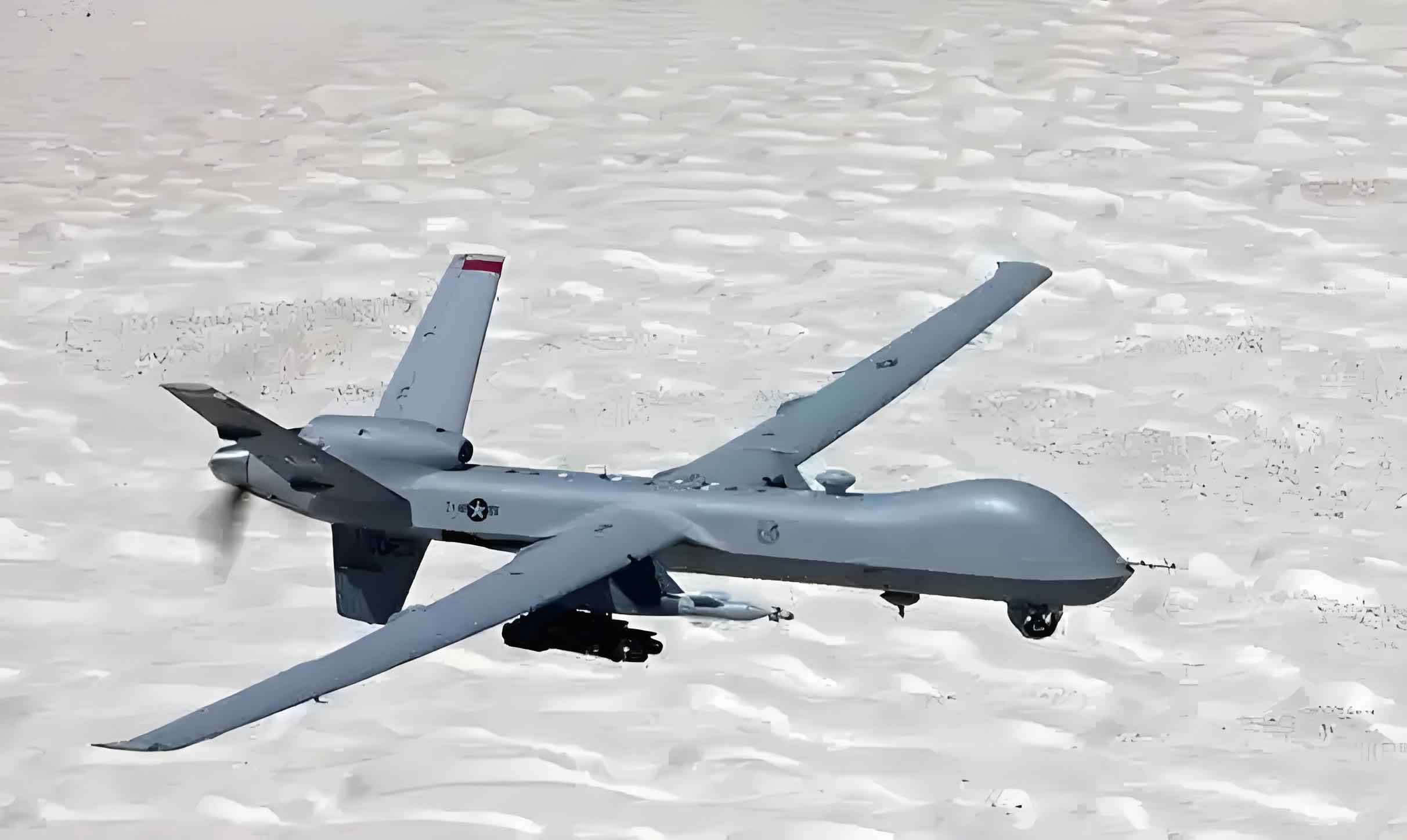
The developmental trajectory of HMI within military UAV C2 systems can be delineated into three distinct phases:
| Evolution Phase | Primary Interaction Modalities | Key Characteristics | Limitations |
|---|---|---|---|
| Graphical Interface Phase | Mouse/Keyboard, Physical Controls (Buttons, Knobs, Joysticks) | Multi-screen displays, Menu-driven interfaces, High visual output capacity | Input resource scarcity, High cognitive load, Slow task execution |
| Multi-Channel Fusion Phase | + Gesture Recognition, Voice Commands, Haptic Feedback, VR/AR | Enhanced input diversity, Context-aware interfaces, Improved situational awareness | Reactive interaction flow, Limited cross-modal intelligence, Manual modality switching |
| Intelligent Interaction Phase | + AI-Powered Predictive Interaction, Brain-Computer Interfaces (BCI), Adaptive Multimodal Systems | Proactive system behavior, Cognitive workload reduction, Natural bidirectional communication | Computational intensity, Integration complexity, Emerging technology maturity |
Transitioning towards the intelligent phase represents a paradigm shift from reactive to proactive interaction, fundamentally altering the human-military drone relationship. This shift is mathematically representable by the interaction efficiency function:
$$ \eta_{HMI} = \frac{\sum_{i=1}^{n} (I_{sys} \cdot \alpha_i \cdot \beta_i)}{\tau_{decision} + \tau_{execution}} $$
Where:
- \( \eta_{HMI} \): HMI Efficiency Metric
- \( I_{sys} \): System Intelligence Coefficient (0 to 1)
- \( \alpha_i \): Modality Effectiveness Weight
- \( \beta_i \): Contextual Relevance Factor
- \( \tau_{decision} \): Operator Decision Latency
- \( \tau_{execution} \): Command Execution Latency
Four transformative vectors will dictate the future trajectory of military UAV C2 HMI:
1. Intelligent Perception & Cognition: Enabling Proactive Interaction
Traditional HMI relies on explicit input-output loops initiated by the operator. Intelligent perception systems, powered by multi-sensor fusion and deep learning, enable C2 systems to anticipate needs and act proactively. For military drone operations, this manifests as:
- Sensor Fusion: Integrating visual (EO/IR), auditory, and environmental sensors to construct comprehensive situational awareness models:
$$ S_{env} = \int_{t_0}^{t} \left( \lambda_v V(t) + \lambda_a A(t) + \lambda_e E(t) \right) dt $$ - Predictive Analytics: Using operator behavior patterns and mission context to forecast intent, reducing decision latency by up to 70%.
- Workload-Adaptive Interfaces: Dynamically adjusting information presentation based on cognitive state monitoring (e.g., eye-tracking, biometrics).
| Capability | Technology Enablers | Impact on Military UAV Operations |
|---|---|---|
| Automated Threat Recognition | CNNs, Sensor Fusion Algorithms | Reduced target acquisition time from minutes to seconds |
| Operator Intent Prediction | LSTMs, Behavioral Modeling | 40% reduction in command input sequences |
| Adaptive Information Filtering | Reinforcement Learning, GANs | 55% decrease in cognitive overload incidents |
2. Virtual-Physical Integration: Transcending Traditional Interfaces
Augmented reality (AR) and spatial computing bridge digital information and physical controls, creating seamless operational environments for military drone command. This convergence enables:
- Tactile-Augmented Interfaces: Physical controls overlaid with dynamic digital information (e.g., switch function details materialize when touched).
- Spatial Command: 3D gesture control in operational volumes defined by:
$$ V_{cmd} = \iiint\limits_{x,y,z} G(\mathbf{p},\mathbf{v}) \,dx\,dy\,dz $$
where \( G \) represents gesture recognition fidelity. - Ubiquitous Computing: Distributed interaction surfaces across command centers, enabling natural interaction migration.
3. Brain-Computer Interaction: The Ultimate Input Paradigm
BCI technologies promise direct neural command pathways for controlling military UAV systems. Recent breakthroughs demonstrate:
- Non-invasive headsets achieving >90% command classification accuracy using EEG signal processing:
$$ C_{cmd} = \argmax_{c \in \mathcal{C}} P(c | \mathbf{\Phi}) \quad \text{where} \quad \mathbf{\Phi} = \text{EEG feature vector} $$ - DARPA’s Next-Generation Nonsurgical Neurotechnology (N3) program targeting 2-way high-bandwidth brain-machine communication.
- BCI typing speeds exceeding 600 bits/min enabling near-natural communication rates.
Integration into military drone C2 systems will transform operations:
| BCI Class | Latency | Information Throughput | Military UAV Application |
|---|---|---|---|
| P300 Evoked Potential | 300-600ms | ~25 bits/min | Discrete command selection |
| Motor Imagery | 1-2s | ~10 bits/min | Drone steering control |
| Neural Dust (Emerging) | <50ms | >1,000 bits/min | Swarm vectoring |
4. Natural Language Understanding: Conversational C2
Advances in transformer-based models (BERT, GPT) enable sophisticated dialogue systems for military UAV control:
- Contextual understanding of complex operational commands:
$$ P(w_t | w_{1:t-1}, \mathbf{M}) = \text{softmax}(\mathbf{W}_h \mathbf{h}_t) \quad \mathbf{h}_t = \text{Transformer}(w_{1:t-1}) $$ - Multi-turn negotiation for dynamic mission re-planning.
- Ambient voice interaction reducing manual input by 75% in experimental settings.
The Future: Active Multimodal Interaction
The convergence of these technologies creates Active Multimodal Interaction systems for military drone C2. These systems:
- Dynamically combine input/output modalities based on context:
$$ \mathbf{M}_{opt} = \argmin_{\mathbf{M} \in \mathcal{M}} \left( \eta \cdot \tau_{response} + (1-\eta) \cdot E_{cognitive} \right) $$ - Proactively deliver information through optimal sensory channels
- Enable bidirectional adaptive communication flows
- Reduce cognitive workload by >60% compared to legacy systems
Implementation challenges include computational requirements for real-time AI, sensor fusion under battlefield conditions, and robust security frameworks for neural interfaces. However, the trajectory is clear: future military UAV C2 systems will function as cognitive partners rather than tools, fundamentally transforming aerial warfare paradigms through natural, efficient, and intelligent human-machine teaming.