
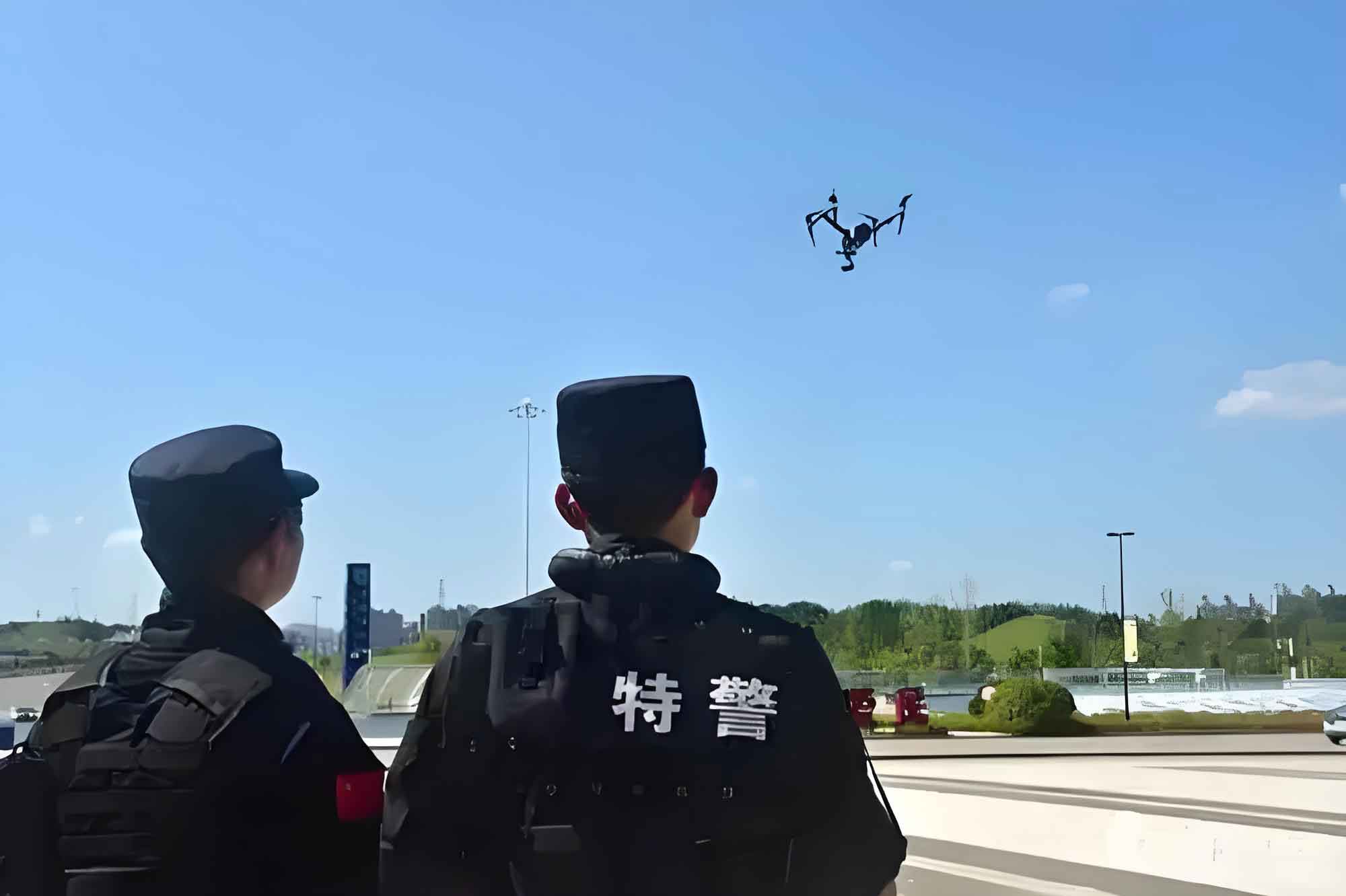
The rapid advancement of unmanned aerial vehicle (UAV) technology has precipitated a paradigm shift in public security operations globally. In recent years, the deployment of police drone systems has become increasingly prevalent, supporting critical missions ranging from large-scale event security and pandemic control to traffic management and counter-terrorism operations. The operational benefits are clear: enhanced situational awareness, access to difficult terrain, and the collection of real-time aerial intelligence. The strategic importance of this technology was underscored when President Xi Jinping, during an inspection visit, emphasized the transformative impact of unmanned systems on modern warfare and the urgent need to cultivate professional talent in this domain. This directive resonates profoundly within the public security sector, where the effective utilization of police drone technology is no longer a luxury but a necessity for modern policing.
Public security academies, as the primary incubators for front-line law enforcement talent and centers for professional development, bear a significant responsibility. They must bridge the gap between technological potential and practical, operational competence. While some institutions, like the Nanjing Forest Police College, have initiated training programs for serving officers, the outcomes reveal systemic shortcomings. The number of certified police drone operators remains critically low, and the scope of training is often narrow, focusing primarily on basic flight mechanics and safety protocols. This creates a significant competency gap; officers may hold a pilot’s license but lack the specialized skills required for complex public security applications. These include tactical tracking and suspect discovery, systematic evidence collection and scene reconstruction via aerial photogrammetry, and the technical knowledge to support signals intelligence operations. Consequently, there is an urgent and pressing need to comprehensively reform and strengthen the construction of police drone training curricula within public security academies.
The Critical Imperative for Specialized Police Drone Training
The current shortage of professionally trained police drone personnel poses a substantial barrier to the full implementation of the “technology-enhanced policing” strategy. Often, officers assigned to UAV units are transferred from other departments, motivated by personal interest or equipped only with short-course certifications. This has led to the formation of teams operating at a rudimentary “basic flight” level, predominantly for routine patrols. The sophisticated application of police drone technology for investigative and tactical purposes remains underdeveloped.
The operational landscape demands far more. Consider vast border regions with complex, inaccessible topography that serve as conduits for smuggling and illegal crossings. Traditional ground patrols are logistically challenging and resource-intensive. Here, the police drone becomes a force multiplier, enabling persistent, wide-area surveillance. Similarly, in criminal investigations, a police drone equipped with a thermal infrared camera can identify anomalous heat signatures, potentially revealing clandestine drug manufacturing labs. The ability to extract actionable intelligence from aerial imagery—through techniques like orthomosaic generation, 3D modeling, and change detection—is a specialized skill set currently in short supply. The evolution of police drone technology has moved beyond its infancy; it is now entering a phase demanding professional, mature, and highly specialized operational doctrines. Public security academies, as hubs for innovation and talent development, must lead this charge by fundamentally restructuring their training paradigms.
Systemic Challenges in Current Training Curriculum Construction
The development of an effective training ecosystem faces several interconnected challenges that hinder the production of truly proficient police drone operators.
1. Fragmented Curriculum and Lack of Standardized Materials
Operating a police drone is an interdisciplinary endeavor, requiring knowledge spanning aviation law, meteorology, aerodynamics, geography, and basic maintenance. Existing courses are often unbalanced, heavily focusing on regulations and basic flight physics while neglecting critical areas like terrain analysis, mission-specific geography, and field maintenance procedures. The theoretical instruction on aerodynamics, involving fluid mechanics principles, can be impenetrable to non-specialists. Furthermore, the absence of nationally unified, standardized textbooks tailored to public security needs leads to inconsistent training quality and knowledge gaps. A coherent curriculum structure is absent.
| Knowledge Domain | Current Common Coverage | Required Depth for Professional Operations | Gap Severity |
|---|---|---|---|
| Aviation Regulations & Airspace | Basic national rules | Advanced COA (Certificate of Authorization) planning, dynamic airspace deconfliction, emergency procedures | Medium |
| Flight Theory (Aerodynamics) | Simplified overview | Applied principles for mission planning (e.g., wind effect on battery, lift calculations) | High |
| Meteorology | General weather avoidance | Micro-weather analysis, interpreting forecast models for specific terrains (valleys, coastal areas) | High |
| Mission Planning & Geography | Minimal or none | Terrain analysis, line-of-sight planning in urban canyons, GPS-denied environment strategies | |
| Maintenance & Field Repair | None or very basic | Pre-flight systematic checks, troubleshooting common failures, replacing critical components in the field | Very High |
| Sensor Operation & Data Exploitation | Basic camera use | Thermal imaging interpretation, multispectral analysis, LiDAR basics, photogrammetry workflow | Very High |
2. Generic Content Lacking Tactical Specificity
Training often defaults to a “one-size-fits-all” approach, presenting general case studies without tailoring content to the distinct operational profiles of different police branches. This lacks tactical granularity. For instance:
- Traffic Police: Need training focused on rapid accident scene documentation, traffic flow analysis, and reconstruction using 3D models from drone imagery. The metric for success is speed and accuracy of scene clearance and evidence preservation.
- SWAT/Tactical Units: Require advanced skills in silent/covert approach, real-time tactical overwatch, room clearing simulation using drone-fed video, and coordinated multi-drone deployments.
- Border Patrol & Search and Rescue: Need expertise in long-endurance flight planning, search pattern execution (e.g., expanding square, parallel track), and thermal signature identification in vast wilderness areas.
- Criminal Investigation: Must master forensic photography protocols from the air, scene preservation via aerial mapping, and the detection of disturbed earth or hidden compartments using specialized sensors.
Training that fails to address these specialized needs produces operators, not police drone specialists.
3. Deficiency in Qualified Instructors
The instructor cadre is the cornerstone of effective training. The niche field of police drone operations creates a severe shortage of qualified educators. An ideal instructor needs a rare combination of skills: expert-level piloting proficiency, deep theoretical knowledge, certified instructor credentials, and—critically—practical public security operational experience. Currently, many academies have staff who hold basic pilot licenses but lack advanced coaching qualifications or expertise in data exploitation (like 3D modeling or spectral analysis). This results in training that remains superficial, unable to elevate trainees from basic pilots to competent police drone mission commanders.
4. Inadequate Logistics and Support Infrastructure
The “platform-centric” view of drones often overlooks the essential support ecosystem. Drones are complex systems requiring meticulous maintenance, repair, and management. Common institutional models are flawed:
- “User-as-Manager” Model: Burdens teaching staff with logistics, diverting focus from curriculum development and research.
- Underskilled Technicians: Support staff may lack specific UAV repair skills, leading to prolonged downtime as equipment is sent back to manufacturers, disrupting training schedules.
The absence of a dedicated, professionally staffed UAV support unit within the academy directly hinders the sustainability and scalability of training programs.
A Multifaceted Strategy for Curriculum Reform and Enhancement
Addressing these challenges requires a systematic, multi-pronged strategy focused on collaboration, standardization, and pedagogical innovation.
1. Deepening Trilateral Collaboration: Academy-Agency-Industry (AAI) Partnerships
A synergistic partnership between Public Security Academies (Academy), Operational Police Agencies (Agency), and UAV Technology Enterprises (Industry) is paramount for creating a realistic and effective training environment.
The framework for this collaboration can be modeled to optimize resource and knowledge flow:
| Partner | Primary Contribution | Mechanism for Integration | Expected Outcome |
|---|---|---|---|
| Public Security Academy (Academy) | Theoretical foundation, pedagogical framework, basic research, training facilities. | Hosting training programs; developing standardized curricula; conducting joint research projects with agencies. | Standardized knowledge base; scientifically validated tactics. |
| Operational Police Agency (Agency) | Real-world operational requirements, tactical challenges, practical experience, evaluation of tactics. | Providing guest instructors from specialist units; offering field internship/training sites; defining capability gaps and requirements. | Training relevance and immediacy; “ground truth” for curriculum. |
| UAV Technology Enterprise (Industry) | Cutting-edge technology, platform-specific expertise, advanced technical training, maintenance know-how. | Providing train-the-trainer courses for academy staff; co-developing specialized training modules (e.g., LiDAR data processing); offering technical support. | Access to latest tech and applications; enhanced technical depth of training. |
This model facilitates a “dual-qualified” instructor development path, where academics gain practical insights through agency attachments, and practitioners contribute their experiential knowledge to the classroom.
2. Developing a Standardized, Tiered National Curriculum Framework
A nationally recognized, competency-based curriculum framework is essential. This framework must move beyond mere flight instruction to encompass the full mission lifecycle of a police drone operation. The curriculum should be modular and tiered, allowing for progressive skill development.
Core Curriculum Modules:
- Foundational Theory & Regulation: Advanced airspace law, meteorology for UAVs, navigation, and crew resource management (CRM) for drone teams.
- Platform Proficiency & Maintenance: In-depth systems knowledge, pre-flight inspection protocols, troubleshooting, and field repair for common failures.
- Mission Planning & Execution: Use of specialized software for planning complex missions, risk assessment, and contingency planning. This includes calculating mission parameters:
Maximum Mission Time can be estimated considering battery capacity and power draw: $$ T_{max} \approx \frac{C_{battery} \times V_{battery} \times \eta}{P_{hover}} $$ where \( C_{battery} \) is capacity (Ah), \( V_{battery} \) is voltage (V), \( \eta \) is system efficiency, and \( P_{hover} \) is power required to hover (W). - Sensor Operation & Data Exploitation (Specialized Tracks):
- Electro-Optical/Infrared (EO/IR): Image interpretation, tracking techniques.
- Mapping & 3D Modeling: Photogrammetry principles, flight planning for mapping, processing software (e.g., Pix4D, Metashape). The process from image capture to 3D model involves solving the collinearity equations for each image point: $$ x – x_0 = -f \frac{m_{11}(X-X_0) + m_{12}(Y-Y_0) + m_{13}(Z-Z_0)}{m_{31}(X-X_0) + m_{32}(Y-Y_0) + m_{33}(Z-Z_0)} $$ $$ y – y_0 = -f \frac{m_{21}(X-X_0) + m_{22}(Y-Y_0) + m_{23}(Z-Z_0)}{m_{31}(X-X_0) + m_{32}(Y-Y_0) + m_{33}(Z-Z_0)} $$ where \((x, y)\) are image coordinates, \((x_0, y_0, f)\) are camera interior orientation parameters, \((X_0, Y_0, Z_0)\) are camera position, \((X, Y, Z)\) are object coordinates, and \(m_{ij}\) are rotation matrix elements.
- Specialized Payloads: Training on loudspeakers, spotlights, delivery mechanisms, or specific detection sensors.
- Tactics, Techniques, and Procedures (TTPs): Branch-specific TTPs developed through the AAI partnership, covering scenarios like surveillance, search patterns, and evidence collection.
3. Pedagogical Innovation and Specialized Instruction
Teaching methodologies must evolve. A key principle is branch-specific cohort training. Instead of mixed classes, separate cohorts for traffic, tactical, investigative, and patrol functions should be trained, with a common core followed by specialized modules. This ensures the training is directly relevant to the officer’s daily duties.
Furthermore, the establishment of a dedicated police drone teaching and research office within the academy is crucial. This office would be responsible for continuous curriculum review, sharing of best teaching practices, analysis of after-action reports from the field to update case studies, and the development of new tactical simulations. The integration of Virtual Reality (VR) and simulation technology is a powerful tool. VR simulators can provide cost-effective, risk-free training for complex and hazardous scenarios—such as flying in dense urban environments, managing system failures, or coordinating multi-police drone swarms—before officers ever take to the field with real equipment.
4. Establishing Robust Institutional Support Structures
To ensure sustainability, academies must invest in dedicated support infrastructure:
- Centralized UAV Laboratory/Unit: A dedicated facility managed by professional technicians skilled in UAV maintenance, repair, and operations (MRO). This unit handles fleet management, logistics, and ensures equipment is mission-ready, freeing faculty to focus on teaching and research.
- Specialized Training Facilities: Developing outdoor flight fields with varied terrain and controlled airspace, alongside indoor VR simulation labs. The lab’s capabilities can be designed around functional modules (e.g., data processing lab, maintenance bay, simulation room).
- Knowledge Management System: A digital repository for training materials, standard operating procedures (SOPs), lesson plans, and after-action reviews, accessible to all partner agencies and academies to promote consistency and continuous learning.
Conclusion
The construction and implementation of effective police drone training curricula are intrinsically linked to the evolving demands of public security practice. The path forward requires a decisive break from generic, flight-only training models. By forging deep Academy-Agency-Industry partnerships, public security academies can ensure their training is grounded in real-world needs and technological realities. Developing a standardized, tiered, and branch-specific national curriculum framework will provide the consistent, high-quality foundation necessary to build professional competency. Coupled with pedagogical innovation—such as VR simulation and specialized cohort training—and supported by robust institutional logistics, this holistic approach can transform the training landscape. The ultimate goal is clear: to cultivate not just certified police drone pilots, but proficient police drone mission commanders and data specialists who can fully harness this transformative technology to enhance public safety, protect national security, and execute their duties with greater efficiency and effectiveness. The systematic reform of police drone training is an investment in the future of modern, intelligent policing.