
The proliferation of small, low-cost, and highly capable unmanned aerial systems (UAS) has created a pervasive and asymmetric threat landscape for military installations, critical infrastructure, and civilian airspace. This has driven an urgent global demand for effective countermeasures. While ground-based solutions utilizing jamming, kinetic missiles, and directed energy exist, they often face limitations in terms of cost-effectiveness, collateral damage risk, and flexibility against agile, low-altitude targets. Consequently, the development of dedicated anti-drone aerial platforms has emerged as a pivotal and rapidly evolving field. These systems leverage the mobility, persistence, and adaptability of unmanned platforms themselves to neutralize hostile drones. This report provides a comprehensive, first-person analytical overview of the current state of foreign anti-drone aerial equipment, dissecting prevailing technical approaches, their underlying principles, performance characteristics, and integrated system capabilities, with the aim of informing future development strategies.
The core mission of any anti-drone system involves a sequential chain of detect, track, identify, and neutralize (DTIN). Aerial anti-drone platforms are distinguished by their ability to perform the final “neutralize” step kinetically or non-kinetically from within the air domain, often while also contributing to the earlier stages through onboard sensors. The primary technical pathways for neutralization can be categorized into four archetypes, each with distinct advantages and challenges for anti-drone operations.
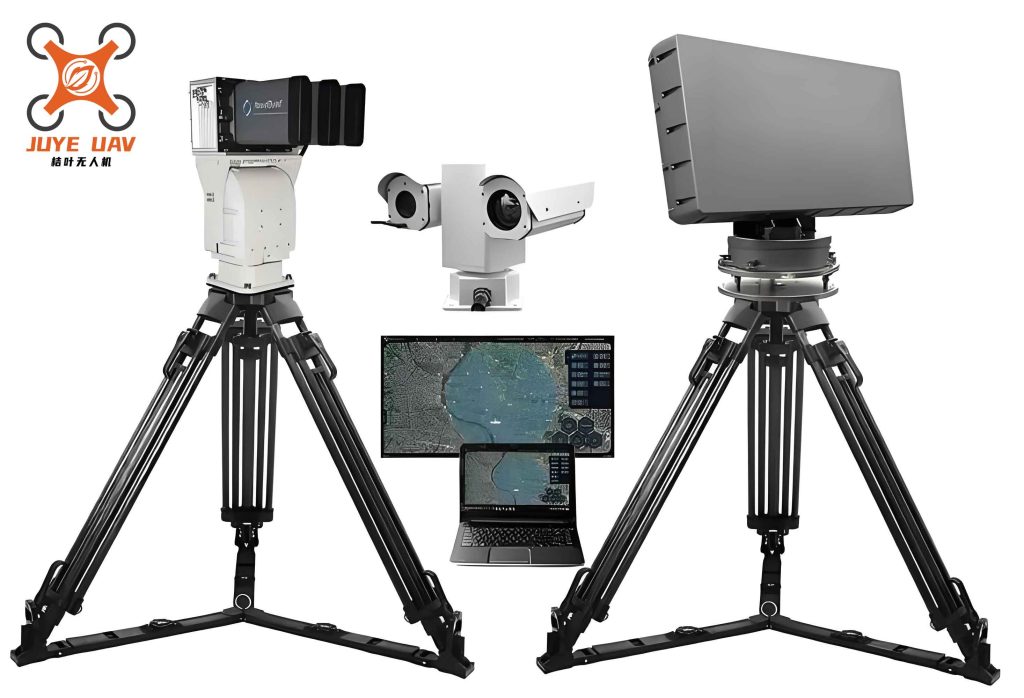
1. Technical Pathways for Aerial Anti-Drone Neutralization
1.1 Collision/Kinetic Interception
This approach represents the most direct form of hard-kill. An interceptor drone is guided at high speed to physically collide with the target drone, destroying both vehicles. The key advantage is its simplicity and reliability; it requires no complex payload beyond a robust airframe and guidance system. The primary challenge lies in achieving a high-probability hit against maneuvering targets, which demands exceptional guidance, navigation, and control (GNC) algorithms and high-speed platforms.
Representative System Analysis: The German TYTAN interceptor exemplifies this philosophy. Designed as a low-cost, expendable asset, it reportedly achieves speeds up to 300 km/h. Its core technology is an integrated computer vision system for target detection and an AI-based autopilot for terminal guidance. The absence of an explosive warhead minimizes cost and eliminates the risk of ground collateral damage from shrapnel. The effectiveness of such a collision-based anti-drone system hinges on the interceptor’s ability to close the engagement geometry reliably. A common guidance law used for such terminal homing is Proportional Navigation (PN), which commands acceleration perpendicular to the line-of-sight (LOS) to nullify its rotation rate.
The commanded acceleration for the interceptor can be expressed as:
$$ a_m = N’ V_c \dot{\lambda} $$
where:
- $a_m$ is the acceleration command perpendicular to the LOS.
- $N’$ is the effective navigation constant (typically 3-5).
- $V_c$ is the closing velocity between interceptor and target.
- $\dot{\lambda}$ is the LOS angular rate.
The probability of a successful kinetic kill in a collision engagement depends on the relative endgame speed, the physical size of the vehicles, and the final miss distance. For a direct body-to-body hit, the required accuracy is on the order of tens of centimeters.
1.2 Net Capture (Entanglement)
This method employs a non-destructive, physical capture mechanism. An interceptor drone approaches the target and deploys a net, often via a compressed air or pyrotechnic launcher, to ensnare it. The captured drone can then be towed to a safe area for disposal or recovery. This technique is highly effective against multirotor drones and small fixed-wing UAS, offering a “soft-kill” that minimizes the risk of debris fall from a mid-air collision. The main challenges include limited effective range of the net launcher (typically 10-30 meters), the need for precise positioning relative to the target, and managing the aerodynamic load of the entangled pair.
Representative System Analysis: The American Fortem DroneHunter 700 is a mature platform in this category. It is a vertical take-off and landing (VTOL) drone designed specifically as an aerial interceptor. Its modular payload bay allows it to carry different net-launcher types, from small nets for sub-2kg drones to larger nets connected to a parachute for heavier targets, inducing a controlled descent. A key enabling subsystem is the integrated Fortem TrueView radar, a compact pulse-Doppler radar that provides all-weather detection, tracking, and classification of small drones. This sensor fusion—combining radar cues with electro-optical/infrared (EO/IR) cameras—enables the DroneHunter to operate autonomously within a wider command-and-control network (Skydome) to coordinate multi-vehicle anti-drone swarms.
The dynamics of net deployment and target entanglement are complex. A simplified model for the net’s center-of-mass trajectory post-launch can be treated as a projectile subject to drag:
$$ m_{net} \frac{d\vec{v}}{dt} = \vec{W} + \vec{D} $$
where $\vec{W}$ is the weight vector and $\vec{D}$ is the aerodynamic drag force, approximately proportional to the square of velocity: $D = \frac{1}{2} \rho C_D A v^2$. Successful capture requires the net’s velocity vector and spread area to intersect the target’s predicted position at the time of arrival.
1.3 Vertical Launch & Aerial Loitering Interception
This concept blends attributes of traditional surface-to-air missiles and reusable drones. An interceptor takes off vertically, often from a canister or compact launcher, and can then transition to efficient forward flight. Its unique value proposition is the ability to loiter on station for extended periods, providing persistent coverage over a point of interest, and then execute a high-speed dash to intercept a threat. This combines rapid response with area denial. The technical challenges involve efficient VTOL or hybrid propulsion, robust autonomy for loitering and target prosecution, and designing for potential recovery and reuse.
Representative System Analysis: The US “Roadrunner” interceptor by Anduril Industries epitomizes this approach. It is a twin-turboprop VTOL aircraft capable of supersonic dash speeds. Its modular payload allows it to be configured for reconnaissance, electronic warfare, or as a kinetic effector with a high-explosive warhead. Its defining operational feature is the ability to be launched pre-emptively and patrol a designated airspace, waiting for a threat to emerge. Upon detection (via off-board or potentially onboard sensors), its AI-driven mission system calculates an optimal intercept path. The potential for vertical landing and reuse offers a compelling cost-per-engagement argument compared to expendable missiles, making it suitable for defending forward operating bases or critical fixed sites against sustained drone and missile threats.
The loitering endurance of such a system is critical. For a propeller-driven aircraft in a stationary loiter, the power required for level flight is related to its weight and aerodynamic efficiency. The endurance $E$ can be estimated using the Breguet endurance equation for propeller aircraft:
$$ E = \frac{\eta_{prop}}{c_p} \frac{C_L}{C_D} \ln \left( \frac{W_{initial}}{W_{final}} \right) $$
where:
- $\eta_{prop}$ is propeller efficiency.
- $c_p$ is the specific fuel consumption (power basis).
- $C_L/C_D$ is the lift-to-drag ratio at the loiter condition.
- $W_{initial}/W_{final}$ is the weight ratio from start to end of loiter.
A high $C_L/C_D$ ratio and low fuel consumption are essential for long endurance, which directly translates to longer protective coverage for the anti-drone mission.
1.4 Airborne Directed Energy: High-Power Microwave (HPM)
This approach involves mounting a directed energy weapon, specifically a High-Power Microwave emitter, on an unmanned aircraft. The platform flies to a position within line-of-sight of a target drone or swarm and emits a focused beam of microwave energy. This energy couples into the target’s electronic systems, inducing temporary disruption (upset) or permanent damage (burnout). The key advantage is a “shots-per-magazine” limited only by platform power and endurance, engaging multiple targets in quick succession with a speed-of-light effect. Challenges include limited effective range due to atmospheric attenuation and inverse-square law spreading, significant power and cooling requirements, and precise aiming and dwell time on target.
Representative System Analysis: The US “Morfius” system, developed by Lockheed Martin, integrates a compact HPM payload onto an Area-I Altius-600 fixed-wing drone. The drone can be air-launched or ground-launched, flying out to patrol an area. Upon detecting a target using its onboard sensors, it closes to an optimal range and activates the HPM payload. The system is designed to deliver a high-intensity, short-duration pulse capable of disabling the avionics, navigation, or control circuits of commercial and military-grade drones. A significant enabling technology is advanced computer vision for multi-target detection in cluttered environments. Patents related to the system describe optimization methods using convex sparsity priors to accurately distinguish and track multiple small targets amidst noise, which is critical for effective HPM engagement against drone swarms.
The power density $S$ incident on a target at range $R$ from an HPM system with effective isotropic radiated power $EIRP$ is given by:
$$ S = \frac{EIRP}{4 \pi R^2} $$
The $EIRP$ is the product of the transmitted power $P_t$ and the antenna gain $G_t$. To achieve a power density sufficient to cause electronic damage ($S_{damage}$) at a practical engagement range $R_{engage}$, the system requires very high $EIRP$:
$$ EIRP_{required} = S_{damage} \cdot 4 \pi R_{engage}^2 $$
This drives the need for powerful electrical generators, efficient antennas, and thermal management on the airborne platform, defining a major trade-off in anti-drone HPM system design.
2. Comparative Analysis of System Capabilities and Enabling Technologies
The effectiveness of any aerial anti-drone platform is not determined by its neutralization mechanism alone, but by the integrated performance of its detection, tracking, decision-making, and engagement subsystems. The following table provides a comparative summary of the representative systems across key performance parameters.
| System / Approach | Representative Platform | Typical Intercept Speed | Estimated Engagement Range | Primary Payload / Kill Mechanism | Guidance & Targeting | Reusable/ Expendable | Key Advantage | Primary Limitation |
|---|---|---|---|---|---|---|---|---|
| Collision/Kinetic | TYTAN Interceptor | High (≤300 km/h) | Medium (km-scale) | Kinetic Energy (Airframe) | Computer Vision + AI Autopilot | Expendable | Low cost, simple, reliable kill | Limited to single use, requires precise hit |
| Net Capture | Fortem DroneHunter 700 | Moderate | Short (10s of m from launch point) | Deployable Net (+ parachute) | Onboard Radar + EO/IR, Networked C2 | Reusable | Non-destructive, evidence capture, reusable platform | Very short net launch range, susceptible to target maneuvers |
| Vertical Intercept/Loiter | Anduril Roadrunner | Very High (Supersonic dash) | Long (10s of km) | Modular (EW, Explosive, ISR) | AI Mission System, External Cues | Designed for Reuse | Persistent coverage, rapid response, multi-role | High system complexity and likely cost |
| Airborne HPM | Morfius (Altius-600) | Platform Speed | Limited (HPM effective range ~100s of m) | High-Power Microwave Emitter | Onboard Sensors + Precision Aiming | Reusable Payload | Multiple shots, engage swarms, speed-of-light effect | Limited effective range, high power/ cooling demands |
Enabling Technology Deep Dive: Sensor Fusion and AI Decision-Making
A critical cross-cutting trend is the deep integration of Artificial Intelligence (AI) and Machine Learning (ML) across the DTIN chain. This is not merely about automating flight controls but enabling cognitive functions essential for effective anti-drone operations in complex environments.
- Target Detection and Identification: AI algorithms, particularly convolutional neural networks (CNNs), are trained on vast datasets of drone and non-drone imagery (birds, aircraft) to reliably distinguish threats from clutter in EO/IR and radar data feeds. This reduces false alarms and accelerates the “identify” step. The probability of correct identification $P_{ID}$ can be modeled as a function of sensor resolution, signal-to-noise ratio (SNR), and algorithm confidence:
$$ P_{ID} = f(SNR, Res_{px}, \Theta_{CNN}) $$
where $\Theta_{CNN}$ represents the trained parameters of the neural network. - Predictive Tracking and Intent Analysis: Beyond Kalman filters, AI can analyze a target’s flight path, speed, and altitude to predict its future trajectory and even infer its intent (e.g., surveillance vs. attack run on a specific asset). This allows the anti-drone system to optimize its own intercept trajectory and prioritize threats.
- Autonomous Engagement Decision-Making: Systems like the DroneHunter’s Skydome or the Roadrunner’s AI mission system can autonomously decide which interceptor to assign to which target, what engagement tactic to use (pursue, net, collide), and when to abort. This is governed by pre-defined Rules of Engagement (RoE) encoded in software, allowing for scalable, swarm-vs-swarm counter-drone operations where human reaction times would be insufficient. The decision logic can be framed as an optimization problem maximizing the probability of mission success $P_{success}$ while minimizing cost and risk:
$$ \max_{x} P_{success}(x) = \prod_{i=1}^{N_{threats}} (1 – P_{kill,i}(x)) $$
subject to constraints on interceptor availability, fuel, and RoE, where $x$ represents the assignment and tactic vector.
Sensor Technology: The effectiveness of AI depends on high-quality data. Advancements in compact, low-power sensors are pivotal:
- Radar: Development of small, gallium nitride (GaN)-based AESA (Active Electronically Scanned Array) radars, like the TrueView, provides high update rates, precision tracking, and electronic beam steering essential for tracking multiple small, low-radar-cross-section targets.
- EO/IR: High-resolution, stabilized gimbals with multi-spectral (visible, near-IR, thermal) sensors enable positive visual identification and tracking at day/night.
- RF Detection: Payloads that can detect and geolocate the control and telemetry signals of target drones are often integrated, providing a passive detection capability and information for electronic attack.
The fusion of data from these disparate sensors creates a composite track with higher confidence and accuracy than any single sensor could provide, a process described by sensor fusion algorithms like the Kalman Filter or more complex probabilistic data association methods.
3. Analysis of Emerging Trends and Future Trajectories
The evolution of aerial anti-drone systems is being shaped by the increasing sophistication of the threat (e.g., autonomous swarms, faster drones) and parallel advancements in technology. Several dominant trends are crystallizing.
3.1 Integration of Heterogeneous Swarms and Manned-Unmanned Teaming (MUM-T)
Future anti-drone defenses will likely not rely on a single type of interceptor. Instead, heterogeneous swarms comprising different specialized platforms will work collaboratively. For example, slower, sensor-rich “hunter” platforms with net or HPM payloads could be paired with high-speed “chaser” kinetic interceptors like the TYTAN. The hunters would detect, track, and possibly disable or slow a target, while the chasers deliver the final kinetic kill from a longer range. Command and control for such heterogeneous anti-drone swarms will require advanced, resilient mesh communication networks and distributed AI for task allocation and coordination.
3.2 Emphasis on Open Architectures and Modularity
The rapid pace of technological change and the diverse nature of drone threats necessitate flexible systems. There is a strong push towards open architecture standards (e.g., SOSA™, CMOSS) that allow for the “plug-and-play” integration of different sensors, effectors, and mission computers from various vendors. This enables rapid upgrades and customization of anti-drone platforms for specific missions. The payload modularity seen in systems like the Roadrunner and DroneHunter 700 is a direct manifestation of this trend.
3.3 Counter-Swarm Technologies
Engaging coordinated drone swarms is the paramount challenge. Solutions are focusing on:
- Swarm vs. Swarm Tactics: Deploying defensive anti-drone swarms that can autonomously engage multiple hostile drones simultaneously, using emergent behaviors like flanking and distraction.
- Area-Denial Effects: Broad-spectrum electronic warfare (EW) payloads or wide-beam HPM systems that can disrupt an entire swarm’s communications or navigation simultaneously.
- Network Attack: Using cyber-electronic payloads to infiltrate and hijack or take down a swarm’s shared communication network, causing it to disperse or crash.
Modeling a swarm engagement is complex. A simplified metric for a defensive anti-drone swarm’s effectiveness could be its maximum sustainable engagement ratio $R_{engage}$:
$$ R_{engage} = \frac{N_{defenders} \cdot \tau_{reload}}{T_{kill} + T_{reposition}} $$
where $N_{defenders}$ is the number of interceptors, $\tau_{reload}$ is the rate a single interceptor can re-engage, $T_{kill}$ is the average time to kill one target, and $T_{reposition}$ is the time to acquire a new target. Maximizing $R_{engage}$ is key to defeating larger attacker swarms.
3.4 Pursuit of Lower Cost-Per-Engagement
Economically, using a $100,000 missile to shoot down a $1,000 commercial drone is unsustainable. The entire field is driven by the need for lower-cost solutions. This incentivizes:
- Expendable but very low-cost kinetic interceptors (the TYTAN model).
- Reusable platforms (the Roadrunner and DroneHunter model).
- Non-kinetic effects with high “magazine depth” (the HPM and EW model).
The cost-effectiveness $CE$ of an anti-drone system can be evaluated as:
$$ CE = \frac{P_{kill} \cdot N_{engagements}}{System\ Lifecycle\ Cost} $$
where a higher $CE$ is desirable. Reusable systems and directed energy weapons aim for a high $N_{engagements}$ term, while simple expendables aim for an extremely low denominator in the cost term.
4. Conclusion and Strategic Implications
The development of foreign aerial anti-drone equipment is characterized by rapid innovation across multiple parallel tracks. No single technology—kinetic collision, net capture, vertical loitering interception, or airborne HPM—has emerged as a universally superior solution. Instead, the operational context (point defense vs. area defense, urban vs. battlefield environment, value of target recovery) dictates the optimal approach. The overarching and convergent trend is the deep integration of artificial intelligence and advanced sensor fusion to create increasingly autonomous, adaptive, and networked systems capable of responding to the scale and speed of modern drone threats.
The trajectory points toward intelligent, layered defense systems where low-cost expendables, reusable interceptors, and non-kinetic platforms operate synergistically under a unified AI-powered battle management system. These systems will form a dynamic, responsive layer within broader integrated air and missile defense (IAMD) architectures. For nations developing their own counter-UAS capabilities, the imperative is to invest not just in platform and effector hardware, but fundamentally in the core enabling technologies: robust AI/ML algorithms for perception and decision-making, compact high-performance sensors (AESA radars, multi-spectral EO/IR), resilient data links, and modular open systems architecture. Furthermore, realistic and challenging testing against evolving drone swarm tactics is essential to validate these complex anti-drone systems. The future of aerial defense against drones lies not in a single silver bullet, but in intelligent, adaptable, and cost-effective networks of systems working in concert.