
In recent years, the total volume of hazardous materials (hazmat) transportation has shown a sustained upward trend globally, with road transport accounting for a predominant share. Given the inherent dangers of the materials and the complexity of road networks, hazmat transportation accidents occur with unfortunate frequency. These incidents pose severe threats to industrial development, public safety, property, and the ecological environment. Compared to regular traffic accidents, hazmat transport accidents are more sudden, destructive, and wide-ranging, with a high potential for triggering secondary disasters. Consequently, how to execute rapid and effective emergency response for such accidents has become a critical focus for researchers and practitioners alike.
The scientific layout and construction of emergency response facilities are paramount for optimizing the distribution and dispatch of resources, ensuring that professional teams can reach accident sites with minimal delay. However, traditional ground-based emergency stations, while essential, face limitations: they are often costly to build and operate, difficult to relocate once established, and their response times can be constrained by terrestrial traffic conditions. Their effectiveness in the critical initial moments following a hazmat incident can thus be limited.
To enhance the capability for “early detection and early response,” many regions are now planning to deploy networks of UAV drones as auxiliary rescue assets. Dedicated take-off and landing points for these UAV drones, often referred to as droneports or drone nests, serve as their operational bases. Compared to traditional emergency stations, these auxiliary rescue UAV drones offer significant advantages: lower construction and maintenance costs, reusability across multiple scenarios, ease of upgrade and expansion, and, most critically, the ability to bypass ground traffic. UAV drones can reach incident sites much faster than ground vehicles. Upon arrival, they can conduct aerial reconnaissance to assess the situation and identify secondary disaster risks, implement immediate traffic control measures on surrounding road segments, and use loudspeakers to direct the evacuation of personnel from hazardous areas.
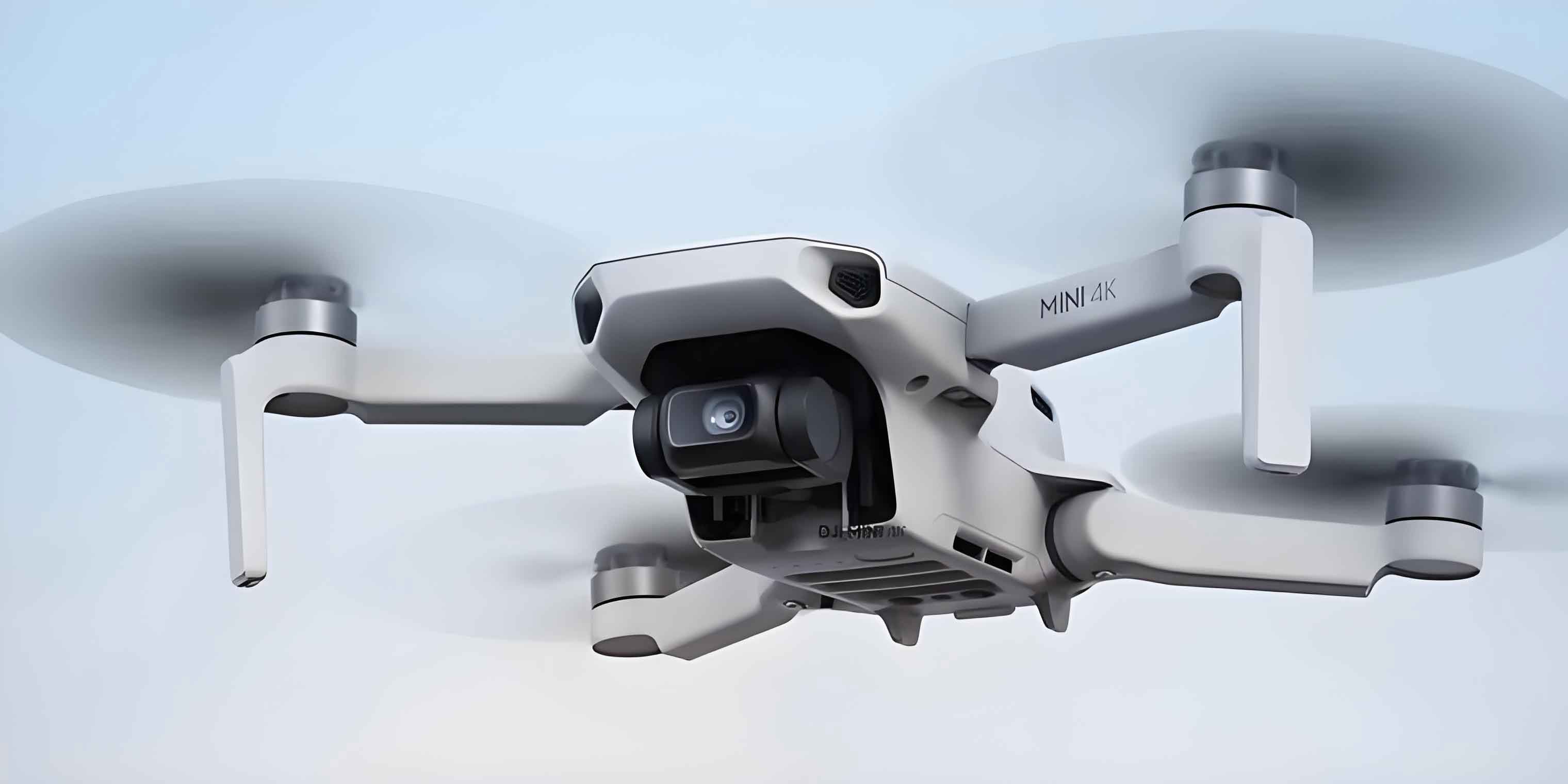
Therefore, strategically planning and constructing networks of droneports in areas with concentrated hazmat transportation flows, enabling UAV drones to assist ground stations in a coordinated response, can dramatically improve emergency response capabilities. This paper addresses the critical problem of optimally locating these auxiliary rescue droneports and allocating response responsibilities among them. We develop mathematical models that account for the inherent uncertainty in road segment risks—a factor often overlooked—and propose a solution methodology to support decision-making for building more resilient hazmat emergency response systems.
Abstract
Planning and establishing networks of auxiliary rescue UAV drones in areas with high concentrations of hazardous materials (hazmat) transportation is a promising strategy to significantly enhance emergency response capabilities. This paper investigates the integrated location-allocation problem for droneports supporting hazmat transportation accident response. We first formulate a deterministic model (DET) for droneport siting and rescue task assignment. Recognizing the significant uncertainty in road segment risks—arising from variable accident impact zones and fluctuating population densities—we then develop a two-stage Distributionally Robust Optimization (DRO) model. This model hedges against ambiguity in the probability distributions of these uncertain parameters. We employ a tractable approximation method, reformulating the original DRO model under a zero-mean bounded perturbation ambiguity set into a solvable mixed-integer programming model. A Branch-and-Benders-Cut (BBC) algorithm is designed to solve the resulting model efficiently. Numerical experiments based on a real regional hazmat transport network validate the effectiveness of the proposed models and algorithm. Key findings indicate that while the DRO model yields slightly more conservative solutions than its deterministic counterpart, it provides substantially stronger robustness, thereby improving system reliability under uncertainty. The coverage benefit of deploying UAV drones increases with the number of droneports but exhibits diminishing marginal returns. Furthermore, the DRO approach proves superior to Stochastic Programming when precise distributional information is lacking and less conservative than traditional Robust Optimization by leveraging partial distributional knowledge.
1. Introduction
The safe transportation of hazardous materials remains a persistent challenge for modern logistics and public safety authorities. Despite stringent regulations, accidents during road transport are not uncommon. The consequences of such accidents can be catastrophic, involving toxic releases, fires, explosions, and environmental contamination, often necessitating large-scale evacuations. The effectiveness of the emergency response in the initial “golden hour” is crucial for mitigating these consequences.
Traditional response paradigms rely heavily on fixed ground-based emergency stations. Facility location models, such as the p-median, p-center, and covering models, have been extensively applied to optimize the placement of such stations. For hazmat-specific scenarios, researchers have developed models like the Maximal Arc-Covering Location (MACL) model, which treats risk as continuously distributed along road segments (arcs), and the Generalized Maximal Covering Location (GMCL) model, which incorporates partial coverage concepts. A combination, the Generalized Maximal Arc-Covering Location (GMACL) model, uses a distance-decay function to measure coverage effectiveness. However, a key limitation of many covering models is that they may not explicitly assign unique responsibility for each demand point (or arc) to a single facility, potentially leading to overlapping coverage zones and service gaps.
The integration of UAV drones into emergency response introduces a paradigm shift. UAV drones, or unmanned aerial vehicles, offer unprecedented advantages in speed, accessibility, and situational awareness. For hazmat response, UAV drones can be deployed from strategically located droneports to perform initial assessment, monitor gas dispersion, guide evacuations, and even deliver initial countermeasures long before ground teams can safely access the area. The location of these droneports is therefore a critical strategic decision that determines the efficacy of the entire UAV drones-assisted response system.
Furthermore, the risk associated with any given road segment is not a fixed value. It is a product of accident probability and potential consequence. The consequence, often measured by population exposure, is highly uncertain. The radius of impact ($$r_{ij}$$) depends on the chemical properties, weather (especially wind), and terrain. The population density ($$\rho_{ij}$$) around a road varies diurnally and with day-of-week patterns. This makes the segment risk $$\omega_{ij}$$ an uncertain parameter. Optimizing the location of droneports for UAV drones without considering this uncertainty may lead to networks that perform poorly under realistic, variable conditions.
To handle decision-making under uncertainty, three primary methodologies are prevalent: Stochastic Programming (SP), which assumes known probability distributions; Robust Optimization (RO), which optimizes against the worst-case realization within an uncertainty set; and Distributionally Robust Optimization (DRO), which minimizes the expected cost (or maximizes benefit) under the worst-case distribution from an ambiguity set that incorporates partial distributional information (e.g., mean, support, variance). DRO strikes a balance, being less conservative than RO while not requiring the full distributional knowledge of SP.
This paper makes the following contributions: (1) We formulate a deterministic location-allocation model for auxiliary rescue UAV drones droneports, explicitly assigning each road segment to a single droneport to avoid coverage imbalance. (2) We develop a novel two-stage DRO model that accounts for distributional ambiguity in road segment risks, leading to more reliable network designs. (3) We derive a tractable reformulation of the DRO model using an appropriate ambiguity set and an inner approximation. (4) We design an efficient BBC algorithm to solve the resulting complex mixed-integer problem. (5) Through comprehensive numerical experiments, we demonstrate the value of the DRO approach by comparing it with deterministic, SP, and RO models, analyzing parameter sensitivities, and testing scalability.
2. Problem Description
The regional hazmat transportation network is represented as a connected, undirected graph $$G(N, A)$$, where $$N$$ is the set of nodes (e.g., road intersections, key points) and $$A$$ is the set of arcs or road segments $$(i, j)$$. Let $$D \subset N$$ be the set of candidate locations for constructing droneports for UAV drones. These candidate sites are typically situated near roadways and can be treated as virtual nodes on the network.
The droneport location-allocation problem is defined as follows: Given a hazmat-intensive region, a set of candidate sites $$D$$, a budget limiting the number of droneports to $$M$$, and the (uncertain) potential risk for each road segment, determine the optimal subset of $$M$$ sites to build droneports for UAV drones and assign each road segment to exactly one operational droneport. The objective is to maximize the total expected reduction in potential risk across the network, which represents the coverage effectiveness of the UAV drones fleet. The key notation is summarized in Table 1.
| Symbol | Description |
|---|---|
| Sets & Indices | |
| $$G=(N, A)$$ | Hazmat transportation network. |
| $$N$$ | Set of nodes, indexed by $$i, j$$. |
| $$D$$ | Set of candidate droneport sites, indexed by $$d$$. |
| $$A$$ | Set of road segments/arcs, indexed by $$(i, j)$$. |
| Parameters | |
| $$M$$ | Number of droneports to be established. |
| $$p_{ij}$$ | Probability of a hazmat accident per unit length on segment $$(i,j)$$. |
| $$l_{ij}$$ | Length of segment $$(i,j)$$. |
| $$r_{ij}$$ | Radius of impact (uncertain) if an accident occurs on $$(i,j)$$. |
| $$\rho_{ij}$$ | Population density (uncertain) around segment $$(i,j)$$. |
| $$\bar{\omega}_{ij}, \hat{\omega}_{ij}$$ | Nominal value and deviation (range) of the uncertain potential risk $$\tilde{\omega}_{ij}$$. |
| $$k^d_i, k^d_j, k^d_a$$ | Distance from droneport $$d$$ to endpoint $$i$$, endpoint $$j$$, and midpoint $$a$$ of segment $$(i,j)$$. |
| $$k^d_{ij}$$ | Weighted average distance from droneport $$d$$ to segment $$(i,j)$$: $$0.25k^d_i + 0.5k^d_a + 0.25k^d_j$$. |
| $$t^d_{ij}$$ | Weighted average response time: $$k^d_{ij} / v$$ ($$v$$ is UAV drones speed). |
| $$\mu^d_{ij}$$ | Risk reduction factor for segment $$(i,j)$$ if covered by droneport $$d$$: $$\mu^d_{ij}=1 – t^d_{ij}/T$$. |
| $$T$$ | Effective response time threshold ($$T \ge \max\{t^d_{ij}\}$$). |
| $$\zeta$$ | Tolerance level for the chance constraint. |
| Decision Variables | |
| $$y_d$$ | Binary, 1 if a droneport is built at candidate site $$d$$, 0 otherwise. |
| $$x^d_{ij}$$ | Binary, 1 if segment $$(i,j)$$ is assigned to droneport $$d$$ for emergency response, 0 otherwise. |
| $$\vartheta$$ | Auxiliary variable representing the lower bound on the total coverage effect. |
3. Model Formulation
3.1. Deterministic Model (DET)
We first model the problem under the assumption that all parameters are known with certainty. The initial potential risk on segment $$(i,j)$$ is calculated as:
$$\omega_{ij} = p_{ij} \cdot (2 \cdot r_{ij} \cdot l_{ij}) \cdot \rho_{ij}, \quad \forall (i,j) \in A.$$
To transform the arc covering problem into a more tractable point covering problem, we define the weighted average distance from a droneport $$d$$ to a segment $$(i,j)$$. The coverage effectiveness, represented by the reduction in risk, decays linearly with the response time. If a UAV drones from droneport $$d$$ covers segment $$(i,j)$$, the remaining risk is:
$$w^d_{ij} = \omega_{ij} \cdot \mu^d_{ij} = \omega_{ij} \cdot \left(1 – \frac{t^d_{ij}}{T}\right).$$
Thus, the risk reduced (coverage benefit) is $$\omega_{ij} \cdot (t^d_{ij}/T)$$. The deterministic model aims to maximize the total risk reduction.
DET Model:
$$
\begin{aligned}
\max_{x^d_{ij}, y_d} \quad & \vartheta \\
\text{s.t.} \quad & \sum_{d \in D} \sum_{(i,j) \in A} \omega_{ij} \cdot \mu^d_{ij} \cdot x^d_{ij} \geq \vartheta \\
& \sum_{d \in D} y_d = M \\
& \sum_{d \in D} x^d_{ij} = 1, \quad \forall (i,j) \in A \\
& x^d_{ij} \leq y_d, \quad \forall d \in D, \forall (i,j) \in A \\
& x^d_{ij}, y_d \in \{0,1\}, \quad \vartheta \geq 0.
\end{aligned}
$$
The objective (1) maximizes the lower bound $$\vartheta$$ on the total coverage. Constraint (2) ensures $$\vartheta$$ is at most the actual total covered risk. Constraint (3) limits the number of built droneports. Constraint (4) assigns each segment to exactly one droneport. Constraint (5) ensures assignments are only made to built droneports.
3.2. Distributionally Robust Optimization Model (DRO)
In reality, $$r_{ij}$$ and $$\rho_{ij}$$ are uncertain, making $$\omega_{ij}$$ uncertain. We model the uncertain risk as $$\tilde{\omega}_{ij} = \bar{\omega}_{ij} + \xi_{ij} \cdot \hat{\omega}_{ij}$$, where $$\bar{\omega}_{ij}$$ is the nominal risk, $$\hat{\omega}_{ij}$$ is the deviation magnitude, and $$\xi_{ij}$$ is a random perturbation variable with an ambiguous distribution belonging to an ambiguity set $$\mathcal{P}$$.
We adopt a distributionally robust chance-constrained approach. The constraint ensuring the total covered risk meets a threshold must hold with high probability ($$1-\zeta$$) under the worst-case distribution in $$\mathcal{P}$$:
$$
\inf_{\mathbb{P} \in \mathcal{P}} \mathbb{P}\left( \sum_{d \in D} \sum_{(i,j) \in A} (\bar{\omega}_{ij} + \xi_{ij} \hat{\omega}_{ij}) \mu^d_{ij} x^d_{ij} \geq \vartheta \right) \geq 1 – \zeta. \tag{6}
$$
The full DRO model is then:
$$
\begin{aligned}
\max_{x^d_{ij}, y_d} \quad & \vartheta \\
\text{s.t.} \quad & \text{Constraints (3)-(5), (8)-(10)} \\
& \text{Distributionally robust chance constraint (6)}.
\end{aligned}
$$
4. Model Transformation
To solve the DRO model, we need a tractable reformulation of constraint (6). Define:
$$z_0 = \sum_{d \in D} \sum_{(i,j) \in A} \bar{\omega}_{ij} \mu^d_{ij} x^d_{ij}, \quad z_{ij} = \sum_{d \in D} \hat{\omega}_{ij} \mu^d_{ij} x^d_{ij}.$$
Constraint (6) becomes:
$$\inf_{\mathbb{P} \in \mathcal{P}} \mathbb{P}\left( z_0 + \sum_{(i,j) \in A} \xi_{ij} z_{ij} \geq \vartheta \right) \geq 1 – \zeta. \tag{7}$$
4.1. Ambiguity Set
We use the following zero-mean bounded perturbation ambiguity set $$\mathcal{P}_1$$, which requires only information on support and mean:
$$\mathcal{P}_1 = \left\{ \mathbb{P} : \mathbb{P}(\xi \in \Xi) = 1, \mathbb{E}_{\mathbb{P}}[\xi_{ij}] = 0 \right\}, \quad \Xi = \{\xi : |\xi_{ij}| \leq 1, \forall (i,j) \in A\}.$$
4.2. Tractable Approximation
Using an inner approximation method, we can derive a safe convex approximation for constraint (7) under $$\mathcal{P}_1$$.
Theorem 1. Under ambiguity set $$\mathcal{P}_1$$, constraint (7) is implied by the following constraints:
$$
\begin{aligned}
& z_0 – \Gamma \sqrt{ \sum_{(i,j) \in A} z_{ij}^2 } \geq \vartheta, \tag{8} \\
& \Gamma \geq \sqrt{2 \ln(1/\zeta)}. \tag{9}
\end{aligned}
$$
Proof Sketch: Constraint (7) is equivalent to $$\sup_{\mathbb{P} \in \mathcal{P}} \mathbb{P}\left( z_0 – \sum \xi_{ij} z_{ij} < \vartheta \right) \leq \zeta$$. Based on the independence and boundedness of $$\xi_{ij}$$, we can apply a concentration inequality (e.g., Hoeffding-type). For any solution satisfying (8) and (9), the probability of violation is bounded by $$\exp(-\Gamma^2/2) \leq \zeta$$, proving the claim.
Substituting the definitions of $$z_0$$ and $$z_{ij}$$, the final tractable DRO Model is:
$$
\begin{aligned}
\max_{x^d_{ij}, y_d, \vartheta, \Gamma} \quad & \vartheta \\
\text{s.t.} \quad & \sum_{d \in D} \sum_{(i,j) \in A} \bar{\omega}_{ij} \mu^d_{ij} x^d_{ij} – \Gamma \sqrt{ \sum_{(i,j) \in A} \left( \sum_{d \in D} \hat{\omega}_{ij} \mu^d_{ij} x^d_{ij} \right)^2 } \geq \vartheta \\
& \Gamma \geq \sqrt{2 \ln(1/\zeta)} \\
& \text{Constraints (3)-(5), (8)-(10)}.
\end{aligned}
$$
This is a mixed-integer second-order cone program (MISOCP) which can be solved with commercial solvers. However, for large-scale instances, we develop a specialized algorithm.
5. Algorithm Design: Branch-and-Benders-Cut (BBC)
We decompose the problem using Benders decomposition. For fixed binary variables $$\bar{x}^d_{ij}, \bar{y}_d$$, the subproblem (SP) and its dual (DSP) are:
SP:
$$
\begin{aligned}
\max_{\vartheta, \Gamma} \quad & \vartheta \\
\text{s.t.} \quad & -\vartheta – \Gamma \sqrt{ \sum_{(i,j) \in A} \left( \sum_{d \in D} \hat{\omega}_{ij} \mu^d_{ij} \bar{x}^d_{ij} \right)^2 } \geq – \sum_{d \in D} \sum_{(i,j) \in A} \bar{\omega}_{ij} \mu^d_{ij} \bar{x}^d_{ij} \\
& \Gamma \geq \sqrt{2 \ln(1/\zeta)} \\
& \vartheta, \Gamma \geq 0.
\end{aligned}
$$
DSP:
$$
\begin{aligned}
\min_{\rho, \Phi} \quad & -\rho \left( \sum_{d \in D} \sum_{(i,j) \in A} \bar{\omega}_{ij} \mu^d_{ij} \bar{x}^d_{ij} \right) + \Phi \sqrt{2 \ln(1/\zeta)} \\
\text{s.t.} \quad & -\rho \geq 1 \\
& -\rho \sqrt{ \sum_{(i,j) \in A} \left( \sum_{d \in D} \hat{\omega}_{ij} \mu^d_{ij} \bar{x}^d_{ij} \right)^2 } + \Phi \geq 0 \\
& \rho \leq 0, \Phi \leq 0.
\end{aligned}
$$
The Master Problem (MP) includes the integer constraints and Benders optimality cuts derived from the DSP:
$$
\begin{aligned}
\max_{x^d_{ij}, y_d, \upsilon} \quad & \upsilon \\
\text{s.t.} \quad & \sum_{d \in D} y_d = M \\
& \sum_{d \in D} x^d_{ij} = 1, \quad \forall (i,j) \\
& x^d_{ij} \leq y_d, \quad \forall d, (i,j) \\
& \upsilon \leq -\rho^* \left( \sum_{d \in D} \sum_{(i,j) \in A} \bar{\omega}_{ij} \mu^d_{ij} x^d_{ij} \right) + \Phi^* \sqrt{2 \ln(1/\zeta)}, \quad \forall (\rho^*, \Phi^*) \in \mathcal{O} \\
& x^d_{ij}, y_d \in \{0,1\}, \upsilon \in \mathbb{R}.
\end{aligned}
$$
where $$\mathcal{O}$$ is the set of optimality cuts. The BBC algorithm embeds the generation of Benders cuts within the branch-and-bound tree. At each node, the linear relaxation of the MP is solved. If the solution is fractional, Benders cuts are added based on the current solution to tighten the relaxation. If the solution is integer, the subproblem is solved to generate a new cut and update bounds. This process continues until the optimality gap is closed.
6. Numerical Experiments
6.1. Data and Parameters
We test our models on a real-world hazmat transport network from a metropolitan area (referred to as D-City). The network consists of 47 nodes, 73 road segments, and 5 candidate sites for droneports supporting UAV drones. The effective response time threshold $$T$$ is set to 15 minutes. Segment lengths $$l_{ij}$$ are obtained from mapping APIs. The nominal potential risk $$\bar{\omega}_{ij}$$ and its deviation $$\hat{\omega}_{ij}$$ are estimated from historical data and predictive models, representing the range of possible risk values (in units of 10,000 persons exposed). A sample of the data is shown in Table 2.
| Segment (i,j) | Length $$l_{ij}$$ (km) | Potential Risk $$[\bar{\omega}_{ij} – \hat{\omega}_{ij}, \bar{\omega}_{ij} + \hat{\omega}_{ij}]$$ |
|---|---|---|
| (1, 2) | 0.57 | [0.1644, 0.2640] |
| (10, 33) | 3.03 | [1.9549, 2.9107] |
| (15, 31) | 1.54 | [0.9099, 1.3167] |
| (35, 36) | 1.44 | [0.7985, 1.0920] |
| (42, 45) | 0.46 | [0.2615, 0.3732] |
6.2. Comparison of DRO and DET Models
Setting $$M=3$$ and $$\zeta=0.05$$, we solve both models. The optimal locations for droneports are identical (sites a, b, c). However, the allocation of road segments to these droneports differs. The DRO model yields a more balanced and risk-averse allocation, assigning high-risk, remote segments to the closest droneport more conservatively. The optimal objective value (total covered risk) for the DRO model is 38.54, lower than the 39.62 from the DET model. This confirms that the DRO model sacrifices a small amount of nominal performance to gain robustness against risk uncertainty, leading to a more reliable network for UAV drones operations.
6.3. Impact of the Number of Droneports (M)
We vary $$M$$ from 1 to 4. The results, summarized in Table 3, show that the total covered risk increases with $$M$$ for both models, as UAV drones can be stationed closer to more segments. However, the marginal gain diminishes. For example, increasing $$M$$ from 3 to 4 yields a very small improvement (39.62 to 39.96 for DET), suggesting an optimal budget point beyond which additional droneports for UAV drones are less cost-effective.
| M | DET Objective | DRO Objective ($$\zeta=0.05$$) | Selected Sites (Both Models) |
|---|---|---|---|
| 1 | 15.11 | 15.11 | {a} or {b} or {c} |
| 2 | 30.53 | 30.53 | {a, c} |
| 3 | 39.62 | 38.54 | {a, b, c} |
| 4 | 39.96 | 39.46 | {a, b, c, d} |
6.4. Sensitivity to Tolerance Level ($$\zeta$$)
Figure 1 shows the optimal DRO objective value as $$\zeta$$ increases from 0.01 to 0.3. As $$\zeta$$ increases (allowing a higher probability of constraint violation), the model becomes less conservative, and the objective value increases, approaching the deterministic optimum. This parameter allows decision-makers to trade off robustness for performance based on their risk appetite regarding the UAV drones network’s reliability.
$$ \text{Figure 1: DRO Objective Value vs. Tolerance Level } \zeta \text{ (M=3)} $$
6.5. Impact of Distributional Ambiguity
We define the degree of ambiguity as $$\alpha = \hat{\omega}_{ij} / \bar{\omega}_{ij}$$ (assuming a constant ratio for simplicity). A larger $$\alpha$$ means a wider range of uncertainty. Solving the DRO model for different $$\alpha$$ values shows that the objective value decreases as $$\alpha$$ increases (Figure 2). Greater uncertainty about segment risks forces the model to make more conservative decisions, reducing the expected coverage benefit achievable by the UAV drones network.
$$ \text{Figure 2: DRO Objective Value vs. Ambiguity Level } \alpha \text{ (M=3, } \zeta=0.05\text{)} $$
6.6. Comparison with Stochastic Programming (SP)
We compare our DRO model with an SP model that assumes the perturbations $$\xi_{ij}$$ are independent and follow a known normal distribution $$N(0, \sigma^2)$$. The SP chance constraint can be reformulated as:
$$z_0 – \Phi^{-1}(1-\zeta) \cdot \sigma \sqrt{\sum z_{ij}^2} \geq \vartheta,$$
where $$\Phi^{-1}$$ is the inverse CDF. We set $$\sigma=0.5$$. Table 4 shows the results. The SP model yields slightly higher objective values as it exploits the specific distribution. We calculate the Price of Distributional Robustness (PDR):
$$\text{PDR} = \frac{Z_{\text{DRO}} – Z_{\text{SP}}}{Z_{\text{SP}}} \times 100\%.$$
The PDR is negative and small (between -0.5% and -4.6%). This demonstrates that the DRO approach, which requires no knowledge of the true distribution, incurs only a small performance penalty compared to SP, making it highly attractive when distributional information is limited or unreliable for planning UAV drones infrastructure.
| M | DRO Objective | SP Objective | PDR |
|---|---|---|---|
| 1 | 28.54 | 29.85 | -4.6% |
| 2 | 36.27 | 37.65 | -3.1% |
| 3 | 38.51 | 39.20 | -1.3% |
| 4 | 39.69 | 39.85 | -0.5% |
6.7. Comparison with Robust Optimization (RO)
The traditional RO model corresponds to the limiting case of the DRO model when $$\zeta \to 0$$, leading to the worst-case realization within the bounded set $$\Xi$$. Its constraint is:
$$z_0 – \sum_{(i,j) \in A} |z_{ij}| \geq \vartheta.$$
Figure 3 plots the objective values of DRO and RO against $$\zeta$$. The RO objective (34.21 for M=3) is constant and significantly lower than the DRO objective for most $$\zeta > 0.01$$. The DRO model only becomes more conservative than RO when $$\zeta$$ is extremely small ($$\zeta < 0.005$$ in this case). For any reasonable tolerance level, the DRO model provides a less pessimistic and more practical solution by leveraging distributional information (mean=0), showcasing its superiority over RO for planning resilient UAV drones networks.
$$ \text{Figure 3: DRO vs. RO Objective Value across } \zeta \text{ (M=3)} $$
6.8. Large-Scale Case Study
To test scalability, we apply the BBC algorithm to a larger network from G-city with 303 nodes and 472 segments. We compare the BBC algorithm’s performance against solving the MISOCP reformulation directly with the GUROBI solver, with a time limit of 3600 seconds. The convergence graphs (Figure 4) show that the BBC algorithm converges to a tight gap within approximately 1200 seconds, while GUROBI fails to converge within the time limit. This demonstrates the efficiency and practical value of our proposed algorithm for solving large-scale, real-world instances of the droneport location problem for UAV drones.
$$ \text{Figure 4: Convergence of BBC Algorithm vs. GUROBI Solver} $$
7. Conclusion
This paper addresses the strategic problem of locating and allocating droneports for auxiliary rescue UAV drones in hazmat transportation networks under uncertainty. We developed a deterministic location-allocation model and, more importantly, a distributionally robust optimization model that accounts for ambiguous probability distributions of road segment risks. By employing a zero-mean bounded perturbation ambiguity set, we derived a tractable MISOCP reformulation. A specialized Branch-and-Benders-Cut algorithm was designed for efficient solution.
Our numerical experiments yield key managerial insights: 1) The DRO model provides a robust network design for UAV drones with a minor sacrifice in nominal performance, significantly enhancing system reliability. 2) The coverage benefit of deploying UAV drones increases with the number of droneports but exhibits diminishing returns, aiding budget decisions. 3) The DRO approach is highly “cost-effective” compared to Stochastic Programming when distributional data is scarce. 4) Unlike traditional Robust Optimization, the DRO approach avoids overly pessimistic solutions by using available partial information (e.g., mean), leading to more practical and less conservative plans for UAV drones deployment.
Future research could extend this work by considering the uncertainty in UAV drones response times due to dynamic weather conditions, integrating multi-period models for mobile UAV drones depots, or exploring multi-objective formulations that balance cost, coverage, and equity. The proposed methodology provides a solid foundation for designing robust and efficient aerial support systems for hazardous material emergency response.