
The evolution of remote sensing technology has been profoundly accelerated by the advent of Unmanned Aerial Vehicles (UAVs). Among these, the China drone sector focusing on Vertical Take-Off and Landing (VTOL) capabilities has emerged as a cornerstone for modern, agile earth observation. The ability to operate independent of prepared runways, coupled with the precision of low-altitude flight beneath cloud cover, has positioned VTOL UAVs as indispensable tools for a myriad of applications. This article, from my perspective as an observer deeply embedded in this technological shift, provides a comprehensive analysis of the current status, market dynamics, and future development trends of VTOL-UAVs for remote sensing within China. The emphasis on “China drone” innovation is not merely a geographical label but a testament to a rapidly maturing ecosystem driving global standards in aerial data acquisition.
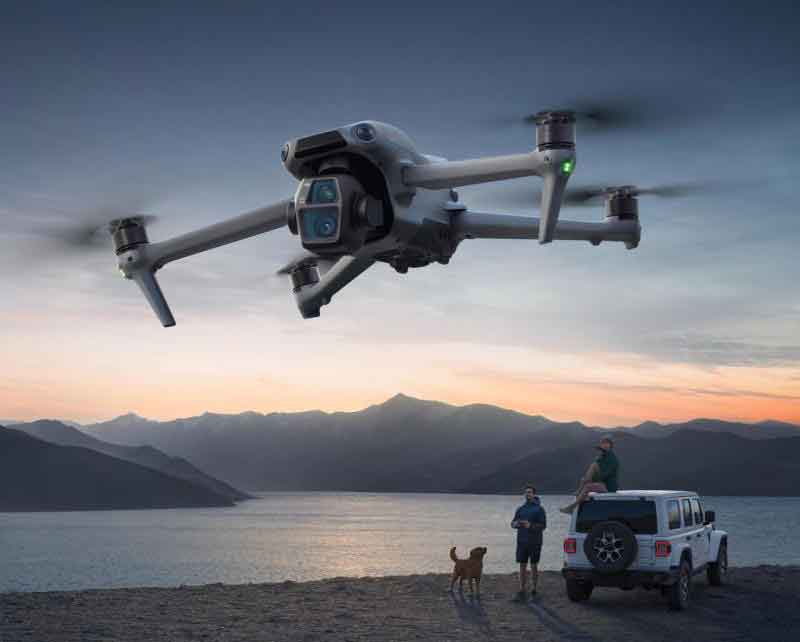
The core appeal of a China drone with VTOL capability lies in its operational flexibility. Traditional fixed-wing UAVs require launch and recovery systems or lengthy runways, while standard multi-rotors suffer from limited endurance and speed. VTOL platforms bridge this gap, combining the hover-and-stare utility of rotors with the efficient cruise performance of wings. This synergy is critical for complex remote sensing missions across diverse and often challenging Chinese terrain, from the densely populated eastern seaboard to the mountainous and arid regions of the west.
1. Taxonomy and Technical Evolution of VTOL UAVs in China
The China drone market for VTOL platforms is primarily segmented into three distinct architectural philosophies, each with its own aerodynamic and operational principles.
1.1 The Classical Workhorse: Unmanned Helicopters
Unmanned helicopters represent the traditional approach to VTOL, utilizing a single main rotor for lift and thrust, countered by a tail rotor or NOTAR (NO TAil Rotor) system for anti-torque. Their primary advantage is high disc loading efficiency in hover, translating to superior payload capacity relative to their size. The fundamental lift equation for a rotor in hover is given by:
$$
T = C_T \cdot \rho \cdot A \cdot (\Omega R)^2
$$
Where \( T \) is thrust, \( C_T \) is the thrust coefficient, \( \rho \) is air density, \( A \) is rotor disc area (\( \pi R^2 \)), and \( \Omega R \) is the tip speed. This formula underscores that for a given power, a larger rotor radius \( R \) generates more thrust efficiently. However, this advantage diminishes in forward flight. As speed increases, the advancing blade tip approaches transonic speeds, while the retreating blade experiences dynamic stall, imposing severe limitations on maximum forward velocity \( V_{max} \). This phenomenon is a key constraint. A China drone based on the helicopter configuration, such as the AV500, excels in missions requiring heavy payloads (e.g., large LiDAR sensors) and precise, stationary observation but is less optimal for large-area coverage.
1.2 The Ubiquitous Platform: Multi-Rotor UAVs
The explosive growth of the consumer and commercial drone market has been led by multi-rotor systems. These China drone platforms are characterized by multiple fixed-pitch rotors (typically 4, 6, or 8) whose speeds are independently controlled to manage attitude, altitude, and translation. Their simplicity, mechanical reliability (no complex swashplate mechanisms), and exceptional stability have made them the default choice for many applications.
The control mechanism relies on varying the rotational speed \( \omega_i \) of each motor. For a standard “X” configured quadcopter, the relationship between motor speeds and body moments is approximated by:
$$
\begin{bmatrix}
\tau_\phi \\
\tau_\theta \\
\tau_\psi
\end{bmatrix}
=
\begin{bmatrix}
l k & -l k & -l k & l k \\
l k & l k & -l k & -l k \\
c & -c & c & -c
\end{bmatrix}
\begin{bmatrix}
\omega_1^2 \\
\omega_2^2 \\
\omega_3^2 \\
\omega_4^2
\end{bmatrix}
$$
Where \( \tau_\phi, \tau_\theta, \tau_\psi \) are the roll, pitch, and yaw moments; \( l \) is the arm length from the center of mass to a motor; \( k \) is the thrust constant; and \( c \) is the drag constant. While offering unparalleled ease of use and hover precision, the multi-rotor China drone suffers from intrinsically low aerodynamic efficiency. Each small rotor operates at a high disc loading, and the platform lacks a lifting body. This results in the primary limitation: endurance \( E \). For battery-powered systems, flight time is inversely related to payload weight \( W_{payload} \) and highly dependent on battery energy density \( \epsilon_{bat} \):
$$
E \propto \frac{\epsilon_{bat} \cdot \eta_{total}}{(W_{airframe} + W_{payload})}
$$
where \( \eta_{total} \) represents total system efficiency. Thus, despite dominating the market in volume, multi-rotors are typically confined to shorter-duration, smaller-scale remote sensing tasks.
1.3 The Hybrid Frontier: VTOL Fixed-Wing UAVs
The most significant technological trend in the professional China drone sector is the convergence of fixed-wing and multi-rotor concepts into VTOL Fixed-Wing (VTOL-FW) UAVs. These hybrids aim to synergize the best of both worlds: vertical launch/landing and efficient high-speed cruise. The design space is rich with configurations:
- Tilt-Rotor/Tilt-Wing: The propulsion nacelles or the entire wing section rotate between vertical (for hover) and horizontal (for cruise) positions.
- Tail-Sitter: The entire aircraft sits on its tail for takeoff and landing, then pitches over for horizontal flight.
- Lift + Cruise: A dedicated set of vertical lift rotors is used for VTOL, which are shut down or folded away in cruise, where a separate forward-facing propulsion system takes over.
The aerodynamic challenge is the weight and drag penalty of carrying the VTOL system during cruise. The Breguet endurance equation for a propeller-driven fixed-wing aircraft highlights what is at stake:
$$
E = \frac{\eta_{prop}}{SFC} \cdot \frac{C_L}{C_D} \cdot \ln \left( \frac{W_{initial}}{W_{final}} \right)
$$
Here, \( \eta_{prop} \) is propeller efficiency, \( SFC \) is specific fuel consumption, \( C_L/C_D \) is the lift-to-drag ratio, and \( W_{initial}/W_{final} \) is the mass ratio. A VTOL-FW China drone must optimize its \( C_L/C_D \) despite the added weight and parasitic drag of the VTOL mechanisms. Successful designs, like the CW series, demonstrate that the operational benefit of runway independence often outweighs this penalty, enabling a single China drone to perform detailed, low-altitude inspections and broad-area mapping sequentially.
The following table summarizes the core characteristics of these three China drone VTOL archetypes:
| Platform Type | VTOL Mechanism | Cruise Efficiency (Typical L/D) | Hover Efficiency | Key Advantage | Primary Limitation |
|---|---|---|---|---|---|
| Unmanned Helicopter | Main Rotor + Anti-Torque | Low (4-6) | Very High | High Payload in Hover | Low Cruise Speed, Mechanical Complexity |
| Multi-Rotor | Differential Thrust (Multiple Rotors) | Very Low (N/A, body is not a lifting surface) | Moderate | Mechanical Simplicity, Excellent Stability & Control | Very Low Endurance, Limited Payload/Speed |
| VTOL Fixed-Wing | Tilt, Lift+Cruise, or Tail-Sitter | High (12-20+) | Low to Moderate | Long Endurance & Range, High Cruise Speed | Design Complexity, Weight/Drag Penalty from VTOL System |
2. The Remote Sensing Application Ecosystem for China Drone Platforms
The versatility of the China drone, particularly VTOL variants, has unlocked remote sensing applications across a vast spectrum of socio-economic and environmental sectors.
2.1 Emergency Response and Disaster Management
In the immediate aftermath of earthquakes, floods, or landslides, rapid situational awareness is critical. A VTOL China drone can be deployed from any small clearing to capture high-resolution optical, thermal, or multispectral imagery. This data enables:
- Identification of blocked roads and accessible pathways.
- Assessment of structural damage to buildings and infrastructure.
- Detection of survivors via thermal signatures.
- Monitoring of floodwater extent and dyke integrity.
The value of \( t_{response} \), the time from event to first data delivery, is minimized by the China drone’s logistical simplicity compared to manned aircraft or satellites.
2.2 High-Precision Surveying, Mapping, and 3D Modeling
This represents one of the most mature and economically significant applications. VTOL-FW China drone platforms are particularly effective, covering large areas efficiently (high \( C_L/C_D \) in cruise) while still capturing data from multiple angles for Structure-from-Motion (SfM) photogrammetry. The process generates digital surface models (DSMs), orthomosaics, and 3D point clouds with centimeter-level accuracy. The foundational equation for image overlap in photogrammetry is crucial for flight planning:
$$
GSD = \frac{H \cdot s}{f}
$$
Where \( GSD \) is Ground Sampling Distance (pixel size on ground), \( H \) is flight altitude, \( s \) is sensor pixel size, and \( f \) is lens focal length. A mission-planning algorithm for a China drone must ensure sufficient forward (\(>80\%\)) and side (\(>60\%\)) overlap between consecutive images to guarantee successful 3D reconstruction, a task perfectly suited for automated flight control systems on modern China drone platforms.
2.3 Agricultural Remote Sensing and Precision Farming
China’s vast agricultural lands are a prime domain for drone-based sensing. Multispectral and hyperspectral sensors on China drone platforms can derive vital vegetation indices, such as the Normalized Difference Vegetation Index (NDVI):
$$
NDVI = \frac{(NIR – Red)}{(NIR + Red)}
$$
This index, calculated from near-infrared (NIR) and red band reflectance, correlates with plant health, biomass, and nitrogen content. VTOL drones, especially multi-rotors capable of ultra-low-altitude flight, enable targeted scouting and variable-rate application (VRA) of water, fertilizers, and pesticides, optimizing resource use and boosting yield. The transition from purely aerial sensing to integrated “sense-and-act” platforms, where the same China drone can image a field and then precisely apply treatments, is a key trend.
2.4 Ecological and Environmental Monitoring
The China drone serves as a potent tool for environmental stewardship. Applications include:
- Forestry: Inventorying tree species, measuring biomass, and detecting pest infestations or illegal logging.
- Wildlife Conservation: Monitoring populations of endangered species (e.g., using thermal imaging to count birds or mammals) with minimal disturbance.
- Pollution Tracking: Identifying and mapping sources of air or water pollution, such as industrial discharges or algal blooms.
- Coastal and Marine Management: Surveying wetlands, monitoring coastline erosion, and assessing coral reef health.
3. Market Analysis and Quantitative Dominance of the China Drone VTOL Sector
An extensive market survey of over 700 UAV models from more than 160 Chinese enterprises reveals the overwhelming dominance of VTOL architectures in the remote sensing sector. The data unequivocally shows that the flexibility offered by VTOL is not just a niche advantage but a mainstream requirement.
| UAV Category (by Take-off/Landing) | Number of Models Surveyed | Percentage of Total Market (%) | Notes |
|---|---|---|---|
| All VTOL UAVs | 614 | 80.47 | Dominant market segment |
| • Multi-Rotor | 464 | 60.81 | Volume leader due to low cost & ease of use |
| • Unmanned Helicopter | 88 | 11.53 | Niche for heavy-payload specialized missions |
| • VTOL Fixed-Wing | 52 | 6.82 | Fastest-growing segment for professional mapping |
| • Other VTOL (Airships, etc.) | 10 | 1.31 | Experimental or special-purpose |
| Non-VTOL UAVs (Hand-launch, Rail, etc.) | 149 | 19.53 | Mostly traditional fixed-wing for pure endurance |
| TOTAL | 763 | 100.00 |
This statistical breakdown underscores several key insights about the China drone ecosystem:
- VTOL as Standard: Over 80% of remote sensing UAV models offer VTOL, making it a de facto standard for operational flexibility.
- Multi-Rotor Saturation: Multi-rotors command the largest share, reflecting their technological maturity and suitability for a wide array of entry-level and mid-level tasks. The proliferation of this China drone type has democratized aerial sensing.
- Rise of the Hybrid: Although VTOL-FW models currently represent a smaller portion, their 6.82% share is significant given their higher complexity and cost. This category is the primary growth vector for high-end, large-area remote sensing, indicating a market shift towards capability over pure simplicity.
- Helicopter Specialization: The unmanned helicopter remains relevant, holding a stable niche where its payload and hover performance are paramount, proving that the China drone market supports diverse technological solutions.
4. Technological Trajectories and Future Prospects for China Drone Development
The future development of VTOL UAVs for remote sensing in China is being shaped by several convergent technological trends, pushing the boundaries of performance, intelligence, and integration.
4.1 Propulsion and Power System Diversification
The quest for longer endurance (\(E\)) is driving innovation beyond lithium-polymer batteries. The fundamental energy equation highlights the challenge:
$$
E = \frac{E_{system}}{P_{required}}
$$
Where \(E_{system}\) is the total available energy onboard and \(P_{required}\) is the power required for flight. Future China drone platforms are exploring:
- Hybrid-Electric Systems: Using a small internal combustion engine to drive a generator, powering electric motors and charging a buffer battery. This significantly increases \(E_{system}\) while retaining electric drive’s controllability.
- Hydrogen Fuel Cells: Offering high specific energy (Wh/kg), potentially doubling or tripling flight times compared to batteries for a given weight, a critical step forward for the heavy-lift China drone.
- Advanced Liquid Fuels (for gas turbines/engines): For the largest VTOL-FW platforms, traditional hydrocarbon fuels still provide the best energy density for extreme endurance missions.
4.2 System Intelligence and Autonomous Swarming
The next-generation China drone will be a smart node in a networked system. Key advancements include:
- Enhanced Autonomy: Moving beyond pre-programmed waypoints to onboard real-time path planning, obstacle avoidance in complex environments (e.g., forests, urban canyons), and adaptive mission execution based on live sensor data.
- AI-Powered Data Processing: Embedding edge computing to perform initial image analysis (e.g., change detection, object identification) onboard, reducing data downlink requirements and enabling immediate decision-making.
- Collaborative Swarming: Deploying multiple heterogeneous China drone platforms (e.g., VTOL-FW for wide search, multi-rotors for close inspection) that communicate and collaborate to cover vast areas efficiently and robustly. The coordination problem involves optimizing the coverage path for \(n\) agents, a complex algorithmic challenge being actively solved.
4.3 Airframe and Configuration Innovation
To further improve the lift-to-drag ratio (\(C_L/C_D\)) and reduce the weight penalty of VTOL systems, novel airframe configurations are under investigation:
- Blended-Wing-Body (BWB) VTOL: Integrating the fuselage into the wing for superior aerodynamic efficiency and greater internal volume for payload and fuel.
- Morphing Structures: Wings or rotors that change shape/sweep to optimize performance for different flight phases (hover, transition, cruise).
- Distributed Electric Propulsion (DEP): Using many small electric motors along the wing leading edge for both lift and propulsion, improving redundancy, control authority, and aerodynamic efficiency through active flow control.
4.4 Miniaturization and Payload Integration
The trend towards smaller, lighter, and more capable sensors (hyperspectral imagers, solid-state LiDAR, compact SAR) enables smaller China drone platforms to perform tasks once reserved for large systems. This miniaturization loop reduces platform cost, logistical footprint, and regulatory burden, further expanding the addressable market for China drone services. The key metric is the payload-to-gross-weight ratio, which next-generation designs aim to maximize.
5. Conclusion: Toward an Integrated Aerial Sensing Ecology
The analysis presented here confirms that the China drone ecosystem, particularly its VTOL segment, is not merely thriving but fundamentally defining the modern approach to remote sensing. From dominating over 80% of the market models to pioneering hybrid fixed-wing designs, Chinese innovation is at the forefront. The transition is clear: from multi-rotors as the ubiquitous entry point towards VTOL fixed-wing platforms as the professional standard for large-scale, efficient mapping, with unmanned helicopters retaining critical niche roles.
The future trajectory points towards a more intelligent, efficient, and integrated aerial sensing ecology. The convergence of diversified propulsion, artificial intelligence, novel aerostructures, and miniaturized sensors will produce a new class of China drone platforms. These systems will be capable of undertaking increasingly complex, autonomous, and collaborative missions—from monitoring the health of nationwide agricultural belts and conducting rapid post-disaster assessments to continuously surveilling critical infrastructure and delicate ecosystems. The ultimate goal is the seamless operation of heterogeneous UAV clusters as a unified, responsive, and intelligent remote sensing infrastructure, a goal towards which the current dynamism of the China drone industry is decisively contributing.