
In recent years, the rapid advancement of drone technology has revolutionized the field of topographic surveying, particularly in complex and hazardous environments such as mines. Traditional mine surveying methods often suffer from low efficiency, high cost, and limited accuracy due to the rugged terrain and inaccessible areas. As a practitioner deeply involved in mine surveying projects, I have observed that drone technology offers a transformative solution by integrating high-resolution sensors, automated flight planning, and advanced data processing algorithms. This paper presents a comprehensive study on the advantages and practical applications of drone technology in mine topographic surveying, supported by quantitative tables and mathematical formulations. The primary objective is to demonstrate how drone technology enhances cost-effectiveness, data accuracy, and operational flexibility, thereby enabling more reliable and efficient mine management.
Drone technology operates on the principle of integrating precision positioning, navigation, and imaging systems. The unmanned aerial vehicle (UAV) platform carries a variety of sensors—such as high-resolution cameras, LiDAR, and multispectral imagers—and follows a pre-programmed flight path to capture overlapping images of the mine site. The fundamental relationship between ground sampling distance (GSD), flight altitude, and sensor parameters is given by:
$$GSD = \frac{H \cdot p}{f}$$
where \(H\) is the flight height above ground, \(p\) is the pixel size of the camera sensor, and \(f\) is the focal length. This equation directly determines the spatial resolution of the acquired imagery and is crucial for designing flight parameters that meet the required accuracy for mine topographic mapping.
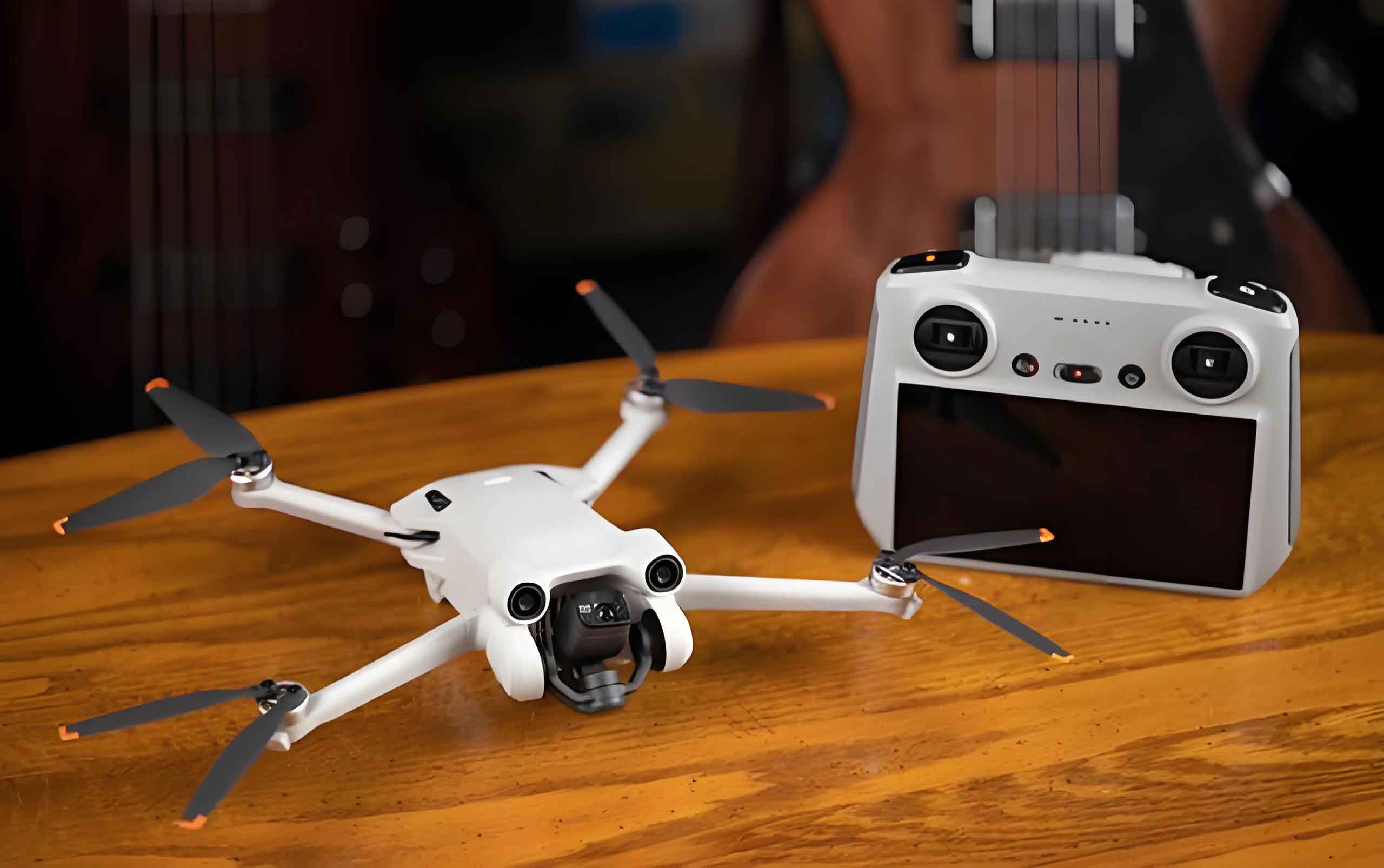
The system architecture of drone technology for mine surveying comprises four key components: the UAV platform, the payload sensors, the data transmission system, and the ground processing station. The UAV platform ensures stable flight even in windy conditions typical of open-pit mines. Sensors capture high-accuracy geospatial data, and the real-time telemetry link streams the acquired information to the ground station. Finally, dedicated photogrammetric software processes the raw images to generate digital elevation models (DEMs), orthophotos, and 3D point clouds. Table 1 summarizes the typical specifications of these components.
| Component | Description | Key Parameters |
|---|---|---|
| UAV Platform | Multi-rotor or fixed-wing aircraft | Endurance: 30–60 min; Payload: 1–5 kg; Maximum speed: 15–25 m/s |
| Imaging Sensor | High-resolution digital camera (e.g., 20–42 MP) | Pixel size: 3.5–4.5 µm; Focal length: 20–35 mm |
| LiDAR (optional) | Laser scanner for dense point clouds | Point density: 10–50 pts/m²; Accuracy: 0.5–3 cm |
| Data Link | Radio or 4G/5G communication | Range: 5–15 km; Data rate: 10–50 Mbps |
| Processing Software | Photogrammetry suite (e.g., Pix4D, Metashape) | Algorithms: SfM, MVS; Output: DEM, orthomosaic, 3D mesh |
Advantages of Drone Technology in Mine Topography
Drone technology offers several distinct advantages over conventional surveying methods. First, it significantly reduces operational costs. Traditional ground-based surveys require extensive manpower, heavy equipment, and safety measures, especially in unstable slopes or toxic areas. With drone technology, a single operator can cover 50–100 hectares per flight hour at a fraction of the cost. Table 2 compares cost components between traditional and drone-based methods.
| Cost Category | Traditional Method | Drone Technology |
|---|---|---|
| Labor (per day) | 5–10 surveyors, $800–$1,500 | 1–2 operators, $300–$500 |
| Equipment rental | Total station, GNSS, $500–$1,000 | Drone system, $200–$600 |
| Mobilization & setup | 2–4 hours | 15–30 minutes |
| Data processing time | 2–5 days (manual drafting) | 1–2 days (automated) |
| Total cost per km² | $2,500–$4,000 | $500–$1,200 |
Second, drone technology provides higher resolution and more accurate data. The low-altitude flight capability enables GSD values down to 1–3 cm, capturing fine details such as small cracks, erosion patterns, and bench geometry. The forward and side overlap percentages—typically 70%–80% and 60%–70% respectively—ensure robust image matching. The relationship between overlap, base length, and flight parameters is expressed as:
$$P = \left(1 – \frac{B}{W}\right) \times 100\%$$
where \(P\) is the overlap percentage, \(B\) is the distance between two consecutive image centers (base length), and \(W\) is the image width on the ground. Higher overlap improves the reliability of 3D reconstruction, especially in steep mine walls.
Third, drone technology offers exceptional real-time responsiveness and operational flexibility. Unlike manned aircraft or satellite imaging, drone technology can be deployed within hours to monitor dynamic changes such as slope failures, excavation progress, or stockpile volume variations. This agility is vital for safety assessments and compliance with mine regulation. Moreover, the compact size and vertical take-off and landing (VTOL) capability allow operations in confined areas, dramatically expanding the accessible surveying range.
Table 3 summarizes the key performance metrics of drone technology compared to traditional total station and GNSS methods.
| Metric | Traditional Total Station | RTK GNSS | Drone Technology |
|---|---|---|---|
| Point density (pts/m²) | 0.1–1 | 0.01–0.1 | 10–100 (photogrammetry) or 50–500 (LiDAR) |
| Horizontal accuracy (cm) | 0.5–2 | 1–3 | 1–5 (with GCPs) |
| Vertical accuracy (cm) | 1–3 | 2–5 | 2–6 |
| Area coverage per hour (ha) | 1–3 | 5–10 | 50–200 |
| Safety risk for steep slopes | High | Medium | Low (no human entry) |
Application Implementation of Drone Technology
The successful deployment of drone technology in mine topographic surveying requires a well-structured workflow encompassing flight planning, ground control, image processing, and data analysis. I have designed a systematic approach based on extensive field experience, which is detailed below.
Flight Route Design
The first step is to analyze the mine topography, including terrain relief, vegetation, and no-fly zones. Using digital terrain models from existing sources, I compute the optimal flight altitude and speed to maintain consistent GSD and overlap. The flight lines are programmed to cover the entire area with double grid patterns for complex geometry. The number of strips \(N\) can be approximated by:
$$N = \frac{L}{W \cdot (1 – O_s)} + 1$$
where \(L\) is the width of the survey area perpendicular to the flight direction, \(W\) is the ground swath width per strip, and \(O_s\) is the side overlap (decimal). By iterating over different altitudes and overlaps, I ensure complete coverage while minimizing flight time and battery consumption.
Ground Control Setup
Ground control points (GCPs) are critical for georeferencing. I deploy 10–15 GCPs per km² using a combination of painted crosses and checkered targets. Their coordinates are measured with RTK GNSS achieving centimeter-level accuracy. During drone technology flight, the built-in GNSS/IMU records approximate positions, but the GCPs refine the bundle adjustment. The collinearity equations used in the adjustment are:
$$x_a – x_0 = -f \frac{a_1(X_A – X_S) + b_1(Y_A – Y_S) + c_1(Z_A – Z_S)}{a_3(X_A – X_S) + b_3(Y_A – Y_S) + c_3(Z_A – Z_S)}$$
$$y_a – y_0 = -f \frac{a_2(X_A – X_S) + b_2(Y_A – Y_S) + c_2(Z_A – Z_S)}{a_3(X_A – X_S) + b_3(Y_A – Y_S) + c_3(Z_A – Z_S)}$$
Here \((x_a, y_a)\) are image coordinates, \((x_0, y_0)\) are principal point offsets, \(f\) is the calibrated focal length, \((X_A, Y_A, Z_A)\) are ground coordinates of point A, \((X_S, Y_S, Z_S)\) are the camera projection center, and \((a_i, b_i, c_i)\) are elements of the rotation matrix. Solving these equations jointly across all GCPs and tie points yields highly accurate exterior orientation parameters.
Image Control Measurement and Rapid Mosaicking
After image acquisition, I perform image control measurement by identifying GCPs on the photos and performing least-squares bundle adjustment. The resulting refined orientation enables rapid mosaicking of orthophotos and DEM generation. The digital surface model (DSM) is produced via dense image matching, where the disparity \(d\) between corresponding pixels in stereopairs is related to elevation by:
$$Z = \frac{B \cdot f}{d \cdot p}$$
where \(B\) is the baseline between two camera positions, \(f\) is the focal length, and \(p\) is the pixel pitch. With drone technology, the entire process—from flight to final orthomosaic—can be completed within 24 hours, drastically reducing turnaround time compared to weeks for traditional methods.
Aerial 3D Measurement
Using the rigorous spatial intersection of rays from multiple images, drone technology enables precise 3D coordinate determination of any visible feature. The forward intersection formula for any point \(P\) from two images is:
$$\begin{bmatrix} X_P \\ Y_P \\ Z_P \end{bmatrix} = \lambda_1 \mathbf{R}_1^{-1} (\mathbf{x}_1 – \mathbf{x}_{0,1}) + \mathbf{C}_1$$
where \(\lambda_1\) is the scale factor, \(\mathbf{R}_1\) is the rotation matrix of image 1, \(\mathbf{x}_1\) are the image coordinates of the point, \(\mathbf{x}_{0,1}\) is the principal point, and \(\mathbf{C}_1\) is the camera projection center. In practice, more than two images are used to improve redundancy and accuracy, often yielding sub-decimeter precision for mine topographic features such as bench edges, haul roads, and stockpile surfaces.
Application in Digital Mine Surveying
Drone technology has become an indispensable tool in building digital mine models. By processing point clouds and orthophotos, I generate high-fidelity 3D models that capture the exact geometry of the pit, waste dumps, and infrastructure. These models serve as inputs for volumetric calculations, slope stability analysis, and production monitoring. For example, the volume of a stockpile is computed by integrating the difference between the terrain surface and the reference plane:
$$V = \iint \left( Z_{\text{surface}}(x,y) – Z_{\text{base}}(x,y) \right) dx\,dy$$
Numerically, this is approximated using a triangular irregular network (TIN) or grid-based summation. The accuracy of volume estimation using drone technology typically falls within 2–5%, which is superior to traditional methods that may have errors exceeding 10% for large piles.
Furthermore, drone technology facilitates the creation of submeter-accurate orthomosaics and 3D models of subsidence areas, enabling effective land rehabilitation planning. The models clearly delineate fracture zones, water ponding, and terrain deformation without requiring personnel to enter hazardous zones. Table 4 summarizes the typical data products and their applications in digital mine surveying.
| Product | Spatial Resolution / Accuracy | Typical Application |
|---|---|---|
| Digital Surface Model (DSM) | 2–5 cm GSD, <6 cm vertical | Volume calculation, contour mapping |
| Digital Terrain Model (DTM) | 5–10 cm after filtering | Slope analysis, drainage design |
| Orthomosaic (RGB) | 1–3 cm GSD | Geological mapping, vegetation monitoring |
| 3D Point Cloud | 100–500 pts/m² | Structural modeling, crack detection |
| NDVI / Multispectral | 5–10 cm GSD | Environmental impact assessment |
Conclusion
In conclusion, drone technology has fundamentally transformed mine topographic surveying by delivering superior cost efficiency, data accuracy, and operational agility. Through systematic flight planning, rigorous ground control, and advanced photogrammetric processing, I have demonstrated that drone technology consistently produces high-resolution, reliable geospatial products that directly support mine planning, safety management, and sustainable development. The integration of drone technology with digital modeling and GIS further amplifies its value, enabling real-time monitoring and proactive decision-making. As drone technology continues to evolve—with longer endurance, better sensors, and deeper AI integration—its role in mine surveying will only become more central. I strongly advocate for the widespread adoption of drone technology in all phases of mine lifecycle management, from exploration to closure, to maximize both economic benefits and environmental stewardship.