
In the contemporary landscape of defense technology, the military UAV has transitioned from a niche reconnaissance tool to a cornerstone of modern warfare. Among the various categories, the micro-class of military UAV stands out due to its unique operational advantages and strategic value. These systems, often weighing mere kilograms, are reshaping tactical doctrines and forcing a re-evaluation of traditional combat paradigms. Their significance lies not in raw power, but in pervasive, low-cost situational awareness and niche mission capabilities that were previously unattainable or too risky for human personnel or larger platforms.
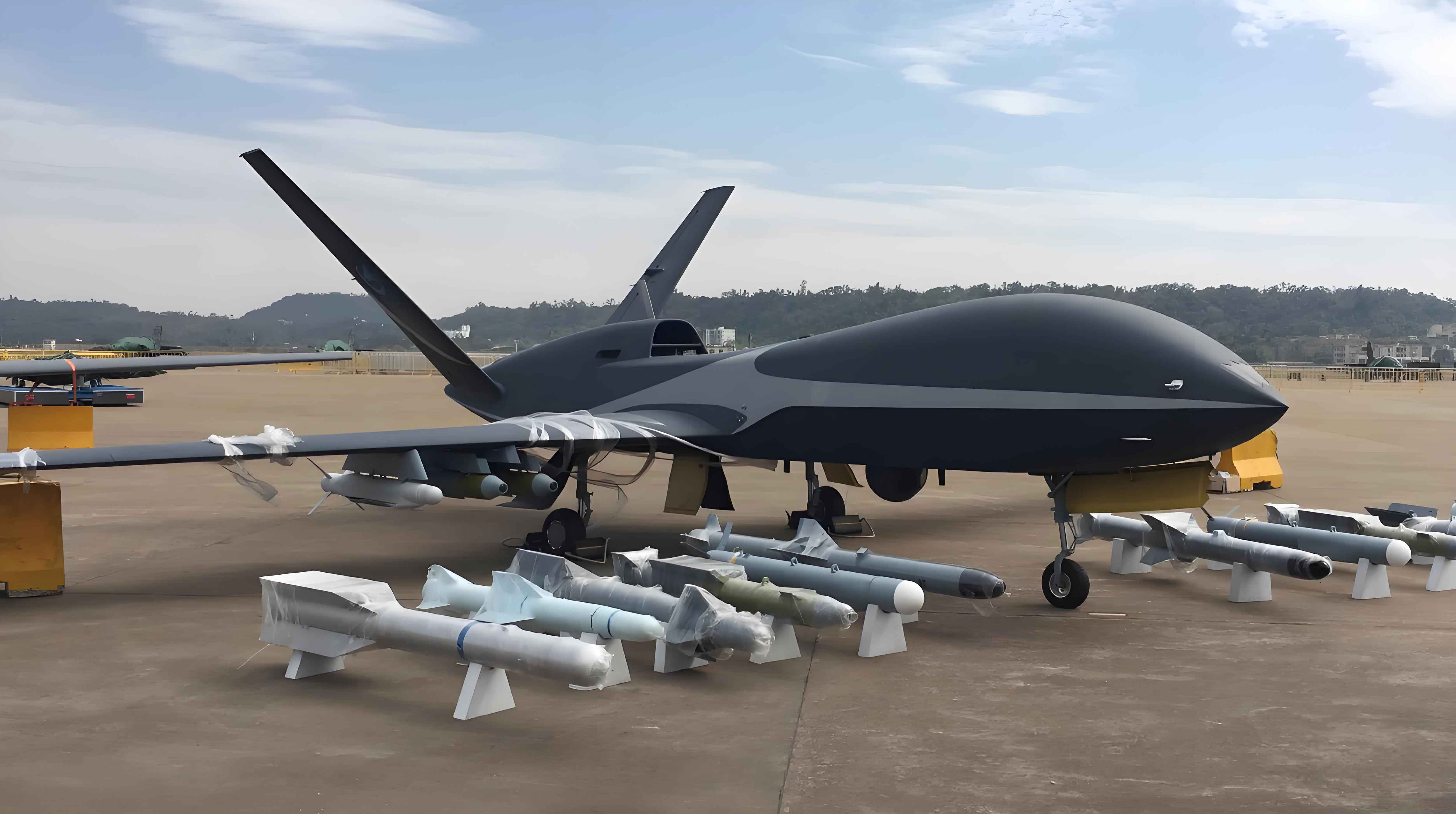
The genesis of unmanned flight can be traced back over a century, but the concentrated development of micro-scale systems for military applications is a more recent phenomenon. The formal push began in the late 1990s, with ambitious research programs aiming to create palm-sized reconnaissance assets. Today, the micro military UAV embodies the principle of asymmetric advantage, offering a force multiplier that is difficult to counter with conventional means due to its size, low acoustic signature, and operational flexibility. As conflicts increasingly occur in complex urban and denied environments, the role of these diminutive systems becomes ever more critical for maintaining information dominance and reducing operational risk.
Defining Characteristics and Operational Advantages
The term “micro” in the context of a military UAV lacks a universally rigid definition, but operational parameters generally converge around compact size, low weight, and short-to-medium range. A common framework defines them as having a maximum take-off weight below 5 kg, an operational radius under 10 km, and an endurance typically limited to 1-3 hours. The fundamental appeal of a micro military UAV stems from a confluence of tactical benefits that directly address modern battlefield challenges.
First, their launch and recovery logistics are exceptionally simple. Unlike their larger counterparts requiring runways or specialized catapults, micro systems utilize methods that demand minimal infrastructure. This flexibility is summarized in the following table:
| Launch Method | Description | Typical Platform Examples | Advantages |
|---|---|---|---|
| Hand Launch | The operator physically throws the UAV into the air to generate initial lift and airflow. | Fixed-wing micro drones | Zero infrastructure, silent start, immediate deployment. |
| Vertical Take-Off and Landing (VTOL) | The UAV lifts off and lands vertically, usually via rotors or ducted fans. | Multi-rotor and coaxial rotor drones | Hover capability, operation from confined spaces (e.g., forest clearings, building courtyards). |
| Pneumatic or Elastic Catapult | A portable device provides the initial kinetic energy for fixed-wing models. | Larger micro-UAVs with higher payloads | Consistent launch velocity, independent of operator strength, suitable for heavier payloads. |
| Tube Launch | The UAV is stored and fired from a sealed tube, often with wing deployment in flight. | Lethal munitions or specialized reconnaissance drones | High protection during transport, rapid deployment, can be vehicle-mounted. |
Second, their small physical footprint translates to superior survivability and covertness. The radar cross-section (RCS) of a micro military UAV is minuscule, often comparable to a large bird, making detection by conventional air defense radars exceptionally difficult. Furthermore, their low acoustic signature is a critical feature for clandestine operations. The sound pressure level decreases with distance according to the inverse-square law, but the source level itself is low. The effective detection range by human ears, $R_{audible}$, can be modeled by considering ambient noise $L_{ambient}$ and the source sound power level $L_{W}$:
$$ L_p(r) = L_W – 20 \log_{10}(r) – 11 $$
where $L_p(r)$ is the sound pressure level at distance $r$ meters. A micro UAV’s $L_W$ is sufficiently low that $L_p(r)$ falls below $L_{ambient}$ at relatively short ranges, providing acoustic stealth.
Third, the economic calculus favors their widespread use. The unit cost of a micro military UAV is orders of magnitude lower than that of a manned aircraft or even a large tactical UAV. This cost-effectiveness allows for “attritable” or even “expendable” operational concepts. The risk of losing a platform is financially manageable, and more importantly, it prevents the loss of human life in high-risk missions like urban reconnaissance, chemical-biological-radiological (CBR) sensing, or battle damage assessment under fire. The trade-off between capability, cost, and risk can be conceptualized by a simple value function for a mission:
$$ V_{mission} = \frac{C_{intel} \cdot P_{success}}{C_{platform} + k \cdot R_{personnel}} $$
where $C_{intel}$ is the value of gathered intelligence, $P_{success}$ is the probability of mission success, $C_{platform}$ is the platform cost, $R_{personnel}$ is the risk to personnel, and $k$ is a high weighting constant. For micro UAVs, a low $C_{platform}$ and $R_{personnel} \approx 0$ can yield a high $V_{mission}$ even for moderately valuable $C_{intel}$.
Global Development Landscape: A Comparative Analysis
The development and deployment of micro military UAV systems are led by a handful of nations, each with distinct developmental pathways and doctrinal emphases. The United States, Israel, and China represent three prominent and illustrative models of advancement in this domain.
United States: Pioneering Advanced Concepts
The U.S. has been the pioneer, with sustained investment through programs like the Micro Air Vehicle (MAV) initiative. American development focuses on pushing technological boundaries and integrating systems into the soldier’s toolkit at the small-unit level. The approach emphasizes robustness, ease of use, and data link security. U.S. systems are often designed for specific force elements, such as the U.S. Marine Corps or Army infantry squads.
Israel: Operational Excellence and Export Dominance
Israel’s approach is deeply rooted in immediate operational needs derived from persistent security challenges. Israeli defense companies excel at rapidly fielding reliable, combat-proven systems that address specific tactical problems. This practicality, combined with aggressive marketing, has made Israel the world’s leading exporter of micro military UAV systems. Their technology often emphasizes modularity, multi-mission capability, and seamless integration with battle management systems.
China: Rapid Ascent and Systemic Integration
China’s entry into the field was later but has been characterized by rapid, state-directed advancement. Leveraging a strong manufacturing base and significant R&D investment, Chinese development follows a dual-track approach: indigenous innovation coupled with analysis and adaptation of foreign technology. The focus is gradually expanding from larger MALE (Medium Altitude Long Endurance) UAVs down to the tactical and micro scales, with an eye on systemic integration for swarm tactics and informationized warfare.
| Country | Representative Systems | Key Parameters (Typical) | Developmental Focus & Doctrine |
|---|---|---|---|
| United States | RQ-11 Raven, Black Hornet, FLIR SUGV (ground/air hybrid concepts) | Weight: 0.5-2.5 kg, Endurance: 25-90 min, Range: ~10 km. Hand-launched or VTOL. | Disposable reconnaissance for infantry squads. Enhancing situational awareness at the lowest tactical echelon. Strong emphasis on miniaturized sensors (e.g., gimbaled EO/IR). |
| Israel | Elbit Skylark, Rafael SkyLite, Aeronautics Orbiter. | Weight: 2-10 kg, Endurance: 1.5-4 hours, Range: 15-50 km. Often tube-launched or catapulted. | Battalion/brigade-level asset for persistent surveillance and target acquisition. High reliability in extreme conditions. Dominance in the export market. |
| China | Various models from CASC, AVIC, and private firms (e.g., DJI-derived modified systems). | Parameters vary widely; many systems in 1-15 kg range, with evolving endurance and range specs. | Rapid technological catch-up and scale production. Focus on cost-effective swarming capabilities and integration into a centralized C4ISR network. |
The performance parameters of these systems are governed by fundamental aerospace equations. For instance, the endurance $E$ of a battery-powered electric propulsion system is given by:
$$ E = \frac{\eta_{total} \cdot C_{battery} \cdot V_{nominal}}{P_{req}} $$
where $\eta_{total}$ is the total powertrain efficiency, $C_{battery}$ is the battery capacity in Amp-hours, $V_{nominal}$ is the nominal voltage, and $P_{req}$ is the required power for level flight. $P_{req}$ itself is a function of airframe aerodynamics and weight:
$$ P_{req} \approx \frac{1}{\eta_{prop}} \cdot \left( \frac{1}{2} \rho v^3 S C_D + \frac{W^2}{\frac{1}{2} \rho v S \pi A e} \right) $$
Here, $\eta_{prop}$ is propeller efficiency, $\rho$ is air density, $v$ is velocity, $S$ is wing area, $C_D$ is drag coefficient, $W$ is weight, $A$ is aspect ratio, and $e$ is Oswald efficiency factor. This equation highlights the critical trade-offs: reducing weight ($W$) and drag ($C_D$) directly reduces power consumption, while increasing battery capacity ($C_{battery}$) and aerodynamic efficiency ($A$, $e$) extends endurance. This is the core engineering challenge for every micro military UAV designer.
Future Trajectories and Technological Frontiers
The evolution of the micro military UAV is far from static. Current limitations are actively being targeted by research initiatives worldwide, pointing toward several interconnected future trends that will redefine their utility on the battlefield.
1. Enhanced Endurance and Range: The primary constraint remains energy density. Future advancements hinge on hybrid power systems and improved aerodynamics. A promising direction is solar-electric hybridization, where endurance $E_{hybrid}$ can be modeled as an augmentation of the purely battery-powered flight:
$$ E_{hybrid} = E_{battery} + \int_{0}^{T_{sunlight}} \frac{\eta_{solar} \cdot P_{solar}(t) \cdot A_{solar}}{P_{req}(t)} dt $$
Here, $\eta_{solar}$ is solar cell efficiency, $P_{solar}(t)$ is incident solar power, $A_{solar}$ is the area covered with cells, and $T_{sunlight}$ is the duration of daylight. For a fixed-wing micro military UAV with high-aspect-ratio wings providing large $A_{solar}$, this can theoretically enable multi-day persistence. Concurrently, advances in hydrogen fuel cells and ultra-high-density batteries (e.g., Lithium-Sulfur, solid-state) offer hope for significant leaps in $C_{battery}$ without proportional weight increases.
2. Miniaturization and Stealth: The drive toward true insect-size platforms continues. This requires breakthroughs in micro-electromechanical systems (MEMS), low-RF-signature communication, and biomimetic flight (flapping-wing or rotary). Stealth encompasses not just radar and acoustics, but also visual and infrared signatures. Advanced materials with low thermal conductivity and adaptive coloration (active camouflage) will be integrated. The scaling laws present both challenges and opportunities; for example, the power required for hovering in a rotary-wing model scales with the fourth power of its linear dimension, making extreme miniaturization for VTOL platforms exceptionally difficult.
3. Functional Diversification and Payload Evolution: The role of the micro military UAV will expand beyond intelligence, surveillance, and reconnaissance (ISR). Future payloads will transform them into active tactical nodes. Key areas include:
- Electronic Warfare (EW): Micro-jammers or signal intelligence (SIGINT) collectors that can fly close to enemy emitters.
- Lethal Effects: Miniaturized warheads for precision strikes, either via kamikaze drones (loitering munitions) or deployable micro-munitions.
- Chemical/Biological Sensing: Miniaturized mass spectrometers or biological sensors for hazard detection.
- Communication Relays: Forming ad-hoc mesh networks to maintain connectivity in GPS-denied, communication-degraded environments.
This evolution necessitates a standardized payload interface and sophisticated mission planning software to manage diverse assets.
4. Autonomy and Swarm Intelligence: This is the most transformative trend. Moving beyond pre-programmed waypoints or simple remote piloting, future micro UAVs will possess increasing levels of autonomy. This progression can be described as a hierarchy:
| Autonomy Level | Capability | Enabling Technologies | Impact on Military UAV Ops |
|---|---|---|---|
| Remote Piloted | Full human control via radio link. | Stable video link, low-latency control. | Baseline, vulnerable to jamming. |
| Waypoint Navigation | Automatic flight between GPS coordinates. | GPS/INS, basic flight controller. | Reduces operator workload for simple routes. |
| Conditional Autonomy | Reacts to environment (e.g., obstacle avoidance, lost-link return). | Computer vision, SLAM (Simultaneous Localization and Mapping). | Enables operations in complex urban/forest environments. |
| Collaborative Autonomy (Swarm) | Multiple UAVs coordinate to achieve a goal with minimal human oversight. | Multi-agent AI, distributed algorithms, secure inter-agent communication. | Enables saturation attacks, distributed sensing, resilient networks. A game-changer for the micro military UAV. |
Swarm behavior can be governed by decentralized algorithms based on simple rules (e.g., Reynolds’ flocking rules: separation, alignment, cohesion) augmented with mission-specific objectives. The collective capability of a swarm, $C_{swarm}$, is not linear but can exhibit emergent properties:
$$ C_{swarm} = f(N, C_{unit}, L_{connectivity}, A_{algorithm}) $$
where $N$ is the number of units, $C_{unit}$ is individual capability, $L_{connectivity}$ is the quality of communication links, and $A_{algorithm}$ is the collective AI algorithm’s sophistication. A well-designed swarm of simple, low-cost micro UAVs can overwhelm sophisticated defenses, perform complex search patterns, or form a resilient sensor grid, making defense against them a paramount future challenge.
Conclusion
The micro military UAV has irrevocably altered the tactical calculus of modern conflict. From a novel experiment a few decades ago, it has matured into an indispensable asset, democratizing aerial surveillance and enabling new forms of engagement at the lowest tactical levels. Its evolution is characterized by a relentless push against physical limits—of size, endurance, and autonomy. The future battlefield will likely see not just individual micro drones, but intelligent clouds of them, operating collaboratively to perform missions with a speed, resilience, and complexity that monolithic systems cannot match. The nation that masters the integration of advanced miniaturization, robust artificial intelligence, and swarm tactics within its micro military UAV portfolio will gain a significant and potentially decisive advantage in the information-dominated conflicts of the 21st century. The trajectory is clear: smaller, smarter, more connected, and more pervasive. The era of the micro military UAV is not on the horizon; it is already here, and its impact is only beginning to be understood.