
As a researcher in military medical logistics, I have observed the rapid evolution of unmanned aerial vehicles (UAVs), commonly known as drones, and their transformative potential in healthcare support during conflicts. In this article, I will delve into the critical role of drones in enhancing medical logistics, focusing on their advantages, challenges, and future directions, with an emphasis on the importance of drone training. The integration of drones into medical supply chains is not just a technological advancement but a strategic imperative for modern armed forces. Through this first-person perspective, I aim to provide a comprehensive analysis that underscores the need for robust drone training programs to fully harness these capabilities.
Drones are aircraft that operate without onboard pilots, relying on remote control or autonomous planning to execute specific missions. They have emerged as a key component in national defense strategies worldwide. Currently, over 32 countries have developed more than 50 types of drones, totaling 300 models. Military forces, particularly in the United States and Israel, have pioneered drone applications in medical logistics, developing prototypes like the Combat Medic UAS and operational models such as the Cormorant for casualty evacuation. These innovations highlight the growing significance of drones in saving lives on the battlefield. However, the effective deployment of these systems hinges on comprehensive drone training for personnel, ensuring they can operate in high-stress environments. In the following sections, I will explore how drones amplify medical logistics efficacy, the obstacles to their adoption, and practical measures for advancement, all while reiterating the centrality of drone training in this domain.
Advantages of Drones in Medical Logistics
Drones offer distinct benefits over traditional medical logistics methods, such as ground vehicles or manned aircraft. These advantages can be summarized in the table below, which compares key attributes across different modes of transport. The data underscores why drones are becoming indispensable in military medical support.
| Attribute | Drones | Ground Vehicles | Manned Helicopters |
|---|---|---|---|
| Economic Cost | Low purchase price, low operating cost, minimal human resource expenditure | Moderate to high, with fuel and maintenance expenses | Very high, including pilot salaries and fuel |
| Battlefield Mobility | High: all-terrain, vertical take-off, direct flight paths | Limited by terrain, obstacles, and enemy fire | Moderate, but vulnerable in contested airspace |
| Operational Ease | Simple to operate; personnel can be trained in 1-3 days | Requires skilled drivers and navigators | Demands extensive pilot training and certification |
| Protective Capability | High: zero-contact, remote operation reduces exposure to hazards | Low: personnel are exposed to battlefield risks | Moderate: crew faces risks from enemy engagement |
| Response Speed | Fast: speeds of 50-600 km/h depending on type | Slow: often below 40 km/h in rough terrain | Fast: but deployment may be delayed by logistics |
From this comparison, it is evident that drones provide a cost-effective and agile solution. For instance, the economic advantage can be quantified using a simple formula for total cost of ownership (TCO):
$$ \text{TCO}_{\text{drone}} = P + \sum_{t=1}^{T} \left( \frac{O_t + M_t}{(1+r)^t} \right) $$
where \( P \) is the purchase price, \( O_t \) is operating cost in year \( t \), \( M_t \) is maintenance cost, \( r \) is the discount rate, and \( T \) is the lifespan. Compared to manned systems, drones typically have lower \( O_t \) and \( M_t \), making them financially viable. Moreover, their mobility translates into faster response times, which can be modeled using the equation for delivery time \( \tau \):
$$ \tau = \frac{d}{v} + t_{\text{prep}} $$
Here, \( d \) is the distance, \( v \) is the drone’s speed, and \( t_{\text{prep}} \) is preparation time. Drones minimize \( \tau \) by enabling direct routes, whereas ground vehicles face detours. This efficiency is crucial in medical emergencies, where every minute counts. To leverage these benefits, however, personnel must undergo rigorous drone training to master operation and maintenance, ensuring optimal performance in diverse scenarios.
Enhanced Efficacy in Medical Logistics
Drones integrate various medical technologies, multiplying the efficacy of healthcare support in both peacetime disasters and wartime operations. Their applications span multiple domains, as detailed below. Each function relies on specialized modules, and effective deployment necessitates continuous drone training to adapt to evolving threats.
1. Pre-emptive Medical Reconnaissance: Before deploying medical units, drones equipped with high-definition cameras and remote sensing devices allow commanders to assess environmental conditions. This proactive scouting reduces risks and optimizes resource allocation. The information gathered can be processed using algorithms for terrain analysis, such as:
$$ A_{\text{risk}} = \int_{S} \alpha(x,y) \, dS $$
where \( A_{\text{risk}} \) represents the risk area, \( \alpha(x,y) \) is a hazard function over surface \( S \). Drones facilitate real-time data collection for this calculation.
2. Precision Casualty Search and Rescue: In modern warfare, troops operate across vast areas, making casualty location challenging. Drones with thermal imaging, night vision, and GPS enable rapid aerial searches. The probability of detection \( P_d \) can be enhanced with drone networks:
$$ P_d = 1 – \prod_{i=1}^{n} (1 – p_i) $$
where \( p_i \) is the detection probability by drone \( i \), and \( n \) is the number of drones. This underscores the value of coordinated drone training for search patterns.
3. Multi-dimensional Epidemic Prevention and Protection: In nuclear, biological, or chemical (NBC) environments, drones carry spraying, disinfection, and monitoring modules to perform decontamination. The effectiveness of decontamination can be modeled as:
$$ E_{\text{decon}} = \eta \cdot \frac{Q}{A} $$
with \( \eta \) as efficiency coefficient, \( Q \) as disinfectant quantity, and \( A \) as area covered. Drone training must include handling of NBC hazards to ensure safe operations.
4. Targeted Medical Supply Delivery: Drones deliver blood, pharmaceuticals, and first-aid kits directly to frontline units, overcoming ground obstacles. The payload capacity \( W \) and range \( R \) are critical parameters:
$$ R = \frac{E}{P \cdot g} $$
where \( E \) is energy capacity, \( P \) is power consumption, and \( g \) is gravitational acceleration. Training focuses on optimizing these factors for mission success.
5. Three-dimensional Casualty Evacuation: Drones complement ground ambulances and helicopters, forming an integrated evacuation system. The evacuation rate \( \lambda \) can be increased:
$$ \lambda = \frac{N_{\text{drones}} \cdot \mu}{T_{\text{cycle}}} $$
where \( \mu \) is the number of casualties per drone, and \( T_{\text{cycle}} \) is the mission cycle time. Drone training for evacuation protocols is vital to minimize en-route complications.
6. Remote Medical Consultation: Drones establish communication links, enabling real-time telemedicine between frontline medics and rear specialists. The data transmission rate \( R_t \) must meet medical standards:
$$ R_t \geq \frac{D_{\text{3D}} + D_{\text{audio}}}{t_{\text{max}}} $$
where \( D_{\text{3D}} \) and \( D_{\text{audio}} \) are data sizes, and \( t_{\text{max}} \) is the maximum allowable delay. Personnel require drone training in communication systems to maintain these links.
To illustrate the integration of drones in training scenarios, consider the following image that depicts unmanned systems in a medical logistics exercise. This visual emphasizes the hands-on aspect of drone training, which is essential for proficiency.
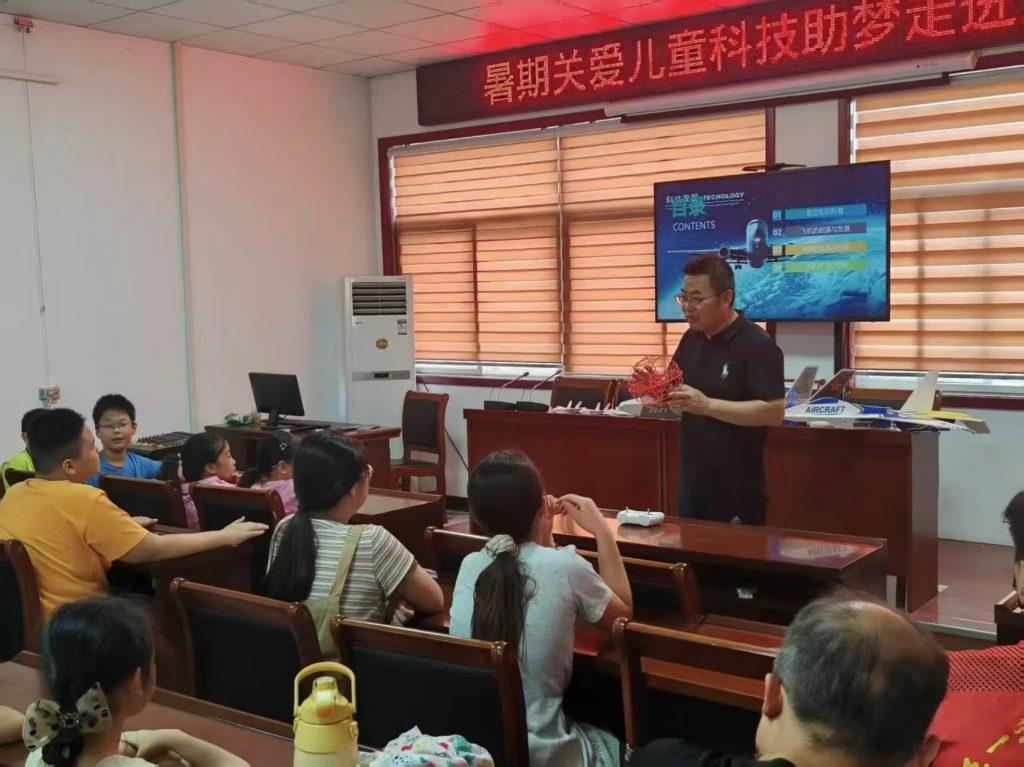
This image shows a typical drone training session where operators simulate medical supply drops. Such practical exercises are crucial for building muscle memory and decision-making skills under pressure.
Challenges in Drone-Based Medical Logistics
Despite the promise, several hurdles impede the widespread adoption of drones in military medical logistics. These challenges must be addressed through targeted strategies, including advanced drone training. Below is a table summarizing the key issues and their implications.
| Challenge | Description | Impact on Medical Logistics |
|---|---|---|
| Battlefield Adaptability | Drones often have limited payload, short range, and vulnerability to electromagnetic interference, reducing performance in complex environments like jungles or urban areas. | Restricts coverage area and reliability, compromising safety in casualty evacuation. |
| Specialization of Equipment | Most medical drones are in early stages, with small payloads and inadequate medical devices, suited only for urban sample transport rather than battlefield use. | Limits functionality to basic tasks, failing to meet comprehensive medical needs in combat zones. |
| Lack of Coordination Mechanisms | Absence of airspace coordination, human-drone collaboration, and communication protocols hampers efficient deployment. | Increases accident risks and reduces responsiveness, undermining timely medical support. |
| Missing Technical Standards | No unified guidelines for drone operations in medical contexts, such as effects on patients or disinfection procedures. | Leads to inconsistent quality, potential contamination, and legal ambiguities. |
These challenges can be quantified using risk assessment models. For instance, the probability of mission failure \( P_f \) due to adaptability issues can be expressed as:
$$ P_f = 1 – e^{-\lambda_a t} $$
where \( \lambda_a \) is the failure rate due to environmental factors, and \( t \) is mission duration. To mitigate this, drone training must incorporate simulations of harsh conditions, teaching operators to navigate electromagnetic interference or adverse weather. Similarly, the lack of standards increases variability, which can be measured using the coefficient of variation \( CV \):
$$ CV = \frac{\sigma}{\mu} $$
where \( \sigma \) is the standard deviation of performance metrics, and \( \mu \) is the mean. High \( CV \) indicates poor consistency, underscoring the need for standardized drone training curricula across military branches.
Measures and Recommendations for Development
To overcome these challenges and maximize the potential of drones in medical logistics, I propose a multi-faceted approach centered on drone training. The following sections outline specific actions, supported by formulas and tables to illustrate implementation.
1. Strengthen Theoretical Research
Research should focus on validating drone applications in various combat scenarios. This involves experimental studies to assess feasibility and integration with existing medical systems. A key aspect is modeling the cost-benefit ratio \( \text{CBR} \):
$$ \text{CBR} = \frac{\sum_{i=1}^{n} B_i}{\sum_{j=1}^{m} C_j} $$
where \( B_i \) are benefits (e.g., lives saved, time reduced) and \( C_j \) are costs (e.g., equipment, drone training expenses). A CBR > 1 justifies investment. Additionally, research should explore optimal drone configurations for different echelons of care, using linear programming to maximize coverage:
$$ \text{Maximize } Z = \sum_{k} a_k x_k \text{ subject to } \sum_{k} b_k x_k \leq B $$
Here, \( x_k \) is the number of drones of type \( k \), \( a_k \) is their efficacy, \( b_k \) is cost, and \( B \) is budget. Drone training modules should be informed by such research to ensure alignment with operational needs.
2. Establish Technical Standards
Priority should be given to developing standards for medical supply delivery, casualty evacuation, and NBC decontamination. These standards must include performance metrics, such as maximum vibration levels \( V_{\text{max}} \) for patient safety during evacuation:
$$ V_{\text{max}} \leq \frac{g}{10} \text{ m/s}^2 $$
where \( g \) is gravity. For supply delivery, temperature control is critical; the allowable temperature deviation \( \Delta T \) can be defined as:
$$ \Delta T = T_{\text{actual}} – T_{\text{required}} \leq \pm 2^\circ \text{C} $$
Drone training must adhere to these standards, incorporating protocols for monitoring and adjustment during missions.
3. Develop Operational Mechanisms
Creating coordination frameworks is essential. This includes setting up dedicated units for drone management within medical logistics commands. The efficiency of coordination can be enhanced by implementing networked communication, with data throughput \( \Theta \) meeting minimum requirements:
$$ \Theta \geq \frac{N_{\text{drones}} \cdot D_{\text{avg}}}{t_{\text{update}}} $$
where \( D_{\text{avg}} \) is average data per drone, and \( t_{\text{update}} \) is update interval. Drone training should emphasize teamwork between operators and medical staff, using simulations to practice airspace deconfliction and real-time decision-making. A table of recommended mechanisms is provided below.
| Mechanism | Key Components | Role of Drone Training |
|---|---|---|
| Airspace Coordination | Dynamic flight planning, risk assessment, and clearance protocols | Train operators in using coordination software and adhering to rules of engagement |
| Human-Drone Collaboration | Unified command structures, shared situational awareness | Conduct joint exercises to foster seamless interaction between humans and drones |
| Communication Interoperability | Standardized data links, encryption for medical data | Include communication drills in drone training to ensure secure and reliable exchanges |
4. Invest in Equipment Research and Development
R&D should aim at enhancing drone professionalism, stability, and adaptability. This involves integrating advanced medical devices, navigation systems, and materials. For example, the payload capacity \( W \) can be improved by using lightweight composites, modeled as:
$$ W = \rho \cdot V \cdot g $$
where \( \rho \) is material density, and \( V \) is volume. Reducing \( \rho \) through nanomaterials increases \( W \). Similarly, anti-jamming capabilities can be boosted with signal processing algorithms, where the signal-to-noise ratio \( \text{SNR} \) must exceed a threshold:
$$ \text{SNR} = 10 \log_{10} \left( \frac{P_{\text{signal}}}{P_{\text{noise}}} \right) \geq 20 \text{ dB} $$
Drone training must keep pace with these technological advancements, ensuring operators can handle new features and troubleshoot issues.
5. Forge a Talent Pipeline Through Drone Training
The cornerstone of success is a skilled workforce. I advocate for a “trinity” training system comprising academic education, unit-based practice, and live exercises. This approach builds competency in drone training from basic to advanced levels. The effectiveness of training can be measured using a learning curve model:
$$ T_n = T_1 \cdot n^{-b} $$
where \( T_n \) is the time to complete the \( n \)-th mission after training, \( T_1 \) is initial time, and \( b \) is the learning rate (typically 0.1 to 0.3). Regular drone training increases \( b \), reducing \( T_n \) and improving mission efficiency. Below is a table outlining the training framework.
| Training Stage | Focus Areas | Outcomes |
|---|---|---|
| Academic Education | Theory of drone operations, medical logistics principles, safety protocols | Foundation in knowledge, enabling understanding of system capabilities and limitations |
| Unit-Based Practice | Hands-on operation, maintenance drills, scenario-based simulations | Practical skills development, with emphasis on drone training for specific medical tasks |
| Live Exercises | Full-scale missions in simulated combat environments, integration with other units | Real-world readiness, teamwork, and ability to adapt under stress |
Moreover, drone training should include certification programs that assess proficiency. The certification score \( S \) can be computed as a weighted sum:
$$ S = w_1 S_{\text{theory}} + w_2 S_{\text{practical}} + w_3 S_{\text{scenario}} $$
with weights \( w_1, w_2, w_3 \) summing to 1. Passing thresholds ensure operators meet minimum standards. Continuous drone training is vital, as technology evolves; thus, refresher courses should be mandated annually, with performance metrics tracked over time.
Conclusion
In conclusion, drones represent a paradigm shift in military medical logistics, offering unparalleled advantages in cost, mobility, and safety. However, realizing their full potential requires addressing challenges related to adaptability, specialization, coordination, and standards. Central to all solutions is the imperative of comprehensive drone training, which equips personnel with the skills to operate effectively in dynamic battlefields. Through theoretical research, technical standardization, operational mechanisms, R&D investment, and a robust training pipeline, armed forces can integrate drones into a seamless medical support network. As I reflect on this, I am convinced that prioritizing drone training will not only enhance logistical efficacy but also save countless lives in future conflicts. The journey toward drone-enabled medical logistics is ongoing, and with sustained focus on education and practice, we can turn technological promise into tangible reality.
To further illustrate the importance of training, consider the cumulative impact of drone training on mission success rates. Over time, as operators gain experience, the probability of successful medical deliveries \( P_s \) increases exponentially:
$$ P_s = 1 – e^{-k \cdot N_{\text{training}}} $$
where \( k \) is a constant reflecting training effectiveness, and \( N_{\text{training}} \) is the number of training hours. This relationship underscores why investing in drone training is not an option but a necessity for modern military medicine.