
Agricultural trusteeship services represent a transformative approach where farmers delegate specific production stages—such as cultivation, planting, pest control, and harvesting—to specialized service organizations without transferring land ownership. This model integrates advanced technologies like precision agriculture tools, improved seed varieties, and modern machinery into smallholder farming systems, addressing inefficiencies in traditional fragmented operations. The adoption of agricultural drone technology exemplifies this innovation, particularly in labor-intensive tasks like pest management. This study examines how specialized cooperatives enhance service efficacy using agricultural UAV systems within hybrid rice seed production—a sector demanding exceptional precision due to its critical role in global food security.
Hybrid rice seed cultivation requires meticulous timing and accuracy in pollination, irrigation, and disease management. Manual pesticide application proves inadequate here, as uneven coverage reduces seed purity and yield. Agricultural drone fleets address this through aerial spray operations that ensure uniform chemical distribution. The operational efficiency of agricultural UAV platforms follows this formula:
$$ \text{Efficiency Gain} = \frac{\text{Traditional Labor Days} \times \text{Daily Wage} – (\text{Drone Operational Cost} + \text{Chemical Savings})}{\text{Area Serviced}} $$
Where:
- Traditional Labor Days = Days required for manual spraying per hectare
- Daily Wage = Local agricultural wage rate
- Drone Operational Cost = Fuel, maintenance, and labor per sortie
- Chemical Savings = Reduced pesticide volume × unit cost
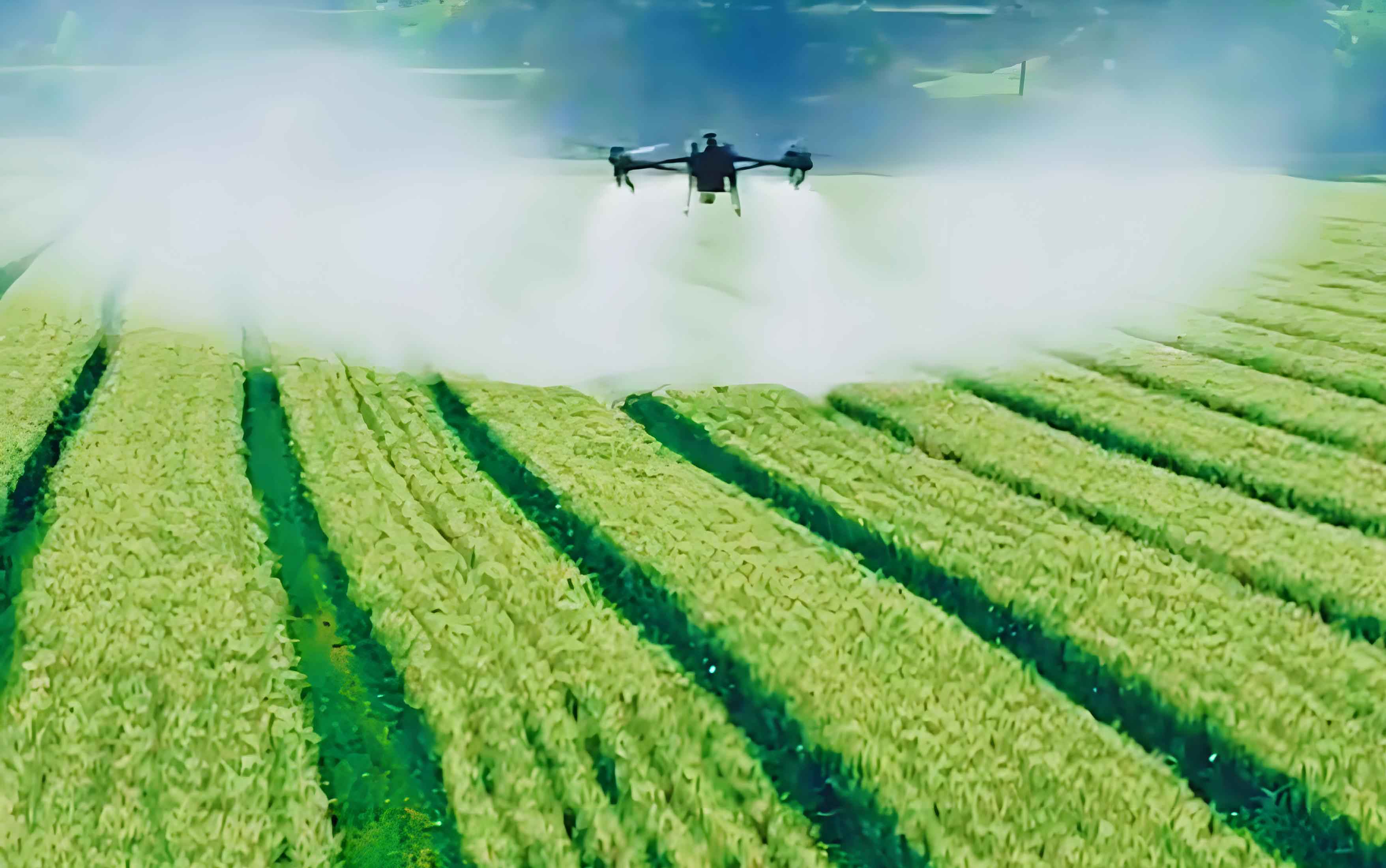
A Fujian county specializing in hybrid rice seeds—producing 10% of China’s total—demonstrates this model’s impact. Its cooperatives adopted agricultural drone fleets for Unified Prevention and Control (UPC), a standardized pest management protocol. Key outcomes from 2019–2024 include:
| Year | Cooperatives Using Agricultural UAV | Drone Fleet Size | Area Serviced (ha) | Labor Cost Savings (US$) | Pesticide Cost Savings (US$) | Yield Increase Revenue (US$) | Total Economic Gain (US$) |
|---|---|---|---|---|---|---|---|
| 2019 | 8 | 23 | 2,333 | 48,300 | 11,592 | 86,940 | 146,832 |
| 2020 | 9 | 25 | 2,467 | 51,060 | 12,254 | 91,932 | 155,246 |
| 2021 | 11 | 26 | 3,067 | 63,480 | 15,240 | 114,336 | 193,056 |
| 2022 | 11 | 28 | 4,333 | 89,700 | 21,528 | 161,532 | 272,760 |
| 2023 | 13 | 37 | 5,800 | 120,060 | 28,814 | 216,108 | 364,982 |
| 2024 | 16 | 51 | 7,533 | 155,958 | 37,426 | 280,764 | 474,148 |
| Total | – | – | 25,533 | 528,558 | 126,854 | 951,612 | 1,607,024 |
Note: Currency converted from original Chinese Yuan data at 1 USD ≈ 6.9 CNY
The efficiency of agricultural drone operations is quantified as:
$$ \text{Operational Efficiency} = \frac{\text{Coverage Area (ha)}}{\text{Time (hours)} \times \text{Resource Input Cost}} $$
Key implementation strategies included:
- Technical Training Systems: Over 200 drone operators and 800 technicians received certification in flight operations, maintenance, and pesticide science through partnerships with manufacturers like DJI and XAG.
- Service Model Innovation: Cooperatives offered flexible contracts—single spray missions ($22–32/ha) or full-season packages ($260–303/ha)—with quality clauses tied to local agronomic monitoring.
- Ecological Impact: Agricultural UAV spray systems reduced pesticide volumes by 30% through precise droplet dispersion and specialized chemical formulations, minimizing soil and water contamination.
Despite progress, four constraints hinder scalability:
- Financial Barriers: High-end agricultural drone units cost $15,000–$25,000 with rapid obsolescence cycles. Subsidy volatility—ranging from 30% to 19% of purchase price—leaves cooperatives undercapitalized. Loan access remains limited without collateral.
- Technical Skill Gaps: Only 30% of cooperative members possess secondary education, restricting advanced data analysis and maintenance capabilities. Complex terrains and signal interference degrade agricultural UAV performance during critical outbreaks like rice blast disease.
- Fragmented Implementation: Small landholdings (averaging 0.2–0.5 ha) prevent economies of scale. Power lines obstruct flight paths, reducing sortie efficiency by 15–40% in mountainous zones.
- Cultural Resistance: 42% of farmers in surveys distrust mechanized services due to unfamiliarity, preferring traditional manual methods despite higher costs.
To address these, six policy pathways emerge:
1. Optimize Service Models & Stakeholder Engagement
Adopt performance-based incentives for operators using this metric:
$$ \text{Service Quality Score} = \alpha(\text{Coverage Uniformity}) + \beta(\text{Timeliness}) + \gamma(\text{Cost Efficiency}) $$
Where α, β, γ are weights assigned through farmer feedback. Digital platforms should visualize real-time agricultural drone performance metrics to build trust.
2. Accelerate Technological Innovation
Develop terrain-adaptive agricultural UAV systems with enhanced battery life (45+ minutes) and obstacle detection. Integrate AI for predictive spraying using satellite and IoT soil sensors:
$$ \text{Spray Decision Algorithm} = f(\text{Pest Density}, \text{Weather}, \text{Growth Stage}) $$
3. Financial Mechanism Reform
Stabilize subsidy frameworks through multi-tiered support:
- National: 30% base grant for all agricultural drone purchases
- Provincial: 15% bonus for cooperatives serving >500 ha annually
- Municipal: Insurance subsidies covering 50% of operational risk policies
4. Terrain-Specific Mechanization
Promote land consolidation via cooperative-led “plot swapping” to create contiguous fields. Where topography prohibits merging, deploy miniaturized agricultural UAV models (payload < 5L) with reinforced rotors for wind resistance.
5. Expand Data-Driven Services
Fuse agricultural drone multispectral imaging with farm management software to generate prescriptive analytics:
$$ \text{Health Index} = \frac{\sum \text{Normalized Difference Vegetation Index}}{\text{Growing Degree Days}} \times 100 $$
6. Cooperative Alliance Networks
Establish regional service hubs pooling drones, technicians, and spare parts. Shared resource allocation follows:
$$ \text{Resource Utilization Rate} = 1 – \left( \frac{\text{Idle Equipment Hours}}{\text{Total Operational Hours}} \right) $$
Peak-season coordination could boost this metric beyond 85%.
The integration of agricultural drone systems into trusteeship frameworks demonstrates how technological scaling bridges smallholder productivity gaps. Future gains require policy stability, continuous R&D in agricultural UAV capabilities, and inclusive governance aligning mechanization with ecological resilience. This evolution positions trusteeship services as central to global food systems’ adaptation to climate volatility and labor transitions.