
The reliable operation of overhead transmission lines is fundamental to modern power grids. Composite insulators, prized for their lightweight, high mechanical strength, and superior pollution flashover resistance, have seen widespread deployment. A critical property defining their long-term performance is hydrophobicity—the material’s ability to repel water. Maintaining strong hydrophobicity prevents the formation of continuous water films on the insulator surface, thereby significantly inhibiting leakage current and minimizing the risk of flashovers. However, this hydrophobicity degrades over time due to environmental stressors such as ultraviolet radiation, acid rain, electrical arcing, and surface contamination. Consequently, regular assessment of the hydrophobicity status of in-service insulators is a crucial, yet challenging, aspect of power line maintenance.
Traditional assessment, primarily the spray method (guided by standards like IEC TS 62073), requires maintenance personnel to physically climb transmission towers, manually spray water on the insulator, and visually classify the hydrophobic state (HC1 to HC7) based on water bead shape and distribution. This method is not only labor-intensive and time-consuming but also poses significant safety risks and suffers from subjective judgment inconsistencies. The advent of computer vision and deep learning has provided pathways for automated image-based classification. However, a significant bottleneck remains: the spraying operation itself. Manually spraying insulators located tens of meters above ground is impractical and dangerous. While UAV drones have become commonplace for visual inspection, their role has largely been limited to image capture. The integration of a controlled, lightweight spraying mechanism onto a UAV drone platform to enable a fully remote hydrophobicity assessment cycle represents a substantial innovation gap.
This work addresses this gap by presenting the design and practical implementation of a comprehensive, intelligent detection system for insulator hydrophobicity. The core innovation lies in leveraging UAV drones not just as passive observers but as active agents in the assessment protocol. We designed a dual-UAV framework: a spraying UAV drone equipped with a custom-developed, electronically controlled spray module, and an imaging UAV drone for high-resolution data capture. The captured images are processed in real-time by a lightweight yet accurate deep learning model deployed on an edge computing device. The entire user interaction, from controlling the UAV drones to initiating analysis and viewing results, is seamlessly integrated into the drone controller’s software interface. This system effectively decouples the human operator from the hazardous high-voltage environment, transforming a traditionally risky and subjective task into a safe, efficient, and objective digital inspection routine.
System Architecture and UAV-Based Spraying Platform
The proposed system architecture is built around a cooperative workflow between two primary physical subsystems: the Spraying End and the Detection & Analysis End. The system’s operational logic is designed to integrate smoothly with existing power line inspection protocols using UAV drones.
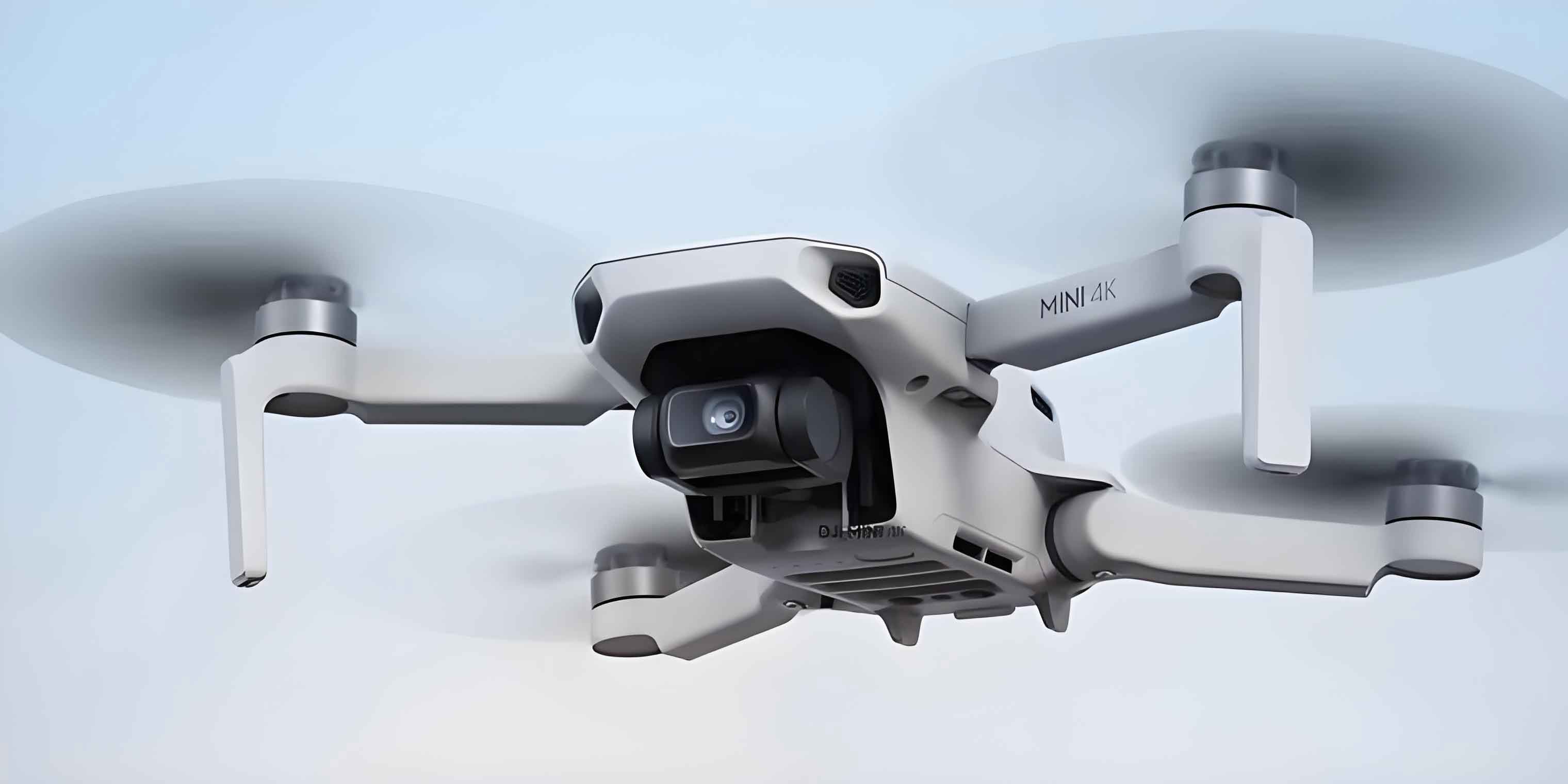
The Spraying End is responsible for the precise application of water mist onto the target insulator. It centers on a commercial UAV drone platform, selected for its payload capacity, flight stability, and programmability. For our implementation, the DJI Matrice 350 RTK was chosen due to its 2.7 kg payload, high-precision positioning (0.1 m hover accuracy), and the availability of the DJI Payload SDK. The custom spray apparatus is the key component. It consists of a water reservoir (1000 ml capacity), a DC pump, a spray nozzle, interconnecting tubing, and an electronic control unit. The control unit, built around an STM32 microcontroller, is interfaced with the UAV drone‘s onboard computer via the Payload SDK adapter mounted on the DJI Skyport V2 gimbal connector.
The control sequence is initiated by the operator through a custom application on the spraying UAV drone‘s remote controller. A spray command is sent to the UAV drone, which relays it via the Skyport V2 interface to the Payload SDK adapter and subsequently to the STM32 controller. The controller then generates a Pulse-Width Modulation (PWM) signal with a specific duty cycle to drive the pump motor through an electronic speed controller (ESC). The spray duration (typically 5s, 10s, or 20s as per standard practice) is controlled by the length of the PWM signal. This design allows the UAV drone to autonomously execute a pre-programmed spray pattern from a safe distance of 1-2 meters from the insulator, ensuring consistent and repeatable wetting essential for reliable classification.
The Detection & Analysis End handles image acquisition and intelligent processing. A second imaging UAV drone, equipped with a high-zoom camera, is deployed shortly after the spraying operation (within 30 seconds) to capture detailed images of the wetted insulator from an optimal distance of approximately 5 meters. The core intelligence resides in an edge computing device (based on a Rockchip RK3588 processor with a 6-TOPS NPU) that hosts the deployed deep learning model. This device communicates with the imaging UAV drone‘s remote controller over a Wi-Fi link using the User Datagram Protocol (UDP) for low-latency image transfer.
The system’s user interface is consolidated into a single software application running on the imaging UAV drone‘s controller. This application allows the operator to: 1) view the live feed or captured images from the UAV drone, 2) select an image for analysis, 3) transmit it to the edge device with one click, and 4) display the returned hydrophobicity classification result (HC1-HC7) along with confidence metrics. This integrated workflow means the line inspector controls both UAV drones and receives diagnostic results through the familiar interface of the drone controller, requiring minimal adaptation to existing inspection routines.
Deep Learning Model for Hydrophobicity Classification
The accuracy of the entire system hinges on the performance of the image classification model. The model must be highly accurate to ensure reliable diagnostics, yet computationally efficient to run in real-time on resource-constrained edge hardware deployed alongside the UAV drone operation. To meet these dual demands, we based our model on the FasterNet architecture and enhanced it with an attention mechanism.
FasterNet Backbone: FasterNet is a recently proposed convolutional neural network designed explicitly for higher FLOPs (Floating Point Operations) efficiency without compromising accuracy. Its key innovation is the Partial Convolution (PConv) layer. Standard convolutions apply filters across all input channels simultaneously, leading to significant memory access and computational cost. PConv applies regular convolution only to a subset of contiguous input channels (e.g., the first or last 1/4), leaving the rest unchanged. This strategy dramatically reduces redundant computation and memory access. A typical FasterNet block consists of a PConv layer for efficient spatial feature extraction, followed by two pointwise (1×1) convolutions for channel mixing and non-linear transformation. The network structure comprises four stages, each with an increasing number of FasterNet blocks, preceded by embedding/merging layers for down-sampling. The final classification head includes global pooling and fully connected layers.
While efficient, the standard FasterNet treats all channel features equally after PConv. For hydrophobicity classification, subtle differences in water bead morphology, density, and contact angle distinguish between adjacent HC classes (e.g., HC2 vs. HC3). These discriminative features may reside in specific channels of the high-dimensional feature maps.
Integration of Efficient Channel Attention (ECA): To enable the model to focus on more informative channels, we integrated the Efficient Channel Attention (ECA) module after the last stack of FasterNet blocks, just before the final classification head. The ECA module generates channel-wise weights without dimensionality reduction, preserving model efficiency. Let the input feature map from the final FasterNet stage be denoted as $\mathbf{X} \in \mathbb{R}^{H \times W \times C}$, where $H$, $W$, and $C$ are height, width, and channel number. The ECA operation is summarized as follows:
1. Channel-wise Global Average Pooling (GAP): Spatial information is squeezed to produce a channel descriptor vector $\mathbf{z} \in \mathbb{R}^{C}$.
$$ z_c = \frac{1}{H \times W} \sum_{i=1}^{H} \sum_{j=1}^{W} X_c(i, j) $$
2. Adaptive 1D Convolution for Weight Generation: Instead of using fully-connected layers, ECA employs a fast 1D convolution with kernel size $k$ to capture local cross-channel interaction. The size $k$ is adaptively determined by a mapping of channel dimension $C$: $k = \psi(C) = \frac{|\log_2(C) + b|_{\text{odd}}}{\gamma}$, where $|\cdot|_{\text{odd}}$ denotes the nearest odd number. This yields the attention weights $\boldsymbol{\omega}$.
$$ \boldsymbol{\omega} = \sigma(\text{Conv1D}_k(\mathbf{z})) $$
where $\sigma$ is the Sigmoid activation function.
3. Channel Recalibration: The original feature map $\mathbf{X}$ is scaled by the computed attention weights to produce the refined output $\tilde{\mathbf{X}}$.
$$ \tilde{X}_c = \omega_c \cdot X_c $$
By adding the ECA module, the modified FasterNet (FasterNet-ECA) can dynamically emphasize features from channels that are more relevant for distinguishing hydrophobic states, thereby improving classification accuracy on challenging, fine-grained image data. The final model architecture, from input insulator image to HC class prediction, is optimized for deployment on the RK3588 edge platform using the RKNN toolkit.
Experimental Validation and Performance Analysis
The performance of the proposed deep learning model and the integrated field system was rigorously evaluated through benchmark dataset testing and real-world field trials.
Dataset and Benchmark Comparisons: The model was trained and validated on a publicly available, high-quality dataset of insulator hydrophobicity images, comprising 4,536 samples evenly distributed across the seven HC classes. We compared our FasterNet-ECA model against several established and relevant architectures: the highly accurate but computationally heavy ResNet101, the lightweight MobileNetV2, and the baseline standard FasterNet. Performance was measured using Accuracy per class (AC), mean Accuracy (mAC), computational complexity in Giga-FLOPs (GFLOPs), and inference speed in Frames Per Second (FPS) on the edge device. The results are consolidated in the table below.
| Model | HC1 | HC2 | HC3 | HC4 | HC5 | HC6 | HC7 | mAC | GFLOPs | FPS |
|---|---|---|---|---|---|---|---|---|---|---|
| ResNet101 | 97.6% | 100.0% | 97.1% | 98.7% | 96.2% | 91.4% | 100.0% | 97.2% | 4.1 | 77 |
| MobileNetV2 | 98.8% | 95.9% | 97.1% | 99.4% | 89.1% | 95.6% | 97.5% | 96.2% | 0.7 | 90 |
| FasterNet | 98.8% | 97.5% | 100.0% | 99.4% | 97.4% | 94.3% | 100.0% | 98.2% | 3.1 | 185 |
| FasterNet-ECA (Ours) | 98.8% | 98.2% | 100.0% | 99.5% | 97.4% | 94.8% | 100.0% | 98.4% | 3.4 | 182 |
The analysis of the results reveals clear advantages of our proposed model. While ResNet101 achieves solid accuracy, it is the most computationally complex and slowest model. MobileNetV2 is very lightweight (0.7 GFLOPs) but suffers a noticeable drop in mean accuracy (96.2%), particularly on classes HC5 and HC7, indicating a trade-off. The baseline FasterNet offers an excellent balance with high speed (185 FPS) and high accuracy (98.2% mAC). Our enhanced FasterNet-ECA model pushes the accuracy boundary further, achieving the highest mean accuracy of 98.4%. It maintains near-perfect accuracy on HC1, HC3, and HC7, and shows improvement on the more ambiguous classes like HC2 and HC6 compared to the baseline. This gain comes with only a minimal increase in computational cost (3.4 vs. 3.1 GFLOPs) and an negligible impact on real-time inference speed (182 FPS), which is more than sufficient for processing images streamed from a UAV drone. The performance satisfies the core requirement for edge deployment: high accuracy with real-time processing capability.
Field Trial on Operational Transmission Lines: The complete system was tested on a de-energized 110 kV transmission line to validate the operational workflow. The spraying UAV drone successfully executed a 5-second spray from a standoff distance, uniformly wetting the insulator strings. The imaging UAV drone then captured 65 high-resolution images. The edge processing device, communicating with the drone controller, analyzed these images in real-time at an average speed of 38 images per second, a rate dictated by the image transfer and display latency but well within the needs of methodical inspection. All images exhibited the characteristic water bead patterns required for analysis.
The classification results for two selected insulator strings (A and B) are summarized below. The system predominantly identified HC1 (excellent hydrophobicity) and HC2 (good hydrophobicity) states, with a few units classified as HC3, which is consistent with the expected condition of well-maintained in-service insulators. The field trial confirmed the practical viability, stability, and effectiveness of the integrated UAV drone-based detection system in an authentic environment.
| Insulator String | Hydrophobicity Classification (from top to bottom) |
|---|---|
| String A | HC1, HC3, HC1, HC2, HC1, HC1, HC1, HC1 |
| String B | HC2, HC1, HC1, HC1, HC1, HC1, HC1, HC1 |
Conclusion and Outlook
This work successfully designed, implemented, and validated a novel intelligent system for the non-contact, in-situ detection of insulator hydrophobicity. The system fundamentally re-engineers the traditional spray method by integrating two key technological pillars: advanced UAV drone operations and lightweight deep learning at the edge. The custom-designed spray module enables a UAV drone to perform the precise wetting operation remotely, eliminating the need for climbers and associated risks. The imaging and analysis chain, powered by the optimized FasterNet-ECA model, delivers fast, objective, and highly accurate (98.4% mAC) hydrophobicity classification directly in the field. The seamless integration of control and user interface into the drone controller ensures the system is operator-friendly and readily adoptable within existing power utility inspection workflows.
The demonstrated system represents a significant step towards fully automated power asset management. Future work will focus on further miniaturizing and integrating the spray and imaging payloads onto a single UAV drone platform to improve operational efficiency. Furthermore, expanding the deep learning model’s capabilities to perform a multi-task assessment—simultaneously detecting hydrophobicity, surface erosion, cracking, and contamination—would provide a more comprehensive insulator health index from a single UAV drone flight. The integration of such intelligent UAV drone systems is poised to become a cornerstone of the digital transformation in power grid maintenance, enhancing reliability, safety, and operational efficiency.