
The proliferation of unmanned aerial vehicles (UAVs) across military and civilian domains has introduced a profound and asymmetric challenge to national air defense, particularly for the protection of key areas. These zones, encompassing political and economic hubs, critical infrastructure, and vital military installations, represent the final shield within a nation’s integrated air and space defense architecture. The emerging threat matrix, dominated by swarms of low-cost, small-sized UAVs capable of saturation attacks, surveillance, and even kamikaze strikes, renders traditional防空 systems increasingly vulnerable. Recent conflicts have starkly illustrated that even advanced防空 networks can be overwhelmed by coordinated drone assaults, lowering the threshold for aerial aggression and presenting a clear and present danger. The central nervous system for orchestrating an effective defense against this novel threat is the Command and Control (C2) system. Therefore, crystallizing the functional requirements for an anti-UAV C2 system is not merely an technical exercise but a foundational prerequisite for building a coherent, responsive, and ultimately successful key area defense posture against unmanned threats.
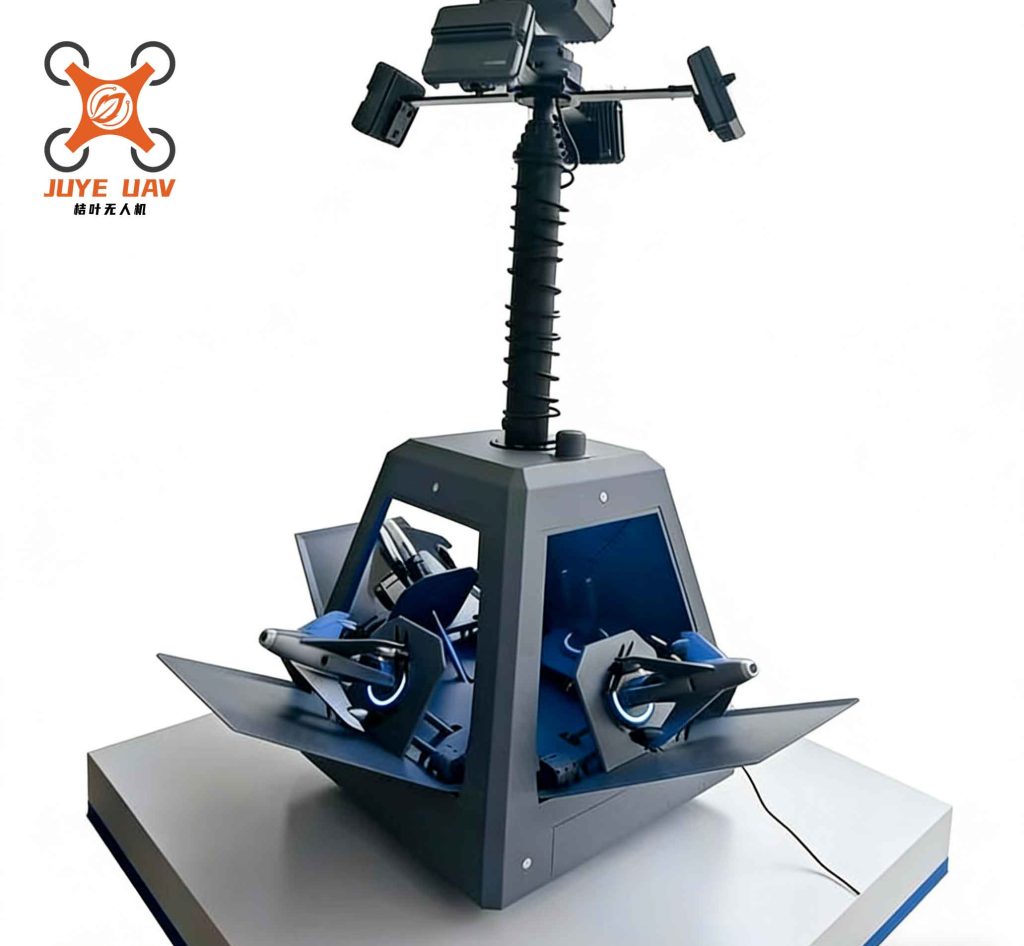
The operational landscape for defending key areas against UAVs is characterized by extreme complexity and compressed decision cycles. The adversary employs a diverse array of platforms, from commercially available quadcopters to purpose-built loitering munitions, operating at low altitudes and often leveraging swarm intelligence for coordinated maneuvers. This diversity invalidates the concept of a single “silver bullet” solution. The contemporary challenge is one of system integration. A myriad of detection assets (radars, RF scanners, electro-optical/infrared sensors) and kinetic/non-kinetic effectors (directed-energy weapons, electronic warfare suites, interceptor nets, and conventional防空 artillery) must be woven into a cohesive kill web. Without a sophisticated C2 system to perform data fusion, threat evaluation, and dynamic resource allocation, these assets remain isolated “stovepipes,” incapable of delivering a layered, synergistic defensive response. Furthermore, the human commander is placed under immense cognitive strain, facing a deluge of sensor data, fleeting engagement windows, and the need for rapid coordination across multiple units. An intelligent anti-UAV C2 system is therefore mandated to augment human decision-making, transitioning from a tool of manual coordination to a partner in cognitive warfare.
The core capability demands for such an anti-UAV Command and Control system can be distilled into five critical functional pillars, as summarized in the table below.
| Capability Pillar | Core Functions | Key Technologies/Models |
|---|---|---|
| Data Fusion & Processing | Multi-source data correlation, track stitching, attribute fusion, common operational picture (COP) generation. | Kalman/粒子 filters, JDL fusion model, association algorithms (e.g., JPDA), data normalization. |
| Situational Awareness & Threat Analysis | Target identification/classification, intent recognition, threat assessment, kill chain analysis. | Deep Learning (CNN, RNN), Bayesian reasoning, threat evaluation models (e.g., TOPSIS, AHP), pattern recognition. |
| Assisted Command & Decision-Making | Weapon-target pairing, engagement sequencing, course-of-action (COA) generation and evaluation, automated tasking. | Optimization algorithms (Linear/Integer Programming), wargaming simulations, rule-based expert systems, decision trees. |
| Human-Machine Interface (HMI) & Visualization | Intuitive COP display, alert management, decision cueing, interactive planning tools. | GUI design principles, augmented reality (AR), natural language processing (NLP) for commands. |
| Combat Effectiveness Evaluation (CEE) | Real-time battle damage assessment (BDA), campaign-level performance analysis, system效能 validation. | Sensor fusion for BDA, statistical analysis, after-action review (AAR) tools, Monte Carlo simulation. |
1. Multi-Domain Data Fusion and Processing: The system must ingest heterogeneous data streams from networked侦测 systems—radar tracks, RF signatures, EO/IR feeds, and acoustic sensors. Its first task is to perform correlation and fusion to resolve tracks from the same target observed by different sensors. This involves preprocessing (filtering, registration, alignment), data association, and state estimation. A classic state estimation model is the Kalman filter, which for a linear dynamic system can be represented as:
$$ \hat{x}_{k|k-1} = F_k \hat{x}_{k-1|k-1} $$
$$ P_{k|k-1} = F_k P_{k-1|k-1} F_k^T + Q_k $$
where $\hat{x}$ is the state estimate, $P$ is the error covariance, $F$ is the state transition model, and $Q$ is the process noise covariance. The fusion engine must output a unified, high-fidelity track with attributes (type, ID, kinematic data) for each UAV target, forming the bedrock of the COP.
2. Intelligent Situational Awareness and Threat Analysis: Beyond tracking, the system must interpret the data. This involves classifying the UAV type (e.g., quadcopter vs. fixed-wing) and discerning its intent (surveillance, attack, relay). Threat assessment is a quantifiable cornerstone of anti-UAV operations. A multi-criteria decision-making model can be employed. Let $T_i$ be the threat value of target $i$, calculated as a weighted sum of normalized parameters:
$$ T_i = w_v \cdot N(v_i) + w_h \cdot N(h_i) + w_d \cdot N(\frac{1}{d_i}) + w_{CPA} \cdot N(\frac{1}{t_{CPA}}) + w_{type} \cdot C_{type} $$
where $w$ are weights for speed ($v$), altitude ($h$), distance to asset ($d$), time to closest point of approach ($t_{CPA}$), and target type ($C_{type}$). $N(\cdot)$ denotes a normalization function. This model allows the C2 system to autonomously rank threats, enabling prioritization for engagement.
3. AI-Augmented Command and Decision-Making: This is the core of the anti-UAV C2 system’s value. Given the ranked threat list and the status of available effectors, the system must solve the dynamic weapon-target assignment (WTA) problem. This can be formulated as a constrained optimization problem. For a simplified scenario with $m$ weapons and $n$ targets, let $p_{ij}$ be the probability that weapon $i$ kills target $j$, and $v_j$ be the threat value of target $j$. We define a decision variable $x_{ij} \in \{0,1\}$ indicating assignment. A classic objective is to maximize expected threat destroyed:
$$ \text{Maximize} \sum_{j=1}^{n} v_j \left(1 – \prod_{i=1}^{m} (1 – p_{ij})^{x_{ij}} \right) $$
subject to constraints like $\sum_{j} x_{ij} \leq 1$ (a weapon assigned to at most one target). The system should generate and compare multiple COAs, simulating outcomes and recommending the optimal allocation and firing sequence in seconds, a task impossible for humans under swarm attack conditions.
4. Intuitive Human-Machine Interface and Visualization: The commander must remain “in the loop” for critical decisions. The HMI must transform complex data into actionable insight. This involves threat-flagged overlays on geospatial maps, multi-perspective views (e.g., plan, elevation), and automated alerts for high-priority targets. The system should provide “at-a-glance” status of engagement zones, weapon system readiness, and recommended actions, reducing cognitive load and accelerating the OODA (Observe, Orient, Decide, Act) loop.
5. Continuous Combat Effectiveness Evaluation: The anti-UAV engagement does not end with weapon release. The system must assess battle damage via sensor feedback (e.g., loss of track, visual confirmation of kill) to determine if re-engagement is necessary. Post-engagement, it should analyze system performance metrics: time from detection to engagement, probability of kill (PK) per weapon type against different UAV classes, and resource consumption. This data feeds back into the planning cycle, allowing for tactical adaptation and long-term system refinement.
To meet these demanding requirements, the development of next-generation anti-UAV C2 systems must pivot decisively towards intelligent, open architectures. The future lies not in monolithic systems but in agile, cognitive kill webs. Several strategic pathways are critical:
A. Architecting for Openness and Integration: A cloud-native, “network-cloud” fused architecture is essential. This involves a底层 cloud platform providing scalable computation and data lakes, a universal middleware “middle-platform” for data scheduling and service management, and a flexible “front-end” application layer. This decoupled architecture allows for the seamless, “plug-and-play” integration of new sensors and effectors, whether they are high-power microwave systems or next-generation jammers. Adherence to open technical standards (like the U.S. C-sUAS standard or similar) is paramount to prevent vendor lock-in and ensure joint interoperability.
B. Embedding Foundational AI and Advanced Analytics: Intelligence must be pervasive. The application of large language models (LLMs) and foundation models can revolutionize areas like interpreting adversary patterns from open-source intelligence or generating narrative situation reports. More fundamentally, machine learning algorithms must be embedded at the core:
- For Threat Analysis: Deep neural networks (e.g., CNNs for EO/IR imagery, RNNs for temporal behavior analysis) for real-time UAV classification and anomalous behavior detection.
- For Decision Optimization: Reinforcement Learning (RL) agents that can be trained in high-fidelity simulations to develop optimal engagement policies for complex, multi-threat swarm scenarios, adapting to unforeseen tactics.
- For Predictive Awareness: Graph neural networks to model the relationships within a drone swarm, predicting its collective maneuver and intent.
C. Rigorous and Realistic Testing & Evaluation (T&E): An intelligent C2 system’s development is iterative and driven by data. A robust T&E ecosystem is non-negotiable. This includes:
- Digital Twin & Simulation: High-fidelity digital twins of the battlespace for “left-shifted” testing—evaluating algorithms and concepts in simulation long before live integration.
- Controlled Live-Fly Exercises: Dedicated test ranges where representative UAV swarms (using actual or surrogate platforms) challenge the C2 system in realistic, repeatable scenarios to validate sensor fusion, decision timelines, and hard-kill/soft-kill coordination.
- Adversarial T&E: Incorporating red teams that employ evolving UAV tactics to continuously stress the system and uncover vulnerabilities, driving rapid software updates and tactical evolution.
The table below summarizes the key technological enablers and their applications in building an intelligent anti-UAV C2 infrastructure.
| Technology Area | Specific Application in Anti-UAV C2 | Expected Impact |
|---|---|---|
| Cloud-Native & Microservices Architecture | Enables elastic scaling of fusion & AI services, rapid deployment of updates, and integration of legacy/new systems via APIs. | System agility, resilience, and continuous evolution. |
| Machine Learning / Deep Learning | Automatic target recognition (ATR), swarm behavior prediction, adaptive电子 countermeasures, optimized resource scheduling. | Reduced commander cognitive load, faster and more accurate decisions. |
| Reinforcement Learning (RL) | Training autonomous engagement policies in simulation for complex, dynamic swarm-on-swarm or multi-weapon scenarios. | Development of superhuman tactical doctrines for autonomous C2 agents. |
| Edge Computing | Placing AI inference models directly on sensor platforms or local command posts for low-latency initial detection and tracking. | Dramatically reduced sensor-to-shooter timeline for time-critical threats. |
| Secure, Low-Latency Comms (5G/Tactical Mesh) | Providing the high-bandwidth, reliable data backbone for distributed sensor feeds and coordinated effector control. | Real-time COP synchronization and coordinated engagements across wide areas. |
In conclusion, the defense of key areas has entered a new era defined by the unmanned swarm. The central challenge is no longer solely about developing harder “kinetic kill” mechanisms but about forging a smarter “cognitive kill chain.” The anti-UAV Command and Control system is the crucible where data, AI, and human expertise must fuse to create this decisive advantage. By steadfastly focusing on the core capabilities of integrated data fusion, intelligent threat analysis, AI-augmented decision-making, intuitive human interfaces, and rigorous效能 evaluation—all built upon an open, cloud-based, and AI-native architecture—nations can construct the resilient and adaptive C2 systems required to defend their critical assets. The paradigm must shift from human-directed networks of weapons to a weaponized network of intelligence, where the system itself is a cognitive combatant in the relentless contest against autonomous aerial threats.