
The rapid expansion of the low-altitude economy has positioned the China UAV industry as a critical driver of national technological advancement and economic transformation. With strategic initiatives outlined in government work reports for 2024 and 2025, the safe and efficient operation of China UAV formations in complex low-altitude airspace has become a paramount research priority. Our review systematically examines the aerodynamic challenges faced by China UAV in three quintessential low-altitude environments: complex wind fields, spatially confined spaces, and multi-UAV operational scenarios. The low-altitude aerodynamic environment is characterized by intricate flow structures, diverse interference sources, and significant coupling effects, which profoundly impact the aerodynamic performance and flight safety of China UAV. Understanding these mechanisms is essential for advancing the capabilities of China UAV in applications ranging from logistics and agriculture to surveillance and emergency response.
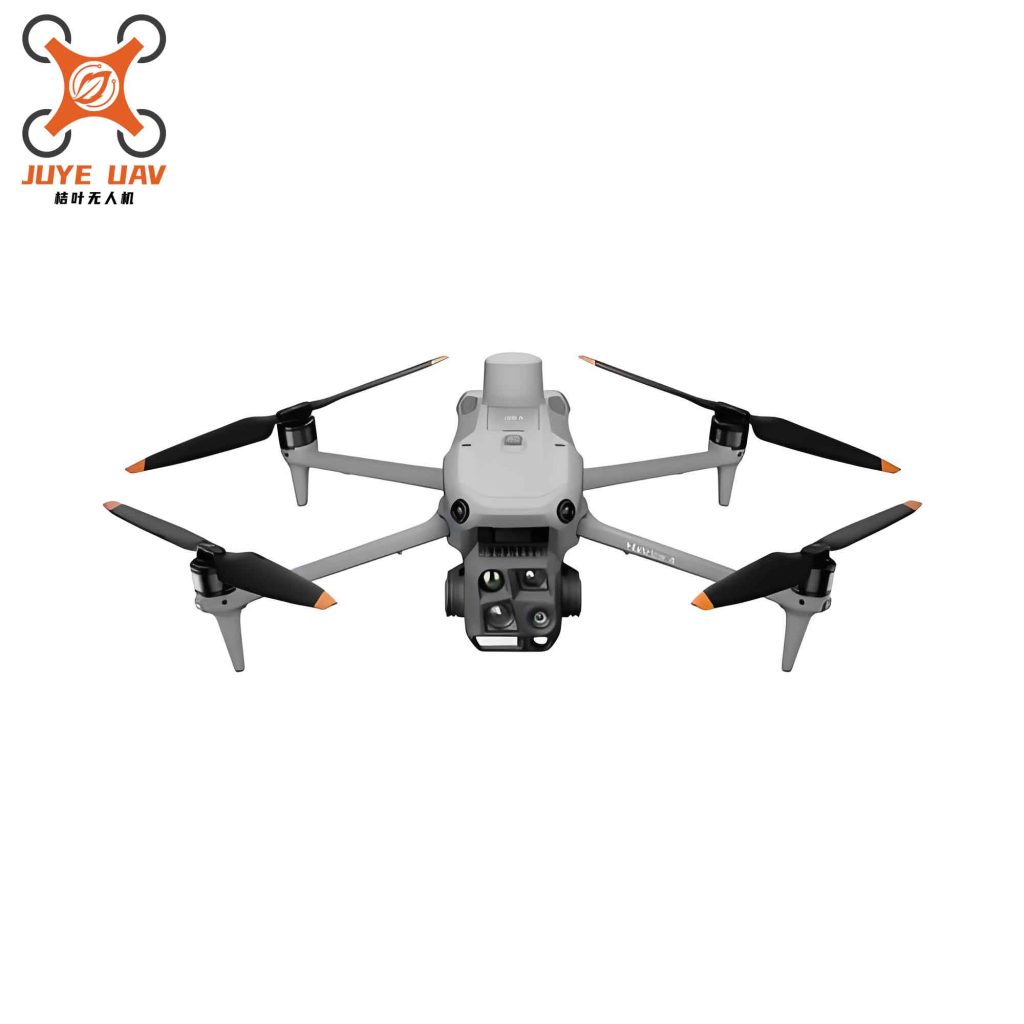
Complex Wind Field Environments
In our investigation of low-altitude wind fields, we found that the atmospheric boundary layer (ABL) presents unique challenges for China UAV operations. The interaction between surface friction, urban morphology, and thermal dynamics creates highly heterogeneous and non-stationary turbulent flows. We systematically categorized the characteristics of these wind fields, noting that turbulence intensity typically decreases with altitude while exhibiting strong anisotropy in urban canyons. The typical turbulence intensity can be expressed as:
$$ I_u = \frac{\sigma_u}{\bar{U}} $$
where \(\sigma_u\) is the root-mean-square of the fluctuating velocity component and \(\bar{U}\) is the mean wind speed. Our analysis shows that for China UAV operating at altitudes below 100 meters, this value can exceed 0.3 in densely built environments.
The coupling between wind fields and terrain features is particularly critical for China UAV missions. We observed that building arrays induce complex flow patterns including horseshoe vortices, wake interference, and skimming flows. The aspect ratio of street canyons significantly influences these patterns. Table 1 summarizes the numerical methods we employed for simulating these complex wind fields.
| Method | Computational Cost | Turbulence Resolution | Application for China UAV |
|---|---|---|---|
| RANS (e.g., Realizable k-ε) | Low | Time-averaged only | Mean wind load estimation |
| Scale Adaptive Simulation (SAS) | Moderate | Partial transient capture | Gust response analysis |
| Large Eddy Simulation (LES) | High | Large-scale eddies resolved | Detailed urban canyon flows |
| Wrf-UCM + Embedded LES | Very High | Multi-scale resolved | Realistic typhoon/storm scenarios |
| ML-enhanced (CFD-GAN, FNO) | Low (after training) | Data-driven approximation | Real-time path planning for China UAV swarms |
For rapid prediction of wind fields affecting China UAV, we explored machine learning enhanced methods. The Physics-Informed Graph Neural Network (PIGNN-CFD) framework, which incorporates physical equations as constraints within the neural network architecture, demonstrated particular promise. This approach can predict velocity fields in complex urban geometries with remarkable speed, reducing computational time from hours to seconds. The governing equation for this framework combines the RANS conservation laws with a graph neural network:
$$ \mathcal{L}_{total} = \mathcal{L}_{data} + \lambda \mathcal{L}_{physics} $$
where \(\mathcal{L}_{physics}\) enforces momentum and mass conservation on unstructured meshes. This innovation is crucial for enabling real-time aerodynamic risk assessment during China UAV autonomous navigation tasks.
Wind tunnel testing remains fundamental for validating our computational models. We utilized both passive and active simulation techniques. The passive spire-roughness method, while cost-effective, lacks flexibility. Our recent work employed a fan array wind generator (FAWG) consisting of 40 × 40 individually controllable fans, which can synthesize arbitrary time-varying wind fields including gusts and shear layers. This facility has been instrumental in testing the gust tolerance of next-generation China UAV designs under controlled laboratory conditions.
Spatially Constrained Environments
The aerodynamic interactions between China UAV and surrounding structures constitute a critical research domain. When UAV operate in close proximity to walls, ceilings, or ground surfaces, significant perturbations in thrust and moment occur. We classified these wall effects into ground effect, ceiling effect, sidewall effect, and complex multi-wall coupling. The fundamental flow physics can be described through the momentum theory augmented with image methods. For ground effect, the classic Cheeseman-Bennett model provides a baseline prediction for thrust augmentation:
$$ \frac{T}{T_\infty} = \frac{1}{1 – \left(\frac{R}{4z}\right)^2} $$
where \(R\) is the propeller radius, \(z\) is the height above ground, and \(T_\infty\) is the thrust in free air. Our experiments confirmed that for China UAV with typical rotor diameters of 0.3-0.5 meters, ground effect becomes significant at heights below one rotor diameter. However, this model underpredicts thrust for extreme ground effect (z/R < 0.5) due to neglecting fountain flow recirculation.
Table 2 presents a comprehensive comparison of the aerodynamic effects observed in our experimental campaign with various wall configurations relevant to China UAV operations.
| Wall Configuration | Thrust Variation (%) | Power Variation (%) | Key Mechanism |
|---|---|---|---|
| Ground (z/R = 0.5) | +25 to +35 | -10 to -15 | Cushion effect, reduced induced velocity |
| Ceiling (z/R = 0.5) | +15 to +20 | -8 to -12 | Flow stagnation, increased pressure |
| Sidewall (y/R = 0.5) | -2 to -5 | +1 to +3 | Asymmetric wake, lateral force |
| Corner (Ground + Sidewall) | +10 to +20 | -5 to -8 | Combined blockage, recirculating fountain |
| Tilted Ceiling (15°) | +5 to +15 | -3 to -10 | Asymmetric compression, vortex shedding |
Our investigation into ceiling effects revealed particularly interesting behaviors for China UAV conducting bridge inspection missions. When the propeller operates close to a horizontal ceiling, the flow constriction leads to pressure buildup on the upper surface. We derived a correction model for tilted ceiling conditions:
$$ \frac{T}{T_\infty} = 1 + \alpha \left(\frac{R}{z}\right)^2 \cos(\beta) $$
where \(\alpha\) is an empirical coefficient and \(\beta\) is the tilt angle of the ceiling relative to the propeller plane. Our CFD simulations using the Reynolds-Averaged Navier-Stokes equations with sliding mesh technique validated that this model captures the nonlinear thrust enhancement observed at close proximity. The streamlines showed distinct asymmetric re-circulation zones that intensify ceiling effect for China UAV at high tilt angles, contrary to ground effect behavior where tilt reduces the influence.
Multi-UAV Environments
The proliferation of China UAV has led to increasing scenarios where multiple aircraft operate in close proximity. This creates complex aerodynamic coupling through wake interactions, downwash interference, and induced flow fields. We examined both cooperative formation flight and non-formation scenarios involving heterogeneous UAV systems. In formation flight, the aerodynamic benefit for China UAV can be substantial if proper spacing is maintained. The wake interaction can be modeled using vortex lattice methods or free-wake analyses. The induced drag reduction for a following UAV in a V-formation is given by:
$$ \Delta C_{D,ind} = -\frac{C_L^2}{\pi AR} \cdot \frac{2w_{ind}}{V_\infty} $$
where \(C_L\) is the lift coefficient, \(AR\) is the aspect ratio, and \(w_{ind}\) is the induced velocity from the leading UAV’s wake. Our wind tunnel measurements with scaled models of typical China UAV fixed-wing platforms confirmed drag reductions of 10-20% for optimal spacing of 0.5 to 1.0 wingspan lateral offset.
For multi-rotor China UAV, the interference is dominated by rotor wake interactions. Table 3 summarizes the control strategies we adapted to mitigate aerodynamic coupling in multi-rotor systems.
| Control Strategy | Interference Model | Application Scenario | Performance Improvement |
|---|---|---|---|
| Neural-Swarm DNN | Learned aerodynamic interaction | Dense multi-rotor formation | Worst-case altitude error reduced by 75% |
| Adaptive PSO Trajectory Planning | Downwash field prediction | Marsupial UAV docking | Mission time reduced by 30% |
| Distributed Model Predictive Control | Momentum source (MS) model | Heterogeneous UAV swarms | Safe separation distance reduced by 40% |
| Centralized Ceiling Interaction MPC | Ceiling effect force estimation | Indoor inspection with wall interaction | Tracking error reduced by 60% |
In our research on marsupial China UAV systems (mother-daughter configurations), we developed a quasi-steady momentum source method to model the aerodynamic interference during launch and recovery. The source term introduced into the Navier-Stokes equations is:
$$ \mathbf{f}_{ms} = \frac{1}{2} \rho V_r^2 \sigma C_T \mathbf{n} $$
where \(\rho\) is air density, \(V_r\) is the resultant velocity relative to the blade, \(\sigma\) is the rotor solidity, \(C_T\) is the thrust coefficient, and \(\mathbf{n}\) is the unit normal vector. This method allowed us to simulate the interference between the mother UAV’s rotors and the daughter UAV’s airframe at a computational cost suitable for iterative design optimization. Our ground test platform, shown schematically in our previous publications, validated that the safe flight envelope suggested by this simulation matches experimental measurements within 10% accuracy. The daughter UAV experiences a significant thrust reduction when entering the mother UAV’s downwash region, which must be compensated by the control system to prevent collision.
For non-formation scenarios, such as coincidental encounters in shared airspace, the aerodynamic interference is transient but can be severe. Our particle image velocimetry (PIV) measurements showed that the wake of a leading multi-rotor China UAV can persist for up to 20 rotor diameters downstream, with peak velocity deficits of 30% at 5 diameters. The Turbulence kinetic energy (TKE) budget analysis revealed that wake interaction leads to enhanced dissipation:
$$ \frac{\partial k}{\partial t} + \bar{U}_j \frac{\partial k}{\partial x_j} = P_k + \varepsilon_k + D_k $$
where \(P_k\) is the production term, \(\varepsilon_k\) is the dissipation rate, and \(D_k\) is the diffusion term. The interaction between adjacent wakes increases \(P_k\) by up to 50% compared to isolated rotors, explaining the unsteady loading experienced by downstream China UAV.
Summary and Future Directions
Our comprehensive review has highlighted the critical aerodynamic challenges facing the widespread deployment of China UAV in complex low-altitude environments. The key conclusions and future research directions are summarized below.
Core Challenges:
1. Multi-scale turbulence coupling: The urban boundary layer contains eddies ranging from millimeters to hundreds of meters, making direct numerical simulation infeasible for real-time applications. Existing turbulence models lack fidelity in the strong shear regions characteristic of building wakes.
2. Complex wall interference: While ground effect is relatively well-understood, the combination of ceilings, sidewalls, and tilted surfaces induces highly asymmetric loading that is difficult to predict with simple analytical models. Our experimental data shows that the coupling effect can deviate from linear superposition by up to 15%.
3. Real-time aerodynamic modeling for swarms: High-fidelity CFD simulations for multi-UAV interactions are computationally prohibitive. Data-driven models, while promising, require extensive training datasets that are not yet available for the full range of China UAV operational scenarios.
Recommended Future Research for China UAV:
– Physics-AI hybrid modeling: Combining machine learning with physical conservation laws offers a path toward accurate and fast predictions. The development of foundational models for China UAV aerodynamics, pre-trained on large-scale CFD databases, could enable real-time gust compensation and collision avoidance.
– Advanced experimental facilities: The construction of large-scale wind tunnels with active turbulence grids and multi-fan arrays is critical. These facilities should be capable of replicating the multi-scale, non-stationary characteristics of real urban wind fields specific to Chinese cities.
– Integrated control-aerodynamics co-design: Future China UAV should be designed with aerodynamic monitoring sensors (e.g., distributed pressure sensors or skin-friction sensors) integrated directly into the flight control loop, allowing for reactive compensation to wall and wake effects.
– Standardized safety metrics: Establishing aerodynamic-based safety distances for China UAV in dense operational environments is crucial for regulatory development. Our work suggests that a dynamic safety envelope based on real-time environmental sensing is more effective than static separation standards.
In conclusion, the aerodynamic environment in low-altitude airspace presents unique and complex challenges that directly impact the safety and efficiency of China UAV operations. Through our systematic review of wind fields, spatial constraints, and multi-UAV interactions, we have identified critical knowledge gaps and promising methodological pathways. The integration of high-fidelity physics-based simulation, advanced experimental techniques, and intelligent data-driven models will be essential for unlocking the full potential of China UAV in the emerging low-altitude economy. The continued development of robust aerodynamic models and control strategies will ensure that China UAV can operate safely and efficiently in the increasingly crowded and complex skies above our cities.