
1. Introduction
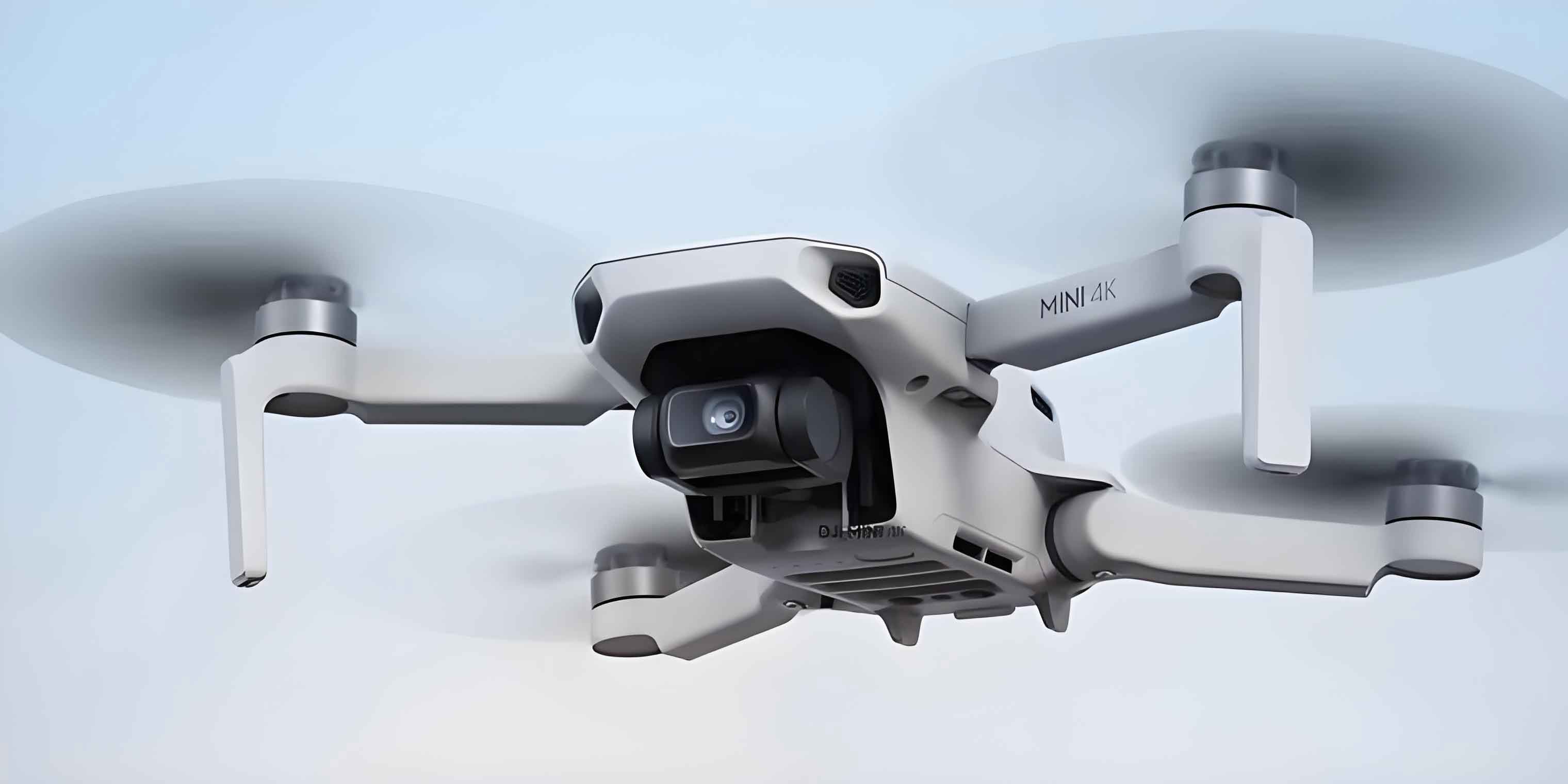
Fixed wing unmanned aerial vehicles (UAVs) are critical assets in military reconnaissance, geographic mapping, environmental monitoring, and emergency response due to their extended endurance, high speed, and substantial payload capacity. Precise longitudinal attitude control is paramount for ensuring trajectory tracking accuracy and maintaining stability under external disturbances (e.g., wind gusts, airflow variations). Traditional methods like PID and LQR control, while simple to implement, exhibit limitations:
- Model Dependency: Require precise mathematical models.
- Limited Adaptability: Perform poorly under parametric uncertainties and external disturbances.
- Robustness Deficits: Fail in dynamic operational environments.
Modern approaches, such as sliding mode control (SMC), offer inherent robustness against uncertainties but face challenges like chattering and high control input demands. Integration of neural networks, particularly Radial Basis Function Neural Networks (RBFNNs), presents a solution by approximating unmodeled dynamics and adapting online. This work introduces an adaptive RBFNN-integrated SMC framework for fixed wing unmanned aerial vehicle longitudinal attitude control, rigorously validated via Lyapunov stability and simulations.
2. Problem Statement and Dynamics Modeling
2.1 Longitudinal Attitude Control Challenges
Fixed wing unmanned aerial vehicle longitudinal dynamics involve complex nonlinearities:{α˙=fα+Δαq˙=fq+Δqθ˙=q⎩⎨⎧α˙=fα+Δαq˙=fq+Δqθ˙=q
where αα = angle of attack, θθ = pitch angle, qq = pitch rate, fα,fqfα,fq = known dynamics, and Δα,ΔqΔα,Δq = compounded uncertainties/disturbances:Δα=Δfα+dα,Δq=Δfq+dq.Δα=Δfα+dα,Δq=Δfq+dq.
Here, Δfα,ΔfqΔfα,Δfq = modeling errors, and dα,dqdα,dq = external disturbances. Key parameters include mass (mm), velocity (VV), thrust (TT), dynamic pressure (QQ), pitch inertia (IyIy), and aerodynamic coefficients (CL,Cm,CmuCL,Cm,Cmu).
2.2 Control Objectives
Design a controller ensuring:
- Finite-time convergence of pitch angle θθ to reference θdθd.
- Robustness against Δα,ΔqΔα,Δq.
- Adaptability to varying flight conditions.
3. RBFNN-Adaptive Sliding Mode Control Design
3.1 Controller Architecture
The structure integrates:
- Sliding Mode Control: For robustness.
- RBFNN: Approximates ΔfαΔfα online.
- Minimal Parameter Learning: Reduces computational load.
3.2 Sliding Surface Design
Define tracking error e=θ−θde=θ−θd. The sliding surface is:s=e˙+ηe,η>0.s=e˙+ηe,η>0.
Differentiating yields:s˙=e¨+ηe˙=fα+Δα−θ¨d+ηe˙.s˙=e¨+ηe˙=fα+Δα−θ¨d+ηe˙.
3.3 Control Law with Disturbance Compensation
The SMC law is synthesized as:u=(−βsgn(s)−μs−Maero/Iy−12ϕ^hTh+θ¨d−ηe˙)/(QSwCmuIy),u=(−βsgn(s)−μs−Maero/Iy−21ϕ^hTh+θ¨d−ηe˙)/(IyQSwCmu),
where β,μ>0β,μ>0 are gains, sgn(⋅)sgn(⋅) is the signum function, and ϕ^ϕ^ is the RBFNN’s adaptive parameter.
3.4 RBFNN Approximation
The RBFNN estimates ΔfαΔfα:Δfα=W∗Th(x)+ϵ,∣ϵ∣≤ϵN,Δfα=W∗Th(x)+ϵ,∣ϵ∣≤ϵN,
where x=[θ,q]Tx=[θ,q]T is the input, W∗W∗ = ideal weights, h(x)h(x) = Gaussian basis functions:hj=exp(−∥x−cj∥22bj2),j=1,2,…,m.hj=exp(−2bj2∥x−cj∥2),j=1,2,…,m.
The NN output is Δfα^=W^Th(x)Δfα^=W^Th(x). To enable real-time implementation, a minimal learning parameter ϕ=∥W∗∥2ϕ=∥W∗∥2 is introduced, with ϕ^ϕ^ as its estimate.
3.5 Adaptive Law
The weight adaptation law is:ϕ^˙=γ2s2hTh−κγϕ^,γ,κ>0.ϕ^˙=2γs2hTh−κγϕ^,γ,κ>0.
This ensures boundedness and convergence with reduced computational overhead.
4. Stability Analysis
Theorem: The closed-loop system is globally stable, with tracking error converging to a bounded region.
Proof: Consider Lyapunov functions:
- Sliding Phase (s=0s=0):V1=12e2,V˙1=ee˙.V1=21e2,V˙1=ee˙.With s=0s=0, e˙=−ηee˙=−ηe, yielding V˙1=−ηe2<0V˙1=−ηe2<0 (asymptotic stability).
- Reaching Phase (s≠0s=0):V2=12s2+12γϕ~2,ϕ~=ϕ−ϕ^.V2=21s2+2γ1ϕ~2,ϕ~=ϕ−ϕ^.Differentiating and substituting control/adapation laws:V˙2≤−μs2−κ2ϕ~2+12ϵN2+κ2ϕ2.V˙2≤−μs2−2κϕ~2+21ϵN2+2κϕ2.For μ,κ>0μ,κ>0, V˙2≤−kV2+CV˙2≤−kV2+C, where k=min(2μ,κγ)k=min(2μ,κγ), C=12ϵN2+κ2ϕ2C=21ϵN2+2κϕ2. Solving:V2(t)≤Ck+(V2(0)−Ck)e−kt.V2(t)≤kC+(V2(0)−kC)e−kt.Thus, ss and ϕ~ϕ~ are uniformly ultimately bounded (UUB).
5. Simulation Analysis
5.1 Setup
Parameters for a fixed wing unmanned aerial vehicle:
| Parameter | Value |
|---|---|
| Mass (mm) | 1400 kg |
| Reference Area (SwSw) | 10 m² |
| Pitch Inertia (IyIy) | 5400 kg·m² |
| Initial Altitude | 5000 m |
| Initial Velocity | 516 km/h |
| θdθd | 3° |
- Disturbances: Δq=500×[0.2sin(3t)+0.3cos(t)]Δq=500×[0.2sin(3t)+0.3cos(t)] N·m.
- Aerodynamic Uncertainty: +20% parametric variation.
- Controllers Compared: PID, SMC, RBFNN-SMC.
Table 1: Controller Parameters
| Controller | Parameters |
|---|---|
| PID | Kp=0.25Kp=0.25, Ki=0.33Ki=0.33, Kd=0.19Kd=0.19 |
| SMC | β=30β=30, μ=1.5μ=1.5 |
| RBFNN-SMC | β=30β=30, μ=1.5μ=1.5, η=0.01η=0.01, γ=150γ=150, κ=50κ=50 |
5.2 Results
A. Nominal Conditions:
- Pitch Tracking (Fig. 2): RBFNN-SMC & SMC show near-zero steady-state error and faster rise time (<2 s) vs. PID (~10 s).
- Control Input (Fig. 4): Comparable smoothness between SMC and RBFNN-SMC.
Table 2: Performance Comparison (Nominal)
| Metric | PID | SMC | RBFNN-SMC |
|---|---|---|---|
| Rise Time (s) | ~10 | <2 | <2 |
| Steady-State Error (°) | <0.2 | <0.05 | <0.05 |
| Overshoot (%) | 0 | 0 | 0 |
B. Perturbed Conditions:
- Pitch Tracking (Fig. 5): PID exhibits oscillations (±0.5°); SMC shows minor fluctuations (±0.1°); RBFNN-SMC maintains precision (±0.05°).
- Pitch Rate (Fig. 6) & Control Input (Fig. 7): RBFNN-SMC demonstrates superior disturbance rejection.
Table 3: Robustness Comparison (Perturbed)
| Metric | PID | SMC | RBFNN-SMC |
|---|---|---|---|
| Max Pitch Deviation (°) | ±0.5 | ±0.1 | ±0.05 |
| Settling Time (s) | >15 | ~5 | <4 |
| Control Input Variation | High | Moderate | Low |
6. Conclusion
This work presents an adaptive RBFNN-SMC strategy for fixed wing unmanned aerial vehicle longitudinal attitude control, addressing model uncertainties and external disturbances. Key contributions include:
- RBFNN Approximation: Online estimation of unmodeled dynamics ΔfαΔfα using sensor-measurable states (θ,qθ,q).
- Minimal Parameter Learning: Reduced computational burden via single-parameter (ϕϕ) adaptation, enabling real-time deployment.
- Global Stability: Rigorous Lyapunov-based proof ensuring UUB tracking error.
- Enhanced Robustness: Superior performance over PID/SMC under aerodynamic perturbations and disturbances, validated in simulations.
The proposed method significantly improves tracking accuracy, disturbance rejection, and adaptability for fixed wing unmanned aerial vehicles operating in complex environments. Future work will focus on experimental validation and extension to full 6-DOF control.