
The coordinated operation of multiple unmanned aerial vehicles (UAVs), or a drone formation, has become a pivotal research area due to its superior performance and adaptability to complex missions compared to a single UAV. The control strategies for a drone formation can be broadly categorized into position-based, displacement-based, and distance-based methods. However, in communication-denied or sensor-limited environments, these approaches may falter as they rely on information that can be lost or unavailable. Recent advancements in vision technology and onboard sensors enable the direct measurement of relative bearing vectors between agents, paving the way for bearing-based formation control. This approach, grounded in the theory of bearing rigidity, offers a robust alternative, particularly in scenarios where agents possess only relative directional information.
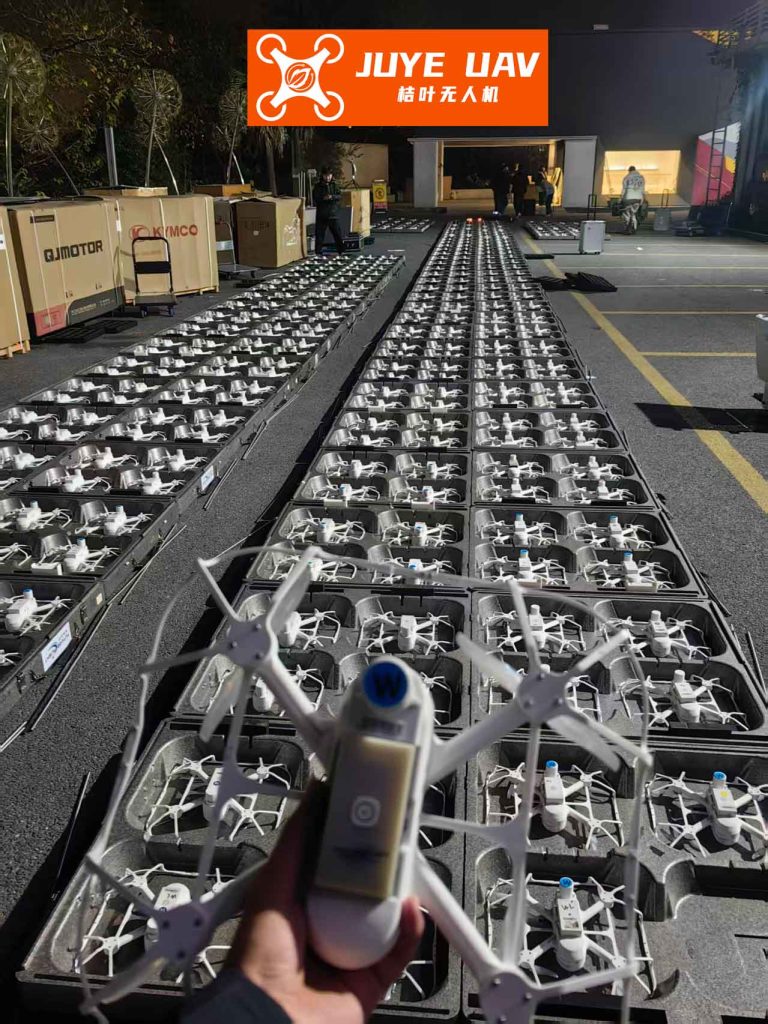
The core challenge in bearing-based drone formation control lies in achieving collective maneuvers—translation, scaling, and rotation—while maintaining a desired geometric shape. Leader-follower architectures are often employed, where a leader agent tracks a predefined trajectory, and follower agents adjust their states based on bearing constraints to preserve the formation. A significant complication arises when the leader’s velocity is time-varying and unknown to the followers. Most existing bearing-based controllers guarantee formation stability only under constant leader velocity. When the leader accelerates, traditional methods may fail to track accurately, leading to formation distortion or loss.
This work investigates a distributed control scheme for a drone formation under a leader-wingman structure, specifically addressing the scenario where the leader’s velocity is time-varying and only partially known. We consider a practical constraint: only a subset of wingman drones, those in direct communication with the leader, have access to the leader’s orientation. No drone has direct knowledge of the leader’s speed. The objective is to design a control law that enables the drone formation to achieve and maintain a desired bearing-rigid configuration while accurately tracking the translating, scaling, and rotating maneuvers dictated by the leader, relying solely on relative bearing measurements, local velocity information, and limited leader data.
Problem Formulation and Preliminaries
Consider a system of \( n \) drones operating in \( \mathbb{R}^d \) (with \( d = 2 \) or \( 3 \)). The kinematic model for each drone \( i \) is simplified to a double-integrator model, which effectively captures the dynamics for high-level path planning and formation control:
$$ \dot{p}_i(t) = v_i(t) $$
$$ \dot{v}_i(t) = u_i(t) $$
where \( p_i \in \mathbb{R}^d \), \( v_i \in \mathbb{R}^d \), and \( u_i \in \mathbb{R}^d \) represent the position, velocity, and control input (acceleration) of drone \( i \), respectively. The collective state is denoted by \( p = [p_1^T, p_2^T, \dots, p_n^T]^T \) and \( v = [v_1^T, v_2^T, \dots, v_n^T]^T \).
The formation employs a leader-first wingman architecture. Drone 1 is designated as the leader, whose motion is independent and prescribed. Drone 2 is the first wingman, which has a critical role in defining the formation scale. The remaining \( n-2 \) drones are standard wingmen. The communication and sensing topology is represented by an undirected graph \( \mathcal{G}(\mathcal{V}, \mathcal{E}) \), where \( \mathcal{V} = \{1, 2, …, n\} \) is the vertex set and \( \mathcal{E} \subset \mathcal{V} \times \mathcal{V} \) is the edge set. An edge \( (i, j) \in \mathcal{E} \) indicates that drone \( i \) can measure the relative bearing to drone \( j \). The neighbor set of drone \( i \) is \( \mathcal{N}_i = \{ j \in \mathcal{V} : (i, j) \in \mathcal{E} \} \). The graph is assumed to be infinitesimally bearing rigid, ensuring the desired formation is uniquely defined by its inter-agent bearings.
The relative bearing vector from drone \( i \) to drone \( j \) is defined as:
$$ g_{ij} = \frac{p_j – p_i}{\| p_j – p_i \|}. $$
To project any vector onto the orthogonal complement of \( g_{ij} \), we use the orthogonal projection matrix:
$$ P_{g_{ij}} \triangleq I_d – g_{ij} \cdot g_{ij}^T. $$
A key property is that for any vector \( x \in \mathbb{R}^d \), \( P_{g_{ij}} x = 0 \) if and only if \( x \) is parallel to \( g_{ij} \).
The desired formation configuration is defined by a set of constant bearing constraints \( \{ g_{ij}^* \}_{(i,j) \in \mathcal{E}} \). The leader’s motion is defined by its speed \( s(t) > 0 \) and its unit direction vector \( f(t) \), so that \( v_1(t) = s(t) f(t) \). We assume the angular acceleration of the direction vector is bounded, i.e., \( \|\ddot{f}(t)\| \leq \eta \), where \( \eta \) is a known positive constant transmitted only to wingmen directly connected to the leader.
The control objectives for the drone formation are formalized as follows. The formation is said to achieve the desired tracking if, as \( t \to \infty \):
- Neighbor bearings achieve the desired bearings: \( g_{ij}(t) \to g_{ij}^* \) for all \( (i,j) \in \mathcal{E} \).
- The formation scale converges to the desired scale \( d^* \), defined by the distance between the leader and the first wingman: \( \| p_2(t) – p_1(t) \| \to d^* \).
- The velocities of all drones synchronize with the leader’s velocity: \( v_i(t) \to v_1(t) \) for \( i = 2, …, n \).
Controller Design for the Drone Formation
The primary challenge is that the wingmen do not know the leader’s acceleration \( \dot{v}_1 = \dot{s}f + s\dot{f} \). To address this, we design distributed estimators for the leader’s directional derivative \( \dot{f} \) and its speed \( s \), which are then fused to compensate for the leader’s unknown acceleration in the control law.
Leader Acceleration Estimation
Each wingman \( i \in \{2, …, n\} \) maintains estimates \( \hat{\omega}_i \) for \( \dot{f} \) and \( \hat{\eta}_i \) for the bound \( \eta \). The estimation errors are \( \delta_{\omega_i} = \hat{\omega}_i – \dot{f} \) and \( \delta_{\eta_i} = \hat{\eta}_i – \eta \). The following consensus-based adaptive estimators are proposed:
$$ \dot{\hat{\omega}}_i = -k_{\omega} \sum_{j \in \mathcal{N}_i} (\hat{\omega}_i – \hat{\omega}_j) – \hat{\eta}_i \cdot \text{sgn}\left( \sum_{j \in \mathcal{N}_i} (\hat{\omega}_i – \hat{\omega}_j) \right) $$
$$ \dot{\hat{\eta}}_i = -k_{\eta} \sum_{j \in \mathcal{N}_i} (\hat{\eta}_i – \hat{\eta}_j) + \left\| \sum_{j \in \mathcal{N}_i} (\hat{\omega}_i – \hat{\omega}_j) \right\|_1 $$
where \( k_{\omega} \) and \( k_{\eta} \) are positive control gains. For a wingman \( j \) directly connected to the leader, the terms \( \hat{\omega}_j \) and \( \hat{\eta}_j \) are replaced by the true values \( \dot{f} \) and \( \eta \), respectively.
Concurrently, each wingman estimates the leader’s speed \( s(t) \) using a simple adaptive law:
$$ \dot{\hat{s}}_i = -v_i^T \hat{\omega}_i. $$
The speed estimation error is defined as \( \delta_{s_i} = \hat{s}_i – s \). With these estimators, each wingman can construct an estimate of the leader’s acceleration as \( \hat{a}_i = \hat{s}_i \hat{\omega}_i \). It can be proven that under an infinitesimally bearing rigid graph, the estimation errors \( \delta_{\omega} \), \( \delta_{\eta} \), and \( \delta_{s} \) converge to zero exponentially.
Bearing-Based Formation Control Law
The control input for each drone is designed differently based on its role in the drone formation.
First Wingman (Drone 2): The first wingman’s control is responsible for tracking the leader while maintaining the desired distance \( d^* \), which governs the overall scale of the drone formation.
$$ u_2 = k_p (p_1 – p_2 + d^* g_{21}^*) + k_v (v_1 – v_2) + \hat{s}_2 \hat{\omega}_2 $$
The first term \( k_p (p_1 – p_2 + d^* g_{21}^*) \) is a proportional term driving the relative position to the desired offset. The second term \( k_v (v_1 – v_2) \) ensures velocity consensus with the leader. The final term \( \hat{s}_2 \hat{\omega}_2 \) is the estimated leader acceleration, which acts as a feedforward compensation to cancel the effect of the leader’s motion.
Other Wingmen (Drones \( i = 3, …, n \)): The control for the remaining wingmen in the drone formation is based purely on bearing constraints and velocity consensus with neighbors, augmented with the leader acceleration estimate.
$$ u_i = -\sum_{j \in \mathcal{N}_i} P_{g_{ij}^*} \left[ k_p (p_i – p_j) + k_v (v_i – v_j) \right] + \hat{s}_i \hat{\omega}_i $$
The summation term \( -\sum P_{g_{ij}^*} [\cdot] \) ensures that the control effort lies in the space orthogonal to the desired bearing, effectively aligning the current bearing \( g_{ij} \) with the desired one \( g_{ij}^* \) while also driving velocities to consensus. The term \( \hat{s}_i \hat{\omega}_i \) again provides the necessary compensation for the leader’s acceleration.
Formation Rotation via Bearing Alignment
The control laws above achieve translation and scaling of the drone formation. However, for rotation (e.g., during a turn), the bearing constraints \( g_{ij}^* \) are defined in a fixed global inertial frame. To enable the entire formation to rotate with the leader’s heading, we transform the bearing constraints into a formation-fixed coordinate frame. Once the formation is stable, the body frames of all drones align. We define a rotation matrix \( Q_i \) for drone \( i \) based on its heading angle \( \gamma_i \). The desired bearing in the body frame becomes \( \bar{g}_{ij}^* = Q_i^T g_{ij}^* \). The modified control laws are:
$$ u_2 = k_p (p_1 – p_2 + d^* \bar{g}_{21}^*) + k_v (v_1 – v_2) + \hat{s}_2 \hat{\omega}_2 $$
$$ u_i = -\sum_{j \in \mathcal{N}_i} P_{\bar{g}_{ij}^*} \left[ k_p (p_i – p_j) + k_v (v_i – v_j) \right] + \hat{s}_i \hat{\omega}_i, \quad i = 3,…,n $$
This allows the drone formation to maintain its internal shape while rotating collectively to align with the leader’s changing velocity direction.
Stability Analysis
The stability of the proposed control scheme for the drone formation can be analyzed using Lyapunov theory. A key construct is the bearing Laplacian matrix \( \mathcal{B} \in \mathbb{R}^{dn \times dn} \) for the desired formation, defined with matrix weights \( -P_{g_{ij}^*} \) for edges \( (i,j) \in \mathcal{E} \). For an infinitesimally bearing rigid graph with the leader and first wingman as anchors, the sub-matrix \( \mathcal{B}_{ff} \) corresponding to the wingman positions is positive definite. This property ensures the wingmen’s desired positions and velocities are uniquely determined by the leader’s states and the bearing constraints, as shown below.
| Matrix Block | Description | Role in Formation |
|---|---|---|
| \( \mathcal{B}_{ff} \) | Bearing Laplacian sub-matrix for wingmen. | Invertible for a uniquely locatable formation. |
| \( \mathcal{B}_{f,a} \) | Coupling matrix between wingmen and anchors (leader & first wingman). | Defines how anchor states propagate through bearing constraints. |
The wingmen’s desired states satisfy: \( p_f^* = -\mathcal{B}_{ff}^{-1} \mathcal{B}_{f,a} p_a \) and \( v_f^* = -\mathcal{B}_{ff}^{-1} \mathcal{B}_{f,a} v_a \), where subscript \( a \) denotes the anchors.
Defining the formation tracking error as \( \delta = [\delta_v^T, \delta_p^T]^T \), where \( \delta_{p_i} = p_i – p_i^* \) and \( \delta_{v_i} = v_i – v_i^* \), and considering the Lyapunov function candidate \( V = \frac{1}{2} k_p \delta_p^T \mathcal{B}_{ff} \delta_p + \frac{1}{2} \delta_v^T \delta_v + \frac{1}{2} \delta_s^T \delta_s \), its derivative along the system trajectories can be shown to be:
$$ \dot{V} = -k_v \delta_v^T \mathcal{B}_{ff} \delta_v \leq 0. $$
Since \( \mathcal{B}_{ff} \) is positive definite and \( k_v > 0 \), \( \dot{V} \) is negative semi-definite. Applying LaSalle’s invariance principle proves that the tracking errors \( \delta_p \), \( \delta_v \), and the speed estimation error \( \delta_s \) globally converge to zero. Thus, the desired drone formation is asymptotically stable.
Simulation Studies and Performance Evaluation
To validate the proposed control scheme, extensive simulations were conducted for a drone formation of eight UAVs in both 2D and 3D space. The communication topology follows an infinitesimally bearing rigid graph. The leader’s velocity profile was designed to include constant-velocity, accelerating, and turning phases. The controller gains were set as \( k_p=2.5 \), \( k_v=10 \), \( k_{\omega}=5 \), \( k_{\eta}=5 \). The initial conditions for a representative 2D case are listed below.
| Drone \( i \) | Role | Initial Position \( p_i \) (m) | Initial Velocity \( v_i \) (m/s) |
|---|---|---|---|
| 1 | Leader | (50, 65) | (25, 25) |
| 2 | First Wingman | (30, 30) | (20, 21) |
| 3 | Wingman | (0, 70) | (18, 22) |
| 4 | Wingman | (10, 25) | (25, 18) |
| 5 | Wingman | (-10, 100) | (20, 20) |
| 6 | Wingman | (5, -10) | (30, 15) |
| 7 | Wingman | (-40, 100) | (20, 16) |
| 8 | Wingman | (-70, 25) | (26, 22) |
Case 1: Translation with Time-Varying Velocity. The 2D drone formation with a desired scale of 60m successfully assembled from random initial positions. During a 120-second simulation, the leader accelerated from \( (25, 25) \) m/s at \( t=60s \) with an acceleration of \( (0.5, 0.5) \) m/s² for 20 seconds. The key performance metrics are summarized below.
| Performance Metric | Steady-State Value (Before t=60s) | Peak Perturbation During Acceleration | Settling Time After Perturbation |
|---|---|---|---|
| Bearing Error \( \sum \| g_{ij} – g_{ij}^* \| \) | ≈ 0 rad | < 0.05 rad | < 5 s |
| Scale Error \( \| \|p_2-p_1\| – d^* \| \) | ≈ 0 m | < 0.13 m | < 5 s |
| Velocity Tracking Error \( \| v_i – v_1 \| \) | ≈ 0 m/s | ≈ 0.02 m/s | < 2 s |
The results demonstrate that the formation maintained its shape with high precision and the wingmen accurately estimated and compensated for the leader’s unknown acceleration.
Case 2: 3D Formation Flight. The algorithm was extended to 3D, with the leader moving with an initial velocity of \( (25, 25, 25) \) m/s and later accelerating in all three axes. The drone formation successfully converged to and maintained a 3D cuboid formation, confirming the scheme’s applicability in three-dimensional space.
Case 3: Formation Scaling. To test scaling, the desired distance \( d^* \) was commanded to change from 60m to 100m at \( t=50s \). The drone formation smoothly expanded to the new scale. The bearing error remained below 0.4 rad during the transition and rapidly converged back to near zero, proving effective scale control.
Case 4: Formation Rotation. Using the bearing alignment control laws, the 2D drone formation performed a coordinated turn. The leader executed a maneuver inducing a rotation. While a transient bearing error (up to 3.34 rad) occurred due to the dynamic re-alignment of the formation frame, the formation quickly re-stabilized. For the majority of the flight under constant heading, the velocity, bearing, and scale errors converged to zero, validating the rotation capability.
Conclusion
This work presented a comprehensive distributed control solution for a multi-agent drone formation based on bearing rigidity theory under practical sensing constraints. The core innovation lies in the integration of a consensus-based adaptive estimator for the leader’s time-varying velocity with a bearing-based formation control law. This integration allows wingmen with no direct knowledge of the leader’s speed and only partial knowledge of its orientation to accurately track the leader while preserving a rigid geometric formation. The proposed scheme enables the drone formation to perform complex collective maneuvers, including translation with varying speed, scaling, and rotation. Rigorous Lyapunov-based stability analysis proves the asymptotic convergence of all tracking and estimation errors. Simulation results in both 2D and 3D spaces confirm the effectiveness, robustness, and fast convergence properties of the approach. Future work will focus on incorporating obstacle avoidance into the bearing-based framework and testing the algorithm on physical quadrotor platforms under realistic noise and communication delays.