
In the current era of rapid technological advancement, I have observed Unmanned Aerial Vehicles (UAVs), commonly known as drones, fundamentally reshaping the paradigms of traditional disaster management and rescue operations. Among these, specialized fire UAV systems have emerged as a cornerstone technology within modern emergency response frameworks. Their inherent mobility, flexibility, and multifunctional capabilities allow them to operate in environments that are often too hazardous, inaccessible, or vast for human responders. This analysis, from my perspective as a practitioner engaged with these technologies, aims to comprehensively explore the application of fire UAV technology in disaster prevention, mitigation, and response. I will delve into its critical roles in early warning, situational assessment, and rescue support, while also examining future developmental trajectories and the inherent challenges that must be overcome.
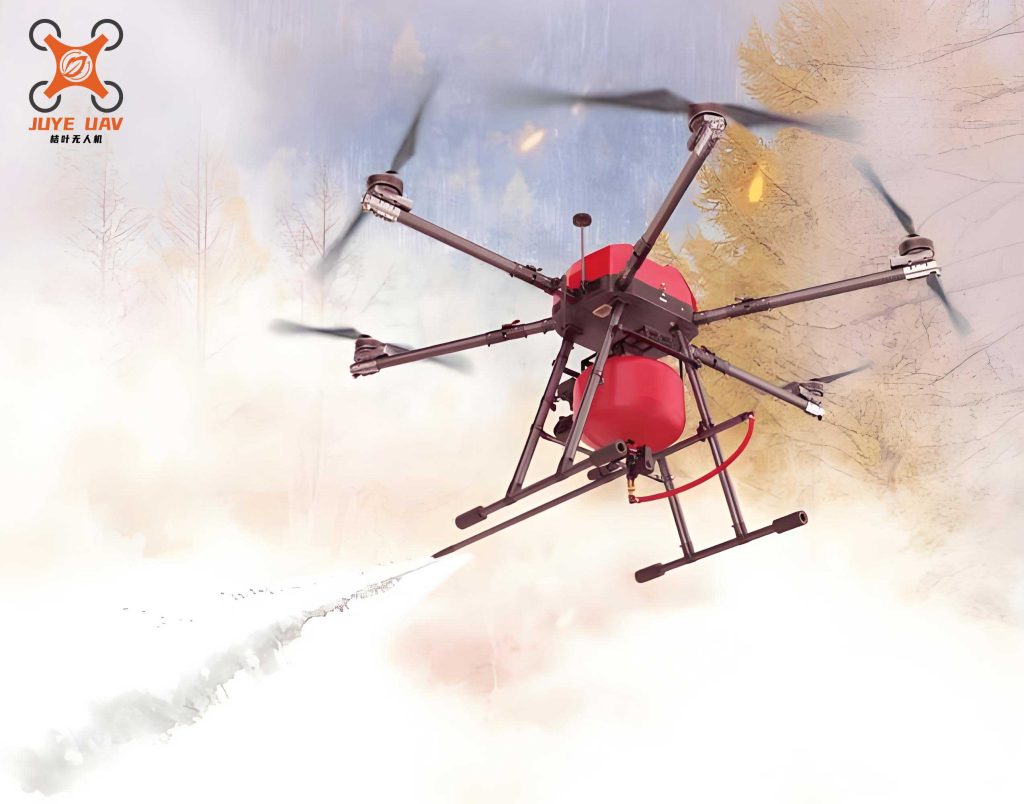
An Overview of Fire UAV Technology
The conceptual origins of UAVs date back to the early 20th century, but it is in recent decades that we have witnessed transformative breakthroughs. The evolution of the modern fire UAV is inextricably linked to parallel advancements in micro-sensors, sophisticated flight control systems, and the development of lightweight, high-energy-density batteries. This technological convergence has propelled UAVs from primarily military reconnaissance platforms to indispensable tools across numerous civilian sectors, with emergency services being a prime beneficiary. The core technical attributes of a fire UAV—including agile maneuverability, support for diverse payloads, and capabilities for remote or autonomous operation—make it uniquely suited for the dynamic and complex scenarios characteristic of disasters.
Classification and Typology of Fire UAVs
Fire UAVs can be systematically categorized based on their airframe configuration and their mission-specific payloads. Each type offers distinct advantages tailored to different phases of emergency response.
| UAV Type (by Airframe) | Key Characteristics | Primary Disaster Response Applications |
|---|---|---|
| Multi-Rotor | Vertical Take-Off and Landing (VTOL), excellent hover stability, high maneuverability in confined spaces. | Close-range inspection of structures, pinpoint search & rescue in rubble, targeted fire suppression in urban canyons. |
| Fixed-Wing | Long endurance, high speed, large area coverage. | Rapid assessment of wildfire perimeters, large-scale post-disaster mapping, pipeline or forest patrols. |
| VTOL Composite | Combines VTOL convenience with fixed-wing efficiency for extended range. | Long-duration reconnaissance in areas without runways (e.g., mountainous regions, dense forests). |
| Unmanned Helicopter | High payload capacity, sustained hover capability. | Heavy payload delivery (medical supplies, equipment), external firefighting with water/foam buckets. |
| Tethered UAV | Continuous power via ground-based generator, enabling indefinite flight time. | Persistent aerial platform for communications relay, continuous lighting, or real-time surveillance over an incident command post. |
The operational capability of a fire UAV is ultimately defined by its payload. Modern systems are highly modular, allowing a single platform to be reconfigured for various missions. The payload suite transforms the UAV from a simple flying camera into a sophisticated data acquisition and intervention node.
| Payload Category | Specific Sensors/Equipment | Data/Function Provided |
|---|---|---|
| Visual & Thermal Imaging | High-resolution zoom camera, gimbal-stabilized dual (Visible/IR) sensor. | Day/Night situational awareness, identification of hotspots through smoke, location of trapped individuals via body heat. |
| Geospatial Mapping | LiDAR (Light Detection and Ranging), multispectral/hyperspectral sensors. | High-precision 3D terrain models, assessment of vegetation health/stress (fire risk), calculation of burned area and volume. |
| Environmental Sensing | Gas detectors (CO, CH₄, VOCs), particulate matter sensors, meteorological probes. | Real-time detection of toxic or explosive atmospheres, monitoring of smoke plume dispersion, on-scene weather data. |
| Rescue & Intervention | Loudspeakers, LED searchlights, automatic payload release mechanisms, integrated fire extinguisher balls or water mist systems. | Communication with survivors, illumination of work areas, delivery of emergency supplies (life vests, medicines), direct attack on small incipient fires. |
The effectiveness of a fire UAV in a complex disaster scenario is not merely the sum of its parts. I see its true power realized in a systems approach: a fixed-wing UAV conducts a wide-area scan to generate a fire perimeter map; a multi-rotor fire UAV then delves into high-risk zones to locate survivors; while a tethered UAV provides uninterrupted communications. Data from all platforms fuse at the command center, creating a “perception-decision-action” loop that integrates satellite data, ground robots, and personnel on the ground. This synergy leverages the key advantages of UAVs—risk substitution for human responders, persistent presence, and modular flexibility—to dramatically enhance operational efficiency and safety.
Typical Application Scenarios for Fire UAVs
1. Preventive Measures and Resource Optimization
Proactive disaster management is paramount. Here, fire UAV technology enables a shift from reactive response to preventive monitoring. Through scheduled low-altitude patrols over forests, industrial sites, and urban-wildland interfaces, UAVs can identify latent hazards. Multispectral sensors can detect vegetation moisture stress, a key precursor to wildfire. High-resolution imaging can spot illegal waste dumping, aging electrical infrastructure, or unsafe storage of flammable materials. This data allows authorities to prioritize mitigation efforts before a crisis occurs.
Upon ignition, the fire UAV becomes an indispensable tool for rapid assessment. Its ability to quickly overfly the incident provides commanders with an instantaneous “God’s-eye view.” The data collected is critical for the scientific allocation of resources. The required number of personnel, type of firefighting vehicles, and volume of suppressant can be estimated using quantitative models derived from UAV data. For instance, the rate of spread (ROS) of a wildfire can be approximated from sequential geotagged images, informing resource deployment strategies. This targeted approach minimizes deployment time and maximizes the effectiveness of the initial attack, crucial for limiting a disaster’s scale.
2. Dynamic Risk Assessment and Coordinated Emergency Response
During an active incident, the fire UAV serves as the primary source of real-time, high-fidelity intelligence. Fusing data from visual, thermal, and LiDAR payloads allows for the creation of dynamic risk maps. These maps quantify threats such as fire intensity, direction of spread, potential for flashover, or structural instability of damaged buildings. This information forms the quantitative basis for strategic decision-making at the emergency operations center.
The operational workflow in a major urban fire, for example, often involves a fire UAV equipped with a dual-sensor gimbal. It captures exterior panoramas and identifies internal hot spots through windows, generating a 3D thermal model of the structure. This model aids in determining fire origin, predicting vertical and horizontal spread via convection paths, and identifying compromised structural elements. The data directly informs both evacuation routing for civilians and offensive/defensive firefighting tactics for crews.
The utility of the fire UAV extends across all phases of the disaster cycle and various disaster types:
| Disaster Type | Core Fire UAV Tasks | Key Payloads & Outputs |
|---|---|---|
| Wildfire | Perimeter mapping, hotspot detection, head-fire monitoring, post-fire damage assessment. | Thermal camera, LiDAR. Output: Fire progression maps, heat intensity GIS layers, 3D burn severity models. |
| Earthquake | Rapid damage assessment, search for survivors in rubble, structural stability analysis. | High-res camera, LiDAR, thermal sensor. Output: Orthomosaic maps, 3D digital twin of rubble pile, thermal signatures of survivors. |
| Flood & Hurricane | Inundation mapping, search for stranded individuals, levee/dam integrity inspection, delivery of supplies. | Visual camera, multispectral sensor, payload dropper. Output: Flood extent maps, water current analysis, identification of people on roofs. |
| Hazardous Material Incident | Remote atmospheric sampling, identification of leak source, monitoring of plume dispersion. | Gas detectors, optical gas imaging (OGI) camera. Output: Real-time concentration maps of toxic gases, safe approach corridors for responders. |
The continuous, time-series data provided by a fire UAV enables a closed-loop command system. Actions on the ground are constantly evaluated against updated intelligence from the air, allowing for agile adjustments to tactics, thereby enhancing the safety of both victims and responders and improving overall mission efficacy.
3. Supporting Community Engagement and Post-Disaster Reconstruction
In the recovery phase, the fire UAV transitions to a tool for documentation, planning, and community reassurance. Periodic aerial surveys using photogrammetry and LiDAR generate highly accurate 3D models and orthorectified maps of the affected area. These visual products are powerful tools for communicating the scale of damage to insurance adjusters, government agencies, and the community itself, fostering a shared understanding of the challenges ahead.
This geospatial data becomes the foundational “digital twin” for reconstruction planning. Planners can simulate different rebuilding scenarios, optimize the placement of new infrastructure, and plan for ecological restoration. The integration of UAV-derived maps with Geographic Information Systems (GIS) containing demographic and logistical data enables the precise spatiotemporal distribution of aid resources. Furthermore, during reconstruction, fire UAV can perform automated progress monitoring, comparing as-built conditions against architectural plans and flagging delays or deviations, thereby providing project managers with quantifiable oversight tools to accelerate recovery.
Application Challenges and Proposed Solutions
Despite their proven value, the deployment of fire UAV systems in real-world disasters faces significant technical and operational hurdles. Acknowledging and addressing these is critical for the technology’s maturation.
Key Operational Challenges
Adverse Environmental Conditions: In wildfires, high winds destabilize UAV flight, while dense smoke severely degrades the performance of optical and thermal sensors, leading to data loss. In floods, heavy rain and strong winds threaten both flight stability and the water resistance of electronic components.
Complex and Confined Operational Environments: Urban canyons created by high-rise buildings present severe challenges: limited flight paths, frequent GPS signal multipath errors, and intermittent communication links due to signal blockage. In post-earthquake rubble fields, the chaotic, cluttered environment poses a high risk of collision.
Degraded Communication and Navigation Infrastructure: Disasters often damage or overload cellular networks. UAVs operating beyond visual line of sight (BVLOS) in such conditions risk losing command and control links. Similarly, GNSS signals can be weak or jammed in valleys or near damaged structures, compromising autonomous navigation.
Limited Endurance and Payload Capacity: The flight time of multi-rotor UAVs, the most common type for close-in work, is typically limited to 20-40 minutes. This constrains mission duration and necessitates frequent battery swaps, which is logistically challenging in a dynamic incident. Payload capacity also limits the size and weight of sensors or intervention equipment that can be carried.
Technical and Strategic Mitigation Pathways
To overcome these barriers, a multi-faceted development approach is required, focusing on robustness, autonomy, and integration.
1. Development of Resilient Sensor Suites: Research must focus on sensors that maintain fidelity in extreme conditions. For thermal imaging, this involves advanced algorithms to distinguish true heat signatures from background clutter caused by sun glare or reflective surfaces. Multi-sensor fusion—combining data from visual, thermal, and short-wave infrared (SWIR) cameras—can provide actionable intelligence even in smoky environments. The performance of a sensor in smoke can be modeled by the attenuation coefficient $\alpha$ related to visibility $V$:
$$ I = I_0 e^{-\alpha d} $$
where $I$ is the received signal intensity, $I_0$ is the initial intensity, and $d$ is the distance through the smoke. Developing sensors and algorithms that compensate for this attenuation is key.
2. Advancement in Autonomous Navigation and Swarm Intelligence: To operate in GNSS-denied and cluttered environments, fire UAV must leverage advanced Simultaneous Localization and Mapping (SLAM) algorithms. These allow the UAV to build a map of its surroundings using onboard sensors (LiDAR, cameras) while simultaneously tracking its own position within that map. Furthermore, the concept of UAV swarms holds great promise. A swarm of heterogeneous fire UAV could collaboratively map a large area, with individual units sharing data and adjusting their behavior based on a shared mission objective. The resource allocation in a swarm can be optimized using cooperative control algorithms.
3. Robust Communication and Edge Computing Architectures: Ensuring reliable data links requires a hybrid communication strategy. This may involve mesh networks between UAVs, use of licensed spectrum bands for critical control, and deployment of tethered UAVs as airborne communication relays. To reduce bandwidth dependency and latency, edge computing is essential. Onboard processors can perform real-time analytics (e.g., immediate detection of a person in rubble) and transmit only critical alerts and compressed data, rather than raw video streams. The data transmission requirement $B$ can be expressed as:
$$ B = f_r \cdot R_c + f_a \cdot S_a $$
where $f_r$ is the frame rate of raw video, $R_c$ is the compressed data rate per frame, $f_a$ is the alert frequency, and $S_a$ is the size of an alert packet. Minimizing $B$ through intelligent processing is crucial.
4. Platform Optimization for Enhanced Performance: Technological improvements are directly needed to extend capabilities. This includes the development of more energy-dense batteries or hybrid power systems to increase flight time $T_{\text{flight}}$:
$$ T_{\text{flight}} = \frac{C \times V}{P_{\text{avg}}} $$
where $C$ is battery capacity, $V$ is voltage, and $P_{\text{avg}}$ is the average power draw. Reducing $P_{\text{avg}}$ through efficient motors and aerodynamics, or increasing $C$ through new battery chemistry, directly extends operational duration. Similarly, airframe designs must evolve for greater durability and stability in high winds.
Future Trajectory and Concluding Perspective
The future evolution of fire UAV technology points toward greater intelligence, integration, and regulatory maturity. I anticipate several convergent trends:
Increased Autonomy and AI Integration: Future systems will move beyond remote piloted vehicles to intelligent agents. Machine learning algorithms will enable predictive analytics—for example, forecasting a wildfire’s propagation based on real-time UAV data, fuel models, and weather forecasts. AI will also power advanced computer vision for automatic detection of hazards, survivors, or structural defects with high accuracy.
Standardization and Regulatory Frameworks: For fire UAV technology to reach its full potential, especially in BVLOS operations in shared airspace, robust regulatory frameworks are essential. This includes standards for vehicle airworthiness, pilot training and certification, secure and encrypted communication protocols, and well-defined operational procedures for integration with manned aviation in disaster zones.
Human-Machine Teaming: The ultimate goal is not to replace human responders but to create seamless teams. The fire UAV acts as a force multiplier, providing superhuman sensing and persistence. The firefighter or incident commander, equipped with a tablet displaying fused, real-time UAV data, can make better-informed decisions faster, while remaining at a safer distance from immediate dangers.
In conclusion, the integration of fire UAV technology into emergency response represents a paradigm shift with demonstrable benefits for life safety and property conservation. From my standpoint, the path forward is clear: it necessitates continued technological innovation to enhance robustness and autonomy, coupled with the parallel development of thoughtful policies, training programs, and operational doctrines. By systematically addressing the current challenges, we can unlock the full potential of these aerial platforms. I am confident that through this dual path of innovation and integration, fire UAV systems will become even more central to our global efforts in building resilient communities and effective, proactive disaster management ecosystems.