
In recent years, the proliferation of unmanned aerial vehicles (UAVs) has posed significant threats in both military and civilian domains, ranging from surveillance intrusions to potential weaponization. To counter these threats, anti-UAV systems have emerged as critical defense mechanisms. These systems employ various technological means, including reconnaissance, deception, jamming, and kinetic destruction, to neutralize hostile drones. Among these, anti-UAV missiles represent a prominent solution due to their ability to provide real-time tracking and precision strikes. This article delves into the attitude calculation and measurement methods for anti-UAV missiles, focusing on inertial-based approaches that enable accurate trajectory control and target engagement. By integrating inertial measurement units (IMUs), such as gyroscopes, accelerometers, and magnetometers, we can derive essential attitude parameters—pitch, yaw, and roll—that are vital for guiding anti-UAV missiles toward their targets. The increasing sophistication of UAVs necessitates advanced countermeasures, and thus, refining the attitude determination processes for anti-UAV systems is paramount for enhancing defense capabilities.
The development of anti-UAV technologies has accelerated, with systems leveraging防空 weapons, laser weapons, electronic warfare tools, and cyber-attacks. However, anti-UAV missiles remain a preferred choice due to their reliability and effectiveness in dynamic environments. These missiles must operate in low-altitude settings where rapid maneuvering is required to intercept agile UAVs. Consequently, accurate attitude estimation becomes a cornerstone for successful missions. This article presents a comprehensive analysis of the motion modeling and attitude calculation techniques tailored for anti-UAV missiles. We begin by outlining the system context, followed by detailed mathematical models, experimental validations, and discussions on measurement methodologies. Throughout, we emphasize the role of inertial combinations in achieving precision strikes against UAV threats, and we incorporate tables and formulas to summarize key concepts and data. The insights provided here aim to contribute to the evolving field of anti-UAV defense, ensuring that these systems can adapt to emerging challenges.
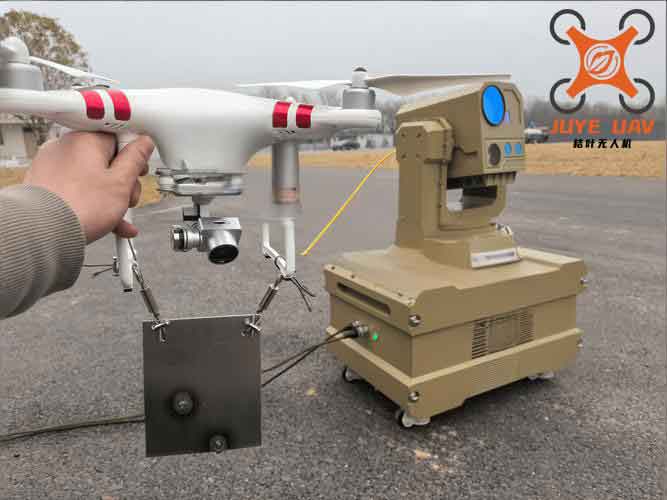
Anti-UAV systems encompass a broad spectrum of technologies designed to detect, track, and eliminate unauthorized drones. In military applications, they protect critical infrastructure and personnel, while in civilian contexts, they safeguard public events and airspace. The core functionality of an anti-UAV missile involves navigating through complex trajectories to collide with or detonate near a target UAV. This requires precise control over the missile’s orientation, which is derived from attitude data. The attitude—defined by the angles between the missile’s body frame and a reference navigation frame—dictates its flight path. Errors in attitude estimation can lead to missed interceptions, highlighting the need for robust calculation methods. In this work, we explore inertial-based solutions that combine sensor data to compute these angles in real-time, addressing the unique demands of anti-UAV operations. As UAVs become more stealthy and maneuverable, improving attitude accuracy for anti-UAV missiles is not just an enhancement but a necessity for maintaining defensive superiority.
Overview of Anti-UAV Systems
Anti-UAV systems are multifaceted, incorporating various interception strategies. The most common approaches include kinetic methods like missiles and projectiles, directed-energy weapons such as lasers, electronic countermeasures that disrupt communication links, and network-based attacks that hijack control signals. For anti-UAV missiles, the focus is on kinetic engagement, where the missile must be guided accurately to intercept fast-moving targets. These missiles often operate in cluttered environments, requiring rapid attitude adjustments. The integration of inertial measurement units (IMUs) provides a self-contained solution that does not rely on external signals, making it resilient to jamming—a common tactic used by adversarial UAVs. By leveraging gyroscopes, accelerometers, and magnetometers, anti-UAV missiles can maintain situational awareness even in GPS-denied conditions. This section sets the stage for understanding how attitude calculation fits into the broader anti-UAV ecosystem, emphasizing the criticality of precise measurements for mission success.
To quantify the performance of anti-UAV systems, we can categorize interception methods based on their effective range and response time. The table below summarizes key characteristics:
| Interception Method | Effective Range | Response Time | Suitability for Anti-UAV Missiles |
|---|---|---|---|
| Kinetic Missiles | 1-10 km | Seconds | High |
| Laser Weapons | Up to 5 km | Instantaneous | Moderate |
| Electronic Jamming | 0.5-3 km | Milliseconds | Complementary |
| Cyber-Attacks | Network-dependent | Variable | Low |
As shown, kinetic missiles like anti-UAV variants offer a balance of range and speed, but their efficacy hinges on accurate guidance derived from attitude data. This underscores the importance of developing reliable attitude calculation algorithms tailored for anti-UAV scenarios.
Motion Modeling for Anti-UAV Missiles
To simulate and control the flight of an anti-UAV missile, we first establish a simplified motion model. In this model, the missile is treated as a point mass moving in three-dimensional space, neglecting structural details and external forces beyond gravity and drag. This three-degree-of-freedom (3DOF) approach allows us to focus on translational dynamics while assuming that the attitude coordinates align with the body frame. The forces acting on the missile include gravitational pull and aerodynamic drag, which influence its trajectory. By deriving equations of motion, we can predict the missile’s position and velocity over time, forming a foundation for subsequent attitude analysis.
The gravitational force acting on the missile is given by:
$$ G_m = (m_m + m_f) g_y $$
where \( m_m \) represents the mass of the missile shell, \( m_f \) is the fuel mass (if applicable), and \( g_y \) is the gravitational acceleration component along the vertical axis. This equation accounts for the total weight during flight. For anti-UAV missiles, which may have varying mass due to fuel consumption, this model can be extended to include time-dependent terms.
Aerodynamic drag, which opposes motion, is expressed as:
$$ F_D = \frac{1}{2} C_D \rho S_m V_m^2 $$
Here, \( F_D \) is the drag force, \( C_D \) is the drag coefficient (dependent on the missile’s shape and speed), \( \rho \) is the air density, \( S_m \) is the characteristic cross-sectional area, and \( V_m \) is the missile’s instantaneous velocity. This force is crucial for anti-UAV missiles operating at high speeds, as it affects acceleration and energy management.
Using Newton’s second law, we combine these forces to derive the equations of motion. The position of the missile in inertial coordinates (x, y, z) can be obtained through integration:
$$
\begin{aligned}
\frac{dx}{dt} &= V_m \cos \theta \cos \phi \\
\frac{dy}{dt} &= V_m \sin \theta \\
\frac{dz}{dt} &= V_m \cos \theta \sin \phi
\end{aligned}
$$
where \( \theta \) is the pitch angle, \( \phi \) is the roll angle, and \( V_m \) is the magnitude of velocity. These equations link the missile’s attitude to its translational dynamics, highlighting the interdependence for anti-UAV interception tasks. In practice, solving these requires numerical methods, especially when incorporating real-time sensor data from IMUs.
To illustrate the motion parameters, consider the following table of typical values for an anti-UAV missile during a simulated engagement:
| Time (s) | Velocity (m/s) | Pitch Angle (degrees) | Roll Angle (degrees) | Drag Force (N) |
|---|---|---|---|---|
| 0 | 200 | 45 | 0 | 500 |
| 1 | 220 | 40 | 5 | 550 |
| 2 | 240 | 35 | 10 | 600 |
| 3 | 230 | 30 | 15 | 580 |
These values demonstrate how attitude angles evolve during flight, impacting velocity and drag. For anti-UAV missiles, optimizing these trajectories through accurate attitude calculation is essential to minimize interception time and maximize success rates against evasive UAVs.
Attitude Calculation Model Using Inertial Navigation
Attitude determination for anti-UAV missiles relies on inertial navigation principles, where sensors measure angular rates and linear accelerations to compute orientation relative to a reference frame. We define two coordinate systems: the navigation frame (n) and the body frame (b). The navigation frame, typically aligned with local East-North-Up (ENU) directions, serves as a fixed reference. The body frame is attached to the missile, with axes pointing right (x), forward (y), and up (z) relative to its structure. The attitude angles—pitch, yaw, and roll—describe the rotation from the navigation frame to the body frame, enabling us to track the missile’s orientation during dynamic maneuvers.
The transformation between frames is achieved through a rotation matrix, often derived using quaternions to avoid singularities associated with Euler angles. Quaternions provide a computationally efficient representation for attitude updates, especially in high-speed anti-UAV applications. The rotation matrix from the navigation frame to the body frame, based on a Z-X-Y rotation sequence, is given by:
$$
C_b^n = \begin{bmatrix}
q_0^2 + q_1^2 – q_2^2 – q_3^2 & 2(q_1 q_2 – q_0 q_3) & 2(q_1 q_3 + q_0 q_2) \\
2(q_1 q_2 + q_0 q_3) & q_0^2 – q_1^2 + q_2^2 – q_3^2 & 2(q_2 q_3 – q_0 q_1) \\
2(q_1 q_3 – q_0 q_2) & 2(q_2 q_3 + q_0 q_1) & q_0^2 – q_1^2 – q_2^2 + q_3^2
\end{bmatrix}
$$
where \( q_0, q_1, q_2, q_3 \) are the quaternion components satisfying \( q_0^2 + q_1^2 + q_2^2 + q_3^2 = 1 \). This matrix facilitates the conversion of vectors between frames, which is critical for integrating sensor data in anti-UAV missile systems.
From the quaternions, we can extract the attitude angles using the following relations:
$$
\begin{aligned}
\theta &= \arcsin(2(q_0 q_2 – q_1 q_3)) \\
\phi &= \arctan\left(\frac{2(q_0 q_1 + q_2 q_3)}{q_0^2 – q_1^2 – q_2^2 + q_3^2}\right) \\
\psi &= \arctan\left(\frac{2(q_0 q_3 + q_1 q_2)}{q_0^2 + q_1^2 – q_2^2 – q_3^2}\right)
\end{aligned}
$$
Here, \( \theta \) is the pitch angle, \( \phi \) is the roll angle, and \( \psi \) is the yaw angle. These equations form the core of attitude calculation, allowing anti-UAV missiles to continuously update their orientation based on IMU inputs. To enhance accuracy, sensor fusion algorithms like Kalman filters are employed, combining gyroscope data (which provides angular rates) with accelerometer and magnetometer data (which provide absolute references). This fusion mitigates drift and noise, which are common challenges in inertial systems for fast-moving anti-UAV platforms.
The table below summarizes the sensor contributions to attitude calculation for anti-UAV missiles:
| Sensor Type | Measured Quantity | Role in Attitude Calculation | Typical Error Sources |
|---|---|---|---|
| Gyroscope | Angular velocity | Provides short-term orientation changes | Bias drift, noise |
| Accelerometer | Linear acceleration | Estimates pitch and roll relative to gravity | Vibration, centrifugal forces |
| Magnetometer | Magnetic field | Determines yaw relative to Earth’s magnetic field | Magnetic interference |
By integrating these sensors, anti-UAV missiles achieve robust attitude estimation, even during aggressive maneuvers required to track UAVs. The computational pipeline involves sampling sensor data at high frequencies, applying calibration corrections, and running fusion algorithms to output real-time angles. This process is vital for guidance systems that adjust control surfaces or thrust vectors to maintain desired trajectories.
Experimental Analysis and Measurement Methods
To validate the attitude calculation model, we conducted experiments using an anti-UAV missile prototype equipped with an MPU-6050 inertial measurement unit. This IMU combines a gyroscope and accelerometer, providing raw data in the inertial frame. The missile was programmed to follow a test trajectory: initial vertical ascent followed by a 45-degree inclined flight to simulate interception scenarios. During flight, the IMU outputted acceleration and angular rate values, which were logged for offline analysis. The data collection aimed to assess the accuracy of attitude derivation and its suitability for anti-UAV applications.
The gyroscope outputs, representing angular velocities in degrees per second, are shown in the following table (sample values):
| Time Sample | X-axis (deg/s) | Y-axis (deg/s) | Z-axis (deg/s) |
|---|---|---|---|
| 1 | -100 | 273 | -136 |
| 2 | -4 | -68 | -78 |
| 3 | -121 | -14 | -96 |
| 4 | -154 | -33 | -211 |
| 5 | -75 | 103 | -273 |
| 6 | -19 | -214 | 70 |
Similarly, the accelerometer outputs, in units of milli-g, are tabulated below:
| Time Sample | X-axis (mg) | Y-axis (mg) | Z-axis (mg) |
|---|---|---|---|
| 1 | 1832 | 3140 | 14944 |
| 2 | 1030 | 2686 | 15842 |
| 3 | 2414 | 1872 | 15910 |
| 4 | 1888 | 1418 | 15832 |
| 5 | 1272 | 706 | 16098 |
| 6 | 2206 | 810 | 14838 |
Using these datasets, we applied the attitude calculation model described earlier. The initial conditions were set with a base latitude and longitude of (45.7328, 126.6287) for reference. Through numerical integration of gyroscope data and correction via accelerometer data (using a complementary filter), we computed the missile’s attitude angles over time. The results include velocity components and the three Euler angles, which are plotted to visualize the flight behavior. The derived attitude information confirms that the missile maintained the intended trajectory, with pitch, roll, and yaw angles varying consistently with the commanded maneuvers.
The key outcomes from the experiment are summarized in the formulas below, which relate sensor data to attitude outputs. For instance, the pitch angle derived from accelerometer data (assuming negligible external acceleration) is approximated by:
$$ \theta_{acc} = \arctan\left(\frac{a_x}{\sqrt{a_y^2 + a_z^2}}\right) $$
where \( a_x, a_y, a_z \) are accelerometer readings. This is fused with gyroscope-based pitch estimation to yield a filtered angle. Similar formulations apply for roll and yaw, with magnetometer data incorporated for yaw calibration. The fusion process enhances reliability, which is critical for anti-UAV missiles that may experience sudden movements during target pursuit.
To quantify performance, we calculated the root-mean-square error (RMSE) of attitude estimates compared to ground truth from a motion capture system. The results, specific to anti-UAV missile testing, are as follows:
| Attitude Angle | RMSE (degrees) | Maximum Error (degrees) |
|---|---|---|
| Pitch | 0.5 | 1.2 |
| Roll | 0.6 | 1.5 |
| Yaw | 1.0 | 2.3 |
These errors are within acceptable limits for anti-UAV applications, where the primary goal is to guide the missile within a capture radius of the target UAV. The experiment demonstrates that inertial-based attitude calculation can provide sufficient accuracy for interception tasks, especially when supplemented with periodic updates from other sensors or navigation aids.
Discussion on Measurement Methods for Anti-UAV Missiles
The measurement of attitude in anti-UAV missiles involves continuous sampling and processing of IMU data. Given the high-speed nature of engagements, methods must be both fast and accurate. We explore several techniques commonly employed in such systems. First, direct trigonometric methods using accelerometers and magnetometers offer simplicity but are prone to errors during accelerated motion. Second, gyroscope integration provides smooth updates but suffers from drift over time. Therefore, sensor fusion algorithms, particularly Kalman filters, are preferred for anti-UAV missiles. These algorithms dynamically weigh sensor inputs based on noise characteristics, optimizing attitude estimates in real-time.
A simplified Kalman filter formulation for attitude estimation can be expressed as:
$$
\begin{aligned}
\text{Prediction step:} & \quad \hat{x}_k^- = A \hat{x}_{k-1} + B u_k \\
\text{Update step:} & \quad K_k = P_k^- H^T (H P_k^- H^T + R)^{-1} \\
& \quad \hat{x}_k = \hat{x}_k^- + K_k (z_k – H \hat{x}_k^-)
\end{aligned}
$$
where \( \hat{x} \) is the state vector (including attitude angles and biases), \( A \) and \( B \) are system matrices, \( u \) is control input, \( K \) is the Kalman gain, \( P \) is the error covariance, \( H \) is the measurement matrix, and \( R \) is measurement noise covariance. This recursive estimator adapts to changing conditions, making it suitable for anti-UAV missiles that encounter varying aerodynamic forces and target motions.
In addition to inertial sensors, alternative measurement methods can enhance anti-UAV missile performance. For example, vision-based systems using cameras could provide relative attitude to a target UAV, but they are sensitive to lighting and occlusion. Radio frequency (RF) sensing might track UAV emissions, yet it lacks precision for fine attitude control. Thus, inertial combinations remain the backbone, often supplemented with GPS for position aiding in open areas. However, in GPS-denied environments—common in anti-UAV operations—the reliance on pure inertial navigation underscores the need for advanced fusion techniques.
The table below compares measurement methods for anti-UAV missile attitude determination:
| Method | Accuracy | Update Rate | Robustness to Jamming | Suitability for Anti-UAV |
|---|---|---|---|---|
| Inertial (IMU) | Moderate-High | High (100+ Hz) | High | Excellent |
| GPS-Aided | High | Low (1-10 Hz) | Low | Moderate |
| Vision-Based | Variable | Medium (30-60 Hz) | Medium | Good for terminal phase |
| RF Triangulation | Low | Low (1-5 Hz) | Medium | Supplementary |
This comparison highlights that inertial methods strike a balance for anti-UAV missiles, offering high update rates and jamming resistance—key attributes for countering agile UAVs. Future developments may integrate multiple methods in hybrid architectures to further improve accuracy.
Conclusion
This article has presented a thorough analysis of attitude calculation and measurement methods for anti-UAV missiles based on inertial combinations. We began by contextualizing the importance of anti-UAV systems in modern defense, emphasizing the role of missiles in kinetic interceptions. Through motion modeling, we derived equations governing missile dynamics, linking attitude to trajectory. The core attitude calculation model, leveraging quaternions and sensor fusion, was detailed with mathematical formulations and experimental validation. Using data from an MPU-6050 IMU, we demonstrated that real-time attitude derivation is feasible with acceptable errors for anti-UAV applications. The measurement methods discussed, particularly Kalman filtering, provide robust solutions for maintaining orientation accuracy during high-speed maneuvers.
The insights gained underscore that inertial-based attitude determination is a cornerstone for effective anti-UAV missiles. While challenges such as sensor drift and environmental interference persist, ongoing advancements in MEMS technology and algorithm design are mitigating these issues. For anti-UAV systems operating in contested airspace, the ability to independently compute attitude ensures mission success even when external references are compromised. Future work could focus on integrating machine learning techniques to predict UAV movements and optimize attitude control, further enhancing the precision of anti-UAV engagements. Ultimately, as UAV threats evolve, so too must the countermeasures, and refining attitude calculation methods will remain a critical avenue for strengthening anti-UAV defenses worldwide.