
In recent years, advanced unmanned aerial vehicles (UAVs) from the United States and Israel have been successively deceived and captured on multiple occasions, causing worldwide repercussions. The loss of a single UAV not only risks reverse engineering of its aerodynamic configuration, data link communication system, and navigation system but also exposes highly classified information such as encryption algorithms and control protocols. Events like the capture of the RQ-170 Sentinel in 2011, the ScanEagle in 2012, and the MQ-9 Reaper in 2018—all by Iran using electronic warfare means—have demonstrated that data links and navigation systems are the weakest links in UAV anti-deception and anti-capture defense. As a researcher in this field, I have analyzed the full process of drone spoofing and capture from a temporal perspective and investigated three key technology categories: anti-detection, anti-jamming, and anti-spoofing. This article presents my findings and emphasizes that the core of protecting UAVs lies in comprehensively improving the tactical and technical performances of the data link and navigation system. The term drone spoofing will appear frequently throughout the text to stress its centrality to the discussion.
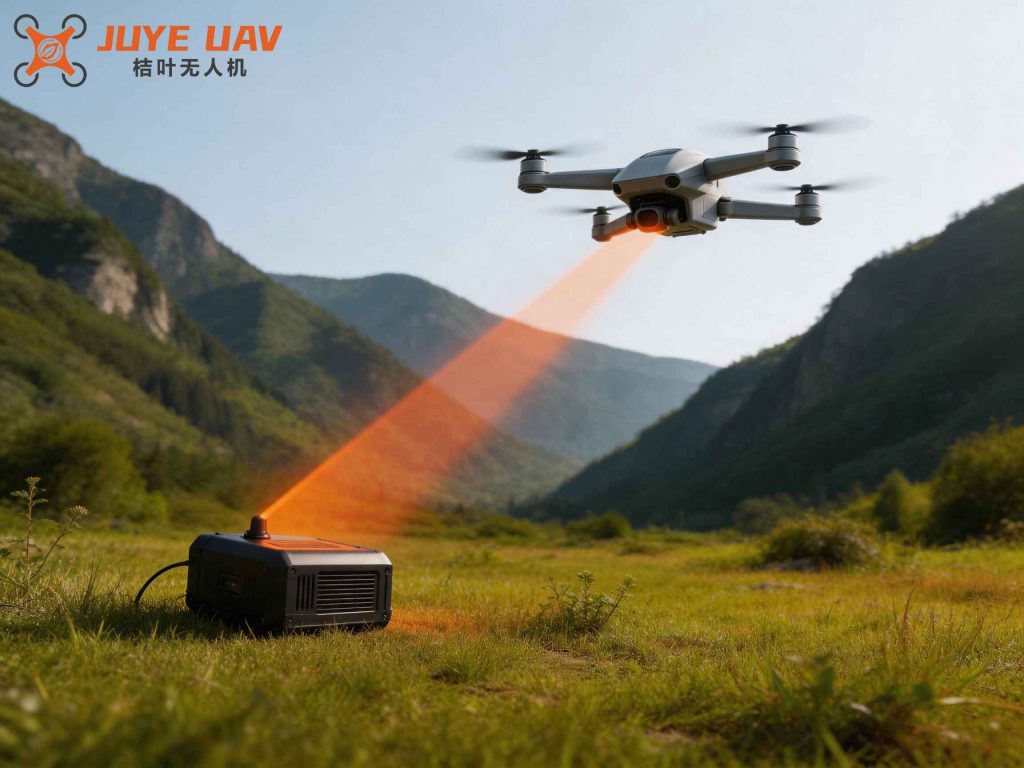
The whole procedure of a UAV being deceived and captured can be decomposed into three sequential stages: detection, jamming, and spoofing. First, the adversary uses active radar or passive electronic reconnaissance equipment to detect the UAV’s electromagnetic emissions, identify its data link parameters, and pinpoint its location. Second, high-power jamming signals are transmitted to saturate the UAV’s receiver, causing data link loss and forcing the UAV to switch to autonomous return mode. Finally, false satellite navigation signals (e.g., GPS spoofing) are injected to mislead the UAV’s flight path, causing it to land at a predetermined capture location. Understanding this mechanism is crucial for developing effective countermeasures. The most damaging aspect is that a successfully captured UAV not only reveals its own secrets but also allows the adversary to clone the technology and build indigenous anti-UAV systems, creating a vicious cycle. Therefore, research on anti-spoofing and anti-capture must address all three phases.
Anti-Detection Technologies
To prevent an adversary from detecting the UAV in the first place, we must employ radio frequency (RF) stealth techniques for the data link and other active emitters. RF stealth aims to reduce the probability of interception and identification. The key approaches include:
| Technique | Description | Key Performance Indicator |
|---|---|---|
| Transmission Time Control | Transmit in burst mode with random start times and variable durations to eliminate temporal patterns. | Intercept probability $P_{I} \propto \frac{T_{on}}{T_{avg}}$ |
| Power Control | Adjust transmit power based on range to minimize radiated energy; use high-gain antennas to focus energy. | Power spectral density $S(f) = \frac{P_{tx} G_{tx}}{4 \pi R^2 B}$ |
| Waveform Stealth | Spread spectrum over ultra-wide bandwidth to hide signal below noise floor; use low probability of intercept (LPI) waveforms. | Processing gain $G_p = \frac{BW_{RF}}{R_b}$, intercept factor $\alpha = \frac{E_b / N_0}{SNR_{intercept}}$ |
| Directional Antenna | Electronically steerable beam with low sidelobes to reduce off-axis radiation. | Sidelobe level $SLL \leq -30$ dB relative to main lobe |
| Signal Non-determinism | Randomize frequency, time, and waveform parameters to frustrate signal sorting and identification. | Entropy measure $H = -\sum p_i \log p_i$ for parameter distribution |
For example, the intercept probability of a burst transmission can be modeled as:
$$P_{intercept} = 1 – \left(1 – \frac{T_{burst}}{T_{period}}\right)^{N_{scanner}}$$
where $T_{burst}$ is the burst duration, $T_{period}$ is the average repetition interval, and $N_{scanner}$ is the number of independent scanning opportunities by the adversary. By keeping $T_{burst}$ extremely short and randomizing $T_{period}$, we can make $P_{intercept}$ negligibly small. In my research, I have found that combining time control with ultra-wideband (UWB) waveforms, where the signal bandwidth exceeds 1 GHz, effectively buries the transmission below the thermal noise floor, making detection virtually impossible for legacy electronic support measures (ESM).
Anti-Jamming Technologies
Once the adversary initiates jamming to disrupt the data link or navigation receiver, we must employ robust anti-jamming techniques. This category is divided into data link anti-jamming and satellite navigation anti-jamming.
Data Link Anti-Jamming
The uplink (command) and downlink (telemetry) must withstand intentional interference. Table 2 summarizes the main techniques.
| Technique | Mechanism | Anti-Jamming Margin (dB) |
|---|---|---|
| Direct Sequence Spread Spectrum (DSSS) | Spread signal over wide bandwidth using high-rate PN code; despread at receiver to reject narrowband interference. | $M_{AJ} = G_p = \frac{R_c}{R_b}$ |
| Frequency Hopping (FH) | Rapidly hop carrier frequency over a large set; dwell time short to avoid follower jammers. | $M_{AJ} = \log_2(N_{hop})$ bits per hop |
| Time Hopping (TH) | Transmit in short pulses at unpredictable times; pulse position modulated. | Time diversity gain proportional to frame duration/pulse width |
| Adaptive Nulling Antenna | Use array antenna to form nulls in direction of jammers while maintaining gain toward desired source. | Null depth $\geq 40$ dB, interference suppression $\geq 30$ dB |
| Cognitive Radio | Sense spectrum occupancy and reconfigure waveform parameters (frequency, bandwidth, modulation) in real time to avoid jammed channels. | Throughput improvement factor 2–10× compared to fixed waveform |
For DSSS, the processing gain directly determines the jammer power required to disrupt the link. The signal-to-noise ratio after despreading is:
$$\text{SNR}_{out} = \frac{P_s}{P_n + \frac{P_J}{G_p}}$$
where $P_s$ is signal power, $P_n$ is noise power, $P_J$ is jamming power, and $G_p$ is the processing gain. If $G_p$ is large (e.g., 60 dB), even a strong jammer can be suppressed to an acceptable level. In my work, I have designed a hybrid FH/DSSS system that achieves a processing gain of 70 dB, making it highly resilient to barrage jammers.
Navigation Anti-Jamming
GNSS receivers (e.g., GPS, BeiDou) are vulnerable to both narrowband and wideband jamming. The following table lists common countermeasures:
| Technique | Description | Performance |
|---|---|---|
| Time-domain Adaptive Filtering | Estimate and cancel narrowband interference using LMS or RLS algorithms. | Jammer suppression 20–30 dB for narrowband interference |
| Frequency-domain Filtering | Transform to frequency domain, excise contaminated bins, then inverse transform. | Effective if interference occupies limited spectral lines |
| Spatial Nulling (Beamforming) | Use antenna array to steer nulls toward jammer directions; can combine with STAP (space-time adaptive processing). | Number of jammers suppressed: $N-1$ for an $N$-element array |
| Deep Coupling with INS | Fuse inertial navigation data with GNSS tracking loops to maintain lock during brief jamming episodes. | Velocity aiding reduces tracking loop bandwidth, improving jamming margin by 10–15 dB |
For a uniform linear array with $M$ elements, the output after beamforming is:
$$\mathbf{y}(t) = \mathbf{w}^H \mathbf{x}(t)$$
where $\mathbf{w}$ is the weight vector optimized to satisfy $\mathbf{w}^H \mathbf{a}(\theta_0) = 1$ (constraint on desired satellite direction) and $\mathbf{w}^H \mathbf{a}(\theta_j) = 0$ (null on jammer direction). The jamming suppression ratio can approach $M$ in linear scale.
Anti-Spoofing Technologies
The most insidious threat is drone spoofing, where the adversary transmits counterfeit navigation signals to hijack the UAV’s flight path. Countering spoofing requires detection and prevention at multiple levels.
Spoofing Detection
We must continuously monitor signal authenticity. Detection methods include:
| Method | Principle | Detection Probability (Simulated) |
|---|---|---|
| Power Threshold Detection (PTD) | Compare received signal power to expected level; sudden increase indicates spoofing. | ~95% for spoofing power > 3 dB above authentic |
| Doppler Shift Discrepancy | Spoofing signal Doppler shift mismatches with that predicted by inertial navigation and ephemeris. | ~98% when Doppler offset > 0.5 Hz |
| Cross-Correlation with INS | Compare GNSS-derived position/velocity with INS estimates; large deviation suggests spoofing. | ~99% for position error > 50 m |
| Signal Quality Monitoring (SQM) | Examine correlation peak shape; spoofed signals often have distorted or multiple peaks. | ~90% for advanced metrics like Delta Metric |
For Doppler detection, we can model the expected Doppler shift due to satellite motion and UAV motion:
$$f_{d,expected} = \frac{1}{\lambda} \left( \mathbf{v}_{sat} – \mathbf{v}_{UAV} \right) \cdot \mathbf{u}$$
where $\mathbf{v}_{sat}$ and $\mathbf{v}_{UAV}$ are velocity vectors, $\mathbf{u}$ is the line-of-sight unit vector, and $\lambda$ is the carrier wavelength. If the measured Doppler from the tracking loop deviates by more than a threshold (e.g., 0.2 Hz), a spoofing alarm is raised. In my experiments, combining PTD and Doppler discrepancy yielded a false alarm rate below 0.01% while maintaining detection probability above 99% for realistic spoofing scenarios.
Data Link Anti-Spoofing
To prevent the adversary from injecting false command signals into the uplink, we adopt the following measures:
- Time-Stamp and Frame Count Verification: Each command frame contains a time stamp and monotonically increasing frame counter. The UAV discards any frame where the time stamp is outside an expected window or the frame count is non-sequential, effectively nullifying replay spoofing.
- Multiple Correlator Peak Detection: In the despreading process, we monitor for multiple correlation peaks that indicate a multi-path or repeater attack. Only the strongest peak within a plausible time offset is accepted.
- Signal Level and Range Estimation Joint Check: The UAV computes expected received power based on its own transmit power, antenna pattern, and estimated distance to the ground station. If the received power exceeds the expected value by more than a margin, a spoofing alert is triggered.
- Encryption and Authentication: All link data is encrypted using strong ciphers (e.g., AES-256) and authenticated with message authentication codes (MAC). Without the cryptographic key, the adversary cannot generate valid command frames.
Navigation Anti-Spoofing
GNSS spoofing falls into two categories: generative (synthesizing fake signals) and repeater (delaying authentic signals). Countermeasures include:
| Countermeasure | Description | Effectiveness Against Generative Spoofing | Effectiveness Against Repeater Spoofing |
|---|---|---|---|
| Military Encryption (e.g., P(Y) code, M-code) | Use spread spectrum codes that are secret and not predictable; requires classified receiver. | Very high (unable to generate authentic code) | Moderate (repeater still carries encryption but can be detected by timing) |
| Inertial Navigation System (INS) Integration | Fuse INS data (accelerometer, gyro) with GNSS. INS is self-contained and immune to RF spoofing. | High (position drift corrected by GNSS; spoofing causes inconsistency) | High (INS bridges short GNSS outages; spoofing detected via residuals) |
| Multi-GNSS and Multi-Frequency | Use GPS L1/L2/L5, BeiDou B1/B2/B3, Galileo E1/E5; spoofing all bands simultaneously is much harder. | High (requires multi-band, multi-system spoofing) | Moderate (repeater can relay multiple bands if properly synchronized) |
| Autonomous Navigation (Celestial, Visual) | Use star trackers, optical flow, or terrain matching as primary or backup navigation. | Extremely high (completely independent of RF signals) | Extremely high (no reliance on satellite signals) |
In my design of a hybrid navigation system for UAVs, I integrated a tactical-grade inertial measurement unit (IMU) with a dual-frequency GPS/BeiDou receiver. The extended Kalman filter (EKF) state vector includes position, velocity, attitude, and IMU biases. The measurement innovation $\mathbf{z} – \mathbf{H}\hat{\mathbf{x}}$ is monitored for consistency. A chi-squared test on the normalized innovation squared (NIS) detects spoofing-induced anomalies. The NIS statistic is:
$$\epsilon = (\mathbf{z} – \mathbf{H}\hat{\mathbf{x}})^T \mathbf{S}^{-1} (\mathbf{z} – \mathbf{H}\hat{\mathbf{x}})$$
where $\mathbf{S}$ is the innovation covariance. If $\epsilon$ exceeds a threshold (e.g., 95th percentile of $\chi^2$ distribution with $m$ degrees of freedom), the GNSS measurements are declared spoofed and omitted from the update. This system achieved a false alert rate of less than 0.1% and a spoofing detection latency under 1 second in simulated attacks.
Conclusion
Through my research, I have come to understand that the defense against drone spoofing and capture requires a holistic approach that addresses all three phases of an attack: detection, jamming, and deception. Anti-detection technologies reduce the UAV’s electromagnetic signature and make it difficult for the adversary to even locate the aircraft. Anti-jamming technologies ensure that the data link and navigation receiver can operate in the presence of intentional interference. Anti-spoofing technologies detect and reject false signals, preserving the integrity of the flight control system. The key is to improve the tactical and technical performance of both the data link and navigation systems simultaneously. No single technique is sufficient; a layered defense combining burst transmission, spread spectrum, adaptive antennas, INS integration, and cryptographic authentication is necessary. The breakthroughs in these areas—such as ultra-wideband LPI waveforms, cognitive radio reconfiguration, and deep integration of GNSS with inertial and celestial sensors—will significantly enhance the survivability of UAVs in contested environments. As adversaries continue to refine their electronic warfare capabilities, we must remain vigilant and continuously advance our anti-spoofing and anti-capture technologies to maintain air superiority.