
The rapid advancement of technologies in micro-electromechanical systems, communication systems, microprocessors, and navigation has led to the widespread adoption of Unmanned Aerial Vehicles (UAVs) across various fields. In China, the application of UAVs, particularly in the power industry, has seen exponential growth due to their high efficiency and ability to overcome the limitations of manual inspections. Substations, with their vast arrays of equipment and high potential risks, present a critical area for inspection. The traditional manual approach is slow and labor-intensive, while ground robots are often limited by terrain. China UAV drones, with their high maneuverability, compact size, and precise hovering capabilities, offer a transformative solution.
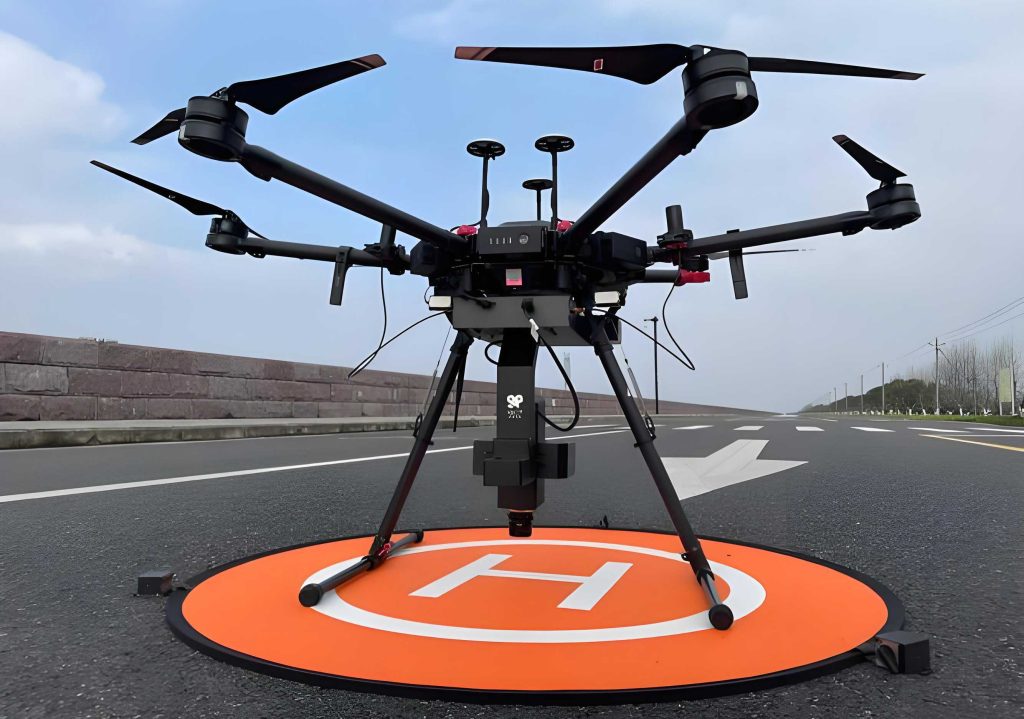
Statistics from the State Grid Corporation of China indicate that drone inspection efficiency can be more than eight times that of traditional manual methods. The future of substation inspection lies in intelligent, unmanned systems where UAVs play a leading role, potentially integrated with robots and personnel for a hybrid smart inspection framework. While the use of China UAV drones for transmission line inspection has matured, their application within substation environments remains fraught with challenges. The most significant of these is the complex and intense electromagnetic environment generated by densely packed high-voltage and current-carrying equipment. This environment can severely interfere with a drone’s flight stability, data communication links, and sensor accuracy, potentially leading to system malfunctions or crashes. Therefore, establishing a safe operational distance—the minimum spatial separation between the drone and live equipment to avoid electromagnetic interference and collision risks—is paramount for the safe and effective deployment of China UAV drone technology in substations. This study focuses on determining this critical safety distance through a combination of simulation and physical testing.
1. Methodology for Determining Safety Distance
1.1 Definition of Safety Distance
Within the technical framework of UAV power inspection, the safety distance is a comprehensive threshold that accounts for multiple risk factors. It is defined as the minimum spatial separation required between a UAV and live electrical components, power facility structures, or environmental obstacles to mitigate operational hazards. These hazards primarily include electromagnetic interference (which can disrupt flight control systems), potential electrical breakdown (arcing), and physical collision. This study employs a cross-validation methodology integrating numerical simulation and physical experimentation to systematically investigate the influencing mechanisms and establish quantitative criteria for this safety distance, thereby providing a theoretical and data-driven foundation for high-precision safe operation protocols for China UAV drones.
1.2 Simulation Analysis for Magnetic Field Criterion
The magnetic field tolerance of a UAV is predominantly determined by the susceptibility of its critical components, most notably the electronic compass. A three-dimensional simulation model of a current-carrying loop was constructed, as shown in Figure 1, with a current load set to 500 A. The magnetic flux density distribution on the UAV’s fuselage (referring to the main body housing core components, excluding arms and rotors) was extracted. The simulation results indicated an average magnetic flux density of approximately 480 µT across the fuselage, with a maximum value of 593 µT and a minimum of 419 µT. It is crucial to note that different internal components may experience varying field strengths and possess different tolerances. To ensure a conservative and safe criterion, the minimum magnetic flux density value on the fuselage is selected as the critical reference point. Considering potential peak values, the magnetic flux density critical value $$B_{crit}$$ for the UAV is defined as 1.414 times this minimum simulated value:
$$B_{crit} = 419 \mu T \times 1.414 \approx 593 \mu T$$
The magnetic field criterion for safe distance is therefore defined as follows: at the critical distance, the maximum magnetic flux density experienced at the UAV’s fuselage position must be less than this critical value $$B_{crit}$$.
1.3 Framework for Setting Safety Distance
The influence of power-frequency magnetic fields is determined through the aforementioned simulation and experimental analysis. However, to establish a practical safety distance for operations, additional factors contributing to positional uncertainty must be incorporated. The workflow is illustrated in Figure 2. The critical distance $$d_L$$ is the minimum distance primarily governed by the electromagnetic field criterion (where $$d_B$$ for magnetic fields is typically governing over $$d_E$$ for electric fields in high-current environments). An early warning distance $$d_W$$ is then established by adding a safety margin to this critical distance. Based on these two distances, the space around substation equipment can be zoned into: a Prohibited Flight Area (inside $$d_L$$), a Caution/Danger Area (between $$d_L$$ and $$d_W$$), and a Safe Operating Area (beyond $$d_W$$).
The safety margin $$\Delta d$$ accounts for various operational uncertainties:
- Hovering Accuracy ($$d_1$$): When operating in Real-Time Kinematic (RTK) mode, the recommended horizontal and vertical hovering accuracy for advanced China UAV drones is 0.1 m. Thus, $$d_1 = 0.1$$ m.
- Control Latency Buffer ($$d_2$$): This includes uplink delay (20 ms), downlink video delay (300 ms), and pilot reaction time (0.2 s), totaling 0.52 s. At an approach speed of 1 m/s, $$d_2 = 0.52$$ m.
- Braking Distance ($$d_3$$): Test data for similar UAVs shows a braking distance < 0.15 m at 1 m/s. Thus, $$d_3 = 0.15$$ m.
- Wind Gust Effect ($$d_4$$): For UAVs with a maximum wind resistance rating of 10 m/s, the horizontal deviation due to gusts is estimated at 0.5 m. Thus, $$d_4 = 0.5$$ m.
The total recommended safety margin is therefore:
$$\Delta d = d_1 + d_2 + d_3 + d_4 = 0.1 + 0.52 + 0.15 + 0.5 = 1.27 \text{ m}$$
Consequently, the warning distance is calculated as: $$d_W = d_L + \Delta d$$.
1.4 Calculation Method for Safety Distance
1.4.1 Solution Procedure
The steps for determining the safety distance for China UAV drone inspection around high-voltage and current-carrying equipment in substations are as follows:
- Construct a three-dimensional simulation model of the UAV and the target substation equipment.
- Perform spatial magnetic field simulation to extract the distribution of the maximum magnetic flux density at various positions.
- Based on the magnetic field criterion ($$B_{crit} = 593 \mu T$$), determine the critical distance $$d_L$$ where this criterion is met.
- Incorporate the safety margin $$\Delta d$$ to account for operational uncertainties and determine the warning distance $$d_W$$.
- Define the flight zones (Prohibited, Caution, Safe) around the equipment based on $$d_L$$ and $$d_W$$.
The core challenge lies in efficiently calculating the maximum magnetic flux density $$B_{max}$$ at any point in space, which is a sinusoidal function of time due to the three-phase AC system. A combined finite-element and analytical method is proposed to solve this efficiently without time-domain transient simulation.
1.4.2 Solving for Maximum Magnetic Flux Density
The power-frequency magnetic field generated by substation equipment is quasi-static. The field at any point can be characterized by its amplitude and phase, or equivalently, its real and imaginary components. These components can be obtained by solving two static field problems corresponding to phases 0° and -90°, or directly from time-harmonic field simulation.
For a three-phase system, the magnetic flux density vector $$\vec{B}(x,y,z,t)$$ at any point in space has orthogonal components (e.g., in x, y, z directions) that are sinusoidal functions of time with different amplitudes and phases:
$$B_x = B_{xm} \cos(\omega t + \phi_x)$$
$$B_y = B_{ym} \cos(\omega t + \phi_y)$$
$$B_z = B_{zm} \cos(\omega t + \phi_z)$$
where $$B_{xm}, B_{ym}, B_{zm}$$ and $$\phi_x, \phi_y, \phi_z$$ are the amplitudes and phase angles, respectively, which depend solely on the spatial coordinates (x, y, z).
The instantaneous magnitude of the resultant magnetic flux density is:
$$B(t) = \sqrt{ [B_{xm} \cos(\omega t + \phi_x)]^2 + [B_{ym} \cos(\omega t + \phi_y)]^2 + [B_{zm} \cos(\omega t + \phi_z)]^2 }$$
The maximum value of $$B(t)$$ over one period $$T$$ is the required $$B_{max}$$ for that spatial point. Instead of sampling the time function, an analytical approach can be used. By computing the real (in-phase) and quadrature (out-of-phase) components of the field for each phase excitation, the amplitudes and phases for each spatial direction can be derived. The maximum value $$B_{max}$$ can then be found analytically or through a simple numerical maximization of the expression for $$B(t)$$, which is significantly faster than full time-domain simulation. This method allows for the efficient mapping of $$B_{max}$$ throughout the simulation domain, enabling the precise determination of the contour where $$B_{max} = B_{crit}$$, thus defining the critical distance surface.
2. Safety Distance Calculation and Application Verification
2.1 Simulation for Typical Equipment
Based on actual substation layouts, a 3D model of 110 kV equipment was established for simulation. The magnetic field distribution under rated operating conditions (e.g., for a transformer with a medium-voltage winding current of 859 A) was solved. The critical distance $$d_L$$ was determined by finding the contour where the simulated $$B_{max}$$ equaled 593 µT. Several typical approach paths (horizontal between phases, vertical from above/below) were analyzed. The results for a 110 kV scenario are summarized in Table 1. The critical distance varies depending on the approach direction, with the largest value governing the overall safe operating limit.
| Approach Direction | Horizontal (Between Phases) | Horizontal (Between Intervals) | Vertical (Downward) | Vertical (Upward) |
|---|---|---|---|---|
| Critical Distance $$d_L$$ (cm) | 39 | 34 | 42 | 41 |
The magnetic field strength, and consequently $$d_L$$, is directly proportional to the operating current of the equipment. To generalize the findings, simulations were conducted for standard equipment models at different voltage levels, considering their maximum typical operating currents as per design specifications. The linear relationship between field and current allows for scaling. The critical distance $$d_L$$ and the corresponding warning distance $$d_W$$ (where $$d_W = d_L + 127 \text{ cm}$$) for common voltage levels are presented in Table 2. This table provides a practical reference for planning inspections with China UAV drones in various substations.
| Substation Voltage (kV) | Equipment Voltage (kV) | Max Current (A) | Critical Distance $$d_L$$ (cm) | Warning Distance $$d_W$$ (cm) |
|---|---|---|---|---|
| 110 | 110 | 420 | 12 | 139 |
| 220 | 220 | 602 | 22 | 149 |
| 500 | 500 | 1320 | 60 | 187 |
| 1000 | 1000 | 2474 | 112 | 239 |
2.2 Application Verification Testing
To empirically validate the magnetic field tolerance and the simulated safety distances, physical tests were conducted. The test platform, shown in Figure 4, utilized a current loop to generate a controlled magnetic field, isolating it from electric field effects. The China UAV drone was gradually moved closer to the energized conductor while monitoring its compass status and measuring the local magnetic flux density. The results, presented in Table 3, show that at a distance of 13 cm and a current of 500 A (producing ~480 µT), the drone’s compass interference reached a critical level, aligning well with the simulation-derived criterion of 593 µT considering measurement and positioning tolerances.
| Distance to Conductor (cm) | Measured Flux Density (µT) | UAV Compass Status |
|---|---|---|
| 22 | 302 | Normal |
| 14 | 452 | Normal |
| 13 | 480 | Critical/Abnormal |
| 12 | 516 | Abnormal |
| 11 | 508 | Abnormal |
Furthermore, field verification tests were performed in operational substations to validate the overall safety distance methodology. The China UAV drone was flown near live equipment at distances guided by the calculated $$d_W$$. As shown in Table 4, in all test cases, the UAV operated without triggering alarms or showing signs of discharge (as monitored by UV imaging), even when flying closer than the conservative warning distance in some scenarios. The test with a 2000 A bus at 220 kV confirmed safe operation at 1.02 m, which is consistent with the scaled expectation from the simulation results. These practical tests confirm the validity and conservatism of the proposed safety distance framework for the deployment of China UAV drones in substation inspection roles.
| Voltage (kV) | Current (A) | Equipment | Simulated $$d_L$$ (cm) | Test Flight Distance (cm) | Result |
|---|---|---|---|---|---|
| 500 | 350 | Circuit Breaker | ~8* | 48 | Normal |
| 220 | 350 | Busbar | ~11* | 27 | Normal |
| 220 | 2000 | Busbar | ~115* | 102 | Normal |
*Estimated based on linear scaling from Table 2 data.
3. Conclusion
This study established a robust methodology for determining the safe inspection distance for multirotor UAVs, specifically focusing on the context of China UAV drone applications in high-voltage substations. The magnetic field was identified as the dominant constraint for typical high-current equipment. Through a combination of finite-element simulation and physical testing on a representative advanced UAV model, a magnetic flux density criterion of $$B_{crit} \approx 593 \mu T$$ was derived as the threshold for significant compass interference. A comprehensive safety distance framework was proposed, defining both a critical distance $$d_L$$ based on this electromagnetic criterion and a practical warning distance $$d_W$$ by incorporating a 127 cm safety margin accounting for hovering inaccuracy, control latency, braking distance, and wind effects.
The simulation results yielded specific critical and warning distances for standard equipment at 110 kV, 220 kV, 500 kV, and 1000 kV voltage levels, providing a valuable reference table for field operations. The methodology was successfully validated through controlled magnetic field tests, which confirmed the interference threshold, and through real-world flight tests in active substations, which demonstrated the safety and effectiveness of the derived distances. The findings of this research contribute significantly to the safe and standardized deployment of China UAV drone technology for substation inspection, offering concrete guidance for distance control and forming a essential foundation for automated path planning in these complex electromagnetic environments.