
As I reflect on the rapid evolution of global unmanned aerial systems, it becomes increasingly clear that the United States military stands at a critical juncture. The drone revolution, once dominated by American military applications in the post-9/11 era, has been profoundly reshaped by commercial and entrepreneurial forces, particularly from China. I observe that the U.S. risks missing out on transformative innovations if it fails to adapt its procurement, development, and industrial strategies. In contrast, the China drone ecosystem has demonstrated remarkable agility, diversity, and growth, offering valuable insights for military modernization. This article explores, from my perspective, what the U.S. military can learn from China’s approach, emphasizing the need for systemic change through first-person analysis, supported by tables and formulas to crystallize key concepts.
The rise of the China drone market is not merely a story of cheap manufacturing; it is a narrative of strategic integration between military needs and private-sector innovation. Historically, the U.S. military pioneered drone technology, accounting for over 60% of global research and development costs in the early 2000s. However, this reliance on large defense contractors for monolithic platforms has stifled agility. Meanwhile, China’s drone industry, fueled by startups and small enterprises, has surged ahead, creating a vibrant ecosystem that spans consumer, commercial, and military domains. I argue that by studying China’s model, the U.S. can reinvigorate its own drone capabilities. Let me delve into the core lessons, starting with the imperative of fostering close ties with innovative firms.
Building and Sustaining Relationships with Innovators
One of the most striking aspects of the China drone ecosystem is the symbiotic relationship between the military and private innovators. In my view, this flexibility is a cornerstone of China’s success. The Chinese government actively listens to emerging enterprises, providing them opportunities to influence military drone development. This approach reduces development risks and avoids stagnation, as fresh ideas rapidly translate into prototypes and deployments. For instance, companies like DJI, though initially focused on consumer drones, have leveraged their expertise to contribute to dual-use technologies. This contrasts sharply with the U.S., where military innovation often depends on government contracts funneled through large contractors, leading to slower cycles and incremental improvements.
I propose that the U.S. military must create more avenues for collaboration with small and medium-sized enterprises (SMEs). Recent steps, such as the Defense Innovation Unit Experimental (DIUx) and the Army Research Laboratory’s Robotics Collaborative Technology Alliance, are moves in the right direction. However, these efforts need scaling. A formalized partnership with entities like small drone consortia or manufacturer alliances could yield significant benefits. To quantify this, consider an innovation rate model: the speed of technological advancement depends on the number of collaborating entities and the depth of their integration. Let me express this with a formula:
$$ R_{innovation} = \alpha \cdot \sum_{i=1}^{N} (E_i \cdot C_i) $$
Here, \( R_{innovation} \) represents the innovation rate, \( \alpha \) is a constant factor for regulatory efficiency, \( N \) is the number of enterprises, \( E_i \) denotes the entrepreneurial capacity of enterprise \( i \), and \( C_i \) signifies the collaboration intensity with the military. In China’s case, high \( N \) and \( C_i \) values, driven by policy support, boost \( R_{innovation} \). For the U.S., increasing \( N \) by engaging SMEs and enhancing \( C_i \) through flexible mechanisms could accelerate progress. The table below summarizes key differences in innovation approaches:
| Aspect | U.S. Military Drone Innovation | China Drone Ecosystem Innovation |
|---|---|---|
| Primary Drivers | Large defense contractors, government contracts | Startups, private firms, government collaboration |
| Innovation Cycle | Long, risk-averse, incremental | Short, agile, rapid prototyping |
| Military-Industry Ties | Formal, contract-based, limited SME involvement | Informal yet structured, high SME integration |
| Risk Management | High development risk concentrated in few players | Risk distributed across multiple innovators |
By embracing such a model, the U.S. can harness the creativity of its drone startups, much like the China drone community does. This leads me to the next lesson: diversifying drone products to unlock new capabilities.
Diversifying Drone Products for Enhanced Flexibility
The China drone industry excels in producing a wide array of unmanned systems, from nano-drones to large military platforms. This diversity, I believe, is a strategic advantage that the U.S. military should emulate. American drone manufacturing has historically focused on high-end, large platforms like the MQ-9 Reaper, neglecting the lower-end, small, and cheap drones that have proliferated in consumer markets. This gap limits the exploration of novel concepts, such as swarm tactics using inexpensive drones—a area where China has made significant strides. The China drone market offers everything from hobbyist quadcopters to sophisticated surveillance and strike systems, enabling flexible applications and fostering innovation in operational doctrines.
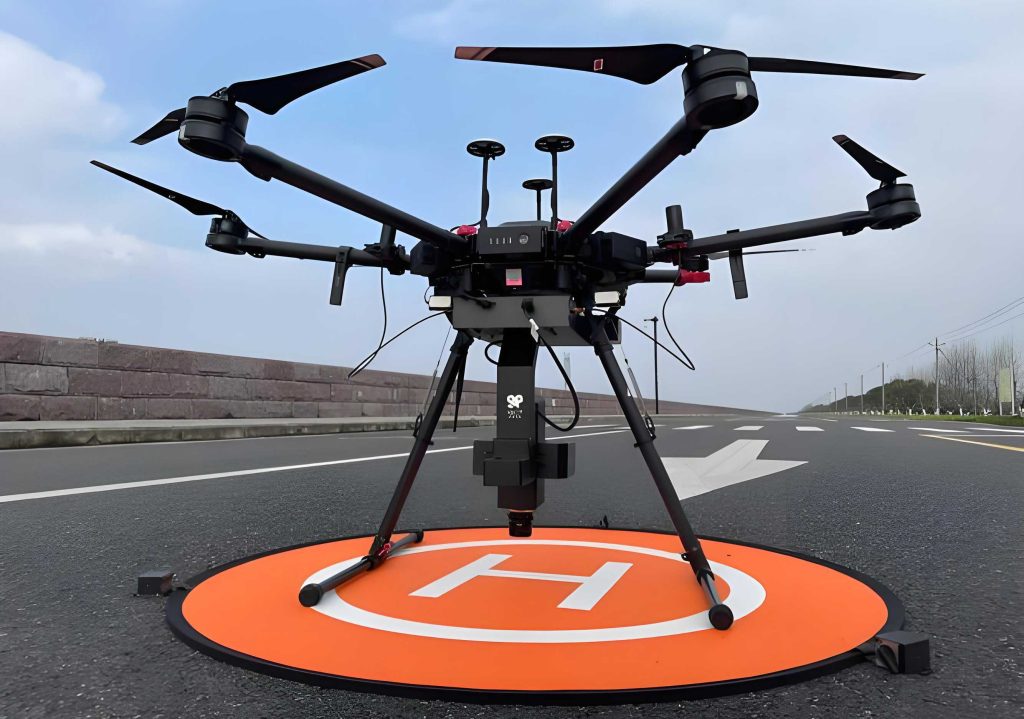
I often think about how product variety correlates with market resilience and technological spillover. In economics, diversification can be modeled to show reduced dependency and increased innovation potential. For drones, the range of products directly impacts military adaptability. Let me illustrate this with a formula for capability expansion:
$$ C_{total} = \int_{s_{min}}^{s_{max}} f(s) \cdot \gamma(s) \, ds $$
Here, \( C_{total} \) represents the total capability derived from drones, \( s \) denotes a size or type parameter (e.g., from small to large), \( f(s) \) is the distribution function of drone products across types, and \( \gamma(s) \) is the utility factor per type. In China’s drone ecosystem, \( f(s) \) is broad and continuous, covering a wide \( s_{min} \) to \( s_{max} \), leading to high \( C_{total} \). For the U.S., \( f(s) \) is skewed toward large \( s \), limiting \( C_{total} \). By expanding \( f(s) \) through support for diverse manufacturing, the U.S. can enhance its operational flexibility. The table below compares product diversity:
| Drone Type | U.S. Focus | China Drone Market Offerings |
|---|---|---|
| Small Consumer Drones | Limited, mainly imported | Abundant, domestically produced (e.g., DJI models) |
| Medium Commercial Drones | Niche applications, some defense variants | Wide range for agriculture, logistics, surveillance |
| Large Military Drones | Dominant (e.g., Global Hawk, Predator) | Growing capabilities (e.g., CH-4, Wing Loong) |
| Nano/Micro Drones | Experimental, limited deployment | Rapidly advancing, used in swarms and recon |
This diversification not only supports military needs but also drives commercial success, which ties into the third lesson: leveraging economic incentives to fuel development.
Stimulating Military Drone Projects through Economic Incentives
In the China drone ecosystem, economic success in international markets has provided a virtuous cycle of funding and technological advancement. I see this as a critical lesson for the U.S. military. Chinese drone startups have achieved global dominance in consumer and commercial segments, generating profits that can be reinvested into dual-use military projects. This contrasts with the U.S., where regulatory frameworks like the Arms Export Control Act of 1976 restrict foreign sales of certain drone technologies, limiting commercial opportunities and making defense contractors heavily reliant on government contracts. Without economic stimuli, innovation stagnates, and SMEs struggle to compete.
From my perspective, the U.S. should consider relaxing export controls to enable broader market participation. This would allow American drone firms to scale economically, fostering competition and innovation. To analyze this, I use a simple economic model for research and development (R&D) investment:
$$ I_{R\&D} = \beta \cdot (R_{commercial} + R_{military}) – \delta \cdot T_{barriers} $$
Here, \( I_{R\&D} \) is the total R&D investment, \( \beta \) is a multiplier effect, \( R_{commercial} \) and \( R_{military} \) represent revenue streams from commercial and military sales, respectively, and \( T_{barriers} \) denotes trade barriers with \( \delta \) as their impact coefficient. In China’s case, high \( R_{commercial} \) from global drone sales boosts \( I_{R\&D} \), while low \( T_{barriers} \) (due to supportive policies) minimizes losses. For the U.S., increasing \( R_{commercial} \) by easing exports and reducing \( T_{barriers} \) could significantly enhance \( I_{R\&D} \). The table below outlines key economic factors:
| Economic Factor | U.S. Drone Industry | China Drone Industry |
|---|---|---|
| Primary Revenue Source | Government defense contracts | Global commercial sales, dual-use exports |
| Export Restrictions | Stringent under ITAR and AECA | Relatively relaxed, promoting market expansion |
| SME Participation | Limited due to high barriers | High, driven by market opportunities |
| R&D Funding Cycle | Dependent on budget cycles, slower | Reinforced by commercial profits, agile |
By adopting such incentives, the U.S. can mimic the China drone market’s dynamism. This leads to the fourth lesson: harnessing manufacturing prowess for technological expansion.
Achieving Technological Expansion through Advanced Manufacturing
China’s drone enterprises have leveraged robust manufacturing capabilities to scale rapidly, driving down costs and accelerating innovation. I contend that the U.S. military must revitalize its domestic manufacturing base to compete effectively. The China drone ecosystem benefits from integrated supply chains, mass production, and expertise in areas like additive manufacturing (3D printing) and robotics. This enables quick iteration and deployment of new designs, a capability the U.S. has overlooked in favor of outsourcing. By investing in advanced manufacturing, the U.S. can enhance testing, innovation, and economic growth, potentially surpassing China in key sectors like drone production.
Let me formalize this with a production function that links manufacturing capability to technological advancement:
$$ T_{growth} = M^{\eta} \cdot K^{\theta} $$
Here, \( T_{growth} \) is the rate of technological growth, \( M \) represents manufacturing capacity (e.g., output volume, precision), \( K \) denotes knowledge capital (e.g., R&D, skills), and \( \eta \) and \( \theta \) are elasticity parameters. For the China drone industry, high \( M \) from scalable factories amplifies \( T_{growth} \), even with moderate \( K \). In the U.S., \( K \) is high but \( M \) has declined, limiting \( T_{growth} \). By boosting \( M \) through investments in automation and digital manufacturing, the U.S. can rebalance this equation. The table below compares manufacturing aspects:
| Manufacturing Aspect | U.S. Drone Production | China Drone Production |
|---|---|---|
| Scale and Volume | Low for consumer drones, high for military platforms | High across all segments, global supply chain dominance |
| Technologies Used | Advanced but niche, limited integration | Widespread use of 3D printing, robotics, AI |
| Supply Chain Integration | Fragmented, reliant on imports for components | Highly integrated, domestic sourcing for key parts |
| Cost Efficiency | High costs due to low volume and labor | Low costs from economies of scale and automation |
This focus on manufacturing aligns with the concept of “open innovation,” where users—including the military—contribute to development. As noted by MIT researchers, user-driven innovation can outperform traditional corporate-centric models. In the China drone context, military feedback loops with manufacturers foster rapid improvements, a practice the U.S. should adopt by involving end-users in design and testing phases.
Synthesis and Path Forward
Reflecting on these lessons, I am convinced that the U.S. military has much to gain from studying the China drone ecosystem. The integration of small firms, product diversity, economic incentives, and manufacturing excellence are not isolated factors but interconnected elements of a thriving innovation system. While the China drone market is not without flaws—such as concerns over intellectual property and regulatory opacity—its ability to foster rapid, flexible innovation is undeniable. For the U.S., change is imperative to cultivate a similar environment.
To summarize, let me present a holistic framework using a systems dynamics approach. The overall effectiveness \( E \) of a drone ecosystem can be modeled as:
$$ E = \omega_1 \cdot I + \omega_2 \cdot D + \omega_3 \cdot S + \omega_4 \cdot M $$
Where \( I \) represents innovation collaboration (from Lesson 1), \( D \) denotes product diversification (Lesson 2), \( S \) signifies economic stimulation (Lesson 3), and \( M \) stands for manufacturing capability (Lesson 4). The weights \( \omega_i \) reflect strategic priorities; in China’s case, all are balanced, leading to high \( E \). For the U.S., adjusting \( \omega_i \) through policy reforms—such as increasing \( \omega_1 \) by partnering with SMEs or \( \omega_4 \) by reshoring production—can elevate \( E \). The table below encapsulates actionable recommendations:
| Learning from China Drone Ecosystem | Recommended U.S. Military Actions | Expected Outcomes |
|---|---|---|
| Close military-innovator ties | Expand DIUx-like initiatives, formalize SME alliances | Faster innovation cycles, reduced development risk |
| Diverse drone products | Invest in small, cheap drone R&D, encourage dual-use designs | Enhanced operational flexibility, new swarm tactics |
| Economic incentives | Relax export controls, offer tax breaks for drone startups | Increased commercial revenue, stronger R&D funding |
| Advanced manufacturing | Fund additive manufacturing hubs, promote robotics in production | Lower costs, faster prototyping, job creation |
In conclusion, the China drone phenomenon offers a blueprint for reinvigorating American military drone capabilities. By embracing these lessons, the U.S. can transcend its current limitations and foster an ecosystem where innovation thrives. I believe that through strategic adaptation, the U.S. military can not only catch up but potentially lead in the next wave of drone technology, ensuring national security and technological supremacy. The journey requires humility to learn from others, including the China drone success story, and the courage to implement bold changes.