
In recent years, the C-band, prized for its favorable propagation characteristics and ample bandwidth, has found extensive application across critical domains such as satellite communications, 5G mobile networks, aeronautical navigation, and meteorological radars. However, the intensive reuse of this spectral resource has led to increasingly prominent interference between different systems. Instances include out-of-band blocking interference from 5G base stations to C-band satellite earth stations and co-channel interference from microwave links to weather radars, which directly threaten the operational security of vital infrastructure.
Traditional methods for locating interference sources predominantly rely on fixed monitoring stations and vehicular mobile units, typically following a “first regional localization, then ground-based逼近查找 (close-in search)” paradigm. However, within the context of C-band radio applications, these conventional approaches face significant challenges. Signals in this band experience high free-space path loss, are often transmitted at lower power levels with strong directionality, and are highly susceptible to blockage by buildings and terrain. Ground-based monitoring is further hampered by severe signal attenuation and directional information distortion caused by multipath effects and non-line-of-sight (NLOS) propagation, making it difficult to effectively capture weak sidelobe signals or achieve high-precision direction finding. These limitations are particularly pronounced in areas with dense high-rise buildings or complex topography, where traditional methods exhibit considerable blind spots.
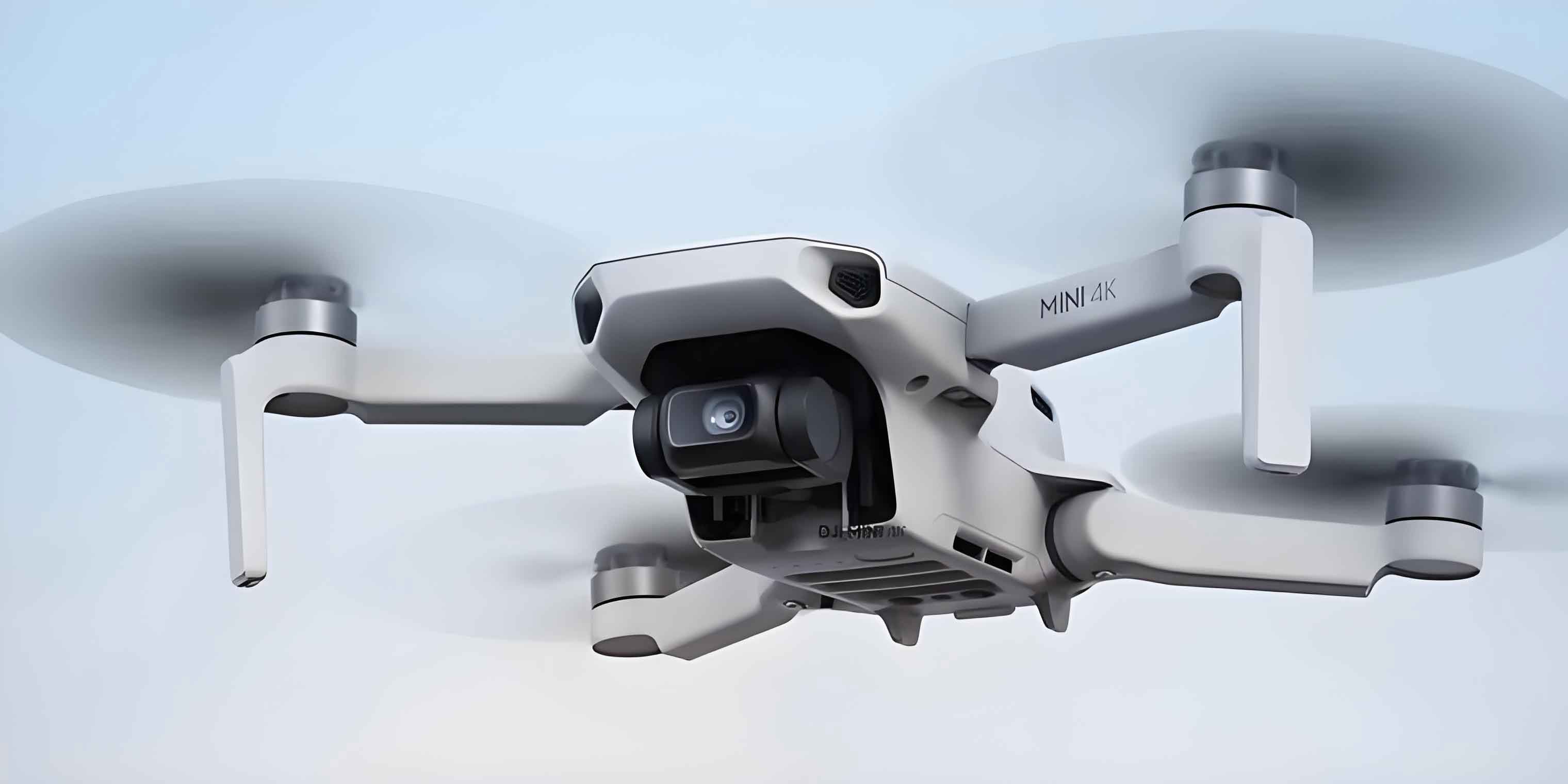
Lightweight UAV drones platforms offer distinct advantages, including vertical take-off and landing (VTOL) capability, flexible deployment, and rapid response. By elevating the monitoring system to altitudes above 120 meters, UAV drones can effectively bypass ground-level obstacles and establish line-of-sight (LoS) propagation links that approximate free-space conditions. This significantly improves the reception conditions for high-frequency signals. Consequently, researching C-band interference source monitoring methods based on UAV drones-mounted radio monitoring systems is of great significance for enhancing spectrum management efficacy. The visual below illustrates the operational concept of such a system, showcasing its ability to operate above ground clutter.
1. System Architecture and Experimental Design
To quantitatively assess the advantages of a UAV drones-based radio monitoring system over traditional ground-based search methods, we designed a verification test for locating simulated C-band satellite interference. The test involved simulating transmissions from a C-band satellite system ground terminal. Its objective was to determine the maximum detection range under the performance constraints of the current UAV drones-borne monitoring system across different propagation environments and transmission states, while simultaneously conducting a comparative test of ground-based逼近查找 (close-in search) capabilities.
The test selected two typical propagation environments: a rural setting and an urban setting. The rural environment featured a transmitter located in open farmland, surrounded by low-rise buildings and vegetation, with flat terrain offering propagation conditions close to free space. The urban environment positioned the transmitter on a rooftop approximately 30 meters above ground level, with the monitoring path traversing a dense area of buildings over 10 stories high, where multipath and blockage effects were significant.
The equipment used in the test is listed in the table below.
| Equipment Role | Model / Manufacturer | Frequency Band | Other Key Parameters |
|---|---|---|---|
| UAV Drones Receiving End | Drones System: DZF-AC3 | 200MHz – 8GHz | Sensitivity: -107 dBm |
| Ground Receiving End | Antenna: Jianwei Chuangye LNA: Dongfang Botai Spectrum Analyzer: N9344C |
5GHz – 7GHz 5GHz – 7GHz 9kHz – 20GHz |
Gain: 10 dBi Gain: 40 dB Sensitivity: -144 dBm |
| Transmitting End | Signal Source: R&S SMW200A Power Amplifier: Dongfang Botai Horn Antenna: Dongfang Botai |
100kHz – 20GHz 1GHz – 6GHz 5GHz – 7GHz |
Modulation: Various PSK Gain: 1-50 dB Gain: 20 dBi |
| Accessories: Tripods, Cables, etc. | |||
2. Theoretical Propagation Model and Performance Metrics
The fundamental metric for evaluating monitoring range is the received signal power. In an ideal free-space scenario, the path loss is calculated using the Friis transmission formula:
$$ L_{fs}(dB) = 32.45 + 20 \log_{10}(f_{MHz}) + 20 \log_{10}(d_{km}) $$
Where:
$L_{fs}$ is the free-space path loss in decibels (dB).
$f_{MHz}$ is the frequency in Megahertz (MHz). For our C-band test frequency of 5900 MHz, $f_{MHz} = 5900$.
$d_{km}$ is the distance between transmitter and receiver in kilometers (km).
The theoretical received power level ($P_{rx, theoretical}$) at the monitoring terminal can then be estimated as:
$$ P_{rx, theoretical}(dBm) = EIRP(dBm) + G_{rx}(dBi) – L_{fs}(dB) $$
Where:
$EIRP$ is the Effective Isotropic Radiated Power of the transmitter (40 dBm in our test).
$G_{rx}$ is the gain of the receiving antenna. For the UAV drones system, this was approximately -5 dBi due to the use of a wide-beam monitoring antenna.
The practical performance of the UAV drones system is assessed by measuring the actual received signal level ($P_{rx, actual}$) and comparing it to the noise floor of the receiver. A key metric is the Signal-to-Noise Ratio (SNR), which must be sufficient for reliable detection and measurement. For this study, a threshold of SNR > 5 dB was used to define a “detectable” signal.
$$ SNR(dB) = P_{rx, actual}(dBm) – N_{floor}(dBm) $$
3. Test Variables and Coverage Capability Analysis
The test investigated the impact of several variables on monitoring performance. At each test point, using a controlled variable method, the received signal levels for both the UAV drones and ground equipment were recorded simultaneously. The tested variables and their values are summarized below.
| Variable | Values | Remarks |
|---|---|---|
| Transmitter Elevation Angle | 30°, 55°, 80° | Simulating different latitude satellite look angles. |
| Transmitter Azimuth Angle | 0°, 55°, 180° | Corresponding to main lobe, side lobe, and back lobe reception. | UAV Drones Flight Altitude | 50 m, 120 m | Key variable for assessing altitude benefit. |
| Horizontal Distance from UAV Drones to Source | 1 km to 7 km | Primary range variable. |
| Propagation Environment | Rural, Urban | Core environment variable. |
The signal coverage capability was analyzed by comparing theoretical free-space reception levels with the maximum actual levels received by the UAV drones at two different altitudes in both environments. The results are consolidated in the following table.
| Environment | Distance (km) | Free-Space Loss (dB) | Theoretical Rx Level (dBm) | UAV @120m Actual Max Rx (dBm) | UAV @50m Actual Max Rx (dBm) |
|---|---|---|---|---|---|
| Rural | 1.0 | 107.87 | -67.87 | -75.9 | -82.4 |
| 2.0 | 113.89 | -73.89 | -82.9 | -98.8 | |
| 3.0 | 117.41 | -77.41 | -92.9 | -98.1 | |
| 4.3 | 120.54 | -80.54 | -95.3 | No Signal | |
| 5.2 | 122.19 | -82.19 | -97.5 | -99.5 | |
| 7.0 | 124.77 | -84.77 | -102.3 | No Signal | |
| Urban | 1.1 | 108.69 | -68.69 | -91.0 | -98.9 |
| 1.8 | 112.97 | -72.97 | -84.4 | -97.8 | |
| 3.3 | 118.24 | -78.24 | -97.7 | No Signal | |
| 4.5 | 120.93 | -80.93 | -105.1 | No Signal |
Analysis of Results:
- Rural vs. Urban: The actual received levels in the rural environment are consistently closer to the theoretical free-space values compared to the urban environment. This confirms the severe additional attenuation and fading introduced by the dense urban landscape.
- Altitude Advantage: In both environments, reception at 120 meters altitude is markedly superior to that at 50 meters. The higher-altitude UAV drones platform maintains a detectable signal at greater distances. For instance, in the rural setting, the 120m UAV drones received a signal at 7 km (albeit weak), while the 50m UAV drones lost the signal between 4.3 km and 5.2 km.
- Mechanism of Improvement: In urban environments, low-altitude (50m) monitoring suffers from severe blockage and strong multipath from buildings. Elevating the UAV drones to 120m helps it clear many local obstacles, reducing NLOS conditions and mitigating destructive multipath interference, leading to a more stable reception of the direct path signal. In rural areas, while the environment is generally open, low-altitude flight can still be affected by minor terrain features, vegetation, and ground reflections. The higher altitude provides a cleaner, more consistent LoS path, extending the reliable monitoring range.
The contrasting signal propagation characteristics in the two test environments are summarized below.
| Comparison Dimension | Urban Environment | Rural Environment | Comprehensive Conclusion |
|---|---|---|---|
| Signal Propagation特性 | Significant multipath, strong building blockage. | Approximates free-space, minimal blockage. | Urban: Complex reflection, fast signal decay. Rural: Gradual attenuation, stable main lobe. |
| Low Altitude (50m) Performance | Severely obstructed, high fluctuation. | Minor local terrain effects, overall stable. | Urban low-altitude signals are significantly impaired; rural low-altitude remains usable but limited. |
| High Altitude (120m) Performance | Signal continuity improves显著, clearer main lobe. | Optimal LoS, stable even at long range. | High altitude significantly improves signal quality and expands coverage in both environments. |
| Monitoring Range Outcome | Stable reception up to ~1.8 km. | Stable reception beyond 5.2 km. | Monitoring range is distinctly farther in rural environments. |
| Effect of Altitude Increase | Effectively avoids building blockage, reduces reflection interference. | Clears terrain obstacles, improves long-range接收性能. | Altitude提升 delivers significant performance gains in both environments, though via different mechanisms (avoiding clutter vs. extending LoS). |
4. Comparative Analysis with Traditional Ground-Based Monitoring
The performance of traditional ground-based mobile monitoring is influenced by two primary factors: monitoring distance (which governs basic path loss) and the height difference between the monitoring antenna and local obstructions (which introduces additional losses from reflection, diffraction, and scattering). The relationship between received signal strength and distance is non-linear and highly unpredictable due to ground environment variability, necessitating case-by-case analysis.
In our practical tests, the maximum detection range (where SNR fell below 5 dB) for the three methods under comparison is shown below.
| Test Environment | Maximum Detectable Range (km) for SNR > 5 dB | ||
|---|---|---|---|
| UAV Drones @ 120m | UAV Drones @ 50m | Ground-Based Search | |
| Rural Environment | 7.0 | 3.0 | 4.3 |
| Urban Environment | 4.5 | 1.8 | 2.3 |
Analysis: The ground-based system, equipped with a high-gain directional antenna and a 40 dB low-noise amplifier (LNA), had a total link gain approximately 40 dB higher than the UAV drones system. This allowed it to outperform the 50m-altitude UAV drones in terms of raw received signal level at some points. However, its effectiveness is crippled by the ground environment’s unpredictability. The primary failure mode for ground search is not a lack of signal sensitivity, but the inability to obtain a usable, stable direction-of-arrival (DOA) estimate due to severe multipath and NLOS conditions. Radio administrators often try to mitigate this by seeking elevated positions (hilltops, tall buildings), but this introduces substantial logistical overhead, communication costs with property owners, and uncertainty regarding power supply. In contrast, a UAV drones platform can be deployed rapidly to achieve an elevated vantage point, offering superior operational agility and measurement reliability during the initial blind search phase for an unknown干扰源.
A summary comparison of the advantages and disadvantages of the different interference查找方法 is provided below.
| Evaluation Criteria | UAV Drones-borne Monitoring System | Traditional Ground Mobile Search | Monitoring from Elevated Ground Positions |
|---|---|---|---|
| Site Selection | Easy. Outside airspace管制 zones, requires map planning, site survey, and local flight notification. | Easy. Low-speed driving or brief stops on roads/parking lots. | Difficult. Rural: Relies on scarce natural high points. Urban: Requires coordination with building owners/tenants for access. |
| Measurement Environment | Favorable. Can hover in any open aerial location, less affected by terrain/buildings along the path. | Unfavorable. Antenna is typically in low-lying areas, highly affected by path obstructions. | Moderate. Elevated position moderately reduces path obstruction effects. |
| Equipment Power Supply | Easy. Uses onboard and spare batteries. | Easy. Powered from vehicle. | Difficult. Elevated sites often lack readily available power, requiring coordination for临时接电. |
| DOA Accuracy & Stability | High. Cleaner LoS path enables more accurate and stable bearing measurements. | Low/Unreliable. Severe multipath corrupts bearing information. | Variable. Improves over ground mobile but depends on specific site; may still have partial blockage. |
| Response Speed | Fast. Direct flight to operational altitude and area. | Slow. Limited by road network and traffic; search pattern is constrained. | Very Slow. Hindered by time-consuming site access and power negotiations. |
5. Practical Implementation and Methodology for UAV Drones-based C-band Monitoring
Based on the test findings, a systematic methodology for employing UAV drones in C-band interference hunting can be formulated. This methodology maximizes the advantages offered by UAV drones platforms.
Phase 1: Pre-Deployment Planning and Signal Analysis
- Interference Characterization: Use fixed stations or initial mobile scans to determine the approximate geographic area and basic signal parameters (frequency, bandwidth, modulation) of the interfering signal.
- Flight Path Planning: Utilize geographic information system (GIS) data and 3D building models to plan initial flight paths. Prioritize routes that provide line-of-sight from expected flight altitudes (e.g., 120m) to the suspected干扰源 area. Identify potential take-off/landing zones.
- Regulatory Compliance: Secure necessary flight permissions and adhere to local UAV drones regulations regarding altitude limits, no-fly zones, and visual line-of-sight (VLOS) or beyond visual line-of-sight (BVLOS) operation rules.
Phase 2: Aerial Search and Localization
- Wide-Area Search Pattern: Deploy the UAV drones to the planned altitude (e.g., 120m). Fly a search pattern (e.g., expanding square, spiral) over the suspected area while monitoring received signal strength (RSSI). The equation for estimating distance ($d$) from a measured $P_{rx}$ (assuming free-space propagation for initial rough estimate) can be inverted from the path loss formula:
$$ d_{km} \approx 10^{\frac{P_{rx}(dBm) – EIRP(dBm) – G_{rx}(dBi) + 32.45 + 20 \log_{10}(f_{MHz})}{20}} $$
This provides a crude range estimate to guide the search. - Direction Finding (DF) and Triangulation: Once a stable signal is acquired, use the UAV drones’s DF capability (e.g., using a Doppler or pseudo-Doppler DF system, or a rotating directional antenna) to take multiple bearings from different aerial positions $A(x_1, y_1, z_1)$, $B(x_2, y_2, z_2)$, etc. The estimated source location $(X_s, Y_s, Z_s)$ can be found by solving the set of equations derived from the bearing vectors $\vec{v_i}$ from each measurement point $i$. For a simplified 2D case with bearings $\theta_i$:
$$ \tan(\theta_i) = \frac{Y_s – y_i}{X_s – x_i} $$
Using multiple ($n \geq 2$) such equations allows for triangulation. The 3D capability of UAV drones significantly improves geometric diversity and localization accuracy compared to ground-based DF confined to a 2D plane. - Altitude Optimization: If signal quality is poor, incrementally increase altitude within regulatory limits to overcome specific obstructions, as demonstrated by the superior performance of the 120m UAV drones.
Phase 3: Pinpointing and Verification
- Close-In Aerial Inspection: Navigate the UAV drones towards the estimated location while continuously monitoring signal strength, which should increase according to the inverse square law ($P_{rx} \propto 1/d^2$). Use the live video feed to visually identify potential transmitter hardware (e.g., illegal satellite dishes, unauthorized antennas).
- Ground Team Coordination: Once the干扰源 is pinpointed from the air, guide a ground team to the exact location for final confirmation, evidence collection, and enforcement action. The UAV drones can remain on station to provide real-time guidance.
- Data Logging and Reporting: Record all flight paths, signal measurements (RSSI, spectrum plots, bearings), timestamps, and visual evidence. This data is crucial for post-operation analysis and regulatory reporting.
6. Future Outlook and Development Directions
The application of UAV drones in radio monitoring, particularly for challenging bands like the C-band, is poised for significant growth. Future developments will focus on enhancing the autonomy, intelligence, and integration of these systems.
1. Advanced Platform and Payload Integration: Development of purpose-built UAV drones platforms with extended endurance, greater payload capacity for more sophisticated monitoring equipment (e.g., high-performance spectrum analyzers, multi-channel DF arrays), and improved resistance to environmental factors like wind. Integration of software-defined radio (SDR) payloads will allow for greater flexibility in monitoring multiple bands and signal types.
2. AI and Machine Learning for Signal Processing: Implementing AI algorithms directly on the UAV drones or at a ground control station to:
- Automatically classify and identify different types of signals and interference patterns in real-time.
- Optimize flight paths autonomously based on real-time signal strength maps and 3D environment models, using techniques like reinforcement learning to find the optimal path for source localization.
- Mitigate multipath effects in DF calculations through advanced signal processing models trained on urban propagation data.
3. Swarm and Cooperative Monitoring: Deploying multiple UAV drones in a coordinated swarm. This allows for:
- Simultaneous bearing measurements from spatially diverse points, drastically reducing localization time and improving accuracy through collaborative triangulation. The location estimation could be solved via collaborative filtering algorithms across the swarm.
- Creating real-time, dynamic radio environment maps (REMs) over a wide area.
- One UAV drones acting as a communications relay for others operating in BVLOS mode.
4. Deep Integration with National Monitoring Networks: UAV drones should not operate in isolation. They need to be seamlessly integrated into the national radio monitoring network infrastructure. This involves:
- Standardized data formats and communication protocols for sharing measurement data between UAV drones, ground vehicles, and fixed stations.
- Using data from fixed stations to cue UAV drones deployments to specific trouble areas.
- Fusing UAV drones-collected data with other sources (e.g., satellite monitoring data, complaints databases) to build a comprehensive picture of the electromagnetic spectrum.
5. Regulatory and Operational Framework Evolution: As the use of UAV drones for spectrum monitoring becomes routine, regulatory frameworks must evolve to support safe, efficient, and authorized operations, especially for BVLOS flights in controlled airspace. Standardized operational procedures and training programs for radio monitoring personnel will be essential.
7. Conclusion
This research, through systematic testing and analysis, validates the technical effectiveness of lightweight UAV drones platforms in locating C-band ground interference sources. The results demonstrate that operation at an altitude of 120 meters significantly enhances signal reception stability and direction-finding precision. The UAV drones-based system achieved effective monitoring coverage of up to 5.2 km in rural environments and 1.8 km in dense urban environments, outperforming traditional ground-based search methods. The key advantages of UAV drones—rapid deployment, access to unobstructed aerial vantage points, and superior几何 diversity for DF—provide a compelling solution to the limitations of traditional methods in high-frequency bands.
The findings offer a replicable and scalable technical pathway for the rapid identification and resolution of radio frequency interference in critical bands like the C-band. The methodology and insights presented contribute directly to safeguarding national electromagnetic spectrum security, ensuring the reliable operation of essential services like satellite communications and 5G networks. Furthermore, as the “low-altitude economy” develops, the proactive management of the spectrum environment using advanced tools like UAV drones will be a critical enabling factor, supporting innovation and safe integration of new aerial services. Future work will focus on integrating autonomous navigation, artificial intelligence for signal analysis, and swarm coordination to further advance the capabilities of UAV drones-based radio monitoring systems.