
As a researcher in the field of unmanned aerial systems, I have witnessed the rapid evolution of drone technology and its transformative impact across military and civilian domains. The concept of drone formation has emerged as a pivotal strategy to overcome limitations of single drones, such as limited endurance, sensor coverage, and mission reliability. In this article, I will delve into the current state and progress of cooperative navigation for drone formations, a critical enabler for precise positioning, formation stability, and mission success. Cooperative navigation involves fusing data from multiple drones to enhance overall navigation accuracy, especially in environments where global navigation satellite systems (GNSS) are degraded or unavailable. Through this first-person perspective, I aim to provide a comprehensive overview, incorporating tables and formulas to summarize key aspects, while frequently emphasizing the importance of drone formation in modern applications.
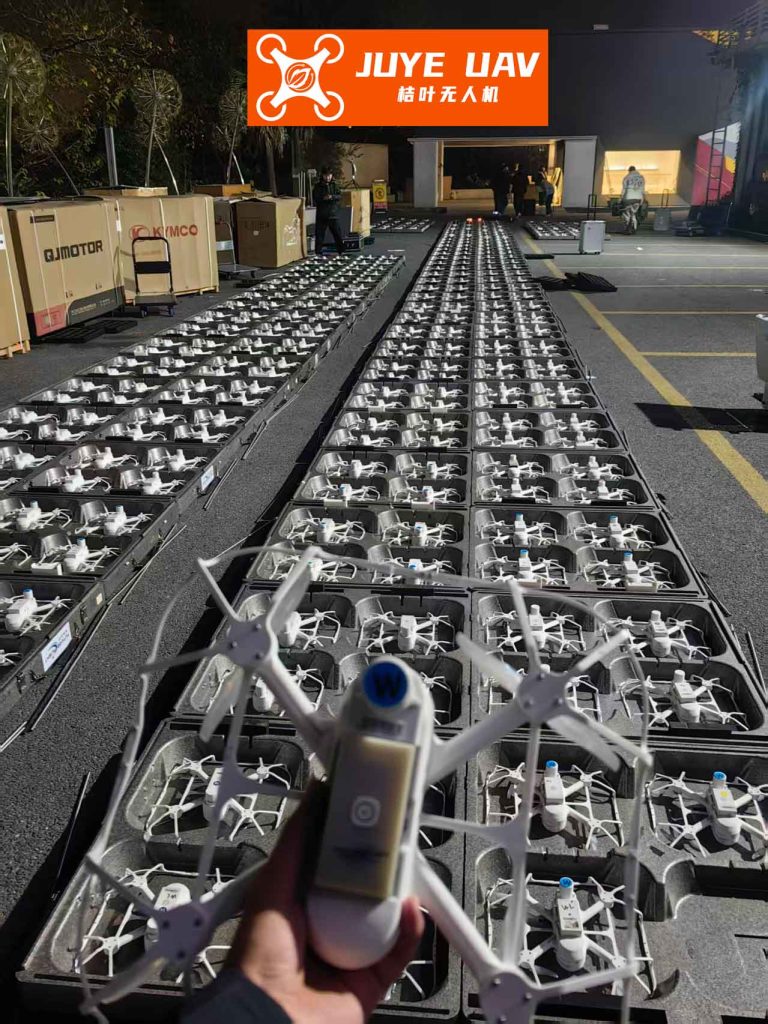
The above image illustrates a stunning drone light show, which exemplifies the precision and coordination achievable in drone formation. Such displays rely heavily on advanced cooperative navigation techniques to synchronize movements and maintain formation integrity. This visual metaphor underscores the broader applications of drone formation in areas like surveillance, logistics, and environmental monitoring, where navigation accuracy is paramount. In the following sections, I will explore the principles, sensor technologies, relative navigation methods, formation structures, algorithms, and future trends in drone formation cooperative navigation.
Drone formation cooperative navigation operates on the principle of sharing navigation information among drones to correct individual errors and improve collective positioning. Typically, drones are equipped with inertial navigation systems (INS) and GNSS receivers, but these systems have inherent limitations. INS provides autonomous navigation but suffers from error accumulation over time, while GNSS offers high accuracy but is susceptible to jamming and signal blockage. In a drone formation, cooperative navigation mitigates these issues by allowing drones to exchange data, such as relative ranges or positions, enabling error estimation and correction. The fundamental equation for navigation error in a single drone can be expressed as:
$$ \delta \mathbf{x}_{k} = \mathbf{F}_{k} \delta \mathbf{x}_{k-1} + \mathbf{w}_{k} $$
where $\delta \mathbf{x}_{k}$ is the state error vector (e.g., position, velocity, attitude errors) at time $k$, $\mathbf{F}_{k}$ is the state transition matrix, and $\mathbf{w}_{k}$ is the process noise. In a drone formation, cooperative measurements between drones provide additional constraints, reducing the overall error. For instance, if two drones measure their relative distance, the measurement model can be represented as:
$$ z_{ij} = \| \mathbf{p}_i – \mathbf{p}_j \| + v_{ij} $$
where $z_{ij}$ is the measured distance between drone $i$ and drone $j$, $\mathbf{p}_i$ and $\mathbf{p}_j$ are their positions, and $v_{ij}$ is measurement noise. By integrating such measurements across the drone formation, navigation filters can estimate and correct errors, enhancing accuracy for all members. This cooperative approach is essential for maintaining formation geometry, especially in challenging environments.
Navigation sensors are the backbone of any drone formation system. Over the years, advancements in sensor technology have significantly improved the capabilities of cooperative navigation. Below, I summarize the key navigation sensors used in drone formations, along with their characteristics and recent developments.
| Sensor Type | Key Features | Limitations | Recent Advances |
|---|---|---|---|
| Inertial Navigation System (INS) | Autonomous, provides attitude, velocity, position; high short-term accuracy | Error drifts over time; requires initialization | Development of nuclear magnetic resonance gyros, cold atom sensors, and hemispherical resonator gyros for higher precision |
| Global Navigation Satellite System (GNSS) | High accuracy globally; low-cost receivers | Vulnerable to jamming, spoofing, and signal obstruction | Enhancements via inter-satellite links, anti-jamming algorithms, and reflectometry for environmental sensing |
| Visual Navigation System | Uses cameras for feature tracking; effective in GPS-denied areas | Depends on lighting and feature richness; computational heavy | Deep learning-based object recognition, optical flow methods inspired by insect navigation |
| Radio Frequency (RF) Sensors | Includes ultra-wideband (UWB) for precise ranging; supports relative navigation | Limited range; interference from obstacles | Integration with INS/GNSS for robust cooperative positioning in urban environments |
| Laser Rangefinders | High-precision distance measurements; useful for obstacle avoidance | Line-of-sight required; affected by weather | Miniaturization and cost reduction for widespread drone use |
The integration of these sensors into relative navigation systems is crucial for drone formation cooperative navigation. A typical relative navigation system combines INS, GNSS, and auxiliary sensors like vision or UWB to form a multi-source fusion framework. The general information flow can be modeled as a centralized or distributed filter. For example, in a master-slave drone formation, the master drone with high-precision sensors provides reference data to slave drones, which then fuse it with their own sensor data. The fusion process can be described using a Kalman filter formulation. Let $\mathbf{x}_s$ be the state vector of a slave drone, and $\mathbf{z}_s$ be the measurement vector that includes relative observations from the master drone. The update step in the Kalman filter is:
$$ \mathbf{K}_k = \mathbf{P}_{k|k-1} \mathbf{H}_k^T (\mathbf{H}_k \mathbf{P}_{k|k-1} \mathbf{H}_k^T + \mathbf{R}_k)^{-1} $$
$$ \mathbf{x}_{k|k} = \mathbf{x}_{k|k-1} + \mathbf{K}_k (\mathbf{z}_k – \mathbf{H}_k \mathbf{x}_{k|k-1}) $$
$$ \mathbf{P}_{k|k} = (\mathbf{I} – \mathbf{K}_k \mathbf{H}_k) \mathbf{P}_{k|k-1} $$
where $\mathbf{K}_k$ is the Kalman gain, $\mathbf{P}$ is the error covariance, $\mathbf{H}$ is the measurement matrix, and $\mathbf{R}$ is the measurement noise covariance. In drone formation cooperative navigation, this filter is extended to incorporate inter-drone measurements, improving the overall state estimation. The effectiveness of such systems has been demonstrated in various studies, showing that relative navigation can maintain accuracy even when GNSS signals are lost, which is vital for persistent drone formation operations.
Formation geometry and navigation structure play a significant role in the performance of cooperative navigation for drone formation. Two common structures are master-slave and parallel architectures. In master-slave structures, one drone (master) is equipped with high-end navigation sensors, while others (slaves) use lower-cost sensors and rely on the master for correction. This hierarchical approach reduces costs but introduces a single point of failure. In parallel structures, all drones have similar capabilities and share information equally, enhancing robustness but requiring more complex communication and processing. The choice of structure depends on mission requirements, such as scalability and fault tolerance. For instance, in a drone formation for surveillance, a master-slave setup might be efficient, whereas in a decentralized swarm, parallel navigation is preferable.
The formation shape also impacts navigation accuracy. Geometric configurations like triangles, lines, or grids can provide optimal observability for relative measurements. Consider a triangle formation of three drones. The relative distances between them can be used to estimate individual positions using trilateration. The relationship can be expressed with equations based on the law of cosines. If the distances between drones are $d_{12}$, $d_{13}$, and $d_{23}$, and assuming drone 1 is at the origin, the position of drone 2 $(x_2, y_2)$ and drone 3 $(x_3, y_3)$ can be solved from:
$$ d_{12}^2 = x_2^2 + y_2^2 $$
$$ d_{13}^2 = x_3^2 + y_3^2 $$
$$ d_{23}^2 = (x_2 – x_3)^2 + (y_2 – y_3)^2 $$
Such geometric constraints enhance cooperative navigation by providing additional equations for state estimation. In practice, drone formations often adapt their shapes dynamically to maintain navigation accuracy, especially in challenging environments like urban canyons or forests. This adaptability is a key advantage of drone formation cooperative navigation, allowing for resilient mission execution.
Cooperative navigation algorithms are the core intelligence behind drone formation positioning. Over the years, numerous filtering and estimation techniques have been developed to address challenges like non-linearities, communication delays, and environmental uncertainties. Below, I summarize some prominent algorithms used in drone formation cooperative navigation, along with their mathematical formulations and applications.
| Algorithm | Key Concept | Mathematical Formulation | Advantages for Drone Formation |
|---|---|---|---|
| Extended Kalman Filter (EKF) | Linearizes non-linear models for state estimation | $\mathbf{x}_{k|k-1} = f(\mathbf{x}_{k-1|k-1}), \mathbf{P}_{k|k-1} = \mathbf{F}_k \mathbf{P}_{k-1|k-1} \mathbf{F}_k^T + \mathbf{Q}_k$ | Handles moderate non-linearities in relative measurements; widely used in INS/GNSS fusion |
| Unscented Kalman Filter (UKF) | Uses sigma points to capture non-linear transformations | $\mathcal{X}_0 = \mathbf{x}, \mathcal{X}_i = \mathbf{x} \pm (\sqrt{(n+\lambda)\mathbf{P}})_i, i=1,\dots,2n$ | Better accuracy for highly non-linear systems, such as vision-based relative navigation |
| Particle Filter (PF) | Monte Carlo sampling for posterior estimation | $w_k^{(i)} \propto w_{k-1}^{(i)} \frac{p(z_k | \mathbf{x}_k^{(i)}) p(\mathbf{x}_k^{(i)} | \mathbf{x}_{k-1}^{(i)})}{q(\mathbf{x}_k^{(i)} | \mathbf{x}_{k-1}^{(i)}, z_k)}$ | Robust to multi-modal distributions; suitable for complex environments in drone formation |
| Consensus-Based Filtering | Distributed estimation via information exchange | $\mathbf{x}_i^{k+1} = \sum_{j \in N_i} a_{ij} \mathbf{x}_j^k + \mathbf{K}_i (z_i – \mathbf{H}_i \mathbf{x}_i^k)$ | Reduces communication load; scalable for large drone formations |
| Adaptive Filtering | Adjusts noise statistics online | $\mathbf{R}_k = \alpha \mathbf{R}_{k-1} + (1-\alpha) (\mathbf{v}_k \mathbf{v}_k^T – \mathbf{H}_k \mathbf{P}_{k|k-1} \mathbf{H}_k^T)$ | Improves robustness to sensor faults and environmental changes in drone formation |
These algorithms enable drone formation cooperative navigation to achieve high precision even under adverse conditions. For example, in GNSS-denied environments, visual odometry combined with UWB ranging can be fused using an EKF to maintain formation coherence. The state vector might include position, velocity, and attitude, while measurements include relative distances and visual feature correspondences. The continuous evolution of these algorithms is driven by the need for real-time processing and adaptability in dynamic drone formation scenarios.
Looking ahead, the future of drone formation cooperative navigation is poised for several transformative trends. As a researcher, I anticipate increased integration with other unmanned systems, such as autonomous ground vehicles or underwater drones, to enable multi-domain cooperative navigation. This will require advanced fusion algorithms and standardized communication protocols. Additionally, the development of more accurate and affordable sensors, like quantum inertial sensors or enhanced vision systems, will boost navigation performance. Another critical direction is the enhancement of autonomous decision-making in drone formation, allowing drones to dynamically reconfigure based on navigation accuracy and mission goals. Fault tolerance and resilience will also be paramount, with algorithms capable of detecting and isolating sensor failures in real-time. Finally, the rise of artificial intelligence and machine learning will lead to smarter cooperative navigation systems that can learn from environmental data and optimize formation paths. These advancements will solidify drone formation as a cornerstone of future autonomous systems.
In conclusion, drone formation cooperative navigation is a vibrant field that addresses the challenges of precise positioning and coordination in multi-drone systems. Through the integration of diverse sensors, innovative formation structures, and advanced algorithms, it enables robust navigation in complex environments. The frequent emphasis on drone formation throughout this article underscores its centrality to modern applications, from aerial displays to critical missions. As technology progresses, cooperative navigation will continue to evolve, driving new capabilities and ensuring that drone formations operate with unprecedented accuracy and reliability. I believe that ongoing research and development in this area will unlock even greater potentials, making drone formation an indispensable tool across industries.
To further illustrate the mathematical underpinnings, consider a simplified model for cooperative navigation error dynamics in a drone formation. Let the state vector for N drones be $\mathbf{X} = [\mathbf{x}_1^T, \mathbf{x}_2^T, \dots, \mathbf{x}_N^T]^T$, where $\mathbf{x}_i$ represents the navigation errors of drone i. The cooperative measurement vector $\mathbf{Z}$ includes all inter-drone ranges. The overall system can be described as:
$$ \dot{\mathbf{X}} = \mathbf{A} \mathbf{X} + \mathbf{W} $$
$$ \mathbf{Z} = \mathbf{C} \mathbf{X} + \mathbf{V} $$
where $\mathbf{A}$ is the system matrix capturing individual error dynamics, $\mathbf{C}$ is the measurement matrix derived from formation geometry, and $\mathbf{W}$ and $\mathbf{V}$ are noise terms. Cooperative navigation aims to estimate $\mathbf{X}$ from $\mathbf{Z}$, reducing errors through filtering. This framework highlights the interconnected nature of drone formation navigation, where each drone’s accuracy benefits from the collective. As drone formation technologies advance, such models will become more sophisticated, incorporating factors like communication delays and environmental disturbances, ultimately leading to more resilient and accurate systems.