
From my perspective as an observer deeply involved in the field of radio communications and spectrum management, the explosive growth of the civilian UAV (Unmanned Aerial Vehicle) market represents one of the most significant technological and regulatory challenges of the past decade. The transition of these devices from niche professional tools to ubiquitous consumer products has been staggering. The sales scale has skyrocketed, fueled by maturing supply chains, plummeting hardware costs, and soaring public interest. The user base has expanded exponentially, moving from a small group of enthusiasts to the general public. This growth is primarily driven by three powerful engines: personal consumer drones, commercial drones, and government-operated UAVs. Forecasts are telling: personal consumer drone shipments were projected to reach 29 million units in 2021, with a compound annual growth rate (CAGR) of 31.3%. Enterprise drone shipments, though smaller in volume, were expected to hit 805,000 units with a five-year CAGR of 51%.
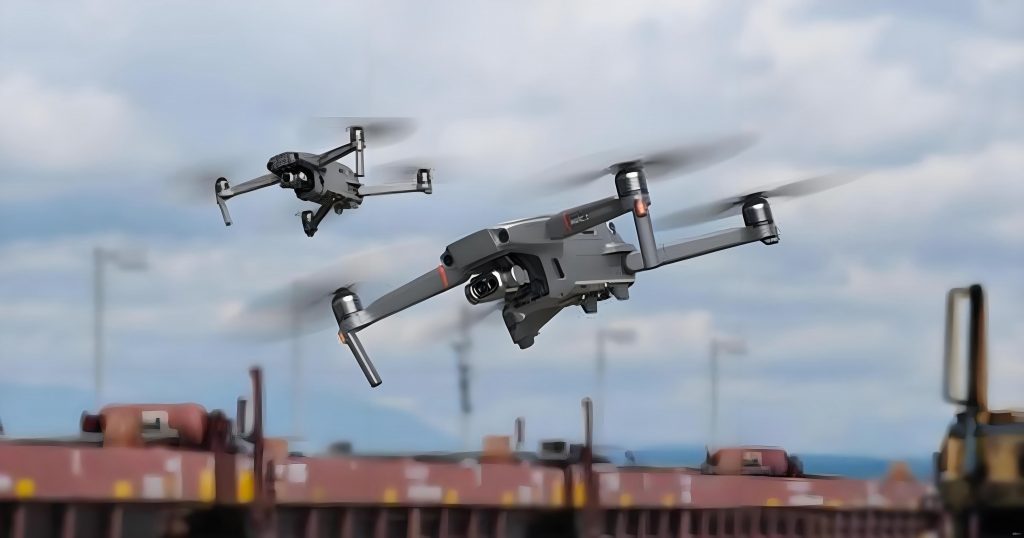
This proliferation is not without its profound implications. The advancement of artificial intelligence and the miniaturization of intelligent hardware have unlocked unprecedented opportunities for civilian UAV applications. They are now deeply integrated into sectors such as aerial photography, surveying and mapping, agricultural plant protection, express delivery, disaster rescue, epidemic monitoring, wildlife observation, and news reporting. However, alongside these benefits, the threats posed by civilian UAVs to public security have become increasingly prominent. The core challenges in drone regulation are often summarized as five key difficulties: ground control is hard, aerial detection is hard, active intervention is hard, traceability and accountability are hard, and legal prosecution is hard. This landscape makes strengthening the radio technical regulation of civilian UAVs not just important, but urgent.
Technical Architecture and Frequency Usage of Civilian UAVs
The operational framework of a typical civilian UAV relies on several critical communication and navigation links, each with distinct frequency characteristics and vulnerabilities.
1. Remote Control (Command) Link
This is an uplink, transmitting commands from the ground control station (GCS) to the civilian UAV. It is the most vital link for direct pilot control.
Historically, analog remote controls used frequencies like 27 MHz, 35 MHz, 40 MHz, and 72 MHz. Modern digital systems have largely migrated to the 2.4 GHz ISM band. However, a variety of other frequencies are also in use, including 328–352 MHz, 433 MHz, 560–760 MHz, 915 MHz, and 5.8 GHz.
To enhance reliability and avoid interference, these links commonly employ Frequency-Hopping Spread Spectrum (FHSS) technology. The signal hops across a sequence of channels within its band. A typical system might hop dozens of times per second, with dwell times on each channel ranging from 0.5 to 8 milliseconds.
The impact of jamming this link is severe. If a pre-programmed flight path exists, the civilian UAV may continue on that path. Without a preset route, a common failsafe behavior is “Return-to-Home” (RTH) or an immediate landing in place.
2. Data and Video Downlink
This downlink carries telemetry data (position, altitude, battery status, system health) and, crucially, live video feed from the drone’s camera back to the operator.
The telemetry data is essential for situational awareness. The video feed, often called the First Person View (FPV) or simply “video downlink,” is a key feature for beyond-visual-line-of-sight (BVLOS) operation, allowing the pilot to navigate via the camera’s perspective.
The dominant frequency for video transmission is 5.8 GHz, favored for its available bandwidth which supports higher video quality. Alternative frequencies include 433 MHz, 1.2 GHz, and 2.4 GHz.
Jamming the video downlink disrupts the pilot’s situational awareness in BVLOS flight but does not directly affect the flight controls. Within visual line of sight (VLOS), the operator can still fly the civilian UAV manually.
3. Navigation System
Virtually all modern civilian UAVs rely on Global Navigation Satellite Systems (GNSS) such as GPS (USA), with many also supporting GLONASS (Russia) and BeiDou (China). The GNSS receiver provides critical data for:
- Attitude stabilization and hold (e.g., position hold, altitude hold).
- Acquisition of state information (3D position, velocity, time).
- Execution of autonomous or pre-programmed flight paths (waypoint navigation).
Jamming GNSS signals has a debilitating effect. The civilian UAV loses its geospatial reference. It may attempt to maintain level flight using its Inertial Measurement Unit (IMU—gyroscopes and accelerometers), but this is subject to drift. For an inexperienced pilot, the aircraft becomes extremely difficult to control, often leading to a loss of stability and a crash. If executing a pre-set route, it will be unable to continue and may land or drift with the wind.
The relationship between these systems can be summarized in the following table:
| Link Type | Direction | Primary Modern Frequencies | Key Function | Consequence of Disruption/Jamming |
|---|---|---|---|---|
| Remote Control | Uplink | 2.4 GHz, 5.8 GHz, 915 MHz, 433 MHz | Flight command input | Activation of failsafe (RTH/Land) or loss of control |
| Data/Video Downlink | Downlink | 5.8 GHz, 1.2 GHz, 2.4 GHz | Telemetry & live video feedback | Loss of situational awareness; VLOS flight still possible |
| GNSS Navigation | Downlink (from satellites) | L1 Band (~1.575 GHz), etc. | Positioning, stabilization, autonomy | Degraded stability, loss of position hold, navigation failure |
The Critical Gap: Spectrum Regulation for Civilian UAVs
The rapid, market-driven adoption of civilian UAV technology has far outstripped the development of cohesive and enforceable spectrum policy. This regulatory lag is a root cause of many safety and security concerns.
In an effort to adapt, China’s Ministry of Industry and Information Technology (MIIT) issued a notification in 2015 planning specific frequency bands for unmanned aircraft systems:
- 840.5–845 MHz: For uplink remote control. The segment 841–845 MHz can be used for both uplink and downlink via Time Division.
- 1430–1444 MHz: For downlink telemetry and data transmission. 1430–1438 MHz is reserved for police UAVs/helicopters for video, with other UAVs using 1438–1444 MHz.
- 2408–2440 MHz: As a backup frequency for both control and data links.
However, this regulation faces a significant implementation challenge. The International Telecommunication Union’s (ITU) Radio Regulations lack specific global rules for civilian UAV spectrum. Consequently, a vast array of pre-existing and current civilian UAV models operate on a wide range of non-compliant frequencies, including 328–352 MHz, 400–449 MHz, 560–760 MHz, and the popular 5.8 GHz band. The 2015 notice essentially functions as a post-facto standard that has not been rigorously enforced against the installed base of devices.
While broader legal frameworks have been updated—such as China’s revised Radio Regulation Ordinance in 2016—they offer only general protections for safety-of-life services on aircraft without providing granular, actionable rules for civilian UAV operations. This absence of detailed, top-down legislation and technical standards creates bottlenecks for the orderly development of the industry.
The following table contrasts the officially planned spectrum with the reality of common usage:
| Link Type | Officially Planned Spectrum (MIIT, 2015) | Commonly Used Spectrum in Reality | Regulatory Status |
|---|---|---|---|
| Command & Control (Uplink) | 840.5–845 MHz | 2.4 GHz, 5.8 GHz, 433 MHz, 915 MHz | Largely non-compliant / Unregulated |
| Telemetry/Data (Downlink) | 1430–1444 MHz | 5.8 GHz, 2.4 GHz, 1.2 GHz | Largely non-compliant / Unregulated |
| Backup/General | 2408–2440 MHz | Often used as a primary band for Wi-Fi-based video | Partial compliance overlap |
Principles and Strategies for Radio Frequency Control of Civilian UAVs
Effective radio frequency management of civilian UAVs requires a multi-layered strategy that differentiates between cooperative and non-cooperative targets. The most pragmatic approach is to prioritize “protocol-based control” supplemented by traditional “energy-based suppression.”
1. Protocol Control for Cooperative Civilian UAVs
For the vast majority of off-the-shelf, unmodified civilian UAVs purchased through正规 channels, the most effective long-term solution is collaboration with manufacturers. The goal is to establish a unified UAV monitoring and management service platform. This system would work by:
- Interfacing with the drone’s communication protocol to identify and track it.
- Monitoring flight parameters (time, location, altitude, heading, speed) in real-time.
- Pushing flight information (notams, geofencing updates) directly to the drone.
- Enforcing dynamic no-fly zones and flight restrictions.
This method increases transparency and prevents hazards proactively, rather than reacting to them.
2. Technical Countermeasures for Non-Cooperative Civilian UAVs
For malicious drones operating in “radio silence” mode or those intentionally used for illicit activities, technical detection, localization, and suppression are necessary. A layered defense is key:
- Detection & Localization: Using RF scanners to detect control, video, and telemetry emissions; radar for primary detection of the physical object; electro-optical/infrared (EO/IR) sensors for visual confirmation.
- Suppression/Neutralization: This is where energy-based countermeasures come into play. The target links are the GNSS signal and the command link.
Analysis of Jamming Scenarios and Their Risks
The choice of which link to jam involves critical risk assessment. We can model the effectiveness and collateral damage of each option.
a) GNSS Jamming: Technically, this is often the easiest to implement. A jammer broadcasting noise or deceptive signals on GNSS frequencies (e.g., ~1.575 GHz for GPS L1) can deny positioning service over a wide area.
The free-space path loss for a jamming signal can be approximated by the Friis transmission equation in its simplest form for loss:
$$ L_{fs} = 20 \log_{10}(d) + 20 \log_{10}(f) + 20 \log_{10}\left(\frac{4\pi}{c}\right) $$
Where \(d\) is distance, \(f\) is frequency, and \(c\) is the speed of light. Lower frequencies propagate better, but GNSS signals are extremely weak by the time they reach Earth, making them highly vulnerable to jamming.
Critical Consideration: GNSS is a critical infrastructure. Indiscriminate jamming near airports, during major public events, or in urban areas can disrupt countless other essential services—aviation, transportation, communications networks, and timing systems. The collateral damage is unacceptable in most scenarios.
b) Command Link Jamming: Jamming the 2.4 GHz or 5.8 GHz control signal can be effective. However, this triggers the drone’s failsafe. If the failsafe is RTH, the civilian UAV will fly back to its recorded home point, which could be directly through the protected airspace or towards a populated area. If it is “land immediately,” it becomes a falling hazard. This creates significant secondary risks, especially over airports or crowds.
c) A Recommended Strategy: Spoofing and Directed Mitigation
Given the risks of blanket jamming, a more surgical approach is recommended: directional, deceptive GNSS spoofing.
Instead of jamming (denying service), spoofing involves broadcasting false but stronger GNSS signals that “trick” the civilian UAV’s receiver into calculating an incorrect position. By carefully crafting these signals, the drone can be guided away from the protected zone to a safe area for landing.
The technical challenge is higher, but the collateral damage is minimized. The effect is localized and targeted only at the UAV’s receiver. This is particularly suitable for safeguarding fixed, high-value locations like government buildings, airports (in specific approach/departure corridors), and major event venues.
The trade-offs between different RF control methods can be summarized as follows:
| Control Method | Target | Mechanism | Effect on Civilian UAV | Collateral Damage Risk | Recommended Use Case |
|---|---|---|---|---|---|
| Protocol Control | Cooperative UAV | Software/Network | Prevents unauthorized takeoff/entry; tracks flight | Very Low | Broad public airspace management |
| GNSS Jamming (Area) | Navigation Receiver | RF Noise Flooding | Loss of position; potential crash or drift | Very High | Only in isolated, non-critical areas |
| Command Link Jamming | Control Receiver | RF Noise on C2 Band | Triggers failsafe (RTH/Land) | Medium-High (due to erratic failsafe behavior) | Limited, with clear safety perimeter |
| GNSS Spoofing (Directed) | Navigation Receiver | Deceptive RF Signals | Controlled diversion to safe location | Low (if well-directed) | High-value fixed site protection (e.g., airports, venues) |
The Path Forward: Strengthening Source Governance
It is crucial to recognize that all technical radio control measures are reactive. They deal with a threat that is already airborne. Sustainable safety and security for the civilian UAV ecosystem require proactive, source-level governance. Based on my analysis, I propose a four-pillar framework:
1. Standardization at the Point of Manufacture: National and international regulatory bodies must enforce strict technical standards for all civilian UAVs. This includes mandatory use of designated, licensed, or controlled frequency bands (phasing out the current free-for-all), implementation of secure, standardized communication protocols for remote identification (Remote ID), and the pre-installation of hardware/software that enables geofencing and protocol-based management. A standard compliance formula for manufacturers could be defined as:
$$ C_{UAV} = f(S_{freq}, S_{proto}, H_{id}, S_{geo}) $$
where compliance \(C_{UAV}\) is a function of adherence to spectrum rules \(S_{freq}\), protocol standards \(S_{proto}\), mandatory hardware identification modules \(H_{id}\), and geofencing software \(S_{geo}\).
2. Full-Channel Sales Registration: The sale of every civilian UAV, regardless of size or capability, must be recorded in a national registry linked to the drone’s unique identifier. Sellers must verify buyer identity, creating a chain of custody. This makes every civilian UAV traceable from factory to first owner.
3. Mandatory Pilot Registration and Licensing: Similar to a driver’s license or pilot’s certificate, operators of civilian UAVs beyond a minimal weight/risk threshold should be required to register and obtain appropriate certification. Licensing would grant specific permissions (e.g., VLOS only, BVLOS in certain classes) and ensure operators understand basic aviation rules, airspace structure, and safety procedures.
4. Automated Flight Authorization (“Digital Sky”): The ultimate preventive measure is a digital air traffic management system for low-altitude airspace. Before every flight, a civilian UAV’s operator or its system would need to request and receive digital authorization via an app or onboard system. This request would be checked against dynamic maps of restricted zones, temporary flight restrictions (TFRs), and other airspace constraints. No authorization, no motor start. This system effectively prevents “rogue flights” before they begin.
The journey of integrating civilian UAVs safely into our national airspace is a complex interplay of technology, market forces, and regulation. The demand for spectrum is undeniable and growing. The current regulatory framework is playing catch-up. The future lies in a balanced approach: leveraging advanced, discriminate radio frequency techniques for necessary defense, while building an unshakeable foundation of standardization, registration, licensing, and digital airspace management to ensure the immense benefits of civilian UAV technology can be realized without compromising public safety and security.