
As I delve into the evolution of U.S. military drones, it becomes clear that these systems have transformed modern warfare, becoming indispensable assets in information-centric conflicts. From humble beginnings in the early 20th century to today’s sophisticated unmanned aerial vehicles (UAVs), the journey reflects a complex interplay of forces that have shaped their trajectory. In this analysis, I explore the driving factors behind this development and the evolutionary models that characterize its path, drawing insights that underscore the maturity of U.S. military drone capabilities. Throughout, I emphasize the role of ‘military drone’ technology as a cornerstone of defense innovation.
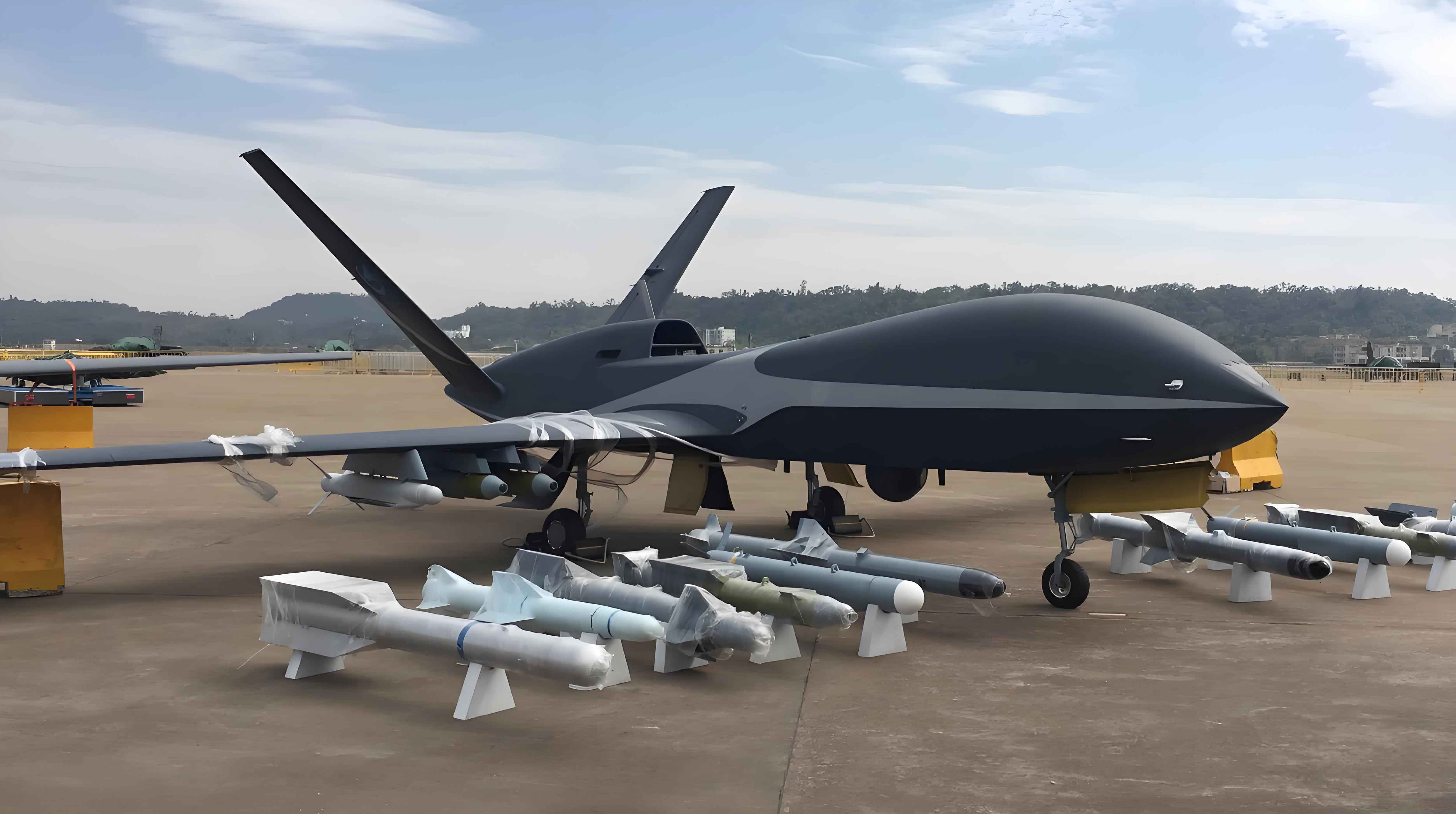
The story of U.S. military drones dates back to the 1910s, when early experiments with converted aircraft for bombing missions hinted at potential but yielded limited success. For decades, progress was sluggish, constrained by nascent technologies in propulsion, control, navigation, and communication. However, the latter half of the 20th century witnessed a paradigm shift, spurred by creative applications in high-tech local wars. Today, the U.S. stands at the forefront of military drone development, leveraging its robust aerospace industry to maintain global leadership. As I examine this history, I aim to unravel the multifaceted dynamics that have propelled these systems from mere derivatives of manned aircraft to pivotal defense tools.
At the heart of this evolution lies a synergy of factors that I categorize into three overarching groups: innovation foresight, internal driving forces, and external driving forces. Innovation foresight is primarily driven by military demand, which acts as a catalyst for new ideas and applications. Internal forces encompass technological level, cultural values, and industrial economics, while external forces include social environment and government decisions. These elements are not isolated; they interact in a feedback loop, continuously shaping the development of military drones. To formalize this relationship, I propose a functional representation:
$$ D(t) = \alpha M(t) + \beta T(t) + \gamma C(t) + \delta I(t) + \epsilon G(t) + \zeta S(t) $$
where \( D(t) \) denotes the development state of military drones at time \( t \), and the coefficients \( \alpha, \beta, \gamma, \delta, \epsilon, \zeta \) represent the relative weights of factors: military demand \( M \), technological level \( T \), cultural values \( C \), industrial economics \( I \), government decisions \( G \), and social environment \( S \). This equation encapsulates the cumulative impact of these drivers, illustrating how their interplay has advanced military drone capabilities over time.
Driving Factors in U.S. Military Drone Development
In my assessment, the progression of U.S. military drones is a result of six key factors that collectively fuel innovation. Below, I detail each factor, highlighting their roles through historical examples and conceptual frameworks.
1. Military Demand: The Pull of Innovation Foresight
Military demand serves as the fundamental starting point for military drone development, dictating its direction and exerting a powerful pull. I observe that this demand operates at three levels: strategic, war-based, and operational. Strategic demand involves long-term planning to address national security threats, guiding the overall spectrum and deployment of military drones. For instance, during the Cold War, the need for surveillance against Soviet forces spurred early drone programs like the AQM-34 Firebee, which evolved from target drones to reconnaissance assets. War-based demand arises from immediate conflicts, such as the Vietnam War, where drones like the Firebee-147 were repurposed for battlefield reconnaissance, reducing pilot risk. Operational demand reflects feedback from the field, leading to iterative improvements—after the Gulf War, lessons learned drove enhancements in drone durability and payload capacity. This cyclical process ensures that military drones remain aligned with evolving combat needs, continuously refining their utility in scenarios where ‘military drone’ operations are critical.
2. Technological Level: The Push of Advancement
Technological advancements are the engine behind military drone evolution, pushing boundaries through innovation. As I analyze historical trends, I note that breakthroughs in disciplines like aerodynamics, materials science, and artificial intelligence have directly enabled more capable drones. For example, the integration of GPS in the 1990s revolutionized navigation for drones like the RQ-1 Predator, allowing for precise, long-endurance missions. The U.S. has leveraged its research ecosystem—including defense contractors, universities, and agencies like DARPA—to foster original innovation. A key metric is the rate of technological progress, which can be modeled as:
$$ \frac{dT}{dt} = k \cdot R \cdot I $$
where \( \frac{dT}{dt} \) is the change in technological level over time, \( k \) is a constant of innovation efficiency, \( R \) represents research investment, and \( I \) denotes interdisciplinary integration. This equation underscores how sustained R&D efforts have propelled military drones from simple remote-controlled devices to autonomous systems with strike capabilities, ensuring the U.S. maintains a ‘military drone’ technology edge.
3. Cultural Values: The Influence of Pragmatic Innovation
Cultural values, particularly the American ethos of pragmatic “can-do” spirit, have profoundly shaped military drone development. In my view, this culture encourages risk-taking, exploration, and a focus on practical solutions, permeating organizations like the U.S. Department of Defense and defense firms. DARPA, for instance, fosters innovation through initiatives like the “Combat Liaison Officer” program, which bridges gaps between developers and frontline users to accelerate technology adoption. This cultural mindset promotes agility in responding to military needs, as seen in the rapid deployment of MQ-9 Reaper drones for counterterrorism after 9/11. The emphasis on collaboration and competition within the industry further drives progress, ensuring that ‘military drone’ projects benefit from diverse perspectives and relentless improvement.
4. Industrial Economics: The Dynamics of Market Forces
Industrial economics provides the foundation for scaling military drone production and commercialization. As I trace the economic trajectory, I see that the U.S. defense industry’s robustness—with strong R&D investment, manufacturing capabilities, and global market access—has been pivotal. The shift from government-funded prototypes to commercially viable products has created a virtuous cycle: technological innovations lead to new applications, which expand market opportunities and generate revenue for further research. For example, companies like General Atomics leveraged military contracts for the Predator drone to develop civilian variants, fostering industry growth. The economic impact can be summarized in a table:
| Period | Industrial Focus | Economic Impact | Military Drone Example |
|---|---|---|---|
| 1970s-1980s | Target drone production | Limited market, niche applications | BQM-74 Chukar |
| 1990s-2000s | Reconnaissance and strike systems | Expanded defense budgets, export growth | RQ-1 Predator |
| 2010s-Present | Multi-role, autonomous platforms | Diversified revenue streams, global dominance | MQ-9 Reaper, RQ-4 Global Hawk |
This table illustrates how industrial economics have evolved alongside military drone sophistication, reinforcing their strategic importance.
5. Government Decisions: The Role of Policy and Funding
Government decisions, through policies and funding allocations, act as a catalyst for military drone development. In my analysis, I find that since the Reagan administration first earmarked procurement funds for drones in the 1987 budget, successive governments have used defense policies to provide stable support. For instance, post-9/11, the Bush administration dramatically increased investments in drone technology for counterterrorism, while the Obama administration maintained procurement despite broader military cuts. The funding trend, as shown in historical data, reveals a steady rise, with peaks during conflicts like the Iraq War. This support mitigates financial risks for companies, enabling long-term research. The relationship can be expressed as:
$$ G(t) = \int_{0}^{t} (B(\tau) + P(\tau)) \, d\tau $$
where \( G(t) \) is cumulative government influence, \( B(\tau) \) represents budget allocations, and \( P(\tau) \) denotes policy incentives at time \( \tau \). This integral highlights the sustained role of government in nurturing the ‘military drone’ ecosystem.
6. Social Environment: The Context of Security Threats
The social environment, encompassing domestic and international security concerns, motivates military drone deployment. As I reflect on history, events like the 9/11 attacks or rising geopolitical tensions have directly influenced drone usage patterns. For example, the need to minimize American casualties in conflicts like Afghanistan drove the adoption of armed drones for precision strikes, while domestic safety concerns have spurred surveillance applications. This environment creates a feedback loop: drones address threats, which in turn shapes public perception and demand for enhanced capabilities. In essence, the social context acts as a real-world testing ground, validating the utility of military drones and guiding their evolution toward roles like border patrol or disaster response.
To synthesize these factors, I present a comprehensive table summarizing their interactions:
| Driving Factor | Primary Role | Key Historical Example | Impact on Military Drone Development |
|---|---|---|---|
| Military Demand | Innovation foresight and direction-setting | Vietnam War reconnaissance missions | Pulled drones from target practice to combat roles |
| Technological Level | Enabling advancement through R&D | GPS integration in the 1990s | Pushed capabilities for autonomy and precision |
| Cultural Values | Fostering pragmatic innovation and risk-taking | DARPA’s collaborative programs | Accelerated adoption and iterative design |
| Industrial Economics | Scaling production and commercialization | Growth of General Atomics’ drone lines | Created sustainable industry for military drones |
| Government Decisions | Providing policy and financial support | Post-9/11 funding surges | Stabilized R&D and procurement pipelines |
| Social Environment | Responding to security threats and public needs | Counterterrorism operations in Pakistan | Shaped mission profiles and public acceptance |
Evolutionary Path Models of U.S. Military Drones
Based on my examination, the development of U.S. military drones has followed three distinct evolutionary models, each reflecting the interplay of the above factors. These models mark phases from infancy to maturity, showcasing how the ‘military drone’ concept has been refined over time.
Model 1: Military Demand-Oriented Evolution (Early 20th Century to 1970s)
In this initial phase, military demand was the dominant driver, with other factors playing minimal roles. As I recount, early experiments like the 1917 Sperry project aimed at converting aircraft into unmanned bombers, but technological limitations led to abandonment. The interwar period saw influence from British target drones, prompting U.S. companies to develop similar systems for training, such as the Radioplane OQ-2. During World War II and the Vietnam War, drones like the Firebee-147 were adapted for reconnaissance, yet progress remained slow due to limited government attention and undeveloped industry. The dynamics can be modeled as:
$$ D_1(t) = \alpha M(t) + \text{negligible contributions from } T, C, I, G, S $$
where \( D_1(t) \) represents development in this model, heavily weighted toward military demand \( M(t) \). This phase established the ‘military drone’ as a tactical tool but lacked systemic integration, with innovation driven solely by battlefield needs.
Model 2: Multi-Factor Integrated Evolution (1970s to 1990s)
This model emerged as external and internal factors began to converge with military demand. I observe that the 1970s Israeli successes with drones in the Yom Kippur War sparked U.S. interest, leading to enhanced R&D. The Gulf War and Kosovo conflicts saw drones like the Pioneer and Predator deployed for surveillance and electronic warfare, proving their value. Consequently, government funding increased, with the Clinton administration investing billions, while technological advances in sensors and data links improved performance. Cultural shifts toward innovation and economic globalization encouraged industry collaboration. The relationship becomes more complex:
$$ D_2(t) = \alpha M(t) + \beta T(t) + \gamma C(t) + \delta I(t) + \epsilon G(t) $$
with social environment \( S(t) \) gaining relevance through post-Cold War security concerns. This integration expanded the ‘military drone’ role beyond reconnaissance to include combat support, setting the stage for transformative applications.
Model 3: Comprehensive Synergistic Evolution (1990s to Present)
In the current phase, all factors interact synergistically, creating a mature ecosystem for military drones. As I analyze, events like 9/11 and the wars in Afghanistan and Iraq accelerated this trend. Drones evolved into “hunter-killer” platforms, exemplified by the armed MQ-1 Predator and MQ-9 Reaper, capable of strike missions with minimal risk. Government policies became more strategic, with the Department of Defense issuing roadmap documents to coordinate development across services. Technological leaps in stealth, AI, and swarming enabled new capabilities, while cultural emphasis on innovation and industry economics fueled global exports. Social pressures, such as demand for counterterrorism and homeland security, further drove adoption. This model can be expressed as:
$$ D_3(t) = \sum_{i} w_i F_i(t) $$
where \( F_i \) represents all six factors—military demand, technological level, cultural values, industrial economics, government decisions, and social environment—with weights \( w_i \) reflecting their balanced influence. The U.S. military drone system now embodies a holistic approach, with integrated development, deployment, and management frameworks.
To compare these models, I offer a table summarizing their characteristics:
| Evolutionary Model | Time Period | Dominant Factors | Key Military Drone Examples | Development State |
|---|---|---|---|---|
| Military Demand-Oriented | Early 1900s–1970s | Military demand alone | Sperry convert, Firebee-147 | Nascent, experimental |
| Multi-Factor Integrated | 1970s–1990s | Military demand, technology, government, economy | RQ-1 Predator, RQ-2 Pioneer | Growing, systemic |
| Comprehensive Synergistic | 1990s–Present | All factors in synergy | MQ-9 Reaper, RQ-4 Global Hawk, mini-drones | Mature, pervasive |
Conclusion: Insights and Future Directions
In concluding my analysis, I assert that the historical development of U.S. military drones exemplifies a sophisticated interplay of drivers, culminating in a robust capability that reshapes modern warfare. The evolutionary path—from demand-driven origins to multi-factor integration and finally to comprehensive synergy—highlights how adaptability and sustained investment have been key. As I reflect, the ‘military drone’ has transitioned from a supplemental tool to a centerpiece of defense strategy, offering lessons in innovation management and strategic planning.
Looking ahead, I anticipate that emerging technologies like artificial intelligence, hypersonic propulsion, and network-centric systems will further transform military drones, potentially leading to autonomous swarms or space-based variants. The U.S. experience underscores the importance of aligning military needs with technological roadmaps, fostering a culture of innovation, and leveraging economic and policy support. For other nations, this history offers a blueprint: prioritize integrated development, invest in core technologies, and adapt to evolving security environments. Ultimately, the story of U.S. military drones is one of continuous evolution, driven by a relentless pursuit of superiority in the skies—a testament to the power of synergy in defense innovation.
Through this exploration, I have aimed to provide a detailed, first-person perspective on the forces that have shaped one of the most impactful military technologies of our time. The journey of the ‘military drone’ is far from over, and its future will undoubtedly be written by the same dynamic factors that have propelled it thus far.